
Kirjahaku
Etsi kirjoja tekijän nimen, kirjan nimen tai ISBN:n perusteella.
159 tulosta hakusanalla Csaba Visy
Under which conditions can Romania join the Eurozone?
Csaba Olti
LAP Lambert Academic Publishing
2011
pokkari

Skitouren Wiener Hausberge - vom Wienerwald bis zum Hochschwab
Csaba Szépfalusi; Karel Kriz
Berger, Ferdinand Verlag
2010
nidottu
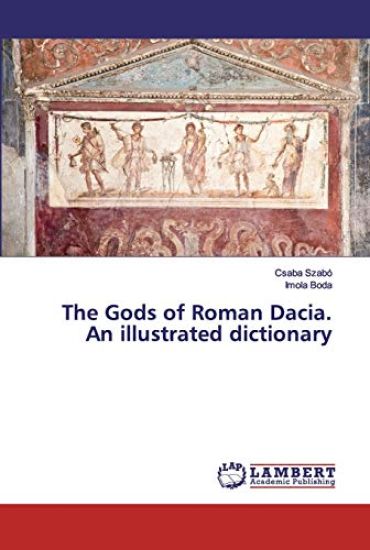
The Gods of Roman Dacia. An illustrated dictionary
Csaba Szabó; Imola Boda
LAP Lambert Academic Publishing
2019
pokkari
This dictionary is a revised and extended version of the mythological dictionary of the Bibliography of Roman Religion in Dacia (BRRD) published in 2014. The main aim of the dictionary of the BRRD was to offer the first comprehensive mythological dictionary and list of divinities and personifications attested on epigraphic and figural monuments from Dacia, mostly for students and the greater public. The pictures (more than 100 illustrations) represent in most of the cases some iconographic analogies found in the territory of Dacia or - when there is no figurative representation - inscriptions. Because the results of the CSIR projects focusing on Roman material of Romania are still not published, most of the pictures are from the monumental work of Ortolf Harl, the Bilddatenbank Ubi Erat Lupa (abbreviated as lupa in the text with the register number of the picture) and from the digital catalogue of bronze statuettes of Roman Dacia. Other photos are used from publications mentioned in the bibliography.

L'angoscia da cancro, il 6 segno vitale, un'esperienza universale legata al cancro e una questione di diritti umani. una realt sfaccettata che ha l'indiscutibile vantaggio di "ricordarci che le persone affette da cancro sono esseri umani". Il cancro, una forma di vita non regolamentata, attacca il corpo, ma dal momento stesso in cui la persona colpita ne viene a conoscenza, gli effetti devastanti del cancro iniziano ad agire anche nella sua vita psicologica e sociale. Il cancro pu facilmente diventare emotivo e carico di pregiudizi a causa del senso di colpa, della punizione, dell'espiazione e dell'immagine di morte associata alla natura maligna. Per alcuni, l'esperienza del cancro ha un impatto significativamente negativo sulla salute mentale e sul benessere, mentre per altri ha un esito psicologico e sociale positivo, compresa la sopravvivenza. Esaminando il disagio emotivo e la qualit di vita dei pazienti oncologici, siamo partiti dall'interazione tra fattori somatici, psicologici e sociali. I livelli di bisogni psicosociali trascurati nei pazienti oncologici raggiungono un livello allarmante in Romania. Il sistema sanitario pubblico rumeno non in grado di offrire un'assistenza psicosociale qualitativa ai pazienti oncologici, poich il disagio oncologico non viene valutato.
A ang stia cancer gena, o 6 sinal vital, uma experi ncia universal relacionada com o cancro e uma quest o de direitos humanos. uma realidade multifacetada com a vantagem indiscut vel de "lembrar-nos que as pessoas com cancro s o seres humanos". O cancro, uma forma de vida n o regulamentada, lan a um ataque ao corpo, mas a partir do momento em que a pessoa afectada toma consci ncia disso, os efeitos devastadores do cancro come am tamb m a funcionar na vida psicol gica e social da pessoa. O cancro pode facilmente tornar-se emocional e carregado de preconceitos devido a culpa, castigo, expia o e a imagem da morte associada natureza maligna. Para alguns, a experi ncia do cancro tem um impacto significativamente negativo na sa de mental e no bem-estar, enquanto para outros tem um resultado psicol gico e social positivo, incluindo a sobreviv ncia. Ao examinar o sofrimento emocional e a qualidade de vida dos doentes de cancro, partimos da interac o de factores som ticos, psicol gicos e sociais. Os n veis de necessidades psicossociais negligenciadas nos doentes com cancro atingem um n vel alarmante na Rom nia. O sistema de sa de p blica romeno n o pode de forma alguma oferecer cuidados psicossociais qualitativos aos doentes com cancro, uma vez que a ang stia cancer gena n o avaliada.
Krebsleiden, das 6. Lebenszeichen, ist eine universelle Erfahrung im Zusammenhang mit Krebs und ein Menschenrechtsthema. Es ist eine facettenreiche Realit t, die den unbestreitbaren Vorteil hat, dass sie uns daran erinnert, dass Menschen mit Krebs Menschen sind". Krebs ist eine unkontrollierte Lebensform, die den K rper angreift, aber von dem Moment an, in dem sich der Betroffene dessen bewusst wird, wirken sich die verheerenden Auswirkungen von Krebs auch auf das psychologische und soziale Leben des Betroffenen aus. Krebs kann aufgrund von Schuldgef hlen, Bestrafung, S hne und dem Bild des Todes, das mit der b sartigen Natur verbunden ist, leicht emotional werden und mit Vorurteilen belastet sein. Bei einigen wirkt sich die Krebserfahrung deutlich negativ auf die psychische Gesundheit und das Wohlbefinden aus, w hrend sie bei anderen positive psychologische und soziale Auswirkungen hat, einschlie lich der berlebenszeit. Bei der Untersuchung der emotionalen Belastung und der Lebensqualit t von Krebspatienten gehen wir von der Wechselwirkung zwischen somatischen, psychologischen und sozialen Faktoren aus. Das Ausma der vernachl ssigten psychosozialen Bed rfnisse von Krebspatienten erreicht in Rum nien ein alarmierendes Ausma . Das rum nische ffentliche Gesundheitssystem kann keineswegs eine qualitative psychosoziale Betreuung von Krebspatienten anbieten, da der Leidensdruck bei Krebs nicht erfasst wird.

Las necesidades psicosociales de la oncología: una voz ausente en Rumanía
Csaba László Dégi
Ediciones Nuestro Conocimiento
2022
nidottu

La d tresse li e au cancer, le sixi me signe vital, est une exp rience universelle li e au cancer et une question de droits de l'homme. C'est une r alit aux multiples facettes qui a l'avantage incontestable de "nous rappeler que les personnes atteintes de cancer sont des tres humains". Le cancer, forme de vie non r gul e, s'attaque au corps, mais d s l'instant o la personne atteinte en prend conscience, les effets d vastateurs du cancer commencent agir sur sa vie psychologique et sociale galement. Le cancer peut facilement devenir motionnel et charg de pr jug s en raison de la culpabilit , de la punition, de l'expiation et de l'image de la mort associ e la nature maligne. Pour certains, l'exp rience du cancer a un impact n gatif significatif sur la sant mentale et le bien- tre, tandis que pour d'autres, elle a un r sultat psychologique et social positif, notamment en termes de survie. En examinant la d tresse motionnelle et la qualit de vie des patients atteints de cancer, nous sommes partis de l'interaction des facteurs somatiques, psychologiques et sociaux. Les niveaux de besoins psychosociaux n glig s chez les patients atteints de cancer atteignent un niveau alarmant en Roumanie. Le syst me de sant publique roumain ne peut en aucun cas offrir une prise en charge psychosociale qualitative aux patients atteints de cancer puisque la d tresse li e au cancer n'est pas valu e.

Attempts to reconstruct the compositional history of the book of Isaiah confine themselves mainly to chapters 1-12 and 28-39, supposed to shroud the basic core of any early collection of Isaianic texts. Other investigations which verge on the group of prophecies concerning the nations in Isa 13-23 rarely delve into exegetical details to the extent that the reader of Isaiah would feel convinced to stand here on familiar grounds. Even others, overtly restricted to a small pericope inside Isa 13-23, often neglect the significance of this larger context. This book provides a thorough analysis of Isaiah 18-20, concerned with Egypt and Kush, from the earliest stages to their final contextualisation within the developing corpus of the Isaianic prophecies regarding the nations.

A Besz lget sek Bud val, a Bels sv nyen szerzett tapasztalatokat foglalja ssze essz k, novell k form j ban. A t rt netek egy r sze kital lt, m g m sokat a val s g ihlette, de mindegyik h tter ben megtal lhat a m lyr l j v bels tapasztal s intenz v lm nye. A k nyv c me utal s Cs pel L ma, Szk t k s Hunok a Buddh k si tj n c m k nyv re s egyben gondolat breszt is azok sz m ra, akik k pesek kirakni a t rt nelmi puzzle-t s felismerik a miszt riumot, ami sszekapcsolja a megvil gosodott mestereket a szk ta, hun s magyar n pekkel. Gondolat breszt mindazoknak, akik rzik, hogy valami nincs rendj n a modern vil ggal, de nem tudj k m g rz seiket s sejtelmeiket szavakk , gondolatokk form lni. tikalauz mindazoknak, akik a bels sv nyen j rnak (azaz mindenkinek) s a szerz h z hasonl an, pr b lj k megismerni s megszelid teni saj t d monaikat s igyekeznek tanulni m ltbeli cselekedeteik k vetkezm nyeib l.

Revolutionizing Network Management: The Journey to AI-native Autonomy
Csaba Vulkán; Péter Szilágyi; Nurit Sprecher
River Publishers
2025
sidottu
End-to-end automation in telecommunications is a challenging yet critical industry objective, representing collective vision for technology evolution in the coming years. Key enablers for achieving this include the expression and the translation of high-level business goals (e.g. intents) into actionable and impactful operations, the deployment and interaction between closed loops, real-time data management, the extraction of meaningful insights from data, ML-driven analytics and intelligence, and seamless orchestration and resource control. Automation processes must be transparent, reliable and robust. This book provides a comprehensive insight into the automation journey. It explores the vision of zero-touch, AI-native network and service autonomy, examining the key trends, catalysts, and technological advancements shaping this paradigm shift. It provides a comprehensive analysis of critical aspects such as data and knowledge management, security and trust, native AI/ML management, intent-based automation, and human-to-machine as well as machine-to-machine interfaces. By delving into advanced concepts such as data-driven, AI-powered analytics, semantic and decision models, network digital twins, and the role of natural language processing and large language models, the book bridges theory and practical application. It highlights how these innovations leverage and maximize intent-driven and closed-loop automation, enabling seamless, intelligent, and autonomous networks. Additionally, it identifies key areas where further research is needed to address existing gaps and unlock the full potential of these technologies. Ultimately, this book provides valuable insights, outlining the transformative potential of zero-touch, AI-native networks and paving the way for seamless, intelligent, and autonomous management of networks and services, driving innovation, efficiency, and new opportunities in the evolving digital landscape.

Buone maniere. Guida contemporanea allo stile, per distinguersi in ogni occasione
Csaba Dalla Zorza
Foodwriter
2018
sidottu

In this original and authoritative study of international economic relations, László Csaba examines the power structures, economic reforms and economic developments within Eastern Europe. He explores the history of intra-regional cooperation and conflicts and international trade, evaluating the changes within the system created by the standards and requirements of the world economy. Particular attention is paid to Soviet-East European relations, assessing the merits and limitations of recent policies and the implications for Eastern Europe of the change and challenge of Gorbachev's reforms. The author addresses many key issues of the economic system. These include price formation in intra-CMEA trade; the impact of the settlement on transferable rouble accounts on intra-CMEA prices and finance; the consequences the CMEA's complex programme of 1971 has had for trade and development and its long-term target programmes initiated in 1976. Csaba looks forward to the new preoccupations for the 1990s: the coordination of economic policy, convertibility, direct interfirm relations and technology transfer.

The author revisits the origins of the Cold War, the German question and the role of the Marshall Plan in the division of Europe as well as the still much debated process of the Sovietization of east-central Europe. He argues that the ongoing detente process, lasted from 1953 until 1991. He also introduces a novel typology for the crises of the Cold War, distinguishing real and pseudo crises, explaining that some of the most spectacular crises of the era, including the Hungarian revolution of 1956 were in reality not genuine East--West conflicts.
This classroom-tested textbook provides an accessible introduction to the design, formal modeling, and analysis of distributed computer systems. The book uses Maude, a rewriting logic-based language and simulation and model checking tool, which offers a simple and intuitive modeling formalism that is suitable for modeling distributed systems in an attractive object-oriented and functional programming style.Topics and features: introduces classical algebraic specification and term rewriting theory, including reasoning about termination, confluence, and equational properties; covers object-oriented modeling of distributed systems using rewriting logic, as well as temporal logic to specify requirements that a system should satisfy; provides a range of examples and case studies from different domains, to help the reader to develop an intuitive understanding of distributed systems and their design challenges; examples include classic distributed systems such as transport protocols, cryptographic protocols, and distributed transactions, leader election, and mutual execution algorithms; contains a wealth of exercises, including larger exercises suitable for course projects, and supplies executable code and supplementary material at an associated website.This self-contained textbook is designed to support undergraduate courses on formal methods and distributed systems, and will prove invaluable to any student seeking a reader-friendly introduction to formal specification, logics and inference systems, and automated model checking techniques.

Proof of the 1-factorization and Hamilton Decomposition Conjectures
Bela Csaba; Daniela Kuhn; Allan Lo
Amer Mathematical Society
2016
pokkari
In The Capitalist Revolution in Eastern Europe, Laszlo Csaba offers an applied economics interpretation of the modernization attempts which followed the collapse of the Soviet empire and of the state socialist experiment. This important book presents a comprehensive overview of empirical and theoretical developments in order to analyse and interpret what common factors or trends are discernible in the transformation process. From 1989 to 1994 a loss of employment and production was recorded in Eastern Europe which exceeded that of the great depression of the 1930s. This book questions why conventional economic doctrines seem to have failed in some countries but have been more successful in others. What - if anything - went wrong with an experiment which involved some of the most prominent economists in the world? Why did shock therapy fail in Russia and why is gradualism reaching its outer most limits in Hungary? In attempting to build a bridge between abstract economic theory and the empirical material available in Eastern Europe, the author adopts a broad framework of analysis making use of data and theories drawn from sociology, history and political science. In developing an analytical framework, and through its application by a single author, this book presents a unique, authoritative perspective on the transformation of Eastern Europe. Students, academic researchers, journalists and policymakers will welcome this decisive assessment of the empirical and theoretical insights resulting from the transformation of Eastern Europe.
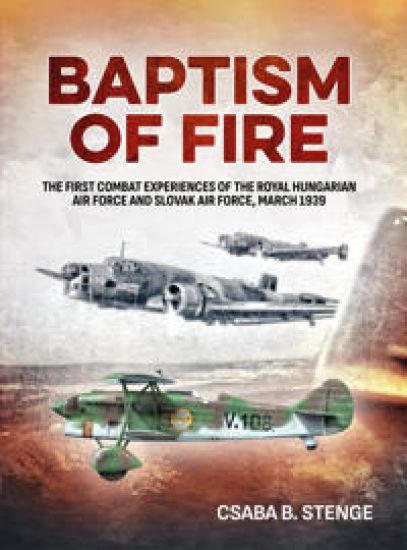
This story is a short but devastating episode from the turbulent history of Central Europe in the 20th Century, one that is hardly known outside the countries concerned. This short conflict was hushed up even in the German media in 1939, because the Third Reich tried to avoid clashes between their potential allies, and were especially angry because of the independent Hungarian military action against Slovakia, with at least one ethnic German Slovak civilian killed as a result of the fighting. Sub-Carpathia was a part of the Kingdom of Hungary for a thousand years, but Hungary lost it after World War I, and it became part of Czechoslovakia until March 1939. Between 1939 and 1944 it was a part of Hungary again, but the Soviet Red Army captured it in the late autumn of 1944. After World War II, in June 1945, a treaty was signed between Czechoslovakia and the Soviet Union, ceding Sub-Carpathia to the Soviet Union. In 1939, Hungary occupied its former territory, Sub-Carpathia, supported by its reconnaissance and bomber forces. When the Hungarian troops entered what Slovakia regarded as its territory, a short but fierce clash started between the contending air forces. Slovak planes strafed and bombed Hungarian ground troops on 23 March 1939, but the heaviest clashes happened on the very next day, when extensive air-to-air combat occurred. The text contains details of the historical background to the conflict, a full account of the combat, notes on Hungarian aviators decorated for their performance, short biographies of Hungarian aviators credited with aerial victories, and a list of Hungarian aerial victories. Besides this, the book contains over 100 rare and mostly previously-unpublished images, as well as a selection of superb colour profiles showing camouflage and markings for the aircraft of both air forces. About the Author Csaba Becze was born in 1975. He is a historian, his PhD describing the history of the Royal Hungarian Air Force in WWII. The focus of his research is aviation and military history, especially of the Hungarian armed forces and air force in WWII. He has spent the last two decades conducting intensive research both in archives and with veterans and their families, looking for surviving wartime materials relating to the Royal Hungarian Air Force. He has authored 6 books and dozens of scholarly articles in the Hungarian, English, German and French languages.