
Kirjahaku
Etsi kirjoja tekijän nimen, kirjan nimen tai ISBN:n perusteella.
1000 tulosta hakusanalla Curtis Allen

Curtis Colirizada y el Barco de Zapatillas: Un Cuento de Aventura
Elaine a. Powers
Createspace Independent Publishing Platform
2014
nidottu
Curtis, el perfecto lagarto rizado cola de Warderick Wells, decide ver donde los turistas vienen. l se embarca en su aventura en un barco de zapatillas de deporte.

Curtis Queue Bouclee et le Bateau de Sneakers: Un Queue d'Aventure
Elaine a. Powers
Createspace Independent Publishing Platform
2015
nidottu
Curtis, le l zard a'la parfaite queue bouclee de Warderick Wells, d cide de voir d'o les touristes viennent. Il met le cap sur son aventure dans un bateau de sneakers.

Curtis Woosley Cemetery Butler County, KY
Daniel B. Durbin
Createspace Independent Publishing Platform
2015
nidottu

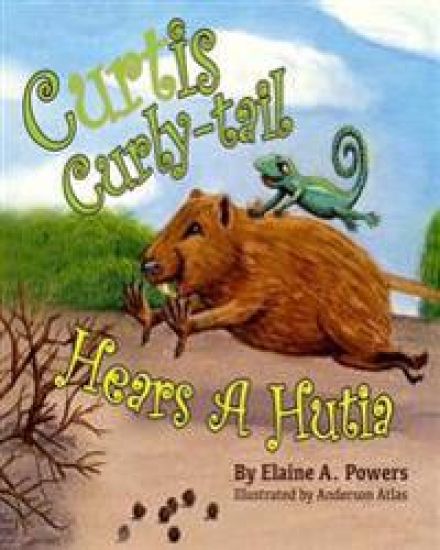
Curtis Curly-tail Hears a Hutia
Elaine a. Powers
Createspace Independent Publishing Platform
2015
nidottu

Curtis Curly-tail is Lizardnapped!
Elaine a. Powers
Createspace Independent Publishing Platform
2016
nidottu


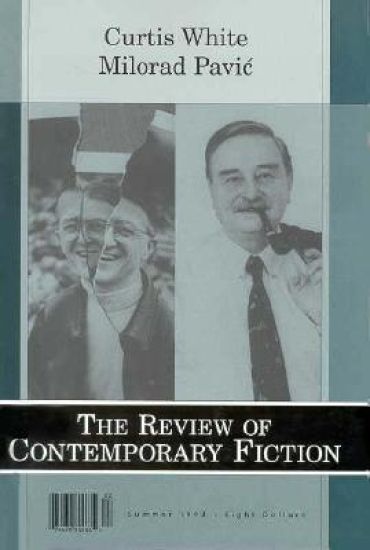
Curtis White and Milorad Pavic Number
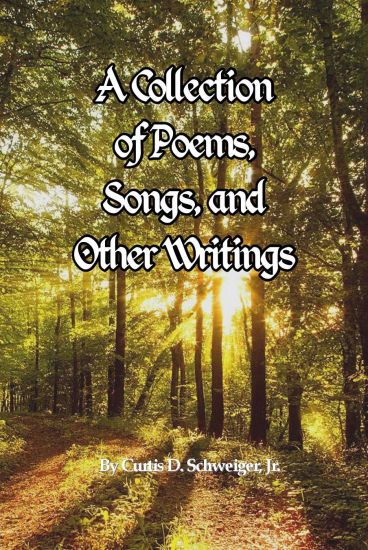
"A collection of poetry and other writings by curtis schweiger jr"
Curtis Schweiger
Curtis Schweiger
2020
pokkari
Hi my name is curtis schweiger jr, im a local singer/songwriter, this year i published my first book of poetry, my cd,"Past and present' was released on apple music, amazon, and my videos are doing good on youtube, i am very proud and plan on writing on into the future, peace, love, curt

Curtis Gets Ready to Dream makes bedtime a breeze and provides special bonding time for you and your children. Curtis is a young dog who does not like to go to bed. He argues with his mother and fights his bedtime. His mother establishes a routine for him that when followed earns him rewards. Curtis uses an imaginative method of progressive muscle relaxation to train his mind and body how to prepare for sleep. Through beautiful illustrations, the pretend play of the main character comes to life and encourages your child to follow along helping them drift off into dreamland.

The author is a journalist descendant of three generations of eminent lawyers, who made the surname famous-perhaps especially Sir Henry Curtis-Bennett, KC. She could get no further than the early 18th century so turned her attention to the distaff side with rewarding results. "A wealth of illustrations, photographs and family trees and a bibliography add interest to the lively and entertaining text." Family Tree Magazine

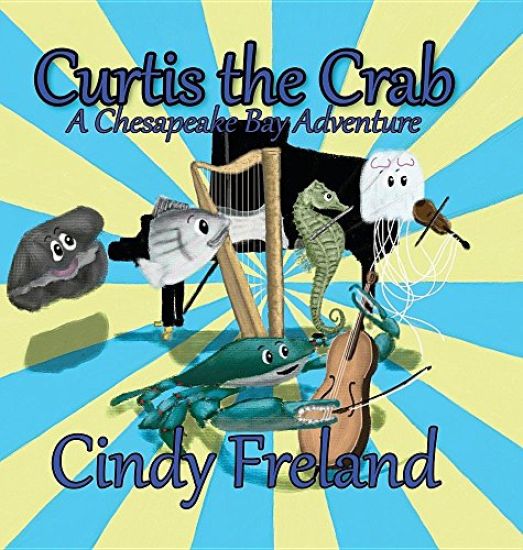
Curtis the Crab: A Chesapeake Bay Adventure
Cindy Freland
Maryland Secretarial Services, Inc.
2016
sidottu

Jada adores her cactus garden, where each cactus has unique charm and beauty. However, despite Jada's care, the cacti are slowly dying. After seeking advice from various experts to no avail, Jada encounters Curtis the Cowboy Cactus, who offers his help. Curtis, with his unique approach, identifies the root cause of the problem: the cacti's inability to get along. Will the cacti be able to overcome their differences and restore harmony in the garden?
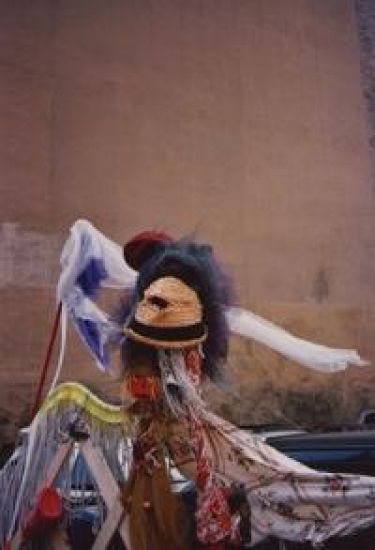
Curtis Cuffie (1955–2002) was an artist who lived and worked in and around the East Village from the mid-1980s until his untimely death in the early 2000s. He moved to New York from Hartsville, South Carolina, as a teenager and lived unhoused for long stretches of his adult life. Cuffie found local notoriety for the way he adorned the streets of downtown New York, collecting what the city provided, often sifting trash to stage on-the-spot sculptures along the Bowery and Cooper Square. His arrangements took the form of impossibly balanced towers, delicate shrines, and unwieldy processions up to thirty-feet in length installed along the walls, fences, and sidewalks of the Lower East Side. Nearly without fail they were removed by the police, inclement weather, the department of sanitation, or the grounds team at Cooper Union, which would later employ him. An enduring presence in the East Village, Cuffie staged sprawling tableaux outside the Village Voice offices that were admired by students and venerable artists alike. He was profiled by scene reporters, political writers, and folk-art journalists, all the while exhibiting in the neighborhood’s famed alternative art spaces. While few of his sculptures remain today, a trove of photographs from the 1990s taken by Cuffie and his companion Katy Abel preserve the work he made in the city. This photobook, the first publication about Cuffie, seeks to honor the artist by collecting the efforts of two of his partners: Carol Thompson, who lived with Cuffie from 1996 to 2001 and archived a great number of his 35mm photographs, and Abel, a Cooper Square resident who took hundreds of snapshots of his art. Curtis Cuffie is designed by Julie Peeters, edited by Scott Portnoy and Robert Snowden with Ciarán Finlayson, and additionally includes writing by the artist, Finlayson, and critic Alan Moore, and images taken by Tom Warren and Margaret Morton. CURTIS CUFFIE (1955–2002) was an artist based in New York City’s East Village. Originally from Hartsville, South Carolina, he moved to Brooklyn at fifteen and eventually settled in Manhattan, first near Bryant Park and later around the Bowery. Homeless for long stretches of time, Cuffie became well-known in the 1990s for the sculptures he made using found materials, which he installed in public spaces downtown. Artforum, the New York Times, and the Village Voice all profiled and reviewed his work. and he held solo exhibitions at Flamingo East, Tribes, and 4th Street Photo Gallery, all in the Lower East Side. In his lifetime, Cuffie was featured in nearly a dozen group shows across the US at venues including Exit Art, American Primitive, and the Jamaica Art Center in New York, and the American Visionary Art Museum in Baltimore. Most recently his work was included in “Souls Grown Diaspora,” curated by Sam Gordon, at Apexart in 2020 and “Greater New York” at MoMA PS1 in 2021–22, both in New York. New York City’s East Village. Originally from Hartsville, South Carolina, he moved to Brooklyn at fifteen and eventually settled in Manhattan, first near Bryant Park and later around the Bowery. Homeless for long stretches of time, Cuffie became well-known in the 1990s for the sculptures he made using found materials, which he installed in public spaces downtown. Artforum, the New York Times, and the Village Voice all profiled and reviewed his work. and he held solo exhibitions at Flamingo East, Tribes, and 4th Street Photo Gallery, all in the Lower East Side. In his lifetime, Cuffie was featured in nearly a dozen group shows across the US at venues including Exit Art, American Primitive, and the Jamaica Art Center in New York, and the American Visionary Art Museum in Baltimore. Most recently his work was included in “Souls Grown Diaspora,” curated by Sam Gordon, at Apexart in 2020 and “Greater New York” at MoMA PS1 in 2021–22, both in New York. KATY ABEL is a New York City native. She became friends with Curtis Cuffie in 1994 and photographed his artwork for the next several years. CIARA?N FINLAYSON is a writer and editor from Houston, Texas. He is the managing editor of Blank Forms Editions and his long-form essay Perpetual Slavery is forthcoming from Floating Opera Press. ALAN WILLARD MOORE lived in New York City for thirty years. He worked with the artists’ groups Colab and the cultural center ABC No Rio, and ran the MWF Video Club distribution project. He received a PhD in art history from the City University of New York in 2000 and has lived in Madrid since 2009. Moore is the author of Art Gangs: Protest and Counterculture in New York City (Autonomedia, 2011), Occupation Culture: Art & Squatting in the City from Below (Minor Compositions/Autonomedia, 2015), and the memoir Art Worker: Doing Time in the New York Artworld (JoAAP, 2022), and a coeditor of Making Room: Cultural Production in Occupied Spaces (JoAAP/Other Forms, 2015). He blogs at Art Gangs and Occupations & Properties. MARGARET MORTON (1948–2020) was a professor of photography and design at the Cooper Union School of Art in New York. In 1989, she began to document the lives of homeless people in New York. Her photos are the subjects of multiple books including The Tunnel: The Underground Homeless of New York City (Yale University Press, 1995) and Fragile Dwelling (Aperture, 2000). CAROL THOMPSON is a Harlem-based curator and historian of the ancient and contemporary art of Africa and the African diaspora. She has authored numerous publications and taught at Vassar, City College in Harlem, New York University, the Fashion Institute of Technology, and other institutions. From 1987–96, she was an integral member of staff at New York’s Center for African Art, and from 2001 to 2019 she served as the Fred and Rita Richman Curator of African Art at the High Museum in Atlanta. Since July of 2019 Thompson has been an art adviser to the executor and curator of the Thomas G. B. Wheelock Collection of Art of Burkina Faso. TOM WARREN is a photographer from Lakewood, Ohio, who has lived in New York City since 1979. In the 1980s he became a portraitist of the downtown art scene, known for his contributions to the East Village Eye and artistic interventions into the neighborhood’s vacant spaces. Warren is the author of The 1980s Art Scene in New York (Hatje Cantz Verlag, 2022)