Kirjojen hintavertailu. Mukana 11 627 623 kirjaa ja 12 kauppaa.

Kirjahaku

Etsi kirjoja tekijän nimen, kirjan nimen tai ISBN:n perusteella.

1000 tulosta hakusanalla D. H. Lawrence

The Trespasser (1912) By: D. H. Lawrence: The Trespasser is the second novel written by D. H. Lawrence, published in 1912.
The Trespasser is the second novel written by D. H. Lawrence, published in 1912. Originally it was entitled the Saga of Siegmund and drew upon the experiences of a friend of Lawrence, Helen Corke, and her adulterous relationship with a married man that ended with his suicide. Lawrence worked from Corke's diary, with her permission, but also urged her to publish; which she did in 1933 as Neutral Ground. Corke later wrote several biographical works on Lawrence.. David Herbert Richards "D. H." Lawrence (11 September 1885 - 2 March 1930) was an English novelist, poet, playwright, essayist, literary critic and painter. His collected works represent, among other things, an extended reflection upon the dehumanising effects of modernity and industrialisation. Some of the issues Lawrence explores are emotional health, vitality, spontaneity and instinct. Lawrence's opinions earned him many enemies and he endured official persecution, censorship, and misrepresentation of his creative work throughout the second half of his life, much of which he spent in a voluntary exile which he called his "savage pilgrimage".At the time of his death, his public reputation was that of a pornographer who had wasted his considerable talents. E. M. Forster, in an obituary notice, challenged this widely held view, describing him as, "The greatest imaginative novelist of our generation." Later, the Cambridge critic F. R. Leavis championed both his artistic integrity and his moral seriousness, placing much of Lawrence's fiction within the canonical "great tradition" of the English novel. Early life: The 4th child of Arthur John Lawrence, a barely literate miner at Brinsley Colliery, and Lydia (n e Beardsall), a former pupil teacher who, owing to her family's financial difficulties, had to do manual work in a lace factory, Lawrence spent his formative years in the coal mining town of Eastwood, Nottinghamshire. The house in which he was born, in Eastwood, 8a Victoria Street, is now the D. H. Lawrence Birthplace Museum. His working-class background and the tensions between his parents provided the raw material for a number of his early works. Lawrence roamed out from an early age in the patches of open, hilly country and remaining fragments of Sherwood Forest in Felley woods to the north of Eastwood, beginning a lifelong appreciation of the natural world, and he often wrote about "the country of my heart" 7] as a setting for much of his fiction. The young Lawrence attended Beauvale Board School (now renamed Greasley Beauvale D. H. Lawrence Primary School in his honour) from 1891 until 1898, becoming the first local pupil to win a County Council scholarship to Nottingham High School in nearby Nottingham. He left in 1901, working for three months as a junior clerk at Haywood's surgical appliances factory, but a severe bout of pneumonia ended this career. During his convalescence he often visited Hagg's Farm, the home of the Chambers family, and began a friendship with Jessie Chambers. An important aspect of this relationship with Chambers and other adolescent acquaintances was a shared love of books, an interest that lasted throughout Lawrence's life. In the years 1902 to 1906 Lawrence served as a pupil teacher at the British School, Eastwood. He went on to become a full-time student and received a teaching certificate from University College, Nottingham, in 1908. During these early years he was working on his first poems, some short stories, and a draft of a novel, Laetitia, which was eventually to become The White Peacock. At the end of 1907 he won a short story competition in the Nottingham Guardian, the first time that he had gained any wider recognition for his literary talents.
Sons and Lovers (1913). By: D. H. Lawrence: Autobiographical novel

Sons and Lovers (1913). By: D. H. Lawrence: Autobiographical novel

D. H. Lawrence

Createspace Independent Publishing Platform
2017
nidottu
Sons and Lovers is a 1913 novel by the English writer D. H. Lawrence, originally published by B.W. Huebsch Publishers. The Modern Library placed it ninth on their list of the 100 best novels of the 20th century. While the novel initially received a lukewarm critical reception, along with allegations of obscenity, it is today regarded as a masterpiece by many critics and is often regarded as Lawrence's finest achievement.The third published novel of D. H. Lawrence, taken by many to be his earliest masterpiece, tells the story of Paul Morel, a young man and budding artist. The original 1913 edition was heavily edited by Edward Garnett who removed 80 passages, roughly a tenth of the text. citation needed] The novel is dedicated to Garnett. Garnett, as the literary advisor to the publishing firm Duckworth, was an important figure in leading Lawrence further into the London literary world during the years 1911 and 1912. citation needed] It was not until the 1992 Cambridge University Press edition was released that the missing text was restored. Lawrence began working on the novel in the period of his mother's illness, and often expresses this sense of his mother's wasted life through his female protagonist Gertrude Morel. Letters written around the time of its development clearly demonstrate the admiration he felt for his mother - viewing her as a 'clever, ironical, delicately moulded woman' - and her apparently unfortunate marriage to his coal-miner father, a man of 'sanguine temperament' and instability. He believed that his mother had married below her class status. Lydia Lawrence wasn't born into the middle-class. clarification needed] This personal family conflict experienced by Lawrence provided him with the impetus for the first half of his novel - in which both William, the older brother, and Paul Morel become increasingly contemptuous of their father - and the subsequent exploration of Paul Morel's antagonising relationships with both his lovers, which are both incessantly affected by his allegiance to his mother. The first draft of Lawrence's novel is now lost and was never completed, which seems to be directly due to his mother's illness. He did not return to the novel for three months, at which point it was titled 'Paul Morel'. The penultimate draft of the novel coincided with a remarkable change in Lawrence's life, as his health was thrown into turmoil and he resigned his teaching job to spend time in Germany. This plan was never followed, however, as he met and married the German minor aristocrat, Frieda Weekley, who was the wife of a former professor of his at the University of Nottingham. According to Frieda's account of their first meeting, she and Lawrence talked about Oedipus and the effects of early childhood on later life within twenty minutes of meeting. The third draft of 'Paul Morel' was sent to the publishing house Heinemann; the response, a rather violent reaction, came from William Heinemann himself. His reaction captures the shock and newness of Lawrence's novel, 'the degradation of the mother as explored in this novel], supposed to be of gentler birth, is almost inconceivable'; he encouraged Lawrence to redraft the novel one more time. In addition to altering the title to a more thematic 'Sons and Lovers', Heinemann's response had reinvigorated Lawrence into vehemently defending his novel and its themes as a coherent work of art. To justify its form, Lawrence explains, in letters to Garnett, that it is a 'great tragedy' and a 'great book', one that mirrors the 'tragedy of thousands of young men in England'.... David Herbert Richards "D. H." Lawrence (11 September 1885 - 2 March 1930) was an English novelist, poet, playwright, essayist, literary critic and painter. His collected works represent, among other things, an extended reflection upon the dehumanising effects of modernity and industrialisation. Some of the issues Lawrence explores are emotional health, vitality,
Women in Love (1920). By: D. H. Lawrence: Novel, Published in 1920, "Women in Love" is a sequel to the earlier novel The Rainbow (1915), and fol
Women in Love is a novel by British author D. H. Lawrence, published in 1920. It is a sequel to his earlier novel The Rainbow (1915), and follows the continuing loves and lives of the Brangwen sisters, Gudrun and Ursula. Gudrun Brangwen, an artist, pursues a destructive relationship with Gerald Crich, an industrialist. Lawrence contrasts this pair with the love that develops between Ursula Brangwen and Rupert Birkin, an alienated intellectual who articulates many opinions associated with the author. The emotional relationships thus established are given further depth and tension by an intense psychological and physical attraction between Gerald and Rupert. The novel ranges over the whole of British society before the time of the First World War and eventually concludes in the snows of the Tyrolean Alps. Ursula's character draws on Lawrence's wife Frieda and Gudrun's on Katherine Mansfield, while Rupert Birkin's has elements of Lawrence and Gerald Crich's of Mansfield's husband, John Middleton Murry. PLOT: Ursula and Gudrun Brangwen are sisters living in The Midlands in England in the 1910s. Ursula is a teacher, Gudrun an artist. They meet two men who live nearby, school inspector Rupert Birkin and coal-mine heir Gerald Crich, and the four become friends. Ursula and Birkin become involved, and Gudrun and Gerald eventually begin a love affair. All four are deeply concerned with questions of society, politics, and the relationship between men and women. At a party at Gerald's estate, Gerald's sister Diana drowns. Gudrun becomes the teacher and mentor of Gerald's youngest sister. Soon Gerald's coal-mine-owning father dies as well, after a long illness. After the funeral, Gerald goes to Gudrun's house and spends the night with her while her parents sleep in another room. Birkin asks Ursula to marry him, and she agrees. Gerald and Gudrun's relationship, however, becomes stormy. The two couples holiday in the Alps. Gudrun begins an intense friendship with Loerke, a physically puny but emotionally commanding artist from Dresden. Gerald, enraged by Loerke and most of all by Gudrun's verbal abuse and rejection of his manhood, and driven by his own internal violence, tries to strangle Gudrun. Before he has killed her, however, he realises that this is not what he wants, and he leaves Gudrun and Loerke, and climbs the mountain, eventually slips into a snowy valley where he falls asleep, and freezes to death. The impact of Gerald's death upon Birkin is profound. The novel ends a few weeks after Gerald's death with Birkin trying to explain to Ursula that he needs Gerald as he needs her; her for the perfect relationship with a woman, and Gerald for the perfect relationship with a man... David Herbert Richards "D. H." Lawrence (11 September 1885 - 2 March 1930) was an English novelist, poet, playwright, essayist, literary critic and painter. His collected works represent, among other things, an extended reflection upon the dehumanising effects of modernity and industrialisation. Some of the issues Lawrence explores are emotional health, vitality, spontaneity and instinct. Lawrence's opinions earned him many enemies and he endured official persecution, censorship, and misrepresentation of his creative work throughout the second half of his life, much of which he spent in a voluntary exile which he called his "savage pilgrimage".At the time of his death, his public reputation was that of a pornographer who had wasted his considerable talents. E. M. Forster, in an obituary notice, challenged this widely held view, describing him as, "The greatest imaginative novelist of our generation." Later, the Cambridge critic F. R. Leavis championed both his artistic integrity and his moral seriousness, placing much of Lawrence's fiction within the canonical "great tradition" of the English novel.
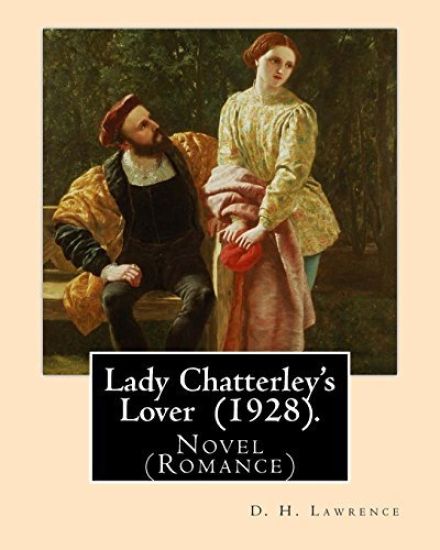
Lady Chatterley's Lover (1928). By: D. H. Lawrence: Novel (Romance)

Lady Chatterley's Lover (1928). By: D. H. Lawrence: Novel (Romance)

D. H. Lawrence

Createspace Independent Publishing Platform
2017
nidottu
Lady Chatterley's Lover is a novel by D. H. Lawrence, first published privately in 1928 in Italy, and in 1929 in France and Australia.An unexpurgated edition was not published openly in the United Kingdom until 1960, when it was the subject of a watershed obscenity trial against the publisher Penguin Books. Penguin won the case, and quickly sold 3 million copies. 1] The book soon became notorious for its story of the physical (and emotional) relationship between a working class man and an upper class woman, its explicit descriptions of sex, and its use of then-unprintable words. The story is said to have originated from events in Lawrence's own unhappy domestic life, and he took inspiration for the settings of the book from Eastwood, Nottinghamshire, where he grew up. According to some critics, the fling of Lady Ottoline Morrell with "Tiger", a young stonemason who came to carve plinths for her garden statues, also influenced the story. Lawrence at one time considered calling the novel Tenderness and made significant alterations to the text and story in the process of its composition. It has been published in three versions.The story concerns a young married woman, the former Constance Reid (Lady Chatterley), whose upper class husband, Sir Clifford Chatterley, described as a handsome, well-built man, has been paralysed from the waist down due to a Great War injury. In addition to Clifford's physical limitations, his emotional neglect of Constance forces distance between the couple. Her sexual frustration leads her into an affair with the gamekeeper, Oliver Mellors, the novel's title character. The class difference between the couple highlights a major motif of the novel which is the unfair dominance of intellectuals over the working class. The novel is about Constance's realization that she cannot live with the mind alone; she must also be alive physically. This realization stems from a heightened sexual experience Constance has only felt with Mellors, suggesting that love can only happen with the element of the body, not the mind. David Herbert Richards "D. H." Lawrence (11 September 1885 - 2 March 1930) was an English novelist, poet, playwright, essayist, literary critic and painter. His collected works represent, among other things, an extended reflection upon the dehumanising effects of modernity and industrialisation. Some of the issues Lawrence explores are emotional health, vitality, spontaneity and instinct. Lawrence's opinions earned him many enemies and he endured official persecution, censorship, and misrepresentation of his creative work throughout the second half of his life, much of which he spent in a voluntary exile which he called his "savage pilgrimage".At the time of his death, his public reputation was that of a pornographer who had wasted his considerable talents. E. M. Forster, in an obituary notice, challenged this widely held view, describing him as, "The greatest imaginative novelist of our generation." Later, the Cambridge critic F. R. Leavis championed both his artistic integrity and his moral seriousness, placing much of Lawrence's fiction within the canonical "great tradition" of the English novel.
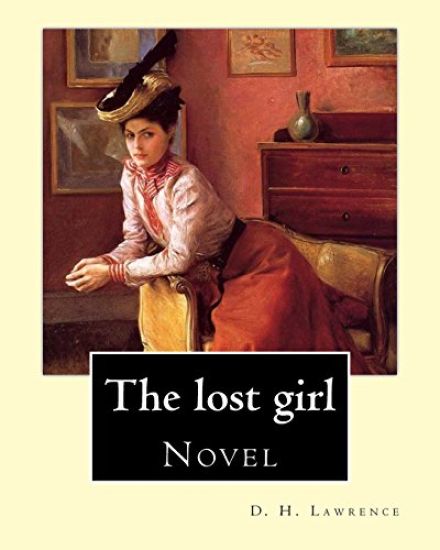
The lost girl By: D. H. Lawrence: Novel

The lost girl By: D. H. Lawrence: Novel

D. H. Lawrence

Createspace Independent Publishing Platform
2017
nidottu
David Herbert Richards "D. H." Lawrence (11 September 1885 - 2 March 1930) was an English novelist, poet, playwright, essayist, literary critic and painter. His collected works represent, among other things, an extended reflection upon the dehumanising effects of modernity and industrialisation. Some of the issues Lawrence explores are emotional health, vitality, spontaneity and instinct. Lawrence's opinions earned him many enemies and he endured official persecution, censorship, and misrepresentation of his creative work throughout the second half of his life, much of which he spent in a voluntary exile which he called his "savage pilgrimage."At the time of his death, his public reputation was that of a pornographer who had wasted his considerable talents. E. M. Forster, in an obituary notice, challenged this widely held view, describing him as, "The greatest imaginative novelist of our generation." Later, the Cambridge critic F. R. Leavis championed both his artistic integrity and his moral seriousness, placing much of Lawrence's fiction within the canonical "great tradition" of the English novel. Early life: The 4th child of Arthur John Lawrence, a barely literate miner at Brinsley Colliery, and Lydia (n e Beardsall), a former pupil teacher who, owing to her family's financial difficulties, had to do manual work in a lace factory, Lawrence spent his formative years in the coal mining town of Eastwood, Nottinghamshire. The house in which he was born, in Eastwood, 8a Victoria Street, is now the D. H. Lawrence Birthplace Museum. His working-class background and the tensions between his parents provided the raw material for a number of his early works. Lawrence roamed out from an early age in the patches of open, hilly country and remaining fragments of Sherwood Forest in Felley woods to the north of Eastwood, beginning a lifelong appreciation of the natural world, and he often wrote about "the country of my heart" 7] as a setting for much of his fiction. The young Lawrence attended Beauvale Board School (now renamed Greasley Beauvale D. H. Lawrence Primary School in his honour) from 1891 until 1898, becoming the first local pupil to win a County Council scholarship to Nottingham High School in nearby Nottingham. He left in 1901, working for three months as a junior clerk at Haywood's surgical appliances factory, but a severe bout of pneumonia ended this career. During his convalescence he often visited Hagg's Farm, the home of the Chambers family, and began a friendship with Jessie Chambers. An important aspect of this relationship with Chambers and other adolescent acquaintances was a shared love of books, an interest that lasted throughout Lawrence's life. In the years 1902 to 1906 Lawrence served as a pupil teacher at the British School, Eastwood. He went on to become a full-time student and received a teaching certificate from University College, Nottingham, in 1908. During these early years he was working on his first poems, some short stories, and a draft of a novel, Laetitia, which was eventually to become The White Peacock. At the end of 1907 he won a short story competition in the Nottingham Guardian, the first time that he had gained any wider recognition for his literary talents.
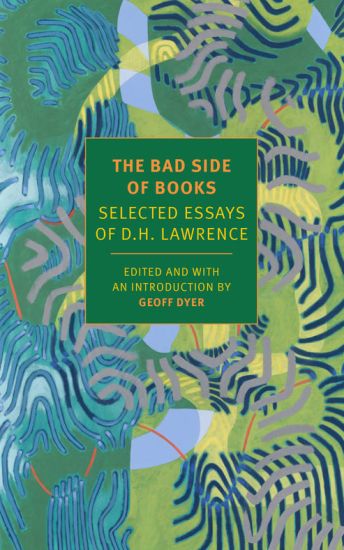
The Bad Side of Books: Selected Essays of D.H. Lawrence

The Bad Side of Books: Selected Essays of D.H. Lawrence

D. H. Lawrence

New York Review of Books
2019
nidottu
You could describe D.H. Lawrence as the great multi-instrumentalist among the great writers of the twentieth century. He was a brilliant, endlessly controversial novelist who transformed, for better and for worse, the way we write about sex and emotions; he was a wonderful poet; he was an essayist of burning curiosity, expansive lyricism, odd humor, and radical intelligence, equaled, perhaps, only by Virginia Woolf. Here Geoff Dyer, one of the finest essayists of our day, draws on the whole range of Lawrence's published essays to reintroduce him to a new generation of readers for whom the essay has become an important genre. We get Lawrence the book reviewer, writing about Death in Venice and welcoming Ernest Hemingway; Lawrence the travel writer, in Mexico and New Mexico and Italy; Lawrence the memoirist, depicting his strange sometime-friend Maurice Magnus; Lawrence the restless inquirer into the possibilities of the novel, writing about the novel and morality and addressing the question of why the novel matters; and, finally, the Lawrence who meditates on birdsong or the death of a porcupine in the Rocky Mountains. Dyer's selection of Lawrence's essays is a wonderful introduction to a fundamental, dazzling writer.
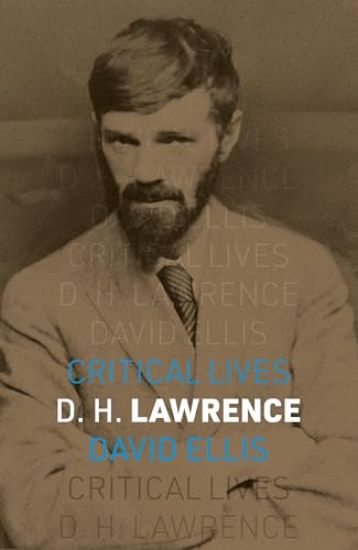
D. H. Lawrence

D. H. Lawrence

David Ellis

REAKTION BOOKS
2025
nidottu
This book offers a concise yet comprehensive look at D. H. Lawrence’s turbulent life and writing career. Tracing his journey from a mining village outside Nottingham to his death at 44 years old in the South of France, it provides fresh perspectives on his major works. David Ellis covers all essential aspects of Lawrence’s life and work and presents a balanced view, steering skilfully between admirers and critics. Written in an accessible style, this book is ideal for both students new to Lawrence and readers looking to revisit one of Britain’s greatest early 20th-century writers.
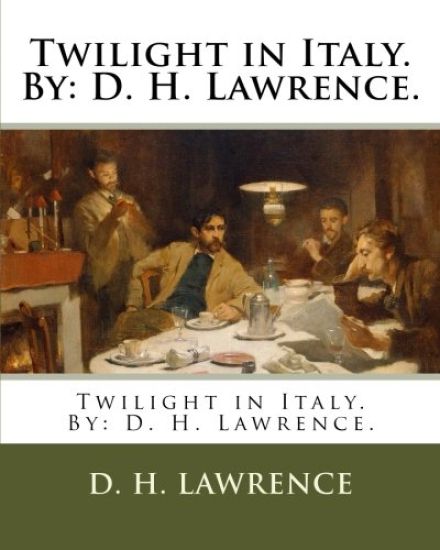
Twilight in Italy. by: D. H. Lawrence.

Twilight in Italy. by: D. H. Lawrence.

D. H. Lawrence

Createspace Independent Publishing Platform
2017
nidottu
David Herbert Lawrence (11 September 1885 - 2 March 1930) was an English novelist, poet, playwright, essayist, literary critic and painter. His collected works represent, among other things, an extended reflection upon the dehumanising effects of modernity and industrialisation. Some of the issues Lawrence explores are sexuality, emotional health, vitality, spontaneity, and instinct. Lawrence's opinions earned him many enemies and he endured official persecution, censorship, and misrepresentation of his creative work throughout the second half of his life, much of which he spent in a voluntary exile he called his "savage pilgrimage". At the time of his death, his public reputation was that of a pornographer who had wasted his considerable talents. E. M. Forster, in an obituary notice, challenged this widely held view, describing him as "the greatest imaginative novelist of our generation." Later, Cambridge critic F. R. Leavis championed both his artistic integrity and his moral seriousness, placing much of Lawrence's fiction within the canonical "great tradition" of the English novel.
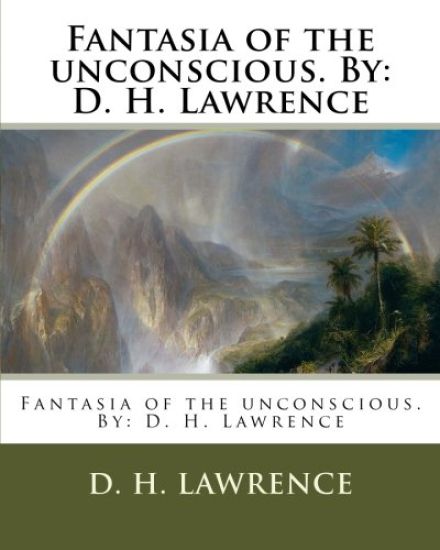
Fantasia of the Unconscious. by: D. H. Lawrence

Fantasia of the Unconscious. by: D. H. Lawrence

D. H. Lawrence

Createspace Independent Publishing Platform
2017
nidottu
David Herbert Lawrence (11 September 1885 - 2 March 1930) was an English novelist, poet, playwright, essayist, literary critic and painter. His collected works represent, among other things, an extended reflection upon the dehumanising effects of modernity and industrialisation. Some of the issues Lawrence explores are sexuality, emotional health, vitality, spontaneity, and instinct. Lawrence's opinions earned him many enemies and he endured official persecution, censorship, and misrepresentation of his creative work throughout the second half of his life, much of which he spent in a voluntary exile he called his "savage pilgrimage". At the time of his death, his public reputation was that of a pornographer who had wasted his considerable talents. E. M. Forster, in an obituary notice, challenged this widely held view, describing him as "the greatest imaginative novelist of our generation." Later, Cambridge critic F. R. Leavis championed both his artistic integrity and his moral seriousness, placing much of Lawrence's fiction within the canonical "great tradition" of the English novel.
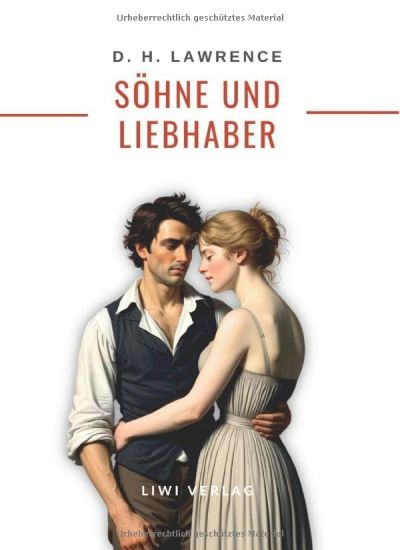
D. H. Lawrence

D. H. Lawrence

D H Lawrence

Liwi Literatur- Und Wissenschaftsverlag
2025
pokkari
In "S hne und Liebhaber" portr tiert D. H. Lawrence den jungen K nstler Paul Morel, welcher in einem emotionalen Gef ngnis gefangen ist - gefesselt von der berw ltigenden, doch ungesunden Liebe seiner Mutter. Diese unheilvolle Bindung vergiftet all seine sp teren Beziehungen und f hrt zu einem zerm rbenden Wechselspiel aus Anziehung und Absto ung, ein Konflikt, wie ihn Shakespeare mit "I love and hate her" (Cymbeline, III, 5) auf den Punkt bringt. Lawrences schonungslose Offenlegung menschlicher Abh ngigkeiten verleiht dem Roman eine zeitlose Intensit t. Obwohl das Werk bei seinem Erscheinen als anst ig kritisiert wurde, gilt es heute als eines der bedeutendsten literarischen Werke des 20. Jahrhunderts - die Modern Library platzierte es 1999 auf Rang 9 der besten englischsprachigen Romane. Erstmals erschienen 1913. Hier in der vielgelesenen bersetzung von Franz Franzius. Frisch aufgelegt als Taschenbuch in gut lesbarer Schriftgr e. D. H. Lawrence. S hne und Liebhaber. Beide Teile in einem Band. bersetzt von Franz Franzius. Erstdruck des Originals: Sons and Lovers, Gerald Duckworth and Company, London 1913. Durchgesehener Neusatz, der Text dieser Ausgabe folgt dem Erstdruck der bersetzung von Franz Franzius: Insel Verlag, Leipzig 1925. Neuausgabe, G ttingen 2025. LIWI Literatur- und Wissenschaftsverlag
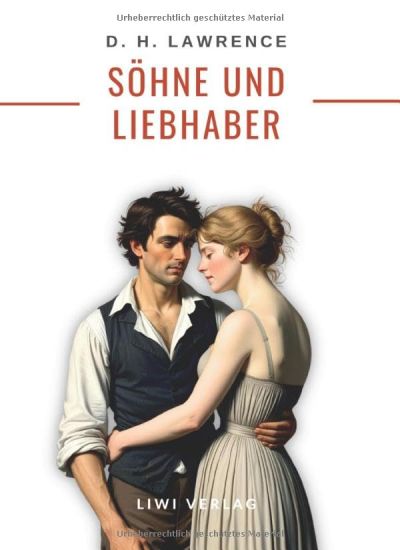
D. H. Lawrence

D. H. Lawrence

D H Lawrence

Liwi Literatur- Und Wissenschaftsverlag
2025
sidottu
In "S hne und Liebhaber" portr tiert D. H. Lawrence den jungen K nstler Paul Morel, welcher in einem emotionalen Gef ngnis gefangen ist - gefesselt von der berw ltigenden, doch ungesunden Liebe seiner Mutter. Diese unheilvolle Bindung vergiftet all seine sp teren Beziehungen und f hrt zu einem zerm rbenden Wechselspiel aus Anziehung und Absto ung, ein Konflikt, wie ihn Shakespeare mit "I love and hate her" (Cymbeline, III, 5) auf den Punkt bringt. Lawrences schonungslose Offenlegung menschlicher Abh ngigkeiten verleiht dem Roman eine zeitlose Intensit t. Obwohl das Werk bei seinem Erscheinen als anst ig kritisiert wurde, gilt es heute als eines der bedeutendsten literarischen Werke des 20. Jahrhunderts - die Modern Library platzierte es 1999 auf Rang 9 der besten englischsprachigen Romane. Erstmals erschienen 1913. Hier in der vielgelesenen bersetzung von Franz Franzius. Frisch aufgelegt als gebundene Ausgabe in gut lesbarer Schriftgr e. D. H. Lawrence. S hne und Liebhaber. Beide Teile in einem Band. bersetzt von Franz Franzius. Erstdruck des Originals: Sons and Lovers, Gerald Duckworth and Company, London 1913. Durchgesehener Neusatz, der Text dieser Ausgabe folgt dem Erstdruck der bersetzung von Franz Franzius: Insel Verlag, Leipzig 1925. Neuausgabe, G ttingen 2025. LIWI Literatur- und Wissenschaftsverlag
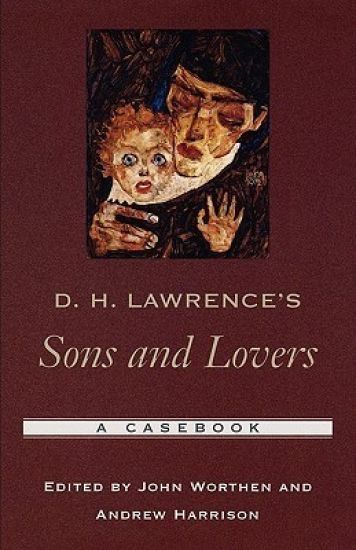
D. H. Lawrence's Sons and Lovers

D. H. Lawrence's Sons and Lovers

Oxford University Press Inc
2005
sidottu
This casebook on D. H. Lawrence's Sons and Lovers is the first to address itself to the full text of the novel, first published in 1992. The introduction discusses the novel's composition and the range of approaches adopted by critics since its original publication in 1913. The nine essays that follow demonstrate the full extent of the contemporary critical response, from studies of narrative technique to psychoanalytic and gender-based analysis, and set the critical agenda for its study in the twenty-first century. This collection also reproduces excerpts from Lawrence's letters relating to Sons and Lovers, along with a full transcription of Alfred Booth Kuttner's 1916 Freudian analysis of the work.
D. H. Lawrence's Sons and Lovers

D. H. Lawrence's Sons and Lovers

Oxford University Press Inc
2005
nidottu
This casebook on D. H. Lawrence's Sons and Lovers is the first to address itself to the full text of the novel, first published in 1992. The introduction discusses the novel's composition and the range of approaches adopted by critics since its original publication in 1913. The nine essays that follow demonstrate the full extent of the contemporary critical response, from studies of narrative technique to psychoanalytic and gender-based analysis, and set the critical agenda for its study in the twenty-first century. This collection also reproduces excerpts from Lawrence's letters relating to Sons and Lovers, along with a full transcription of Alfred Booth Kuttner's 1916 Freudian analysis of the work.
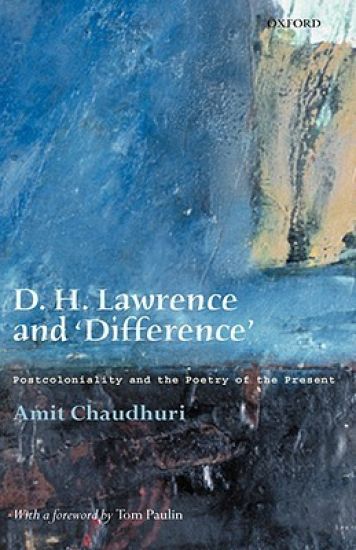
D. H. Lawrence and 'Difference'

D. H. Lawrence and 'Difference'

Amit Chaudhuri; Tom Paulin

Oxford University Press
2003
sidottu
This important study from the prizewinning novelist and critic Amit Chaudhuri explores D. H. Lawrence's position as a 'foreigner' in the English canon. Focusing on the poetry, Chaudhuri examines how Lawrence's works, and Lawrence himself, have been read, and misread, in terms of their 'difference.' In contrast to the Leavisite project of placing Lawrence in the English 'great tradition,' this study demonstrates how Lawrence's writing brings into question the notion of 'Englishness' itself. It also shows how Lawrence's aesthetic sets him apart radically from both his Modernist contemporaries and his Romantic forbears. The starting-point of this enquiry into Lawrentian 'difference' is, for the purposes of this study, the poetry, its stylistic features, the ways in which it has been read, and, importantly, involves a search for a critical language by which it, and its 'difference', might be addressed. In doing so, it takes recourse to Jacques Derrida's notions of 'grammatalogy' and 'ecriture', and Michel Foucault's notion of 'discourse'. Referring to Lawrence's travel writings about Mexico and Italy, his essays on European and Etruscan art, on Mexican marketplaces and rituals, and American literature, and especially to his poetic manifesto, 'The Poetry of the Present,' this book shows how Lawrence was working towards both a theory and a practice that critique the post-Enlightenment unitary European self. Chaudhuri also, radically, allows his own post-colonial identity to inform his reading of the poetry, and to let the poems enter into a conversation with that identity. This is the first time that Lawrence's poetry has been discussed in this way, in the light of post-colonial and post-structuralist theory; it is also the first time a leading post-colonial writer of his generation has taken as his subject a major canonical English writer, and, through him, remapped the English canon as a site of 'difference.'
D. H. Lawrence and the Art of Translation
This study of D.H.Lawrence as a translator is concerned particularly with the European Lawrence; a writer in touch with and responding vividly to works of European literature which struck a chord in his own creative sensibility. German, French, Spanish and above all Italian he knew well; Russian he failed to learn, despite more than one attempt and in his translations from Russian he always collaborated with S.S. Koteliansky, the Russian émigré. The author is not concerned with the theory of translation as such, but shows how an engagement with the style and sensibility of European authors in the translation process set up a kind of dialectic with far-reaching implications, so that translation came to mean for Lawrence a process of interpretation and evaluation in which his own fiction played an active part. The act of translation not only stimulated Lawrence to define his position in relation to other European cultures, especially the Italian and the Russian, it also served as an important focus of the philosophy of Love and Law set out in his Study of Thomas Hardy. In addition, a consideration of Lawrence's translations of Verga throws new light on the function of dialect in Lawrence's own work. Very little has been written on Lawrence's work as a translator, partly, no doubt, because he was himself anxious that his translating activities should not attract too much attention. It is clear from his own comments, however, that when he undertook a translation he was responding to a specific cultural or linguistic challenge and saw the translated text as meeting some spiritual need not only in terms of his own creative work, but also in terms of the imaginative life of his civilisation.
D. H. Lawrence in the Modern World
60 years after Lawrence's death, the nature of his achievement is still being debated. His vision has aroused passionate interest in many countries beyond his own. As a writer in the 20th century and as one with international standing, this book presents Lawrence "in the modern world".
D. H. Lawrence in Italy and England
The critical essays in this volume, by leading authorities on D. H. Lawrence, focus on the importance of Italy and England in Lawrence's work and life. They span the years of his creative maturity from 1915 - which witnessed the important visit to Cambridge, the revisions to Twilight in Italy and the banning of The Rainbow - to 1926, the year in which he began research for the pieces that became Etruscan Places .
D. H. Lawrence and Psychoanalysis
This book opens out a wholly new field of enquiry within a familiar subject: it offers a detailed – yet eminently readable – historical investigation, of a kind never yet undertaken, of the impact of psychoanalysis (at a crucial moment of its history) on the thinking and writing of D.H. Lawrence. It considers the impact on his writing, through his relationship with Frieda Weekley, of the maverick Austrian analyst Otto Gross; it situates the great works of 1911-20 in relation to the controversial issues at stake in the Freud-Jung quarrel, about which his good friend, the English psychoanalyst David Eder, kept him informed; and it explores his sympathy with the maverick American analyst Trigant Burrow. It is a study to interest a literary audience by its close reading of Lawrence’s texts, and a psychoanalytic audience by its detailed consideration of the contribution made to contemporary debate by three comparatively neglected analytic thinkers.
D. H. Lawrence, Ecofeminism and Nature

D. H. Lawrence, Ecofeminism and Nature

Terry Gifford

TAYLOR FRANCIS LTD
2022
sidottu
Shortlisted for the ASLE-UKI Prize for Best Academic MonographThis is the first ecocritical book on the works of D. H. Lawrence and also the first to consider the links between nature and gender in the poetry and the novels. In his search for a balanced relationship between male and female characters, what role does nature play in the challenges Lawrence offers his readers? How far are the anxieties of his characters in negotiating relationships that might threaten their sense of self derived from the same source as their anxieties about engaging with the Other in nature? Indeed, might Lawrence’s metaphors drawn from nature actually be the causes of human actions in The Rainbow, for example? The originality of Lawrence’s poetic and narrative strategies for challenging social attitudes towards both nature and gender can be revealed by new approaches offered by ecocritical theory and ecofeminist readings of his books. This book explores ecocritical notions to frame its ecofeminist readings, from the difference between the ‘Other’ and ‘otherness’ in The White Peacock and Lady Chatterley’s Lover, ‘anotherness’ in the poetry of Birds, Beasts and Flowers, psychogeography in Sea and Sardinia, emergent ecofeminism in Sons and Lovers, land and gender in The Boy in the Bush, gender dialogics in Kangaroo, human animality in Women in Love, trees as tests in Aaron’s Rod, to ‘radical animism’ in The Plumed Serpent. Finally, three late tales provide a reassessment of ecofeminist insights into Lawrence’s work for readers in the present context of the Anthropocene.