
Kirjahaku
Etsi kirjoja tekijän nimen, kirjan nimen tai ISBN:n perusteella.
1000 tulosta hakusanalla D.P. Clarence

Step into the shadows with Ethereal Malignance, the debut supernatural thriller from Australian author D.P. Vaughan.Meet John Wedgewood, a misunderstood loner, who's always been on the fringes of society. His life takes an unexpected turn when his only friend reveals a chilling secret: their city is overrun by 'ethereal beings'-terrifying entities that possess bodies to blend in unnoticed.Faced with a life-altering choice, John can either continue his life of quiet desperation or risk everything to save a stranger from the clutches of these ethereal beings. His decision propels him into a relentless chase through the city's hostile streets under the cover of darkness.In a city that transforms into a hunting ground at sundown, John, who has nothing-no car, no resources, no fighting skills-must rely solely on his wits and courage. With the ethereal beings always just a few steps behind.Ethereal Malignance is a gripping tale of resilience, self-discovery, and the power of the human spirit in the face of otherworldly terror. If you're a fan of gritty, grounded thrillers set in an urban night-time environment, where ordinary people confront extraordinary horrors, this book is for you.

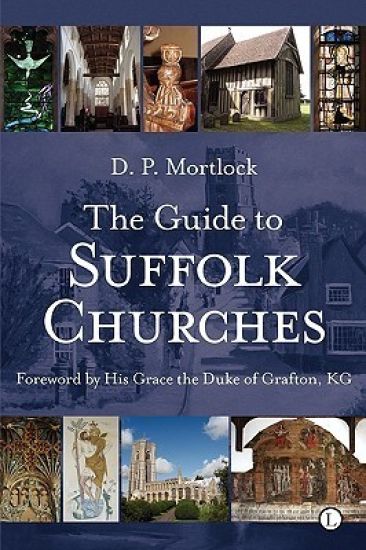
Suffolk is a county renowned for the beauty of its many parish churches, but for the average visitor the physical language in which they speak, that of stained glass, engraved fonts, and hammer-beamed roofs, is bewildering. Now available in an updated, single volume, the Guide to Suffolk Churches provides a way into this fascinating world, its architecture and history. From bells to pulpits to centuries-old graffiti found in window sills, each church unfolds from sealed tome to open book in Mortlockís hands. Accompanying the entries there is an extensive glossary/index and two useful appendices. From carvings of woodwoses to weeping chancels, the meaning of idiosyncracies and uniformities alike across the county are laid out in clear, engaging prose. New photographs, line drawings, and a detailed map ensure that neither the greatest of artefacts nor the smallest of churches can be accidentally overlooked. Written in a voice as knowledgeable as it is enthusiastic about Suffolk and its churches, the guide is incomparable in both the thoroughness and charm with which it unlocks more than one thousand years of history across the countyís hundreds of churches. There is no visit to any parish church in Suffolk, no matter how well informed the visitor, that would not be more enjoyable and informative for having Mortlock along.

A vivid portrait of 18th century life, through the life and times of Thomas Coke, Earl of Leicester.


Several individuals noted the potentially important civilian uses of atomic energy shortly after the bombings of Hiroshima and Nagasaki in 1945. That year J. Robert Oppenheimer told a national radio audience that "in the near future" it would be possible to generate profitable electric power from "controlled nuclear chain reaction units" (reactors). It was suggested that, after fIfteen to twenty-five years of development, mature nuclear technology could provide virtually inexhaustible, cheap energy given the abundance of nuclear fuel. Admiral Lewis Strauss, the Chairman of the Atomic Energy Commission, stated that atomic power would generate electricity "too cheap to meter" (A statement that, according to Brookhaven National Laboratories' physicist Herbert Kouts, immediately "caused consternation among his technical advisors" [Kouts, 1983: 3)). For a brief period it was thought that airplanes would fly using atomic power, and homes would install small nuclear reactors for heat and hot water. 1950s and early 1960s a small number of prototype nuclear In the reactors came on line in the United States. The first power plant protoype reactor began operation in Shippingport, Pennsylvania in 1957. It was followed by the Dresden 1 unit near Chicago in 1959, the Yankee plant in Rowe, Massachusetts (1960), and the Indian Point (New York) and Big Rock Point (Michigan) plants in 1%2. These five plants had a combined 800 megawatts (800 MW), or less than one generating capacity ofless than percent of the total American electricity generating capacity in 1962.

In 1963 an initial attempt was made in my The Psychology of Meaningful Verbal Learning to present a cognitive theory of meaningful as opposed to rote verbal learning. It was based on the proposition that the acquisition and retention of knowl edge (particularly of verbal knowledge as, for example, in school, or subject-matter learning) is the product of an active, integrative, interactional process between instructional material (subject matter) and relevant ideas in the leamer's cognitive structure to which the new ideas are relatable in particular ways. This book is a full-scale revision of my 1963 monograph, The Psychology of Meaningful Verbal Learning, in the sense that it addresses the major aforementioned and hitherto unmet goals by providing for an expansion, clarification, differentiation, and sharper focusing of the principal psychological variables and processes involved in meaningful learning and retention, i.e., for their interrelationships and interactions leading to the generation of new meanings in the individual learner. The preparation of this new monograph was largely necessitated by the virtual collapse of the neobe havioristic theoretical orientation to learning during the previous forty years; and by the meteoric rise in the seventies and beyond of constructivist approaches to learning theory.
Identity and Ritual in a Japanese Diving Village
D.P. Martinez
University of Hawai'i Press
2004
sidottu
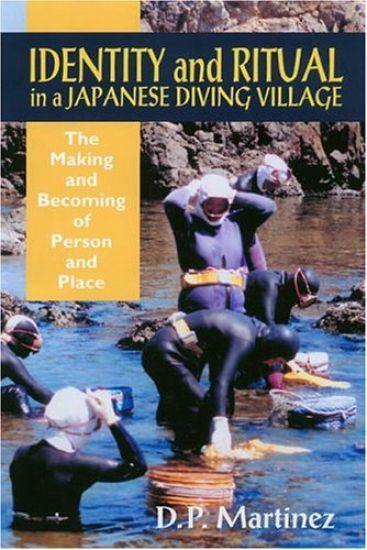
Through her detailed description of a particular place (Kazaki-cho) at a particular moment in time (the 1980s), D. P. Martinez addresses a variety of issues currently at the fore in the anthropology of Japan: the construction of identity, both for a place and its people; the importance of ritual in a country that describes itself as nonreligious; and the relationship between men and women in a society where gender divisions are still very much in place. Kuzaki is, for the anthropologist, both a microcosm of modernity and an attempt to bring the past into the present. But it must also be understood as a place all of its own. In the 1980s it was one of the few villages where female divers (ama) still collected abalone and other shellfish and where some of its inhabitants continued to make a living as fishermen. Kuzaki was also a kambe, or sacred guild, of Ise Shrine, the most important Shinto shrine in modern Japan - home to Amaterasu, the sun goddess. Kuzaki's rituals affirmed a national identity in an era when attitudes to modernity and Japaneseness were being challenged by globalization. Martinez enhances her fascinating ethnographic description of a single diving village with a critique of the way in which the anthropology of Japan has developed. The result is a sophisticated investigation by a senior scholar of Japanese studies that, while firmly grounded in empirical data, calls on anthropological theory to construct another means of understanding Japan - both as a society in which the collective is important and as a place where individual ambitions and desires can be-expressed.
Identity and Ritual in a Japanese Diving Village
D.P. Martinez
University of Hawai'i Press
2004
nidottu
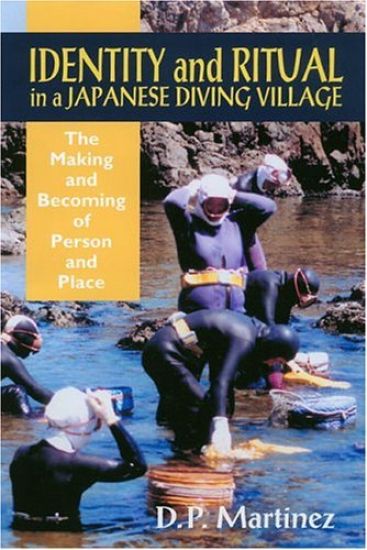
Through her detailed description of a particular place (Kuzakicho) at a particular moment in time (the 1980s), D. P. Martinez addresses a variety of issues currently at the fore in the anthropology of Japan: the construction of identity, both for a place and its people; the importance of ritual in a country that describes itself as nonreligious; and the relationship between men and women in a society where gender divisions are still very much in place. Kuzaki is, for the anthropologist, both a microcosm of modernity and an attempt to bring the past into the present. But it must also be understood as a place all of its own. In the 1980s it was one of the few villages where female divers (ama) still collected abalone and other shellfish and where some of its inhabitants continued to make a living as fishermen. Kuzaki was also a kambe, or sacred guild, of Ise Shrine, the most important Shinto shrine in modern Japan - home to Amaterasu, the sun goddess. Kuzaki's rituals affirmed a national identity in an era when attitudes to modernity and Japaneseness were being challenged by globalization. Martinez enhances her fascinating ethnographic description of a single diving village with a critique of the way in which the anthropology of Japan has developed. The result is a sophisticated investigation by a senior scholar of Japanese studies that, while firmly grounded in empirical data, calls on anthropological theory to construct another means of understanding Japan - both as a society in which the collective is important and as a place where individual ambitions and desires can be expressed.

This volume includes papers presented at a meeting of the Basic Science Section held in Manchester, UK in December 1991.