Kirjojen hintavertailu. Mukana 12 016 292 kirjaa ja 12 kauppaa.

Kirjahaku

Etsi kirjoja tekijän nimen, kirjan nimen tai ISBN:n perusteella.

1000 tulosta hakusanalla Daniel B. Levin

Life Is a Road, Ride It Hard!

Life Is a Road, Ride It Hard!

Daniel B Meyer

iUniverse
2005
sidottu
'That would have been unnerving enough, but the shape of the thing convinced me it moved with a purpose. What I saw, just for a moment, was a dragon. Born of lightning and fire, it flew into the air, writhed in the pleasure of its freedom, and screamed in ecstasy as it flew toward me." 10,158 miles. Incredible thunderstorms, raging forest fires, dense smoke, hail, sleet, cops, a half-a-dozen paramedics, bears, and even a dragon or two.you know.the usual stuff. Ride the Alaskan Highway all the way there and back again. It's 4365 miles each way, Dallas to Fairbanks.
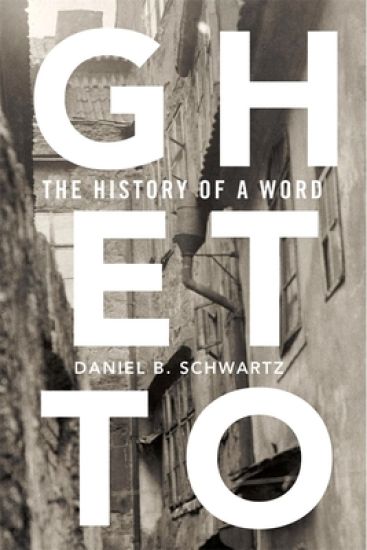
Ghetto

Ghetto

Daniel B. Schwartz

Harvard University Press
2019
sidottu
Just as European Jews were being emancipated and ghettos in their original form—compulsory, enclosed spaces designed to segregate—were being dismantled, use of the word ghetto surged in Europe and spread around the globe. Tracing the curious path of this loaded word from its first use in sixteenth-century Venice to the present turns out to be more than an adventure in linguistics.Few words are as ideologically charged as ghetto. Its early uses centered on two cities: Venice, where it referred to the segregation of the Jews in 1516, and Rome, where the ghetto survived until the fall of the Papal States in 1870, long after it had ceased to exist elsewhere.Ghetto: The History of a Word offers a fascinating account of the changing nuances of this slippery term, from its coinage to the present day. It details how the ghetto emerged as an ambivalent metaphor for “premodern” Judaism in the nineteenth century and how it was later revived to refer to everything from densely populated Jewish immigrant enclaves in modern cities to the hypersegregated holding pens of Nazi-occupied Eastern Europe. We see how this ever-evolving word traveled across the Atlantic Ocean, settled into New York’s Lower East Side and Chicago’s Near West Side, then came to be more closely associated with African Americans than with Jews.Chronicling this sinuous transatlantic odyssey, Daniel B. Schwartz reveals how the history of ghettos is tied up with the struggle and argument over the meaning of a word. Paradoxically, the term ghetto came to loom larger in discourse about Jews when Jews were no longer required to live in legal ghettos. At a time when the Jewish associations have been largely eclipsed, Ghetto retrieves the history of a disturbingly resilient word.
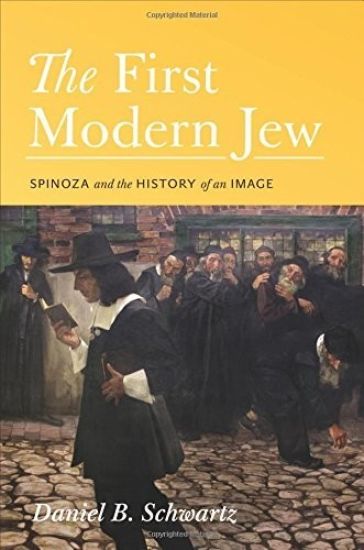
The First Modern Jew

The First Modern Jew

Daniel B. Schwartz

Princeton University Press
2012
sidottu
Pioneering biblical critic, theorist of democracy, and legendary conflater of God and nature, Jewish philosopher Baruch Spinoza (1632-1677) was excommunicated by the Sephardic Jews of Amsterdam in 1656 for his "horrible heresies" and "monstrous deeds." Yet, over the past three centuries, Spinoza's rupture with traditional Jewish beliefs and practices has elevated him to a prominent place in genealogies of Jewish modernity. The First Modern Jew provides a riveting look at how Spinoza went from being one of Judaism's most notorious outcasts to one of its most celebrated, if still highly controversial, cultural icons, and a powerful and protean symbol of the first modern secular Jew. Ranging from Amsterdam to Palestine and back again to Europe, the book chronicles Spinoza's posthumous odyssey from marginalized heretic to hero, the exemplar of a whole host of Jewish identities, including cosmopolitan, nationalist, reformist, and rejectionist. Daniel Schwartz shows that in fashioning Spinoza into "the first modern Jew," generations of Jewish intellectuals--German liberals, East European maskilim, secular Zionists, and Yiddishists--have projected their own dilemmas of identity onto him, reshaping the Amsterdam thinker in their own image. The many afterlives of Spinoza are a kind of looking glass into the struggles of Jewish writers over where to draw the boundaries of Jewishness and whether a secular Jewish identity is indeed possible. Cumulatively, these afterlives offer a kaleidoscopic view of modern Jewish cultureand a vivid history of an obsession with Spinoza that continues to this day.
Beyond the Beat

Beyond the Beat

Daniel B. Cornfield

PRINCETON UNIVERSITY PRESS
2015
sidottu
At a time when the bulwarks of the music industry are collapsing, what does it mean to be a successful musician and artist? How might contemporary musicians sustain their artistic communities? Based on interviews with over seventy-five popular-music professionals in Nashville, Beyond the Beat looks at artist activists--those visionaries who create inclusive artist communities in today's individualistic and entrepreneurial art world. Using Nashville as a model, Daniel Cornfield develops a theory of artist activism--the ways that artist peers strengthen and build diverse artist communities. Cornfield discusses how genre-diversifying artist activists have arisen throughout the late twentieth-century musician migration to Nashville, a city that boasts the highest concentration of music jobs in the United States. Music City is now home to diverse recording artists--including Jack White, El Movimiento, the Black Keys, and Paramore. Cornfield identifies three types of artist activists: the artist-producer who produces and distributes his or her own and others' work while mentoring early-career artists, the social entrepreneur who maintains social spaces for artist networking, and arts trade union reformers who are revamping collective bargaining and union functions. Throughout, Cornfield examines enterprising musicians both known and less recognized. He links individual and collective actions taken by artist activists to their orientations toward success, audience, and risk and to their original inspirations for embarking on music careers. Beyond the Beat offers a new model of artistic success based on innovating creative institutions to benefit the society at large.
The First Modern Jew

The First Modern Jew

Daniel B. Schwartz

Princeton University Press
2013
pokkari
Pioneering biblical critic, theorist of democracy, and legendary conflater of God and nature, Jewish philosopher Baruch Spinoza (1632-1677) was excommunicated by the Sephardic Jews of Amsterdam in 1656 for his "horrible heresies" and "monstrous deeds." Yet, over the past three centuries, Spinoza's rupture with traditional Jewish beliefs and practices has elevated him to a prominent place in genealogies of Jewish modernity. The First Modern Jew provides a riveting look at how Spinoza went from being one of Judaism's most notorious outcasts to one of its most celebrated, if still highly controversial, cultural icons, and a powerful and protean symbol of the first modern secular Jew. Ranging from Amsterdam to Palestine and back again to Europe, the book chronicles Spinoza's posthumous odyssey from marginalized heretic to hero, the exemplar of a whole host of Jewish identities, including cosmopolitan, nationalist, reformist, and rejectionist. Daniel Schwartz shows that in fashioning Spinoza into "the first modern Jew," generations of Jewish intellectuals--German liberals, East European maskilim, secular Zionists, and Yiddishists--have projected their own dilemmas of identity onto him, reshaping the Amsterdam thinker in their own image. The many afterlives of Spinoza are a kind of looking glass into the struggles of Jewish writers over where to draw the boundaries of Jewishness and whether a secular Jewish identity is indeed possible. Cumulatively, these afterlives offer a kaleidoscopic view of modern Jewish cultureand a vivid history of an obsession with Spinoza that continues to this day.

Beyond the Beat

Beyond the Beat

Daniel B. Cornfield

Princeton University Press
2018
pokkari
At a time when the bulwarks of the music industry are collapsing, what does it mean to be a successful musician and artist? How might contemporary musicians sustain their artistic communities? Based on interviews with over seventy-five popular-music professionals in Nashville, Beyond the Beat looks at artist activists—those visionaries who create inclusive artist communities in today's individualistic and entrepreneurial art world. Using Nashville as a model, Daniel Cornfield develops a theory of artist activism—the ways that artist peers strengthen and build diverse artist communities.Cornfield discusses how genre-diversifying artist activists have arisen throughout the late twentieth-century musician migration to Nashville, a city that boasts the highest concentration of music jobs in the United States. Music City is now home to diverse recording artists—including Jack White, El Movimiento, the Black Keys, and Paramore. Cornfield identifies three types of artist activists: the artist-producer who produces and distributes his or her own and others' work while mentoring early-career artists, the social entrepreneur who maintains social spaces for artist networking, and arts trade union reformers who are revamping collective bargaining and union functions. Throughout, Cornfield examines enterprising musicians both known and less recognized. He links individual and collective actions taken by artist activists to their orientations toward success, audience, and risk and to their original inspirations for embarking on music careers.Beyond the Beat offers a new model of artistic success based on innovating creative institutions to benefit the society at large.
Henri Mercier and the American Civil War

Henri Mercier and the American Civil War

Daniel B. Carroll

Princeton University Press
2015
pokkari
As French ambassador to the United States from July 1860 through December 1863, Henri Mercier was in an excellent position to observe, report, and influence the events of those crucial years. Through a description of Mercier's diplomacy, Professor Carroll gives a new account of the Civil War--the tenacious nationalism of the Lincoln-Seward government, the French economic distress caused by the loss of the cotton trade, the continental perspective on the War, the men and society of Washington and Richmond. He shows, in particular, that while maintaining friendly relations in Washington, Mercier seriously considered French recognition of the South, and intervention if necessary. Professor Carroll outlines the French peace proposals of 1862 and 1863, and also Mercier's ingenious plan for a North-South common market. Originally published in 1971. The Princeton Legacy Library uses the latest print-on-demand technology to again make available previously out-of-print books from the distinguished backlist of Princeton University Press. These editions preserve the original texts of these important books while presenting them in durable paperback and hardcover editions. The goal of the Princeton Legacy Library is to vastly increase access to the rich scholarly heritage found in the thousands of books published by Princeton University Press since its founding in 1905.
Henri Mercier and the American Civil War

Henri Mercier and the American Civil War

Daniel B. Carroll

Princeton University Press
2016
sidottu
As French ambassador to the United States from July 1860 through December 1863, Henri Mercier was in an excellent position to observe, report, and influence the events of those crucial years. Through a description of Mercier's diplomacy, Professor Carroll gives a new account of the Civil War--the tenacious nationalism of the Lincoln-Seward government, the French economic distress caused by the loss of the cotton trade, the continental perspective on the War, the men and society of Washington and Richmond. He shows, in particular, that while maintaining friendly relations in Washington, Mercier seriously considered French recognition of the South, and intervention if necessary. Professor Carroll outlines the French peace proposals of 1862 and 1863, and also Mercier's ingenious plan for a North-South common market. Originally published in 1971. The Princeton Legacy Library uses the latest print-on-demand technology to again make available previously out-of-print books from the distinguished backlist of Princeton University Press. These editions preserve the original texts of these important books while presenting them in durable paperback and hardcover editions. The goal of the Princeton Legacy Library is to vastly increase access to the rich scholarly heritage found in the thousands of books published by Princeton University Press since its founding in 1905.
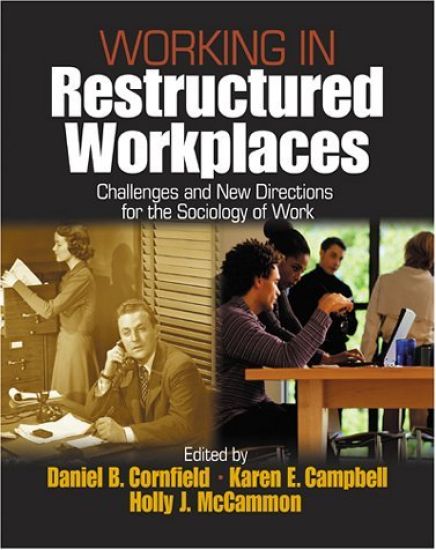
Working in Restructured Workplaces

Working in Restructured Workplaces

Daniel B. Cornfield; Karen E. Campbell; Holly J. McCammon

SAGE Publications Inc
2001
nidottu
What are the contemporary trends in workplace restructuring and the sociological impact on workers' lives? Around what concepts will work be organized and groups and individuals motivated in their work into the new century? To give you definition and answers to these contemporary questions, the editors of the sociological quarterly, Work and Occupations, assembled Working in Restructured Workplaces. It addresses contradictory influences in contemporary workplace restructuring, its impact on workers' lives, and the direction and nature of future changes in the workplace. This authentic collection of sociological thought and research consists of previous works in Work and Occupations and some commissioned specifically for this book to focus on the nature, causes, and consequences of workplace restructuring. The editors introduce a new concept of "workplace restructuring" to broaden your perspective and then assess implications for workers and their lives. The chapters address four major themes: Reconfiguring workplace status hierarchiesCasualization of employment relationshipsRestructuring and worker marginalizationComparative labor responses to global restructuring The last two chapters chart new research agendas on the boundaries and durability of workplace restructuring.
Sex, Drugs and Violence in the Jewish Tradition

Sex, Drugs and Violence in the Jewish Tradition

Daniel B. Kohn

Jason Aronson Inc. Publishers
2004
nidottu
Violence, substance abuse, and sexual behavior present some of the most troubling and confusing issues in American society today. Many questions occupy our minds: Are violent acts ever acceptable? Should one be allowed to consume alcohol or tobacco? Is intercourse outside of marriage acceptable? Is birth control, within or without a relationship? Not surprisingly, there are no easy answers to these or other contentious social issues. Instead, individual opinions run the spectrum. And when one tries to introduce the relevance of religion to these issues, they can become even more complicated. Daniel Kohn, an experienced Rabbi and teacher, brings the voice of Judaism to these and many other moral questions. Through insights gleaned from the Tanakh, the Talmud, and the four-thousand year old Jewish tradition, Sex, Drugs and Violence in the Jewish Tradition provides the reader a thoughtful insight into how one of the world's oldest religions can answer some of our most current questions. Far from a book of prescriptive instruction, Sex, Drugs and Violence in the Jewish Tradition elevates current debates on these issues to a higher level of moral discourse.
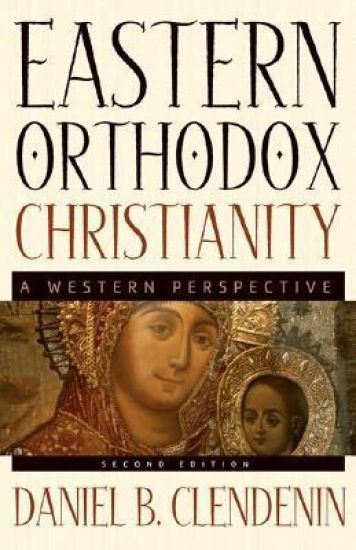
Eastern Orthodox Christianity

Eastern Orthodox Christianity

Daniel B. Clendenin

Baker Academic, Div of Baker Publishing Group
2003
nidottu
In this reliable and engaging survey, Daniel Clendenin introduces Protestants to Eastern Orthodox history and theology with the hope that the two groups will come to see their traditions as complementary and learn to approach one another with a "hermeneutic of love" that fosters "mutual respect, toleration, and even support." This revised edition includes a new preface, a new chapter, and an updated bibliography. In addition to updated demographic information, Clendenin examines at length a particular aspect of Orthodoxy's intersection with Protestantism-its growing exchange with evangelicalism.
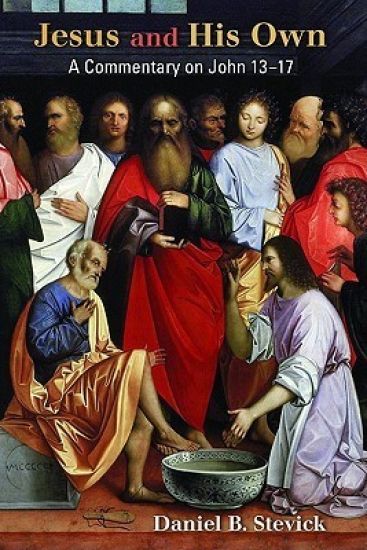
Jesus and His Own

Jesus and His Own

Daniel B. Stevick

William B Eerdmans Publishing Co
2011
nidottu
This study is a section-by-section commentary on the chapters of John's Gospel in which Jesus prepares his disciples for the changed relation that will prevail when he is gone. Jesus and His Own gives attention to the literary, structural, and theological features of this Johannine text. Daniel B. Stevick argues that no place in the New Testament says more about the interior life of the church -- a community that through Christ, lives in close communion with God, under the Spirit, and in tension with the world. These New Testament pages articulate the deepest realities of the church's life -- realities that are essential for the church's understanding of itself.
Understanding Statistics

Understanding Statistics

Daniel B. Wright

SAGE Publications Ltd
1996
sidottu
In this comprehensive introduction to using statistics in the social sciences, Daniel B Wright describes the most popular statistical techniques, explaining their basic principles and demonstrating their use in a wide range of social research. The book is divided into four sections. Part One explains the theoretical relationship between statistics and research, outlining the place of statistics in the research process and introducing hypothesis testing. In Part Two the two t-tests are described in detail. This serves as a foundation for the rest of the book and develops skills that are called upon in later chapters. Part Three outlines the three main families of statistical tests - regression, analysis of variance, and two-variable tests. Finally, Part Four offers a guide to more advanced techniques.
Understanding Statistics

Understanding Statistics

Daniel B. Wright

SAGE Publications Ltd
1996
nidottu
In this comprehensive introduction to using statistics in the social sciences, Daniel B Wright describes the most popular statistical techniques, explaining their basic principles and demonstrating their use in a wide range of social research. The book is divided into four sections. Part One explains the theoretical relationship between statistics and research, outlining the place of statistics in the research process and introducing hypothesis testing. In Part Two the two t-tests are described in detail. This serves as a foundation for the rest of the book and develops skills that are called upon in later chapters. Part Three outlines the three main families of statistical tests - regression, analysis of variance, and two-variable tests. Finally, Part Four offers a guide to more advanced techniques.
Old Economy Village

Old Economy Village

Daniel B Reibel

Stackpole Books
2002
nidottu
The Harmony Society was a Christian communal group that emigrated to Pennsylvania from Germany in the early nineteenth century, eventually settling in Beaver County. The 800 members practiced celibacy and worked for the good of the society. Embracing technology, they became early leaders in industry, manufacturing a variety of goods and materials, which they sold in their shops or across the country. The guidebook provides a survey of early communal societies, then focuses on the settlement at Old Economy Village, concluding with a tour of the buildings and grounds.
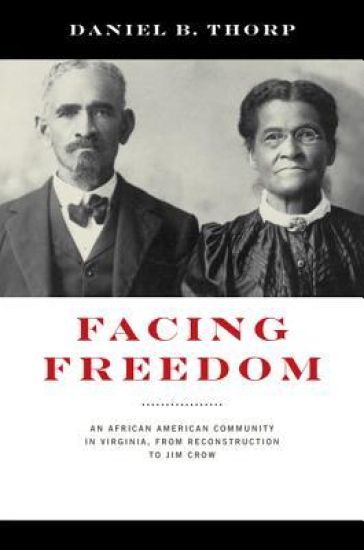
Facing Freedom

Facing Freedom

Daniel B. Thorp

University of Virginia Press
2017
sidottu
The history of African Americans in southern Appalachia after the Civil War has largely escaped the attention of scholars of both African Americans and the region. In Facing Freedom, Daniel Thorp relates the complex experience of an African American community in southern Appalachia as it negotiated a radically new world in the four decades following the Civil War. Drawing on extensive research in private collections as well as local, state, and federal records, Thorp narrates in intimate detail the experiences of black Appalachians as they struggled to establish autonomous families, improve their economic standing, operate black schools within a white-controlled school system, form independent black churches, and exercise expanded—if contested—roles as citizens and members of the body politic. Black out-migration increased markedly near the close of the nineteenth century, but the generation that transitioned from slavery to freedom in Montgomery County established the community institutions that would survive disenfranchisement and Jim Crow. Facing Freedom reveals the stories and strategies of those who pioneered these resilient bulwarks against the rising tide of racism.