Kirjahaku
Etsi kirjoja tekijän nimen, kirjan nimen tai ISBN:n perusteella.
1000 tulosta hakusanalla Daniel F. Styer



School Psychology Ethics in the Workplace
Daniel F. McCleary; Jillian Dawes
TAYLOR FRANCIS LTD
2022
nidottu
School Psychology Ethics in the Workplace introduces a pragmatic and user-friendly model that helps readers become proficient ethical decision-makers using the 2020 National Association of School Psychologists’ (NASP) ethical code and to critically engage the ethical standards and work through ethical dilemmas that often occur in school and clinical settings. This book provides an overview of NASP's latest Principles for Professional Ethics. It introduces readers to various ethical codes related to psychology, the importance of having ethical codes, the limitations of ethical codes, and an ethical decision-making model that accounts for multicultural and social justice issues. Over 100 ethical case studies are presented in the text that specifically relate to NASP’s Principles for Professional Ethics. Readers are provided step-by-step directions on how to use the ethical decision-making model when problem solving each case scenario. School psychology graduate students and their instructors will find this guide invaluable for learning NASP’s new ethical code and for being prepared for situations school psychologists are likely to experience in practice.
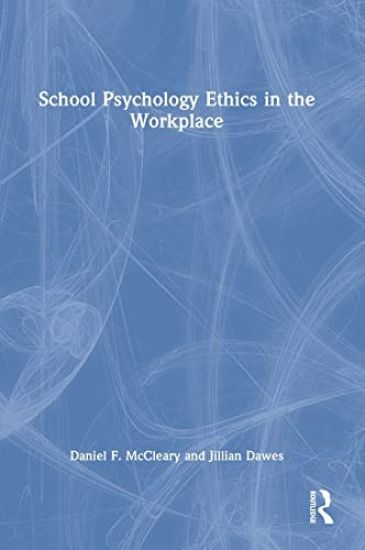
School Psychology Ethics in the Workplace
Daniel F. McCleary; Jillian Dawes
TAYLOR FRANCIS LTD
2022
sidottu
School Psychology Ethics in the Workplace introduces a pragmatic and user-friendly model that helps readers become proficient ethical decision-makers using the 2020 National Association of School Psychologists’ (NASP) ethical code and to critically engage the ethical standards and work through ethical dilemmas that often occur in school and clinical settings. This book provides an overview of NASP's latest Principles for Professional Ethics. It introduces readers to various ethical codes related to psychology, the importance of having ethical codes, the limitations of ethical codes, and an ethical decision-making model that accounts for multicultural and social justice issues. Over 100 ethical case studies are presented in the text that specifically relate to NASP’s Principles for Professional Ethics. Readers are provided step-by-step directions on how to use the ethical decision-making model when problem solving each case scenario. School psychology graduate students and their instructors will find this guide invaluable for learning NASP’s new ethical code and for being prepared for situations school psychologists are likely to experience in practice.
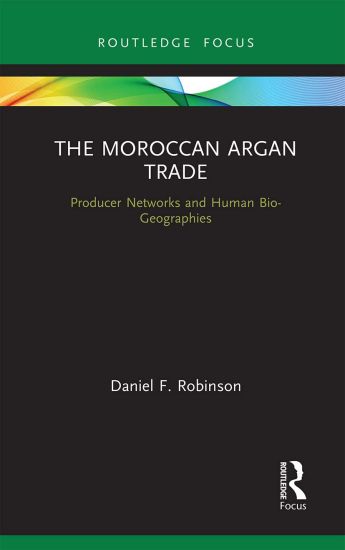
This book provides one of the most detailed and comprehensive examinations of the Moroccan argan tree, the products derived from it and its cultural significance. The Moroccan argan trade is booming, but as the tree provides important ecological functions and plays an important role, both financially and culturally, for the Amazigh (Berber) people it has become a key topic of debate. This book thoroughly examines the production stories, benefits and impacts and provides a value-chain analysis which compares different cooperatives and approaches to production. It assesses the fair-trade approaches and attempts at sustainable production of the bio-trade resource. While being a vital source of income, the argan tree has a significant cultural importance to the Indigenous people and the book assesses the impact of the argan trade on their well-being, community and livelihoods. It examines Indigenous knowledge and intellectual property issues relating to the trade, as well as Berber-state law and politics. Assessing factors relating to legal and economic geography international trade, socio-cultural and human-nature relationships, the book provides a comprehensive analysis of the argan tree which will appeal to students, scholars and practitioners.

Industry consolidation, mergers, changes to business models, the emergence of new threats all require managers to understand highly complex situations, assess risk and opportunity and make informed decisions. How can senior managers do this effectively when so often they are wrestling with brand new scenarios? One of the emerging solutions is business wargaming. Daniel F. Oriesek and Jan Oliver Schwarz provide the first comprehensive look at wargaming as a business tool in a book that explores the anatomy and success factors of a typical wargame. The authors explain how and when wargaming can be used to test strategies, plan and prepare for crises, manage change or increase your organization's ability to anticipate and adapt for the future. Creating imaginative and credible scenarios, and testing them against smart opponents who are eager to find holes and counter your strategy, allows you to learn about a plan or a new venture in the security of the conference room rather than learning the hard way when you go live. Business wargames are sophisticated but they are also very demanding in terms of time and resources. Business Wargaming: Securing Corporate Value will enable you to assess the potential value of the technique for your own organization, to understand what you will be committing to and develop an informed business case and brief for working with the organization that will facilitate the game.


Promises were made. Expectations were raised that vast opportunity laid openly available. Listen: A command set on every child - Dani listened and held each word that she was offered as if it carried utmost truth. But then, Miami disappeared, and hope; the future that had been prophesied was gone. The words of mystery and promise dropped to sudden silence - but not forgotten: Dani left when she was done with schooling, armed only with a tree to prove her worth, and determined to find the way back to Miami - convinced it was the means to understanding everything. Unflickering faith that it was necessary, to bring meaning to her life.

Reinhold Niebuhr, the prominent American theologian, was one of the few religious figures who had a significant impact on the broader society outside the theological community in the United States during the twentieth century. Niebuhr's influence was most pronounced among those associated with historical studies and politics. This book presents Niebuhr in dialogue with seven individuals who each had a major influence on American life: the theologian Paul Tillich, philosopher/educator John Dewey, socialist Norman Thomas, historian Arthur Schlesinger, Jr, international political theorist Hans Morganthau, diplomat George Kennan and Supreme Court Justice Felix Frankfurter. Through a detailed examination of Niebuhr's interactions with these figures, Daniel F. Rice's study offers a survey of mid-twentieth-century theology, political thought and culture.
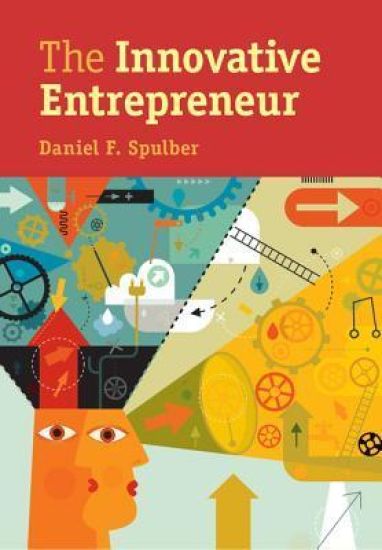
Innovative entrepreneurs are the prime movers of the economy. The innovative entrepreneur helps to overcome two types of institutional friction. First, existing firms may not innovate efficiently due to incumbent inertia resulting from adjustment costs, diversification costs, the replacement effect, and imperfect adjustment of expectations. The innovative entrepreneur compensates for incumbent inertia by embodying innovations in new firms that compete with incumbents. Second, markets for inventions may not operate efficiently due to transaction costs, imperfect intellectual property protections, costs of transferring tacit knowledge, and imperfect information about discoveries. The innovative entrepreneur addresses inefficiencies in markets for inventions through own-use of discoveries and adoption of innovative ideas. The Innovative Entrepreneur presents an economic framework that addresses the motivation of the innovative entrepreneur, the innovative advantage of entrepreneurs versus incumbent firms, the effects of competitive pressures on incentives to innovate, the consequences of creative destruction, and the contributions of the innovative entrepreneur to the wealth of nations.
Innovative entrepreneurs are the prime movers of the economy. The innovative entrepreneur helps to overcome two types of institutional friction. First, existing firms may not innovate efficiently due to incumbent inertia resulting from adjustment costs, diversification costs, the replacement effect, and imperfect adjustment of expectations. The innovative entrepreneur compensates for incumbent inertia by embodying innovations in new firms that compete with incumbents. Second, markets for inventions may not operate efficiently due to transaction costs, imperfect intellectual property protections, costs of transferring tacit knowledge, and imperfect information about discoveries. The innovative entrepreneur addresses inefficiencies in markets for inventions through own-use of discoveries and adoption of innovative ideas. The Innovative Entrepreneur presents an economic framework that addresses the motivation of the innovative entrepreneur, the innovative advantage of entrepreneurs versus incumbent firms, the effects of competitive pressures on incentives to innovate, the consequences of creative destruction, and the contributions of the innovative entrepreneur to the wealth of nations.

The Nagoya Protocol to the Convention on Biological Diversity (CBD) is rapidly receiving signatures and ratifications. Many countries are preparing to implement the protocol through national research permit systems and/or biodiversity laws. Yet there is still considerable confusion about how to implement the Protocol, regarding access and benefit-sharing (ABS) procedures, and minimal experience in many countries. This book seeks to remedy this gap in understanding by analysing a number of ABS case studies in light of the Nagoya Protocol. The case studies are wide-ranging, with examples of plants for medicinal, cosmetic, biotech and food products from or for development in Australia, North Africa, Madagascar, Switzerland, Thailand, USA and Oceania. These will encourage countries to develop national systems which maximise their benefits (both monetary and non-monetary) towards conservation and support for local communities that hold traditional knowledge. In addition, the author analyses new expectations raised by the Nagoya Protocol, such as the encouragement of the development of community protocols by indigenous and local communities. As a result, stakeholders and policy-makers will be able to learn the steps involved in establishing ABS agreements, issues that arise between stakeholders, and the types of benefits that might be realistic.
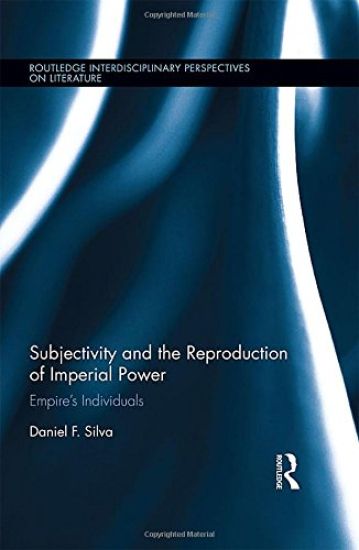
This book brings forth a new contribution to the study of imperialism and colonial discourse by theorizing the emergence and function of individual identity as product and producer of imperial power. While recent decades of theoretical reflections on imperialism have yielded important understandings of how the West has repeatedly reconsolidated its power, this book seeks to grasp the complex role of subjectivity in reformulating the terms of imperial domination from early modern European expansion to late capitalism. This entails approaching Empire as a constantly shifting system of differences and meanings as well as an ontological project, a mode of historical writing, and economy of desire that repeatedly envelops the subject into the realm of western power. The analysis of an array of literary texts and cultural artifacts is undertaken by means of a theoretically eclectic approach – drawing on psychoanalysis, post-structuralism, postcolonial theory, and Marxism – with the aim of forwarding current knowledge of Empire while also contributing to different branches of critical theory. In exploring the formation of imperial subjectivity in different historical moments, Silva raises new questions related to the signification of otherness in European expansion and colonial settlement, slavery and eugenics in post-independence Americas, and late capitalist circulation of bodies and commodities. The volume also covers a broad range of geo-cultural spaces in order to locate western power in time and space. This book’s diversity in terms of approach, historical scope, and cultural contexts makes it a useful tool for research and teaching among students and scholars of disciplines including Postcolonial Studies, Colonial History, Literature, and Globalization.
Iimpetus Behind the Creation of the United States Naval Reserve
Daniel F Goergen
Biblioscholar
2012
pokkari
The Menace of Foreign Entanglements: Let Us Awaken Before It Is Too Late!
Daniel F. Cohalan
Literary Licensing, LLC
2013
nidottu
Master the essentials of real estate law and develop a strong understanding of the role of the real estate paralegal with this concise, yet comprehensive book. Taking a case-based approach, ESSENTIALS OF PRACTICAL REAL ESTATE LAW, 6e details the transactional aspects of the law needed to assist attorneys with closing real estate purchases, sales, and mortgage loans secured by real estate. Case summaries throughout give you a chance to practice your analytical skills and see how concepts are applied in practice. In addition, each chapter includes practical assignments and a self-study examination, along with numerous forms and checklists, to ensure that you are well prepared to work as a professional in real estate. Offering up-to-date coverage of technology and the impact of the recent recession, this resource reflects the latest laws and regulations of the industry.

Gain a solid understanding of the role of today's real estate paralegal and the intricacies of real estate law and transactions using PRACTICAL REAL ESTATE LAW, 7th edition. This comprehensive resource provides students with clear explanations to help you understand the complexities of real estate law. The book's case-based approach explains legal principles using practical applications and the most current examples. Updates throughout this edition clarify the latest rulings and industry regulations, while case summaries illustrate how legal principles operate in today's world. New case problems and assignments offer practice in reading and analyzing case material. Meaningful discussions, checklists and well-illustrated forms guide students through all areas of modern real estate practice with an emphasis on important ethical concerns. Students develop a solid understanding of transactional real estate--from real estate contracts and brokerage relationships to surveys, title insurance, taxation and real estate finance as they relate to both residential and commercial processes.