Kirjojen hintavertailu. Mukana 12 364 841 kirjaa ja 12 kauppaa.

Kirjahaku

Etsi kirjoja tekijän nimen, kirjan nimen tai ISBN:n perusteella.

1000 tulosta hakusanalla Daniel J. Crooks

The American Bird Conservancy Guide to Bird Conservation

The American Bird Conservancy Guide to Bird Conservation

Daniel J. Lebbin; Michael J. Parr; George H. Fenwick; Jonathan Franzen

University of Chicago Press
2010
sidottu
Whether we live in cities, in the suburbs, or in the country, birds are ubituitous features of daily life, so much so that we often take them for granted. But even the casual observer is aware that birds don't fill our skies in the number they once did. That awareness has spawned conservation action that has led to notable successes, including the recovery of some of the nation's most emblematic species, such as the Bald Eagle, Brown Pelican, Whooping Crane, and Peregrine Falcon. Despite this, a third of all American bird species are in trouble - in many cases, they're in imminent danger of extinction. The most authoritative account ever published of the threats these species face, "The American Bird Conservancy Guide to Bird Conservation" will be the definitive book on the subject. The Guide presents for the first time anywhere a classification system and threat analysis for bird habitats in the United States, and the most thorough and scientifically credible assessment of threats to birds published to date, as well as a new list of birds of conservation concern. Filled with beautiful color illustrations and original range maps, the Guide is a timely, important, and inspiring reference for birders and anyone else interested in conserving North America's avian fauna. But this book is far more than another shout of crisis. The Guide also lays out a concrete and achievable plan of long-term action to safeguard our country's rich bird life. Ultimately, it is an argument for hope. Whether you spend your early weekend mornings crouched in silence with binoculars in hand, hoping to check another species off your list, or you've never given much thought to bird conservation, you'll appreciate the visual power and intellectual scope of these pages.
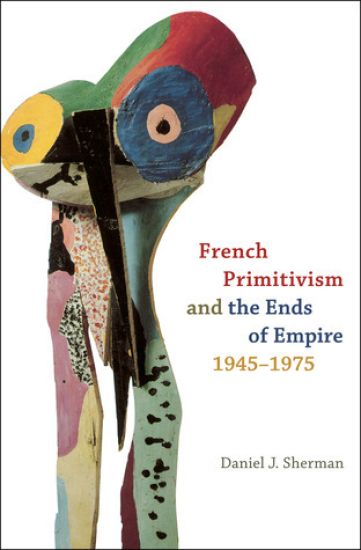
French Primitivism and the Ends of Empire, 1945-1975

French Primitivism and the Ends of Empire, 1945-1975

Daniel J. Sherman

University of Chicago Press
2011
sidottu
For over a century, the idea of primitivism has motivated artistic modernism. Focusing on the three decades after World War II, known in France as "les trentes glorieuses" despite the loss of most of the country's colonial empire, this probing and expansive book argues that primitivism played a key role in a French society marked by both economic growth and political turmoil. In a series of chapters that consider significant aspects of French culture - including the creation of new museums of French folklore and of African and Oceanic arts and the development of tourism against the backdrop of nuclear testing in French Polynesia - Daniel J. Sherman shows how primitivism, a collective fantasy born of the colonial encounter, proved adaptable to a post-colonial, inward-looking age of mass consumption. Following the likes of Claude Levi-Strauss, Andre Putman, and Jean Dubuffet through decorating magazines, museum galleries, and Tahiti's pristine lagoons, this interdisciplinary study provides a new perspective on primitivism as a cultural phenomenon and offers fresh insights into the eccentric edges of contemporary French history.
The Construction of Memory in Interwar France

The Construction of Memory in Interwar France

Daniel J. Sherman

University of Chicago Press
2000
sidottu
This work takes a look at the human impact of World War I by examining the ways in which the French remembered their veterans and war dead after the armistice. Arguing that memory is more than just a record of experience, this cultural history offers a perspective on how commemoration of World War I helped to shape post-war French society and politics. Daniel Sherman shows how a wartime visual culture saturated with images of ordinary foot soldiers, together with contemporary novels, memoirs and tourist literature, promoted a distinctive notion of combat experience. The contrast between battlefield and home front, soldier and civilian was the basis for memory and collective gratitude. Post-war commemoration, however, also grew directly out of the search for the remains of hundreds of thousands of missing soldiers, and the sometimes contentious debates over where to bury them. For this reason, the local monument, with its inscribed list of names and its functional resemblance to tombstobes, emerged as the focal point of commemorative practice. Sherman traces every step in the process of monument building as he analyzes commemoration's competing goals - to pay tribute to the dead, to console the bereaved and to incorporate mourner's individual memories into a larger political discourse.
The Construction of Memory in Interwar France

The Construction of Memory in Interwar France

Daniel J. Sherman

University of Chicago Press
2001
nidottu
This work takes a look at the human impact of World War I by examining the ways in which the French remembered their veterans and war dead after the armistice. Arguing that memory is more than just a record of experience, this cultural history offers a perspective on how commemoration of World War I helped to shape post-war French society and politics. Daniel Sherman shows how a wartime visual culture saturated with images of ordinary foot soldiers, together with contemporary novels, memoirs and tourist literature, promoted a distinctive notion of combat experience. The contrast between battlefield and home front, soldier and civilian was the basis for memory and collective gratitude. Post-war commemoration, however, also grew directly out of the search for the remains of hundreds of thousands of missing soldiers, and the sometimes contentious debates over where to bury them. For this reason, the local monument, with its inscribed list of names and its functional resemblance to tombstobes, emerged as the focal point of commemorative practice. Sherman traces every step in the process of monument building as he analyzes commemoration's competing goals - to pay tribute to the dead, to console the bereaved and to incorporate mourner's individual memories into a larger political discourse.
Sensations

Sensations

Daniel J. Sherman

THE UNIVERSITY OF CHICAGO PRESS
2025
sidottu
Delves into two controversies from the French archaeological world to illuminate the tension between the discipline’s scientific ambitions and its hunger for media attention. For well over a century, from Heinrich Schliemann’s sensational discoveries at Troy in the 1880s, through the Tutankhamun excavations of the 1920s, to the recent LIDAR-aided uncovering of lost Maya cities, archaeology has made headlines. In this new history of archaeology and its archival traces, Daniel J. Sherman treats the friction between science and spectacle as constitutive of the field. By exploring two long-running controversies that roiled the French archaeological world and its wider public in the first third of the twentieth century, he gives the science/media relationship a unique place in the history of archaeology—and its present. The first controversy involves a dispute over the conduct of excavations at Carthage in Tunisia, then under French colonial rule. In the second, accusations of forgery clouded what seemed to be a stunning Neolithic find at a hamlet called Glozel, in the Auvergne region in central France. The affair divided the scholarly community and attracted enormous media attention across Europe and North America. Both controversies occurred at a transitional moment between what has been called the heroic age of archaeology, dominated by explorers and adventurers with little specialized training, and the beginnings of its professionalization. As Sherman shows, the two affairs put the methods, procedures, and networks of archaeology in the spotlight and profoundly shaped its history.
Living with Polio

Living with Polio

Daniel J. Wilson

University of Chicago Press
2005
sidottu
The personal stories of men and women who had acute polio and lived with its crippling consequences are chronicled in a history of the enduring physical and psychological experiences of the disease.
Living with Polio

Living with Polio

Daniel J. Wilson

University of Chicago Press
2007
nidottu
Polio was the most dreaded disease of twentieth-century America. Whenever and wherever it struck, hospitals filled with victims of the virus. Many experienced only temporary paralysis, but others faced a lifetime of disability. "Living with Polio" is the first book to focus primarily on the personal stories of the men and women who had acute polio and lived with its crippling consequences. Writing from his own experience as a polio survivor, Daniel J. Wilson shapes this impassioned book with the testimonials of numerous polio victims, focusing on the years between 1930 and 1960. He traces entire life experiences of the survivors - from their alarming diagnoses all the way to the recent development of post-polio syndrome, a condition in which the symptoms of the disease return two or three decades after they originally surfaced. "Living with Polio" also details each physical and emotional stage of the disease: the loneliness of long separations from family suffered by hospitalized victims; the painful rehabilitation as survivors tried to regain the use of their paralyzed muscles; and the return home and readjustment to school or work with the aid of braces, crutches, or wheelchairs. Poignant and gripping, "Living with Polio" is a compelling history of the enduring physical and psychological experience of polio straight from the rarely heard voices of its survivors.
Science, Community, and the Transformation of American Philosophy, 1860-1930
In the first book-length study of American philosophy at the turn of the century, Daniel J. Wilson traces the formation of philosophy as an academic discipline. Wilson shows how the rise of the natural and physical sciences at the end of the nineteenth century precipitated a "crisis of confidence" among philosophers as to the role of their discipline. Deftly tracing the ways in which philosophers sought to incorporate scientific values and methods into their outlook and to redefine philosophy itself, Wilson moves between close analysis of philosophical texts and consideration of professional careers of illustrative philosophers, such as Charles Sanders Peirce, John Dewey, and Josiah Royce. The author situates the emergence of professional philosophy in the context of the professionalization of American higher education and articulates, in the case of philosophy, the structures and values of a professional discipline. One of the most important consequences of this transformation was a new emphasis on communal theories of truth. Peirce, Dewey, and Royce all developed sophisticated and important theories of community as they were engaged in reshaping and redefining the limits of philosophy. This book will be of great importance for those interested in the history of philosophy, the rise of professions, and American intellectual and educational history, and to all those seeking to understand the contemporary revival of pragmatic thought and theories of community.
Cigarette Nation

Cigarette Nation

Daniel J. Robinson

McGill-Queen's University Press
2021
sidottu
In the 1950s, the causal link between smoking and lung cancer surfaced in medical journals and mainstream media. Yet the best years for the Canadian cigarette industry were still to come, as per capita cigarette consumption rose steadily in the 1960s and 1970s. In Cigarette Nation, Daniel Robinson examines the vibrant and contentious history of smoking to discover why Canadians continued to light up despite the publicized health risks.Highlighting the prolific marketing and advertising practices that helped make smoking a staple of everyday life, Robinson explores socio-cultural aspects of cigarette use from the 1930s to the 1950s and recounts the views and actions of tobacco executives, government officials, and Canadian smokers as they responded to mounting evidence that cigarette use was harmful. The persistence of smoking owes to such factors as product development, marketing and retailing innovation, public relations, sponsored science, and government inaction. Domestic and international tobacco firms worked to furnish Canadian smokers with hope and doubt: hope in the form of reassuring marketing, as seen with light and mild cigarette brands, and doubt by means of disinformation campaigns attacking medical research and press accounts that aligned cigarettes with serious disease.Drawing on a wide range of primary sources, including thousands of industry records released during a landmark tobacco class-action trial in 2015, Cigarette Nation documents in rich detail the history of one of Canada’s foremost public health issues.
Cigarette Nation

Cigarette Nation

Daniel J. Robinson

McGill-Queen's University Press
2021
nidottu
In the 1950s, the causal link between smoking and lung cancer surfaced in medical journals and mainstream media. Yet the best years for the Canadian cigarette industry were still to come, as per capita cigarette consumption rose steadily in the 1960s and 1970s. In Cigarette Nation, Daniel Robinson examines the vibrant and contentious history of smoking to discover why Canadians continued to light up despite the publicized health risks.Highlighting the prolific marketing and advertising practices that helped make smoking a staple of everyday life, Robinson explores socio-cultural aspects of cigarette use from the 1930s to the 1950s and recounts the views and actions of tobacco executives, government officials, and Canadian smokers as they responded to mounting evidence that cigarette use was harmful. The persistence of smoking owes to such factors as product development, marketing and retailing innovation, public relations, sponsored science, and government inaction. Domestic and international tobacco firms worked to furnish Canadian smokers with hope and doubt: hope in the form of reassuring marketing, as seen with light and mild cigarette brands, and doubt by means of disinformation campaigns attacking medical research and press accounts that aligned cigarettes with serious disease.Drawing on a wide range of primary sources, including thousands of industry records released during a landmark tobacco class-action trial in 2015, Cigarette Nation documents in rich detail the history of one of Canada’s foremost public health issues.
Berruyer's Bible

Berruyer's Bible

Daniel J. Watkins

McGill-Queen's University Press
2021
sidottu
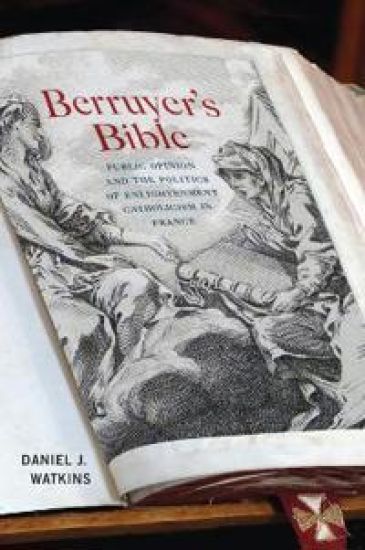
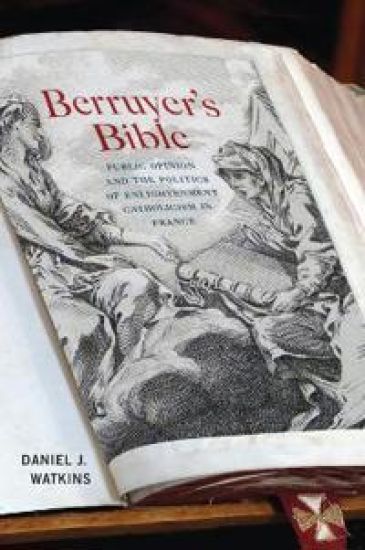
The French Jesuit Isaac-Joseph Berruyer's Histoire du peuple de Dieu was an ambitious attempt to connect the ideas of the Enlightenment with the theology of the Catholic Church. A paraphrase of the Bible written in vernacular French, the Histoire promoted progress, the pursuit of happiness, the fundamental goodness of humanity, and the capacity of nature to shape moral human beings. Berruyer aimed to update the Bible for a new age, but his work unleashed a furor that ended with the expulsion of the Jesuits from France.Berruyer's Bible offers a fresh perspective on the history of the Catholic Enlightenment. By exploring the rise and fall of Berruyer's Histoire, Daniel Watkins reveals how Catholic attempts to assimilate Enlightenment ideas caused conflicts within the church and between the church and the French state. Berruyer's Bible flips the traditional narrative of the Enlightenment on its head by showing that the secularization of French society and the political decline of the Catholic Church were due not solely to the external assaults of anti-clerical philosophes but also to the internal discord caused by Catholic theologians themselves.Built upon extensive research in archives across Western Europe and the United States, Berruyer's Bible paints a vivid picture of the tumultuous intellectual world of the Catholic Church and the power of radical ideas that shaped the church throughout the Enlightenment, the French Revolution, and beyond.
Berruyer's Bible

Berruyer's Bible

Daniel J. Watkins

McGill-Queen's University Press
2021
nidottu
The French Jesuit Isaac-Joseph Berruyer's Histoire du peuple de Dieu was an ambitious attempt to connect the ideas of the Enlightenment with the theology of the Catholic Church. A paraphrase of the Bible written in vernacular French, the Histoire promoted progress, the pursuit of happiness, the fundamental goodness of humanity, and the capacity of nature to shape moral human beings. Berruyer aimed to update the Bible for a new age, but his work unleashed a furor that ended with the expulsion of the Jesuits from France.Berruyer's Bible offers a fresh perspective on the history of the Catholic Enlightenment. By exploring the rise and fall of Berruyer's Histoire, Daniel Watkins reveals how Catholic attempts to assimilate Enlightenment ideas caused conflicts within the church and between the church and the French state. Berruyer's Bible flips the traditional narrative of the Enlightenment on its head by showing that the secularization of French society and the political decline of the Catholic Church were due not solely to the external assaults of anti-clerical philosophes but also to the internal discord caused by Catholic theologians themselves.Built upon extensive research in archives across Western Europe and the United States, Berruyer's Bible paints a vivid picture of the tumultuous intellectual world of the Catholic Church and the power of radical ideas that shaped the church throughout the Enlightenment, the French Revolution, and beyond.
Disruption in Detroit

Disruption in Detroit

Daniel J. Clark

University of Illinois Press
2018
sidottu
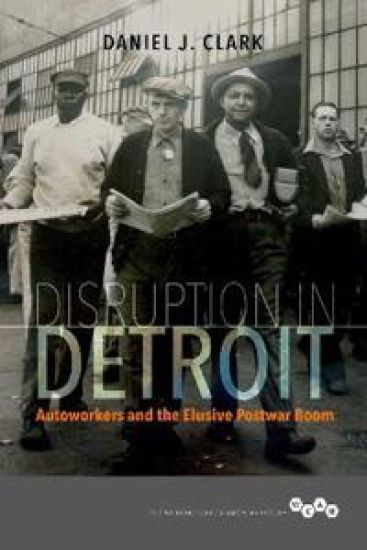
It is a bedrock American belief: the 1950s were a golden age of prosperity for autoworkers. Flush with high wages and enjoying the benefits of generous union contracts, these workers became the backbone of a thriving blue-collar middle class. It is also a myth. Daniel J. Clark began by interviewing dozens of former autoworkers in the Detroit area and found a different story--one of economic insecurity caused by frequent layoffs, unrealized contract provisions, and indispensable second jobs. Disruption in Detroit is a vivid portrait of workers and an industry that experienced anything but stable prosperity. As Clark reveals, the myths--whether of rising incomes or hard-nosed union bargaining success--came later. In the 1950s, ordinary autoworkers, union leaders, and auto company executives recognized that although jobs in their industry paid high wages, they were far from steady and often impossible to find.
Listening to Workers

Listening to Workers

Daniel J. Clark

UNIVERSITY OF ILLINOIS PRESS
2024
sidottu
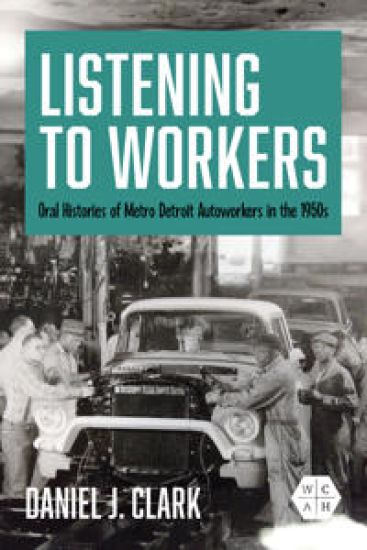
Historians and readers alike often overlook the everyday experiences of workers. Drawing on years of interviews and archival research, Daniel J. Clark presents the rich, interesting, and sometimes confounding lives of men and women who worked in Detroit-area automotive plants in the 1950s.In their own words, the interviewees frankly discuss personal matters like divorce and poverty alongside recollections of childhood and first jobs, marriage and working women, church and hobbies, and support systems and workplace dangers. Their frequent struggles with unstable jobs and economic insecurity upend notions of the 1950s as a golden age of prosperity while stories of domestic violence and infidelity open a door to intimate aspects of their lives. Taken together, the narratives offer seldom-seen accounts of autoworkers as complex and multidimensional human beings.Compelling and surprising, Listening to Workers foregoes the union-focused strain of labor history to provide ground-level snapshots of a blue-collar world.
Disruption in Detroit

Disruption in Detroit

Daniel J. Clark

University of Illinois Press
2018
nidottu
It is a bedrock American belief: the 1950s were a golden age of prosperity for autoworkers. Flush with high wages and enjoying the benefits of generous union contracts, these workers became the backbone of a thriving blue-collar middle class. It is also a myth. Daniel J. Clark began by interviewing dozens of former autoworkers in the Detroit area and found a different story--one of economic insecurity caused by frequent layoffs, unrealized contract provisions, and indispensable second jobs. Disruption in Detroit is a vivid portrait of workers and an industry that experienced anything but stable prosperity. As Clark reveals, the myths--whether of rising incomes or hard-nosed union bargaining success--came later. In the 1950s, ordinary autoworkers, union leaders, and auto company executives recognized that although jobs in their industry paid high wages, they were far from steady and often impossible to find.
Listening to Workers

Listening to Workers

Daniel J. Clark

UNIVERSITY OF ILLINOIS PRESS
2024
nidottu
Historians and readers alike often overlook the everyday experiences of workers. Drawing on years of interviews and archival research, Daniel J. Clark presents the rich, interesting, and sometimes confounding lives of men and women who worked in Detroit-area automotive plants in the 1950s.In their own words, the interviewees frankly discuss personal matters like divorce and poverty alongside recollections of childhood and first jobs, marriage and working women, church and hobbies, and support systems and workplace dangers. Their frequent struggles with unstable jobs and economic insecurity upend notions of the 1950s as a golden age of prosperity while stories of domestic violence and infidelity open a door to intimate aspects of their lives. Taken together, the narratives offer seldom-seen accounts of autoworkers as complex and multidimensional human beings.Compelling and surprising, Listening to Workers foregoes the union-focused strain of labor history to provide ground-level snapshots of a blue-collar world.
Liberated Cinema, Revised and Expanded Edition

Liberated Cinema, Revised and Expanded Edition

Daniel J. Goulding

Indiana University Press
2003
pokkari
Originally published in 1985, Liberated Cinema: The Yugoslav Experience received the first annual "Close-up" award from the Yugoslav Film Institute in 1986 for "outstanding scholarship and for promoting the values of Yugoslav film art internationally." This new edition has been revised and updated throughout. It has been expanded to complete the story of the new Yugoslav cinema of the 1980s and to address major film developments that have taken place in the former Yugoslavia's five successor states. As in his analysis of past periods of Yugoslav cinema, Goulding situates the most recent developments within the context of film economics, state subsidies, and changing patterns of political control. Most significantly, however, he provides an insightful discussion of the ways in which critically important domestic feature films produced or co-produced from 1991 to 2001 reflect on recent brutal internecine warfare and other contemporary social, cultural, and political realities after the breakup of Yugoslavia.
The New Environmental Regulation

The New Environmental Regulation

Daniel J. Fiorino

MIT Press
2006
pokkari
Environmental regulation in the United States has succeeded, to a certain extent, in solving the problems it was designed to address; air, water, and land, are indisputably cleaner and in better condition than they would be without the environmental controls put in place since 1970. But Daniel Fiorino argues in The New Environmental Regulation that-given recent environmental, economic, and social changes-it is time for a new, more effective model of environmental problem solving. Fiorino provides a comprehensive but concise overview of U.S. environmental regulation-its history, its rationale, and its application-and offers recommendations for a more collaborative, flexible, and performance-based alternative. Traditional environmental regulation was based on the increasingly outdated assumption that environmental protection and business are irreversibly at odds. The new environmental regulation Fiorino describes is based on performance rather than on a narrow definition of compliance and uses such policy instruments as market incentives and performance measurement. It takes into consideration differences in the willingness and capabilities of different firms to meet their environmental obligations, and it encourages innovation by allowing regulated industries, especially the better performers, more flexibility in how they achieve environmental goals. Fiorino points to specific programs-including the 33/50 Program, innovative permitting, and the use of covenants as environmental policy instruments in the Netherlands-that have successfully pioneered these new strategies. By bringing together such a wide range of research and real world examples, Fiorino has created an invaluable resource for practitioners and scholars and an engaging text for environmental policy courses.
“I Was a Communist for the FBI”

“I Was a Communist for the FBI”

Daniel J. Leab

Pennsylvania State University Press
2000
sidottu
Who is Matt Cvetic? Hero? Scoundrel? Mole? The man who loosely provided the inspiration for the B-Grade cult movie I Was a Communist for the FBI had a life that was marred by alcoholism, damaged expectations, and greed.Cvetic, at the request of the FBI, joined a Pittsburgh branch of the CPUSA in 1943. He became one of many plants in the Party during that decade and gained the nickname "Pennsylvania’s most significant mole." However, because of his erratic behavior, the FBI fired him in 1950, at which time he surfaced and suddenly became a celebrity through his testimony before the HUAC hearing. Journalist Richard Rovere described Cvetic as a "kept witness," a term that fits those who "made a business of being witnesses," thereby "befouling due process."Cvetic was the subject of a multipart series in the Saturday Evening Post. The articles bordered on fiction, but they gave Cvetic the national exposure he needed to secure a screen deal. Warner Brothers bought the story, made the movie, and enhanced Cvetic’s celebrity as pop icon. In the mid–1950s, Cvetic was discredited as a witness by the courts. His career ended and he found a new niche on the Radical Right, yet he died in 1962 after years of fighting to uphold his image with the media. Today Cvetic’s image is dimly remembered as he continues to fight "the Red Menace" on late-night television. Leab juxtaposes Cvetic’s real life with his reel life. He chronicles his fall from grace, yet admits that Cvetic’s life offers fascinating and useful insights into the creation, merchandising, and distribution of a reckless professional witness. Leab also writes about Cvetic’s life prior to his involvement with the FBI, his glory days, and shows that there is much to be learned from the story of an "anti-Communist icon."