Spanning generations, River of the Brokenhearted explores the life of this formidable woman, a pioneer before the age of feminism, and her legacy as it unfolds tragically in the lives of her son and grandchildren.
"God made Heaven, and then, after measuring the space underneath with a ball of thread, he began to form the earth. A mole asked to help, and God gave him the thread to hold while he wove the patterns of the earth. Sometimes the mole would let out too much thread, and finally the earth grew too large for the space under heaven. The mole was so upset that he hid under the earth. God sent the bee to look for him; he wanted the mole's advice on what to do about the mistake. The bee found the mole and he just laughed at the idea of advising God. The bee, however, hid in a flower and overheard the mole mumbling to himself about what he would do if he were God. 'Iwould squeeze the earth,' he said. 'That would make mountains and valleys and make it smaller at the same time.' When the bee heard this, he went directly to God and told him. God did what the mole had said, and everything fit fine." The myth of Rumanian Creation in which God weaves the earth from a ball of thread is just one the many stories that make up the wonderous world of creation myths. In virtually every culture throughout the ages, creation myths have played a vital role in providing not only explanations of the origins of societies but also specific cultural identities--serving as a "projection of an aspect of a culture's soul." Covering thousands of years of intricate creation tales, A Dictionary of Creation Myths is the first and most comprehensive work devoted to creation myths from cultures throughout the world. With an easy-to-use A-Z format, this around-the-world tour provides quick access to information on the beliefs (both exotic and ordinary) of ancient civilizations from Sumeria and Babylonia to Egypt, Greece, and ancient Rome, from India and China to Japan and Indonesia, as well as the rich mythological history of Native Americans, the indigenous peoples of Australia, and many other cultures. We read of the creation myth of the Diegueno tribe of southern California in which the creator, Tu-chai-pai, made the earth female and the sky male and then formed mud into people; the Norse creation story of the gods Odin, Vili, and Ve, who made man and woman out of two fallen trees--Odin breathed life into the new pair, Vili's gift to them was intelligence, and Ve gave the gifts of sight and hearing; and the myth of Japanese creation in which Izanagei, and his sister Izanami, watch the first land form from ocean water dripping from Izanagi's spear. Alongside these ancient beliefs are the more modern, such as Darwin's theory of evolution and the big bang theory. Each entry identifies the culture associated with the myth, and each myth is retold in clear, eloquent prose, with extensive cross-referencing to guide readers to other entries. Throughout, the authors share insightful analyses of the surprisingly intricate relationship of certain myths across cultures, regions, and time. The entry on Maori creation, for example, leads to entries on the Samoan and Tahitian creation stories and on to the motif of "Creation from Nothing." And, in the course of retelling the creation myth of the Medoc Indians, the authors send us to entries on the "Trickster" and the "earth-diver creation" theme. From cosmic eggs, frost giants, and the Garden of Eden to Brahma, the Spider Woman, and the Gaia Principle, from myths of the apocalypse and the great world religions to myths of love, re-birth, and science, this unique guide illuminates the phenomenon of creation from all aspects of the human experience. Richly illustrated, A Dictionary of Creation Myths is essential for anyone who has ever wondered how the world was created, where we came from, or why we are here at all.
This book offers an unusual yet effective approach to the subject of mythology by stressing the universal rather than national themes. Leeming collects a wide array of narrative texts from the Bible to English literature to interpretations by Joseph Campbell, C.G. Jung and others, which illustrate the stages of the universal hero. The arrangement of texts by themes such as "Childhood, Initiation and Divine Signs" and "The Descent to the Underworld" help readers strip mythic characters of their many national and cultural "masks" to reveal their archetypal aspects. Real figures such as Jesus and Mohammed are also included to underline the text theory that myths are real and can be applied to real life. Changes to the third edition include additional heroine myths (including Navajo, Indonesian, Indian, Chinese and African tales) and an updated bibliography.
This book offers an unusual yet effective approach to the subject of mythology by stressing the universal rather than national themes. Leeming collects a wide array of narrative texts from the Bible to English literature to interpretations by Joseph Campbell, C.G. Jung and others, which illustrate the stages of the universal hero. The arrangement of texts by themes such as "Childhood, Initiation and Divine Signs" and "The Descent to the Underworld" help readers strip mythic characters of their many national and cultural "masks" to reveal their archetypal aspects. Real figures such as Jesus and Mohammed are also included to underline the text theory that myths are real and can be applied to real life. Changes to the third edition include additional heroine myths (including Navajo, Indonesian, Indian, Chinese and African tales) and an updated bibliography.
Now in its second edition, A Handbook of Diction for Singers is a complete guide to achieving professional levels of diction in Italian, German, and French, the three major languages of the classical vocal repertory. Written for English-speaking singers and offering thorough, consistent explanations, it is an ideal tool for students and an invaluable reference for voice teachers, vocal coaches, and conductors. The book combines traditional approaches proven successful in the teaching of diction with important new material not readily available elsewhere, presenting the sounds of each language in logical order, along with essential information on matters such as diacritical marks, syllabification, word stress, and effective use of the variety of foreign-language dictionaries. Presented in an attractively concise format, the book goes into greater detail than comparable texts, providing specific information to clarify concepts typically difficult for English-speaking singers. Particular emphasis is placed on the characteristics of vowel length, the sequencing of sounds between words, as well as the differences between spoken and sung sounds in all three languages. Featuring significantly expanded coverage of each of the three languages and illustrated with numerous examples, this second edition of A Handbook of Diction for Singers is an exceptional text for courses in diction and a valuable reference source for all vocalists.
Now in its second edition, A Handbook of Diction for Singers is a complete guide to achieving professional levels of diction in Italian, German, and French, the three major languages of the classical vocal repertory. Written for English-speaking singers and offering thorough, consistent explanations, it is an ideal tool for students and an invaluable reference for voice teachers, vocal coaches, and conductors. The book combines traditional approaches proven successful in the teaching of diction with important new material not readily available elsewhere, presenting the sounds of each language in logical order, along with essential information on matters such as diacritical marks, syllabification, word stress, and effective use of the variety of foreign-language dictionaries. Presented in an attractively concise format, the book goes into greater detail than comparable texts, providing specific information to clarify concepts typically difficult for English-speaking singers. Particular emphasis is placed on the characteristics of vowel length, the sequencing of sounds between words, as well as the differences between spoken and sung sounds in all three languages. Featuring significantly expanded coverage of each of the three languages and illustrated with numerous examples, this second edition of A Handbook of Diction for Singers is an exceptional text for courses in diction and a valuable reference source for all vocalists.
Now in its third edition, A Handbook of Diction for Singers is a complete guide to achieving professional levels of diction in Italian, German, and French. Combining traditional approaches in the teaching of diction with new material not readily available elsewhere, author David Adams presents the sounds of each language in logical order, along with essential information on matters such as diacritical marks, syllabification, word stress, and effective use of the variety of foreign-language dictionaries. A Handbook of Diction for Singers places particular emphasis on the characteristics of vowel length, the sequencing of sounds between words, as well as the differences between spoken and sung sounds in all three languages, all while taking care to clarify concepts typically difficult for English-speaking singers. This revised third edition offers significantly expanded coverage of each language as well as a new chapter that introduces readers to the specific sounds unique to those languages. The result is a concise yet thorough treatment of the three major languages of the classical vocal repertory, and an invaluable reference for vocalists and voice teachers.
Now in its third edition, A Handbook of Diction for Singers is a complete guide to achieving professional levels of diction in Italian, German, and French. Combining traditional approaches in the teaching of diction with new material not readily available elsewhere, author David Adams presents the sounds of each language in logical order, along with essential information on matters such as diacritical marks, syllabification, word stress, and effective use of the variety of foreign-language dictionaries. A Handbook of Diction for Singers places particular emphasis on the characteristics of vowel length, the sequencing of sounds between words, as well as the differences between spoken and sung sounds in all three languages, all while taking care to clarify concepts typically difficult for English-speaking singers. This revised third edition offers significantly expanded coverage of each language as well as a new chapter that introduces readers to the specific sounds unique to those languages. The result is a concise yet thorough treatment of the three major languages of the classical vocal repertory, and an invaluable reference for vocalists and voice teachers.
Changing conditions in Higher Education and national funding regimes preceded a proliferation of construction projects in universities between 1996 and 2006. This book reviews a hundred projects between 1996 and 2006, and uses 9 detailed case studies from the author's time in charge of capital projects at the University of Cambridge to show us how these projects were conceived, argued for, designed, procured, managed, constructed, and passed on to building users. Readers with an interest in project management, estate management, University management, or the history of the University of Cambridge will find this fascinating and wide-ranging book to be uniquely valuable.
From literary legend David Adams Richards comes the breathtaking final instalment of his epic Miramichi Trilogy. When John Delano is asked by the sister of Orville MacDurmot to investigate his violent death and the accusations of murder that haunted his final days, Delano embarks on a journey that will pull him deep into Miramichi's shadowy history and the pasts of those who conspired against him. Bullied as a child for his meagre upbringing and blindness in one eye, Orville broke from his humble roots to become an internationally renowned archeologist, a position those along the Miramichi treat with both pride and resentment. Not one to suffer fools gladly, Orville finds himself progressively at odds with the region's elite, who wish to use his eminence for their own gains and enlist him for their political causes. As resentments old and new fester, suspicion grows and a book titled Darkness increasingly seems the origin of a crime unlike anything the Miramichi has witnessed before, Orville finds his reputation--and his life--in danger. When the remains of a young woman and man are discovered on a rugged shoreline where Orville has been working on an archeological dig, his enemies finally see their opportunity to destroy him. In a saga crossing decades, continents and generations, yet rooted in the richly conceived world of Richards' Miramichi, Darkness explores the shocking lengths we travel to fulfill personal ambition, and the tragic price we pay to defend our moral principles.
With a voice as Canadian as winter, David Adams Richards reflects on the place of hockey in the Canadian soul. The lyrical narrative of Hockey Dreams flows from Richards' boyhood games on the Miramichi to heated debates with university professors who dare to back the wrong team. It examines the globalization of hockey, and how Canadians react to the threat of foreigners beating us at "our" game. Part memoir, part essay on national identity, part hockey history, Hockey Dreams is a meditation by one of Canada's finest writers on the essence of the game that helps define our nation.
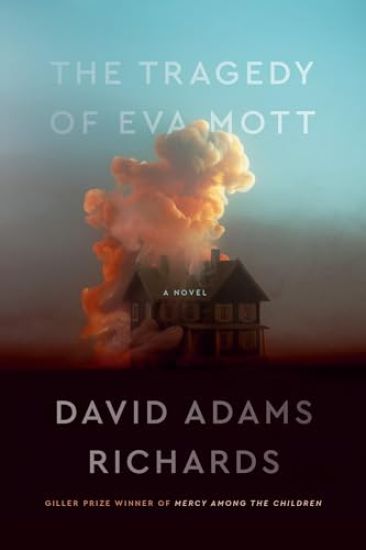
Literary legend David Adams Richards follows the epic Miramichi Trilogy with a startling standalone novel of concentrated power. The Raskin brothers were once proud to be producers of a much sought-after material of great benefit to society--asbestos. But now their mine is under close scientific scrutiny, with reports of serious illness linked to the place. The world is changing, no doubt for the better... But in the shadow of the mine, the values of a whole community are transforming, in more sinister ways. The Raskins' nephew Byron, a war hero and man of wealth, urges the brothers to look for other, less toxic minerals to extract. But meanwhile his own world is unravelling in ways that are unlikely ever to be fixed. His wife Carmel, whom he vaingloriously believed he was rescuing with his marriage proposal, has become an intellectual and political poseur. She and her son Albert are contemptuous of the values of Byron and his kind, while still finding use for his wealth and property. Carmel and Albert, it seems, are heralds of a new world addicted to mimicry and empty self-promotion, to delusions and temptations. Its victims are growing in number: a college professor in town is falsely accused of sexual harassment; a young woman is slipped an hallucinogen at a party with appalling consequences for her and two boys. And what of poor, naive Eva Mott, the captivating beauty who wished to be like her talented cousin Clara? Her story and the book that bears her name will haunt you. The Tragedy of Eva Mott has all the power and brilliance--and many flashes of wry humour--of David Adams Richards at the very top of his form. It will attract controversy but its fierce authenticity cannot be denied.
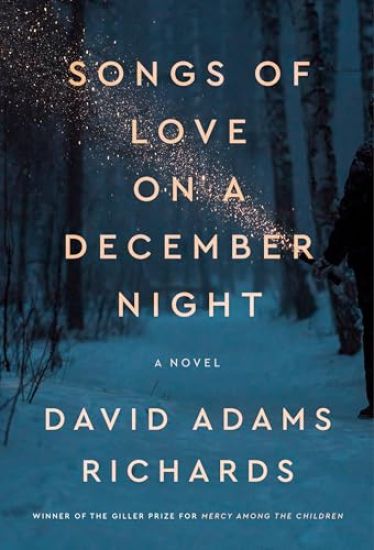
From one of Canada's most celebrated and controversial novelists comes a tale of dark aspirations, betrayal and murder. When Jamie Musselman's father is found dead from an apparent self-inflicted gunshot, it doesn't take long for rumours and suspicions about Jamie to swirl through Miramachi. Why was Jamie also shot that night? Why was money discovered under his pillow? Was it true, as some of the boys at his school claimed, that Jamie possessed a cruel nature and had even once been spotted killing robins? As the years bend on, Jamie continues to maintain his innocence, but few others, aside from his fianc e, Gertie, believe him. Including the police, who finally arrest him. Including the judge, who convicts Jamie of murder. But nothing is ever as it seems in Miramachi, a place where vanity, resentment and crimes of opportunity are forever brewing, and unlikely alliances are continually being formed. In the weeks before the murder, a self-proclaimed revolutionary had returned to Miramachi after being expelled from university; a career criminal falsely claiming Indigenous heritage had been released from jail; and a hapless bully of a father--Gertie's father--had discovered there was money in the Musselmans' home, kept in the very study where Jamie's father was found dead. Is there more to the story than the townsfolk believe? Richly conceived and fearless in its examination of morality and justice, prejudice and corruption, Songs of Love on a December Night is an epic exploration of the evil we are capable of and of the redemption we can aspire to.
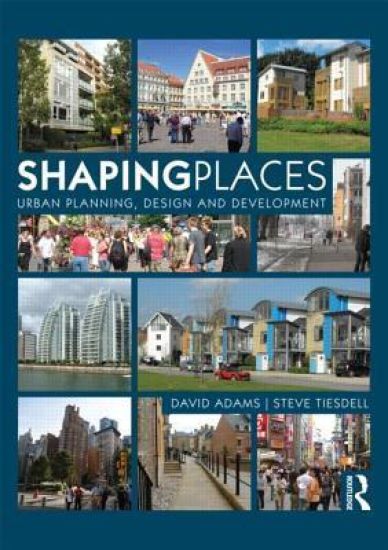
Shaping Places explains how towns and cities can turn real estate development to their advantage to create the kind of places where people want to live, work, relax and invest. It contends that the production of quality places which enhance economic prosperity, social cohesion and environmental sustainability require a transformation of market outcomes. The core of the book explores why this is essential, and how it can be delivered, by linking a clear vision for the future with the necessary means to achieve it. Crucially, the book argues that public authorities should seek to shape, regulate and stimulate real estate development so that developers, landowners and funders see real benefit in creating better places.Key to this is seeing planners as market actors, whose potential to shape the built environment depends on their capacity to understand and transform the embedded attitudes and practices of other market actors. This requires planners to be skilled in understanding the political economy of real estate development and successful in changing its outcomes through smart intervention. Drawing on a strong theoretical framework, the book reveals how the future of places will come to be shaped through constant interaction between State and market power.Filled with international examples, essential case studies, color diagrams and photographs, this is essential reading for undergraduate and graduate students taking planning, property, real estate or urban design courses as well as for social science students more widely who wish to know how the shaping of place really occurs.
Shaping Places explains how towns and cities can turn real estate development to their advantage to create the kind of places where people want to live, work, relax and invest. It contends that the production of quality places which enhance economic prosperity, social cohesion and environmental sustainability require a transformation of market outcomes. The core of the book explores why this is essential, and how it can be delivered, by linking a clear vision for the future with the necessary means to achieve it. Crucially, the book argues that public authorities should seek to shape, regulate and stimulate real estate development so that developers, landowners and funders see real benefit in creating better places.Key to this is seeing planners as market actors, whose potential to shape the built environment depends on their capacity to understand and transform the embedded attitudes and practices of other market actors. This requires planners to be skilled in understanding the political economy of real estate development and successful in changing its outcomes through smart intervention. Drawing on a strong theoretical framework, the book reveals how the future of places will come to be shaped through constant interaction between State and market power.Filled with international examples, essential case studies, color diagrams and photographs, this is essential reading for undergraduate and graduate students taking planning, property, real estate or urban design courses as well as for social science students more widely who wish to know how the shaping of place really occurs.
The location of new housing development has become one of the most intractable controversies of modern times. This book provides a powerful critique of the growing tendency to reduce the debate on the development of new housing to a mere choice between greenfield and brownfield locations. It calls for full account to be taken of such factors as the structure and organisation of the housebuilding industry, supply and demand pressures in the housing market, the contested nature of sustainability and the political character of the planning process if a truly effective housing land policy is to be devised. Drawing on theories from economics and political science, this book will provide an important reference point on the institutional context within which residential development takes place and on the concerns of planning authorities, environmentalists, housebuilders, and their customers in relation to the apparent choice between greenfield and brownfield development.
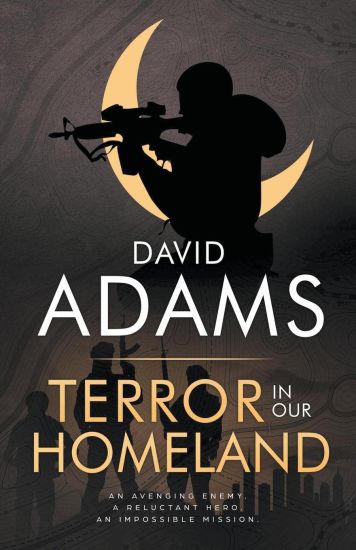
All Steve Wallace wanted was to be left alone, but his war-torn past was about to catch up with him. Was he havingt another painful flashback, or were the two Taliban soldiers he had just killed really here in rural western Queensland. He had no way of knowing he had just stumbled on one of the most sophisticated terror networks Australia has ever seen. For the first time since 1915, Australia is under attack from Islamic terrorists on home soil. Does Australia have the answers, the resources or the resolve to fight against these attacks, or will more innocent men, women and children die? Can Steve Wallace convince the Australian National Security Centre that his discovery is not some Jack Daniel's fuelled PTSD hallucination? The reluctant hero finds himself drawn back into what he had worked so hard to escape.
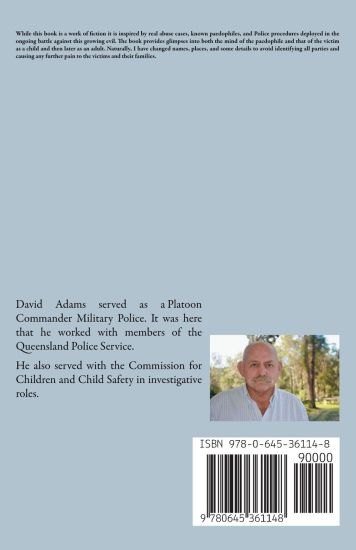
While this book is a work of fiction it is inspired by real abuse cases, known paedophiles, and Police procedures deployed in the ongoing battle against this growing evil. The latter part of my professional career saw my work in the Child Safety sector. This provides me and now you the Reader with both authentic cases, insights and experiences. The book provides glimpses into both the mind of the paedophile and that of the victim as a child and then later as an adult. Naturally, I have changed names, places, and some details to avoid identifying all parties and causing any further pain to the victims and their families.