Kirjojen hintavertailu. Mukana 11 244 527 kirjaa ja 12 kauppaa.

Kirjahaku

Etsi kirjoja tekijän nimen, kirjan nimen tai ISBN:n perusteella.

1000 tulosta hakusanalla David B. Chesebrough

Importing the European Army

Importing the European Army

David B. Ralston

University of Chicago Press
1996
nidottu
This study, extending well beyond military history, documents the ways in which five different countries - Russia, the Ottoman Empire, Egypt, China, and Japan - refashioned their armed forces along European lines during the three centuries after 1600. The appropriation of Western military institutions in countries outside of Europe was, Ralston argues, the major force driving these countries to adopt European administrative, economic and cultural modes. The author follows the same format in his discussion of each country.
Security Politics in the Gulf Monarchies

Security Politics in the Gulf Monarchies

David B. Roberts

Columbia University Press
2023
sidottu
The Gulf monarchies—Saudi Arabia, Kuwait, Bahrain, Qatar, Oman, and the United Arab Emirates—play crucial roles in world markets and politics. Their economies, which have traditionally been driven by oil revenues, have simultaneously propelled transformative change and preserved the traditional order. Fossil fuel wealth has underwritten an implicit social contract characterized by generous welfare states, ruler-centric politics, and a heavy state presence in the economy, facilitating stability during tumultuous times. However, as the transition toward renewable energy looms, will the Gulf monarchies be able to adapt?David B. Roberts offers a definitive guide to continuity and change in the Gulf region. He explores the forces challenging and bolstering the status quo across the political, social, economic, military, and environmental dimensions of security. Roberts examines the six monarchies individually and holistically, considering their recent histories and contemporary concerns. Beneath wide-ranging changes affecting these countries, he pinpoints key dynamics and structures that have persisted over the long term. The book examines key topics such as generational change in leadership, migrant workers, female labor force participation, U.S. military influence, and the multifaceted threat of climate change. Roberts scrutinizes how a move away from the oil-centered economic model could reverberate across the social spectrum, with profound implications for security. Suitable for a range of courses and offering important new insights for experts, this book is an accessible and up-to-date overview of the politics of a key world region.
Security Politics in the Gulf Monarchies

Security Politics in the Gulf Monarchies

David B. Roberts

Columbia University Press
2023
pokkari
The Gulf monarchies—Saudi Arabia, Kuwait, Bahrain, Qatar, Oman, and the United Arab Emirates—play crucial roles in world markets and politics. Their economies, which have traditionally been driven by oil revenues, have simultaneously propelled transformative change and preserved the traditional order. Fossil fuel wealth has underwritten an implicit social contract characterized by generous welfare states, ruler-centric politics, and a heavy state presence in the economy, facilitating stability during tumultuous times. However, as the transition toward renewable energy looms, will the Gulf monarchies be able to adapt?David B. Roberts offers a definitive guide to continuity and change in the Gulf region. He explores the forces challenging and bolstering the status quo across the political, social, economic, military, and environmental dimensions of security. Roberts examines the six monarchies individually and holistically, considering their recent histories and contemporary concerns. Beneath wide-ranging changes affecting these countries, he pinpoints key dynamics and structures that have persisted over the long term. The book examines key topics such as generational change in leadership, migrant workers, female labor force participation, U.S. military influence, and the multifaceted threat of climate change. Roberts scrutinizes how a move away from the oil-centered economic model could reverberate across the social spectrum, with profound implications for security. Suitable for a range of courses and offering important new insights for experts, this book is an accessible and up-to-date overview of the politics of a key world region.

Fanti Kinship and the Analysis of Kinship Terminologies

Fanti Kinship and the Analysis of Kinship Terminologies

David B. Kronenfeld

University of Illinois Press
2009
sidottu
This book examines Fanti kinship terminology from a variety of analytic and formal perspectives. Based on work with a broad number of informants, David B. Kronenfeld details and analyzes internal variation in usage within the Fanti community, shows the relationship between terminology and social groups and communicative usage, and relates these findings to major theoretical work on kinship and on the intersections of language, thought, and culture. The terminological analysis in this study employs a great variety of formal approaches, assesses the strengths and weaknesses of each approach, and covers a wide range of types of usage. This work also performs a systematic, formal analysis of behavior patterns among kin, joining this approach with the analysis of a kinship terminological system. Rather than treating kinship terminology as a special, isolated piece of culture, this study also ties its analysis to more general semantic and cultural theoretical issues. Including computational and comparative studies of kinship terminologies, this volume represents the fullest analysis of any kinship terminological system in the ethnographic record.
Taxation, Government Spending and Economic Welfare

Taxation, Government Spending and Economic Welfare

David B. Smith

Institute of Economic Affairs
2016
nidottu
Amidst the debates about 'austerity' a number of vital debates in public finance have been sidelined. Because the reductions in government spending - small though they have been so far- have been designed to reduce the government's borrowing requirement, there has been little discussion of whether the size of the state should be reduced in order to facilitate long-run reductions in the burden of taxation. This book traces the history of the growth of the size of the state over the last 100 years whilst also making international comparisons. There is a particular focus on recent and projected future developments which shows that, though the total level of government spending has not decreased significantly in recent years, there has been a big redirection of spending from some areas to others. The authors then examine the evidence on the relationship between taxation and economic growth. As well as reviewing recent literature, they also undertake new modelling that higher taxes are detrimental for growth. In the final part of the book, the whole UK tax system is reconsidered in a proper economic framework.The UK has one of the world's most complex tax systems and its incoherence has increased over the last five years. Sweeping reforms are proposed to the system which would involve abolishing around 20 taxes and the development of a simple, predictable tax system based on principles that should gain wide acceptance.
Freedom and Creation in Three Traditions

Freedom and Creation in Three Traditions

David B. Burrell

University of Notre Dame Press
1993
nidottu
With creation of the universe as its focus and a deeper understanding of human freedom as its goal, Freedom and Creation in Three Traditions is a work of philosophical theology that brings together Jewish, Christian, and Muslim perspectives on the complex questions surrounding divine and human freedom. Burrell shows how the three traditions (each avowing the free creation of the universe by God) have developed a view of free human actors in relation to their initial affirmations that the universe is freely created by God. The concept of a free creation of the universe forms a motif for all three traditions, and their respective encounters with divine relation—in the Torah, Jesus Christ, and the Qur'an—offer distinctive ways of articulating and assimilating the original faith in a free creator. Burrell emphasizes the common ground among the traditions, but does not limit his discourse to a search for a common denominator among them. Instead, he traces the interactions among the traditions, employing an explicitly interfaith perspective that offers new ways to probe the vexing question of the relations between a free creator and free creatures. The results of this comparative method of reflection produce fresh insights into perennial human questions about creation and freedom—questions that have constituted a major body of theological reflection over the centuries. Aimed at graduates and advanced undergraduates as well as laypersons interested in interfaith dialogue and reflection, Freedom and Creation in Three Traditions illustrates the value of tradition-directed inquiry and clearly demonstrates the fruitfulness of comparative inquiries in philosophical theology.
Knowing the Unknowable God

Knowing the Unknowable God

David B. Burrell

University of Notre Dame Press
1986
sidottu
In Knowing the Unknowable God, David Burrell traces the intellectual intermingling of Muslim, Jewish, and Christian traditions that made possible the medieval synthesis that served as the basis for Western theology. He shows how Aquinas's study of the Muslim philosopher Ibn-Sina and the Jewish thinker Moses Maimonides affected the disciplined use of language when speaking of divinity and influenced his doctrine of God.
Knowing the Unknowable God

Knowing the Unknowable God

David B. Burrell

University of Notre Dame Press
1992
nidottu
In Knowing the Unknowable God, David Burrell traces the intellectual intermingling of Muslim, Jewish, and Christian traditions that made possible the medieval synthesis that served as the basis for Western theology. He shows how Aquinas's study of the Muslim philosopher Ibn-Sina and the Jewish thinker Moses Maimonides affected the disciplined use of language when speaking of divinity and influenced his doctrine of God.
Friendship and Ways to Truth

Friendship and Ways to Truth

David B. Burrell

University of Notre Dame Press
2000
sidottu
The death of a friend is a source of pain and grief for anyone. For David B. Burrell, it is also a source of reflection on the role of friendship in our ongoing pursuit of truth. In this small but penetrating book, Burrell offers five essays that explore friendship as the bond that links us to the religious traditions we embrace in our search for truth. Known for his many and lasting contributions to philosophical theology, Burrell here makes a definitive statement for that field while also continuing the cross-cultural discussion among Christians, Muslims, and Jews. Burrell considers how friendship can be constitutive of the spiritual exercises one employs to seek truth, and he examines the influences on his thinking of Bernard Lonergan, Stanley Hauerwas, and Augustine to show how friends can open our minds and hearts to interfaith dialogue and the mutual illumination it offers. He also explores cross-cultural understanding through a comparison of the teaching of Aquinas with that of Islam's al-Ghazali, suggesting that their complementary perspectives can fruitfully expand our view of friendship to include our relationship with God. In the end, he offers a model of friendship as a relationship which gives us the courage to maintain our philosophical pursuits and which helps us to persevere in the face of the radical unknowing which characterizes philosophical theology. Just as Burrell learns from death that friendship cannot end, he celebrates how each of us can present to another the face of the good as we journey together through life. And just as our journey toward the truth continues forever, he enables us to see that the gift of friendship is not limited to our earthly existence.
Friendship and Ways to Truth

Friendship and Ways to Truth

David B. Burrell

University of Notre Dame Press
2000
nidottu
The death of a friend is a source of pain and grief for anyone. For David B. Burrell, it is also a source of reflection on the role of friendship in our ongoing pursuit of truth. In this small but penetrating book, Burrell offers five essays that explore friendship as the bond that links us to the religious traditions we embrace in our search for truth. Known for his many and lasting contributions to philosophical theology, Burrell here makes a definitive statement for that field while also continuing the cross-cultural discussion among Christians, Muslims, and Jews. Burrell considers how friendship can be constitutive of the spiritual exercises one employs to seek truth, and he examines the influences on his thinking of Bernard Lonergan, Stanley Hauerwas, and Augustine to show how friends can open our minds and hearts to interfaith dialogue and the mutual illumination it offers. He also explores cross-cultural understanding through a comparison of the teaching of Aquinas with that of Islam's al-Ghazali, suggesting that their complementary perspectives can fruitfully expand our view of friendship to include our relationship with God. In the end, he offers a model of friendship as a relationship which gives us the courage to maintain our philosophical pursuits and which helps us to persevere in the face of the radical unknowing which characterizes philosophical theology. Just as Burrell learns from death that friendship cannot end, he celebrates how each of us can present to another the face of the good as we journey together through life. And just as our journey toward the truth continues forever, he enables us to see that the gift of friendship is not limited to our earthly existence.
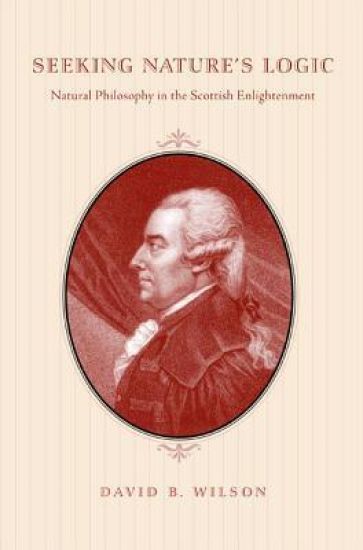
Seeking Nature's Logic

Seeking Nature's Logic

David B. Wilson

Pennsylvania State University Press
2013
pokkari
The Scottish Enlightenment was a vital moment in the history of Western civilization. As one modern admirer of Scotland cogently wrote: “No small nation—except Greece—has ever achieved an intellectual and cultural breakthrough of this magnitude.” Placing Isaac Newton’s natural philosophy within a broad conceptual context, Seeking Nature’s Logic takes that science from Galileo to the early nineteenth century, concentrating on Scotland during the 120 years from 1690 to 1810—a period defined by the publication of Newton’s Principia in 1687 and the death of John Robison in 1805. Newton’s work changed the course of natural philosophy, and Robison was the most significant natural philosopher of the Scottish Enlightenment.As professor of natural philosophy at Edinburgh University from 1774 to 1805, John Robison taught the premier science of the day at the premier science university of the time. He discovered experimentally that electrical and magnetic forces were, like gravity, inverse square forces, and he wrote influential treatises on electricity, magnetism, mechanics, and astronomy. By articulating a particularly Scottish approach to physics, he was the main conceptual link between Newton and those Scottish geniuses of Victorian physics, Lord Kelvin and James Clerk Maxwell. Seeking Nature’s Logic explains the background of Robison’s natural philosophy, analyzes his own sharply shifting ideas, and places those ideas in the context of early nineteenth-century Scottish thought.
Seeking Nature's Logic

Seeking Nature's Logic

David B. Wilson

Pennsylvania State University Press
2009
sidottu
The Scottish Enlightenment was a vital moment in the history of Western civilization. As one modern admirer of Scotland cogently wrote: “No small nation—except Greece—has ever achieved an intellectual and cultural breakthrough of this magnitude.” Placing Isaac Newton’s natural philosophy within a broad conceptual context, Seeking Nature’s Logic takes that science from Galileo to the early nineteenth century, concentrating on Scotland during the 120 years from 1690 to 1810—a period defined by the publication of Newton’s Principia in 1687 and the death of John Robison in 1805. Newton’s work changed the course of natural philosophy, and Robison was the most significant natural philosopher of the Scottish Enlightenment.As professor of natural philosophy at Edinburgh University from 1774 to 1805, John Robison taught the premier science of the day at the premier science university of the time. He discovered experimentally that electrical and magnetic forces were, like gravity, inverse square forces, and he wrote influential treatises on electricity, magnetism, mechanics, and astronomy. By articulating a particularly Scottish approach to physics, he was the main conceptual link between Newton and those Scottish geniuses of Victorian physics, Lord Kelvin and James Clerk Maxwell. Seeking Nature’s Logic explains the background of Robison’s natural philosophy, analyzes his own sharply shifting ideas, and places those ideas in the context of early nineteenth-century Scottish thought.
Australian People and Animals in Today's Dreamtime

Australian People and Animals in Today's Dreamtime

David B. Croft; Ethel Tobach

Praeger Publishers Inc
1991
sidottu
This volume, a collection of papers presented at the 1988 biennial conference of the International Society for Comparative Psychology in Australia, affirms how comparative psychology can help confront global environmental problems by analyzing and comparing the behavior of humans and animals. This often complex relationship is clarified and given fresh insight as each contributor examines a particular aspect pertaining to the ecology of Australia. The continuities and discontinuities in the evolutionary patterns of animal species, the impact of human knowledge and use of animals on the ecological balance, and the need for collaborative efforts to effect change figure prominently in the study, and confirm the book's worldwide scope.Much of the reported work in this volume details data collected from Australian aboriginal sources, which trace the behavior development of many native species. Comparative psychology's respect for indigenous people's knowledge and technology with regard to the use of natural resources is thereby evident, and proves crucial to the study's commitment to the renewal of environmental stability. Australia may be the focus of this conference, but the conclusions drawn have worldwide ramifications. By reading this volume, one finds clues to the nature of a people's knowledge and values and the need for diverse populations to learn from each other in order to survive.
The State Library and Archives of Texas

The State Library and Archives of Texas

David B. Gracy

University of Texas Press
2010
pokkari
The Texas State Library and Archives Commission celebrated its centennial in 2009. To honor that milestone, former State Archivist David Gracy has taken a retrospective look at the agency's colorful and sometimes contentious history as Texas's official information provider and record keeper. In this book, he chronicles more than a century of efforts by dedicated librarians and archivists to deliver the essential, nonpartisan library and archival functions of government within a political environment in which legislators and governors usually agreed that libraries and archives were good and needed-but they disagreed about whatever expenditure was being proposed at the moment. Gracy recounts the stories of persevering, sometimes controversial state librarians and archivists, and commission members, including Ernest Winkler, Elizabeth West (the first female agency head in Texas government), Fannie Wilcox, Virginia Gambrell, and Louis Kemp, who worked to provide Texans the vital services of the state library and archives-developing public library service statewide, maintaining state and federal records for use by the public and lawmakers, running summer reading programs for children, providing services for the visually impaired, and preserving the historically significant records of Texas as a colony, province, republic, and state. Gracy explains how the agency has struggled to balance its differing library and archival functions and, most of all, to be treated as a full-range information provider, and not just as a collection of disparate services.
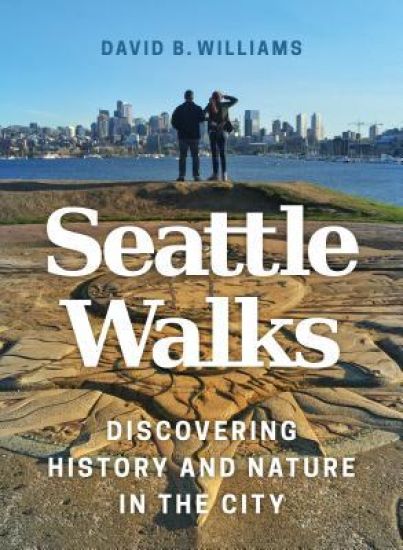
Seattle Walks

Seattle Walks

David B. Williams

UNIVERSITY OF WASHINGTON PRESS
2017
pokkari
Seattle is often listed as one of the most walkable cities in the United States. With its beautiful scenery, miles of non-motorized trails, and year-round access, Seattle is an ideal place to explore on foot.In Seattle Walks, David B. Williams weaves together the history, natural history, and architecture of Seattle to paint a complex, nuanced, and fascinating story. He shows us Seattle in a new light and gives us an appreciation of how the city has changed over time, how the past has influenced the present, and how nature is all around us—even in our urban landscape.These walks vary in length and topography and cover both well-known and surprising parts of the city. While most are loops, there are a few one-way adventures with an easy return via public transportation. Ranging along trails and sidewalks, the walks lead to panoramic views, intimate hideaways, architectural gems, and beautiful greenways. With Williams as your knowledgeable and entertaining guide, encounter a new way to experience Seattle.A Michael J. Repass Book
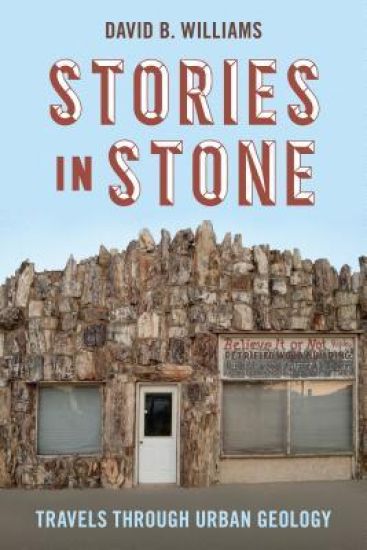
Stories in Stone

Stories in Stone

David B. Williams

University of Washington Press
2019
pokkari
Most people do not think to observe geology from the sidewalks of a major city, but all David B. Williams has to do is look at building stone in any urban center to find a range of rocks equal to any assembled by plate tectonics. In Stories in Stone, he takes you on explorations to find 3.5-billion-year-old rock that looks like swirled pink-and-black taffy, a gas station made of petrified wood, and a Florida fort that has withstood three hundred years of attacks and hurricanes, despite being made of a stone that has the consistency of a granola bar.Williams also weaves in the cultural history of stone, explaining why a white fossil-rich limestone from Indiana became the only building stone used in all fifty states; how in 1825, the construction of the Bunker Hill Monument led to America's first commercial railroad; and why when the same kind of marble used by Michelangelo clad a Chicago skyscraper it warped so much after nineteen years that all 44,000 panels of it had to be replaced. This love letter to building stone brings to life the geology you can see in the structures of every city.
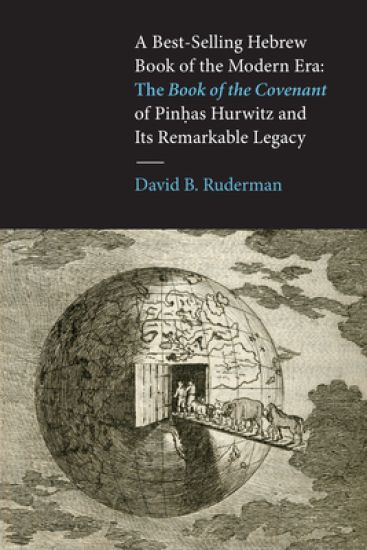
A Best-Selling Hebrew Book of the Modern Era

A Best-Selling Hebrew Book of the Modern Era

David B. Ruderman

University of Washington Press
2020
pokkari
The history of a single book sheds light on the beginnings of modern Jewish thoughtIn 1797, in what is now the Czech Republic, Pin?as Hurwitz published Book of the Covenant. Nominally an extended commentary on a sixteenth-century kabbalist text, Pin?as's publication was in fact a compendium of scientific knowledge and a manual of moral behavior. Its popularity stemmed from its ability to present the scientific advances and moral cosmopolitanism of its day in the context of Jewish legal and mystical tradition. Describing the latest developments in science and philosophy in the sacred language of Hebrew, Hurwitz argued that an intellectual understanding of the cosmos was not at odds with but actually key to achieving spiritual attainment. In A Best-Selling Hebrew Book of the Modern Era, David Ruderman offers a literary and intellectual history of Hurwitz's book and its legacy. Hurwitz not only wrote the book, but also was instrumental in selling it, and his success ultimately led to the publication of more than forty editions in Hebrew, Ladino, and Yiddish. Ruderman provides a multidimensional picture of the book and the intellectual tradition it helped to inaugurate. Complicating accounts that consider modern Jewish thought to be the product of a radical break from a religious, mystical past, Ruderman shows how, instead, a complex continuity shaped Jewish society's confrontation with modernity.