Kirjojen hintavertailu. Mukana 12 409 466 kirjaa ja 12 kauppaa.

Kirjahaku

Etsi kirjoja tekijän nimen, kirjan nimen tai ISBN:n perusteella.

1000 tulosta hakusanalla David C McLean

Roger Bacon and the Origins of Perspectiva in the Middle Ages
David Lindberg presents the first critical edition of the text of Roger Bacon's classic work Perspectiva, prepared from Latin manuscripts, accompanied by a facing-page English translation, critical notes, and a full study of the text. Also included is an analysis of Bacon's sources, influence, and role in the emergence of the discipline of perspectiva. About Roger Bacon: Roger Bacon (c.1220-c.1292) is one of the most renowned thinkers of the Middle Ages, a philosopher-scientist praised and mythologized for his attack on authority and his promotion of what he called experimental science. He was a leading figure in the intellectual life of the thirteenth century, a campaigner for educational reform, and a major disseminator of Greek and Arabic natural philosophy and mathematical science. About Perspectiva: The science that Roger Bacon most fully mastered was perspectiva, the study of light and vision (what would later become the science of optics). His great treatment of the subject, the Perspectiva, written in about 1260, was the first book by a European to display a full mastery of Greek and Arabic treatises on the subject, and through it Bacon was instrumental in defining this scientific discipline for the next 350 years.
Textual Scholarship and the Making of the New Testament

Textual Scholarship and the Making of the New Testament

David C. Parker

Oxford University Press
2014
nidottu
The book is going through its biggest revolution since Gutenberg. Thanks to computer tools and electronic publication, the concept and realisation of critical editions are being rethought. As so often in the history of scholarship, editors of the New Testament are making a vital contribution to these changes. In this book, originally the Lyell Lectures in Bibliography at Oxford, David C. Parker explores textual scholarship, in particular the idea of the edition. He argues that textual scholarship has had an important influence on the meaning given to the term 'New Testament'. Starting with the observation that a text is a process, not an object, he proposes a new way of understanding the relationship between manuscripts, the texts which manuscripts contain and the work they represent as the basis for critical scholarship. This leads him to challenge the idea of a 'Greek New Testament manuscript', and thus to reconsider the nature of the New Testament as a collection of works and the nature and purpose of critical editions. By studying new tools for studying how manuscripts are related to each other, he shows how the modern digital edition of the New Testament has overcome the impasses created by the failure of Lachmannian stemmatics to deal with the problem of contamination. Exploring the emergence of the critical edition in modern scholarship, Parker discusses the ways in which a digital edition advances scholarship and gives the reader more opportunities both to scrutinise the quality of the edition and to access the raw data on which it is based. The whole book uses New Testament research as a paradigm of wider changes in textual scholarship.
The Biology of Caves and Other Subterranean Habitats

The Biology of Caves and Other Subterranean Habitats

David C. Culver; Tanja Pipan

Oxford University Press
2019
sidottu
The second edition of this widely cited textbook continues to provide a concise but comprehensive introduction to cave and subterranean biology, describing this fascinating habitat and its biodiversity. It covers a range of biological processes including ecosystem function, evolution and adaptation, community ecology, biogeography, and conservation. The authors draw on a global range of examples and case studies from both caves and non-cave subterranean habitats. One of the barriers to the study of subterranean biology has been the extraordinarily large number of specialized terms used by researchers; the authors explain these terms clearly and minimize the number that they use. This new edition retains the same 10 chapter structure of the original, but the content has been thoroughly revised and updated throughout to reflect the huge increase in publications concerning subterranean biology over the last decade.
The Biology of Caves and Other Subterranean Habitats

The Biology of Caves and Other Subterranean Habitats

David C. Culver; Tanja Pipan

Oxford University Press
2019
nidottu
The second edition of this widely cited textbook continues to provide a concise but comprehensive introduction to cave and subterranean biology, describing this fascinating habitat and its biodiversity. It covers a range of biological processes including ecosystem function, evolution and adaptation, community ecology, biogeography, and conservation. The authors draw on a global range of examples and case studies from both caves and non-cave subterranean habitats. One of the barriers to the study of subterranean biology has been the extraordinarily large number of specialized terms used by researchers; the authors explain these terms clearly and minimize the number that they use. This new edition retains the same 10 chapter structure of the original, but the content has been thoroughly revised and updated throughout to reflect the huge increase in publications concerning subterranean biology over the last decade.
Why Culture Matters Most

Why Culture Matters Most

David C. Rose

Oxford University Press Inc
2018
sidottu
The key to achieving mass flourishing is culture - not genes, geography, institutions, or policies. In this thought-provoking book, David C. Rose argues that societal success depends on overcoming the challenge posed by rational self-interest undermining the common good. General prosperity requires large group cooperation, which requires trust, and yet as societies grow larger it becomes more difficult to sustain a high trust society. Culture uniquely addresses this problem by aligning individual interests with the common good, thereby addressing the empathy problem and the greater good rationalization problem. Culturally transmitted moral beliefs can sustain large group trust are akin to commonly owned asset by members of society and like any commons are subject to problems of abuse and neglect. These problems are apparent in all societies, and Rose highlights a dilemma: while human flourishing requires the general prosperity that comes from a free market system and it requires freedom that depends upon democratic institutions, there is a danger of redistributive and regulatory favoritism that undermines trust in the system generally. This can lead to political tribalism that is shown to reduce trust in the democratic system. This tension has implications for social, political, and economic development. Cultural beliefs - specifically moral beliefs - are more important than cultural practices or institutions for building a high trust society because when trust producing moral beliefs are well ensconced, trust producing institutions and practices naturally follow. Culture also matters instrumentally because childhood instruction, a hallmark of culture, helps overcome the irrationality of adult individuals choosing to have moral beliefs that they know will limit their ability to promote their own welfare at the expense of the common good in the future. The analysis has surprising implications for the family, religion, government, and the stability of western free market democracies.
Navigating Life with Epilepsy

Navigating Life with Epilepsy

David C Spencer

Oxford University Press Inc
2016
nidottu
Navigating Life with Epilepsy aims to provide clear and reliable information about epilepsy, including "what" (definition), "how" (pathophysiology), "who" (epidemiology), and "why" (etiology). The volume guides the reader through current approaches to diagnosis (including a review of diagnostic tests) and treatment, and shares patient experiences and advice on navigating the myriad psychosocial challenges associated with epilepsy. Epilepsy is a heterogeneous disorder with many causes and a wide spectrum of severity. This text will focus on issues relevant to adolescents and adults with epilepsy; there are many guides for parents of children with epilepsy and issues specific to younger children are beyond the scope of this book. The focus is on translation of current medical knowledge to the lay reader. However, because epilepsy can have profound psychosocial consequences, the book aims to extend beyond the bounds of a medical handbook to include discussion of issues that are of high priority to patients, including those surrounding, driving, work, and relationships.
The Moral Foundation of Economic Behavior

The Moral Foundation of Economic Behavior

David C. Rose

Oxford University Press Inc
2014
nidottu
This book explains why moral beliefs can and likely do play an important role in the development and operation of market economies. It provides new arguments for why it is important that people genuinely trust others-even those whom they know don't particularly care about them-because in key circumstances institutions are incapable of combating opportunism. It then identifies specific characteristics that moral beliefs must have for the people who possess them to be regarded as trustworthy. When such moral beliefs are held with sufficient conviction by a sufficiently high proportion of the population, a high trust society emerges that supports maximum cooperation and creativity while permitting honest competition at the same time. Such moral beliefs are not tied to any particular religion and have nothing to do with moral earnestness or the set of moral values-what matters is how they affect the way people think about morality. Such moral beliefs are based on abstract ideas that must be learned so they are matters of culture, not genes, and are therefore able to explain differences in economic performance across societies.
Astrobiology

Astrobiology

David C. Catling

Oxford University Press
2013
nidottu
Astrobiology is the study of the origin and development of life on this and other planets. What fascinates people about astrobiology is that it seeks answers to long-standing unsolved questions: How quickly did life evolve on Earth and why did life persist here? Is there life elsewhere in the Solar System or beyond? The research of astrobiology has become more crucial than ever in recent decades, as biologists have discovered microbes that live in ever more extreme settings, such as bubbling hot springs, in acid, or deep within rocks. Rooted in strong and rigorous research, astrobiology incorporates the work of microbiologists, geologists, and astronomers. In this Very Short Introduction, David C. Catling introduces the origins of astrobiology and demonstrates its impact on current astronomical research and potential future discoveries. ABOUT THE SERIES: The Very Short Introductions series from Oxford University Press contains hundreds of titles in almost every subject area. These pocket-sized books are the perfect way to get ahead in a new subject quickly. Our expert authors combine facts, analysis, perspective, new ideas, and enthusiasm to make interesting and challenging topics highly readable.
Shallow Subterranean Habitats

Shallow Subterranean Habitats

David C. Culver; Tanja Pipan

Oxford University Press
2014
sidottu
Shallow subterranean habitats (SSHs) are areas of habitable space that are less than 10 m in depth from the surface. These range from large areas such as shallow caves and lava tubes, to tiny areas such as cracks in ceilings, or spaces in soil. Whilst being very different in many ways, they are often bound together by shared characteristics of the habitats and their faunas, and their study can help us to understand subterranean habitats in general. This book concentrates on the more typical SSHs of intermediate size (seepage springs, spaces between rocks, cracks in lava etc.), describing the habitats, their fauna, and the ecological and evolutionary questions posed. Similarities and differences between the habitats are considered and discussed in a broader ecological and evolutionary context. The book is mainly aimed at students and researchers in the field of subterranean biology, but will also be of interest to a wider range of ecologists, evolutionary biologists, freshwater biologists, and conservationists. There will also be an audience of environmental professionals.
The Moral Foundation of Economic Behavior

The Moral Foundation of Economic Behavior

David C. Rose

Oxford University Press Inc
2011
sidottu
This book explains why moral beliefs can and likely do play an important role in the development and operation of market economies. It shows why the maximization of general prosperity requires that people genuinely trust others - even those whom they know don't particularly care about them. It then identifies characteristics that moral beliefs must have for people to trust others even when there is no chance of detection and no possibility of harming anyone. It shows that when moral beliefs with these characteristics are held by a sufficiently high proportion of the population, a high trust society emerges that supports maximum cooperation and creativity while permitting honest competition at the same time. The required characteristics are not tied to any specific religious narrative and have nothing to do with the moral earnestness of individuals or the set of moral values. What really matters is how moral beliefs affect the way people think about morality. The required characteristics are based on abstract ideas that must be learned so they are matters of culture, not genes, and are therefore potentially capable of explaining differences in material success across human societies. This work has many theoretical and empirical implications including but not limited to social capital theory and trust-based economic experiments.
Representing Red and Blue

Representing Red and Blue

David C. Barker; Christopher Jan Carman

Oxford University Press Inc
2012
sidottu
What is a political representative's job, really? Are they supposed to simply figure out what "the people" want and deliver it, or are they charged to do what they think is best for their constituents -- even if that means sometimes ignoring those constituents' wishes? In Representing Red and Blue, David Barker and Christopher Carman explore what people think about this question, why their answers vary, and what difference it makes. They observe that the citizens of "Red America" -- religious and cultural traditionalists, including most Republicans -- often prefer lawmakers who challenge public opinion, whereas "Blue Americans," or culturally progressive Democrats, typically prefer lawmakers who follow it. What is more, these preferences filter up: lawmakers who represent progressive locales tend to pursue the policies their constituents want, whereas representatives of more traditionalistic places often behave quite differently, leaning decidedly to the Right of even most Red American voters. The fundamental reason underlying these patterns, Barker and Carman argue, is that on average, traditionalists and progressives simply do not hold the values of liberal popular democracy in equally high esteem. What all of this means is that the citizens of Red America live in a different kind of democracy than that of the citizens of Blue America -- one where they have less political say over what their government does, but one that seems to suit their tastes all the same.
Know Your Enemy

Know Your Enemy

David C. Engerman

Oxford University Press Inc
2012
nidottu
As World War II ended, few Americans in government or universities knew much about the Soviet Union. As David Engerman shows in this book, a network of scholars, soldiers, spies, and philanthropists created an enterprise known as Soviet Studies to fill in this dangerous gap in American knowledge. This group brought together some of the nation's best minds from the left, right, and center, colorful and controversial individuals ranging from George Kennan to Margaret Mead to Zbigniew Brzezinski, not to mention historians Sheila Fitzpatrick and Richard Pipes. Together they created the knowledge that helped fight the Cold War and define Cold War thought. Soviet Studies became a vibrant intellectual enterprise, studying not just the Soviet threat, but Soviet society and culture at a time when many said that these were contradictions in terms, as well as Russian history and literature. And this broad network, Engerman argues, forever changed the relationship between the government and academe, connecting the Pentagon with the ivory tower in ways that still matter today.
Turf Wars

Turf Wars

David C. King

University of Chicago Press
1997
nidottu
For most bills in American legislature, the issue of turf - or which committee has jurisdiction over a bill - is crucial. This study explains how jurisdictional areas for committees are created and changed in Congress, and dissects the politics of "turf-grabbing". Political scientists have long maintained that jurisdictions are relatively static, changing only at times of dramatic reforms. David King disagrees with this premise and, combining quantitative evidence with interviews and case studies, he shows how ongoing turf wars make jurisdictions fluid. He argues that jurisdictional change stems both from legislators seeking electoral advantage and from nonpartisan House parliamentarians referring ambiguous bills to committees with the expertise to handle the issues. King shows how parliamentarians have become institutional guardians of the legislative process.
The Beginnings of Western Science

The Beginnings of Western Science

David C. Lindberg

University of Chicago Press
2008
nidottu
When it was first published in 1992, "The Beginnings of Western Science" was lauded as the first successful attempt to present a unified account of both ancient and medieval science in a single volume. Chronicling the development of scientific ideas, practices, and institutions from pre-Socratic Greek philosophy to late-medieval scholasticism, David C. Lindberg surveyed the most important themes in the history of science, including developments in cosmology, astronomy, mechanics, optics, alchemy, natural history, and medicine. In addition, he offered an illuminating account of the transmission of Greek science to medieval Islam and subsequently to medieval Europe."The Beginnings of Western Science" was, and remains, a landmark in the history of science, shaping the way students and scholars understand these critically formative periods of scientific development. It reemerges here in a second edition that includes revisions on nearly every page, as well as several sections that have been completely rewritten. For example, the section on Islamic science has been thoroughly retooled to reveal the magnitude and sophistication of medieval Muslim scientific achievement. And the book now reflects a sharper awareness of the importance of Mesopotamian science for the development of Greek astronomy. In all, the second edition of "The Beginnings of Western Science" captures the current state of our understanding of more than two millennia of science and promises to continue to inspire both students and general readers.
Theories of Vision from Al-kindi to Kepler

Theories of Vision from Al-kindi to Kepler

David C. Lindberg

University of Chicago Press
1996
nidottu
Kepler's successful solution to the problem of vision early in the 17th century was a theoretical triumph as significant as many of the more celebrated developments of the scientific revolution. Yet the full import of Kepler's arguments can be grasped only when they are viewed against the background of ancient, medieval, and Renaissance visual theory. David C. Lindberg provides this background, and in doing so he fills the gap in historical scholarship and constructs a model for tracing the development of scientific ideas.
The Almighty Latin King and Queen Nation

The Almighty Latin King and Queen Nation

David C. Brotherton; Luis Barrios

Columbia University Press
2004
sidottu
From Los Angeles and New York to Chicago and Miami, street gangs are regarded as one of the most intractable crime problems facing our cities, and a vast array of resources is being deployed to combat them. This book chronicles the astounding self-transformation of one of the most feared gangs in the United States into a social movement acting on behalf of the dispossessed, renouncing violence and the underground economy, and requiring school attendance for membership. What caused the Almighty Latin King and Queen Nation of New York City to make this remarkable transformation? And why has it not happened to other gangs elsewhere? David C. Brotherton and Luis Barrios were given unprecedented access to new and never-before-published material by and about the Latin Kings and Queens, including the group's handbook, letters written by members, poems, rap songs, and prayers. In addition, they interviewed more than one hundred gang members, including such leaders as King Tone and King Hector. Featuring numerous photographs by award-winning photojournalist Steve Hart, the book explains the symbolic significance for the gang of hand gestures, attire, rituals, and rites of passage. Based on their inside information, the authors craft a unique portrait of the lives of the gang members and a ground-breaking study of their evolution.
The Almighty Latin King and Queen Nation

The Almighty Latin King and Queen Nation

David C. Brotherton; Luis Barrios

Columbia University Press
2004
pokkari
From Los Angeles and New York to Chicago and Miami, street gangs are regarded as one of the most intractable crime problems facing our cities, and a vast array of resources is being deployed to combat them. This book chronicles the astounding self-transformation of one of the most feared gangs in the United States into a social movement acting on behalf of the dispossessed, renouncing violence and the underground economy, and requiring school attendance for membership. What caused the Almighty Latin King and Queen Nation of New York City to make this remarkable transformation? And why has it not happened to other gangs elsewhere? David C. Brotherton and Luis Barrios were given unprecedented access to new and never-before-published material by and about the Latin Kings and Queens, including the group's handbook, letters written by members, poems, rap songs, and prayers. In addition, they interviewed more than one hundred gang members, including such leaders as King Tone and King Hector. Featuring numerous photographs by award-winning photojournalist Steve Hart, the book explains the symbolic significance for the gang of hand gestures, attire, rituals, and rites of passage. Based on their inside information, the authors craft a unique portrait of the lives of the gang members and a ground-breaking study of their evolution.
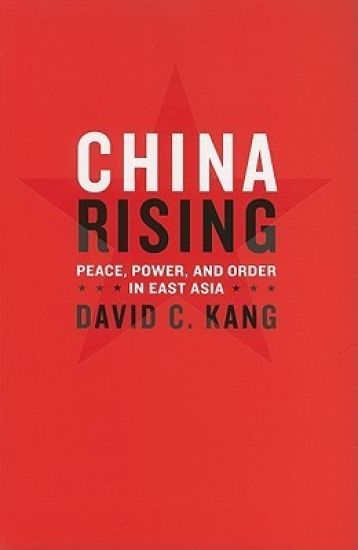
China Rising

China Rising

David C. Kang

Columbia University Press
2007
sidottu
Throughout the past three decades East Asia has seen more peace and stability than at any time since the Opium Wars of 1839-1841. During this period China has rapidly emerged as a major regional power, averaging over nine percent economic growth per year since the introduction of its market reforms in 1978. Foreign businesses have flocked to invest in China, and Chinese exports have begun to flood the world. China is modernizing its military, has joined numerous regional and international institutions, and plays an increasingly visible role in international politics. In response to this growth, other states in East Asia have moved to strengthen their military, economic, and diplomatic relations with China. But why have these countries accommodated rather than balanced China's rise? David C. Kang believes certain preferences and beliefs are responsible for maintaining stability in East Asia. Kang's research shows how East Asian states have grown closer to China, with little evidence that the region is rupturing. Rising powers present opportunities as well as threats, and the economic benefits and military threat China poses for its regional neighbors are both potentially huge; however, East Asian states see substantially more advantage than danger in China's rise, making the region more stable, not less. Furthermore, although East Asian states do not unequivocally welcome China in all areas, they are willing to defer judgment regarding what China wants and what its role in East Asia will become. They believe that a strong China stabilizes East Asia, while a weak China tempts other states to try to control the region. Many scholars downplay the role of ideas and suggest that a rising China will be a destabilizing force in the region, but Kang's provocative argument reveals the flaws in contemporary views of China and the international relations of East Asia and offers a new understanding of the importance of sound U.S. policy in the region.
China Rising

China Rising

David C. Kang

Columbia University Press
2009
pokkari
Throughout the past three decades East Asia has seen more peace and stability than at any time since the Opium Wars of 1839-1841. During this period China has rapidly emerged as a major regional power, averaging over nine percent economic growth per year since the introduction of its market reforms in 1978. Foreign businesses have flocked to invest in China, and Chinese exports have begun to flood the world. China is modernizing its military, has joined numerous regional and international institutions, and plays an increasingly visible role in international politics. In response to this growth, other states in East Asia have moved to strengthen their military, economic, and diplomatic relations with China. But why have these countries accommodated rather than balanced China's rise? David C. Kang believes certain preferences and beliefs are responsible for maintaining stability in East Asia. Kang's research shows how East Asian states have grown closer to China, with little evidence that the region is rupturing. Rising powers present opportunities as well as threats, and the economic benefits and military threat China poses for its regional neighbors are both potentially huge; however, East Asian states see substantially more advantage than danger in China's rise, making the region more stable, not less. Furthermore, although East Asian states do not unequivocally welcome China in all areas, they are willing to defer judgment regarding what China wants and what its role in East Asia will become. They believe that a strong China stabilizes East Asia, while a weak China tempts other states to try to control the region. Many scholars downplay the role of ideas and suggest that a rising China will be a destabilizing force in the region, but Kang's provocative argument reveals the flaws in contemporary views of China and the international relations of East Asia and offers a new understanding of the importance of sound U.S. policy in the region.
Banished to the Homeland

Banished to the Homeland

David C. Brotherton; Luis Barrios

Columbia University Press
2011
sidottu
The 1996 U.S. Immigration Reform and Responsibility Act has led to the forcible deportation of tens of thousands of Dominicans from the United States. Following thousands of these individuals over a seven-year period, David C. Brotherton and Luis Barrios use a unique combination of sociological and criminological reasoning to isolate the forces that motivate emigrants to leave their homeland and then commit crimes in the Unites States violating the very terms of their stay. Housed in urban landscapes rife with gangs, drugs, and tenuous working conditions, these individuals, the authors find, repeatedly play out a tragic scenario, influenced by long-standing historical injustices, punitive politics, and increasingly conservative attitudes undermining basic human rights and freedoms. Brotherton and Barrios conclude that a simultaneous process of cultural inclusion and socioeconomic exclusion best explains the trajectory of emigration, settlement, and rejection, and they mark in the behavior of deportees the contradictory effects of dependency and colonialism: the seductive draw of capitalism typified by the American dream versus the material needs of immigrant life; the interests of an elite security state versus the desires of immigrant workers and families to succeed; and the ambitions of the Latino community versus the political realities of those designing crime and immigration laws, which disadvantage poor and vulnerable populations. Filled with riveting life stories and uncommon ethnographic research, this volume relates the modern deportee's journey to broader theoretical studies in transnationalism, assimilation, and social control.