Kirjojen hintavertailu. Mukana 11 437 845 kirjaa ja 12 kauppaa.

Kirjahaku

Etsi kirjoja tekijän nimen, kirjan nimen tai ISBN:n perusteella.

1000 tulosta hakusanalla David C. Hester

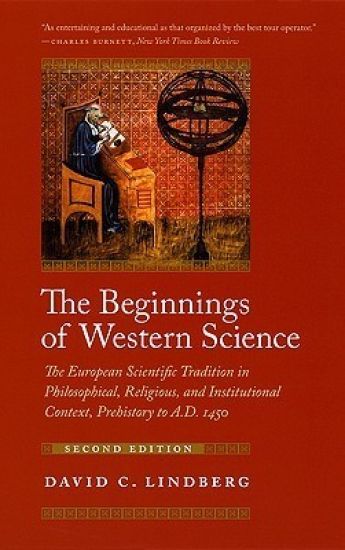
The Beginnings of Western Science

The Beginnings of Western Science

David C. Lindberg

University of Chicago Press
2008
nidottu
When it was first published in 1992, "The Beginnings of Western Science" was lauded as the first successful attempt to present a unified account of both ancient and medieval science in a single volume. Chronicling the development of scientific ideas, practices, and institutions from pre-Socratic Greek philosophy to late-medieval scholasticism, David C. Lindberg surveyed the most important themes in the history of science, including developments in cosmology, astronomy, mechanics, optics, alchemy, natural history, and medicine. In addition, he offered an illuminating account of the transmission of Greek science to medieval Islam and subsequently to medieval Europe."The Beginnings of Western Science" was, and remains, a landmark in the history of science, shaping the way students and scholars understand these critically formative periods of scientific development. It reemerges here in a second edition that includes revisions on nearly every page, as well as several sections that have been completely rewritten. For example, the section on Islamic science has been thoroughly retooled to reveal the magnitude and sophistication of medieval Muslim scientific achievement. And the book now reflects a sharper awareness of the importance of Mesopotamian science for the development of Greek astronomy. In all, the second edition of "The Beginnings of Western Science" captures the current state of our understanding of more than two millennia of science and promises to continue to inspire both students and general readers.

Theories of Vision from Al-kindi to Kepler

Theories of Vision from Al-kindi to Kepler

David C. Lindberg

University of Chicago Press
1996
nidottu
Kepler's successful solution to the problem of vision early in the 17th century was a theoretical triumph as significant as many of the more celebrated developments of the scientific revolution. Yet the full import of Kepler's arguments can be grasped only when they are viewed against the background of ancient, medieval, and Renaissance visual theory. David C. Lindberg provides this background, and in doing so he fills the gap in historical scholarship and constructs a model for tracing the development of scientific ideas.
The Almighty Latin King and Queen Nation

The Almighty Latin King and Queen Nation

David C. Brotherton; Luis Barrios

Columbia University Press
2004
sidottu
From Los Angeles and New York to Chicago and Miami, street gangs are regarded as one of the most intractable crime problems facing our cities, and a vast array of resources is being deployed to combat them. This book chronicles the astounding self-transformation of one of the most feared gangs in the United States into a social movement acting on behalf of the dispossessed, renouncing violence and the underground economy, and requiring school attendance for membership. What caused the Almighty Latin King and Queen Nation of New York City to make this remarkable transformation? And why has it not happened to other gangs elsewhere? David C. Brotherton and Luis Barrios were given unprecedented access to new and never-before-published material by and about the Latin Kings and Queens, including the group's handbook, letters written by members, poems, rap songs, and prayers. In addition, they interviewed more than one hundred gang members, including such leaders as King Tone and King Hector. Featuring numerous photographs by award-winning photojournalist Steve Hart, the book explains the symbolic significance for the gang of hand gestures, attire, rituals, and rites of passage. Based on their inside information, the authors craft a unique portrait of the lives of the gang members and a ground-breaking study of their evolution.
The Almighty Latin King and Queen Nation

The Almighty Latin King and Queen Nation

David C. Brotherton; Luis Barrios

Columbia University Press
2004
pokkari
From Los Angeles and New York to Chicago and Miami, street gangs are regarded as one of the most intractable crime problems facing our cities, and a vast array of resources is being deployed to combat them. This book chronicles the astounding self-transformation of one of the most feared gangs in the United States into a social movement acting on behalf of the dispossessed, renouncing violence and the underground economy, and requiring school attendance for membership. What caused the Almighty Latin King and Queen Nation of New York City to make this remarkable transformation? And why has it not happened to other gangs elsewhere? David C. Brotherton and Luis Barrios were given unprecedented access to new and never-before-published material by and about the Latin Kings and Queens, including the group's handbook, letters written by members, poems, rap songs, and prayers. In addition, they interviewed more than one hundred gang members, including such leaders as King Tone and King Hector. Featuring numerous photographs by award-winning photojournalist Steve Hart, the book explains the symbolic significance for the gang of hand gestures, attire, rituals, and rites of passage. Based on their inside information, the authors craft a unique portrait of the lives of the gang members and a ground-breaking study of their evolution.
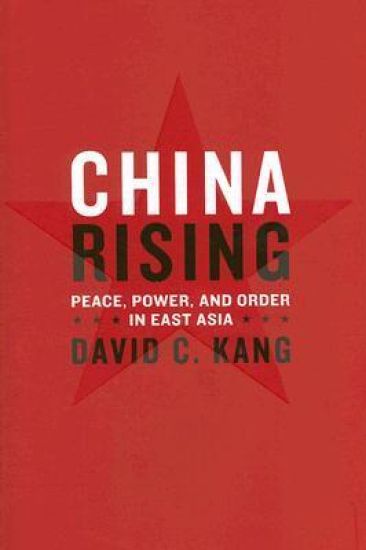
China Rising

China Rising

David C. Kang

Columbia University Press
2007
sidottu
Throughout the past three decades East Asia has seen more peace and stability than at any time since the Opium Wars of 1839-1841. During this period China has rapidly emerged as a major regional power, averaging over nine percent economic growth per year since the introduction of its market reforms in 1978. Foreign businesses have flocked to invest in China, and Chinese exports have begun to flood the world. China is modernizing its military, has joined numerous regional and international institutions, and plays an increasingly visible role in international politics. In response to this growth, other states in East Asia have moved to strengthen their military, economic, and diplomatic relations with China. But why have these countries accommodated rather than balanced China's rise? David C. Kang believes certain preferences and beliefs are responsible for maintaining stability in East Asia. Kang's research shows how East Asian states have grown closer to China, with little evidence that the region is rupturing. Rising powers present opportunities as well as threats, and the economic benefits and military threat China poses for its regional neighbors are both potentially huge; however, East Asian states see substantially more advantage than danger in China's rise, making the region more stable, not less. Furthermore, although East Asian states do not unequivocally welcome China in all areas, they are willing to defer judgment regarding what China wants and what its role in East Asia will become. They believe that a strong China stabilizes East Asia, while a weak China tempts other states to try to control the region. Many scholars downplay the role of ideas and suggest that a rising China will be a destabilizing force in the region, but Kang's provocative argument reveals the flaws in contemporary views of China and the international relations of East Asia and offers a new understanding of the importance of sound U.S. policy in the region.
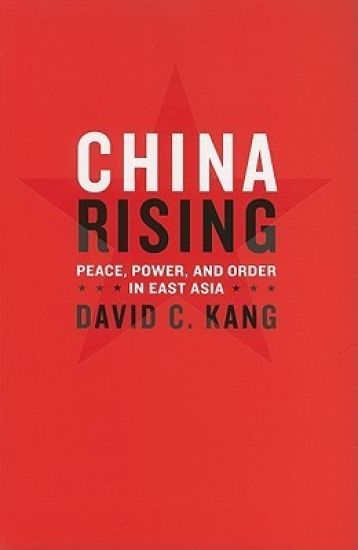
China Rising

China Rising

David C. Kang

Columbia University Press
2009
pokkari
Throughout the past three decades East Asia has seen more peace and stability than at any time since the Opium Wars of 1839-1841. During this period China has rapidly emerged as a major regional power, averaging over nine percent economic growth per year since the introduction of its market reforms in 1978. Foreign businesses have flocked to invest in China, and Chinese exports have begun to flood the world. China is modernizing its military, has joined numerous regional and international institutions, and plays an increasingly visible role in international politics. In response to this growth, other states in East Asia have moved to strengthen their military, economic, and diplomatic relations with China. But why have these countries accommodated rather than balanced China's rise? David C. Kang believes certain preferences and beliefs are responsible for maintaining stability in East Asia. Kang's research shows how East Asian states have grown closer to China, with little evidence that the region is rupturing. Rising powers present opportunities as well as threats, and the economic benefits and military threat China poses for its regional neighbors are both potentially huge; however, East Asian states see substantially more advantage than danger in China's rise, making the region more stable, not less. Furthermore, although East Asian states do not unequivocally welcome China in all areas, they are willing to defer judgment regarding what China wants and what its role in East Asia will become. They believe that a strong China stabilizes East Asia, while a weak China tempts other states to try to control the region. Many scholars downplay the role of ideas and suggest that a rising China will be a destabilizing force in the region, but Kang's provocative argument reveals the flaws in contemporary views of China and the international relations of East Asia and offers a new understanding of the importance of sound U.S. policy in the region.
Banished to the Homeland

Banished to the Homeland

David C. Brotherton; Luis Barrios

Columbia University Press
2011
sidottu
The 1996 U.S. Immigration Reform and Responsibility Act has led to the forcible deportation of tens of thousands of Dominicans from the United States. Following thousands of these individuals over a seven-year period, David C. Brotherton and Luis Barrios use a unique combination of sociological and criminological reasoning to isolate the forces that motivate emigrants to leave their homeland and then commit crimes in the Unites States violating the very terms of their stay. Housed in urban landscapes rife with gangs, drugs, and tenuous working conditions, these individuals, the authors find, repeatedly play out a tragic scenario, influenced by long-standing historical injustices, punitive politics, and increasingly conservative attitudes undermining basic human rights and freedoms. Brotherton and Barrios conclude that a simultaneous process of cultural inclusion and socioeconomic exclusion best explains the trajectory of emigration, settlement, and rejection, and they mark in the behavior of deportees the contradictory effects of dependency and colonialism: the seductive draw of capitalism typified by the American dream versus the material needs of immigrant life; the interests of an elite security state versus the desires of immigrant workers and families to succeed; and the ambitions of the Latino community versus the political realities of those designing crime and immigration laws, which disadvantage poor and vulnerable populations. Filled with riveting life stories and uncommon ethnographic research, this volume relates the modern deportee's journey to broader theoretical studies in transnationalism, assimilation, and social control.
Banished to the Homeland

Banished to the Homeland

David C. Brotherton; Luis Barrios

Columbia University Press
2011
pokkari
The 1996 U.S. Immigration Reform and Responsibility Act has led to the forcible deportation of tens of thousands of Dominicans from the United States. Following thousands of these individuals over a seven-year period, David C. Brotherton and Luis Barrios use a unique combination of sociological and criminological reasoning to isolate the forces that motivate emigrants to leave their homeland and then commit crimes in the Unites States violating the very terms of their stay. Housed in urban landscapes rife with gangs, drugs, and tenuous working conditions, these individuals, the authors find, repeatedly play out a tragic scenario, influenced by long-standing historical injustices, punitive politics, and increasingly conservative attitudes undermining basic human rights and freedoms. Brotherton and Barrios conclude that a simultaneous process of cultural inclusion and socioeconomic exclusion best explains the trajectory of emigration, settlement, and rejection, and they mark in the behavior of deportees the contradictory effects of dependency and colonialism: the seductive draw of capitalism typified by the American dream versus the material needs of immigrant life; the interests of an elite security state versus the desires of immigrant workers and families to succeed; and the ambitions of the Latino community versus the political realities of those designing crime and immigration laws, which disadvantage poor and vulnerable populations. Filled with riveting life stories and uncommon ethnographic research, this volume relates the modern deportee's journey to broader theoretical studies in transnationalism, assimilation, and social control.
Writing Violence

Writing Violence

David C. Atherton

Columbia University Press
2023
sidottu
Edo-period Japan was a golden age for commercial literature. A host of new narrative genres cast their gaze across the social landscape, probed the realms of history and the fantastic, and breathed new life into literary tradition. But how to understand the politics of this body of literature remains contested, in part because the defining characteristics of much early modern fiction—formulaicness, reuse of narratives, stock characters, linguistic and intertextual play, and heavy allusion to literary canon—can seem to hold social and political realities at arm’s length.David C. Atherton offers a new approach to understanding the relationship between the challenging formal features of early modern popular literature and the world beyond its pages. Focusing on depictions of violence—one of the most fraught topics for a peaceful polity ruled over by warriors—he connects concepts of form and formalization across the aesthetic and social spheres. Atherton shows how the formal features of early modern literature had the potential to alter the perception of time and space, make social and economic forces visible, defamiliarize conventions, give voice to the socially peripheral, and reshape the contours of community. Through careful readings of works by the major writers Asai Ryoi, Ihara Saikaku, Chikamatsu Monzaemon, Ueda Akinari, and Santo Kyoden, Writing Violence reveals the essential role of literary form in constructing the world—and in seeing it anew.
Writing Violence

Writing Violence

David C. Atherton

Columbia University Press
2023
pokkari
Edo-period Japan was a golden age for commercial literature. A host of new narrative genres cast their gaze across the social landscape, probed the realms of history and the fantastic, and breathed new life into literary tradition. But how to understand the politics of this body of literature remains contested, in part because the defining characteristics of much early modern fiction—formulaicness, reuse of narratives, stock characters, linguistic and intertextual play, and heavy allusion to literary canon—can seem to hold social and political realities at arm’s length.David C. Atherton offers a new approach to understanding the relationship between the challenging formal features of early modern popular literature and the world beyond its pages. Focusing on depictions of violence—one of the most fraught topics for a peaceful polity ruled over by warriors—he connects concepts of form and formalization across the aesthetic and social spheres. Atherton shows how the formal features of early modern literature had the potential to alter the perception of time and space, make social and economic forces visible, defamiliarize conventions, give voice to the socially peripheral, and reshape the contours of community. Through careful readings of works by the major writers Asai Ryoi, Ihara Saikaku, Chikamatsu Monzaemon, Ueda Akinari, and Santo Kyoden, Writing Violence reveals the essential role of literary form in constructing the world—and in seeing it anew.
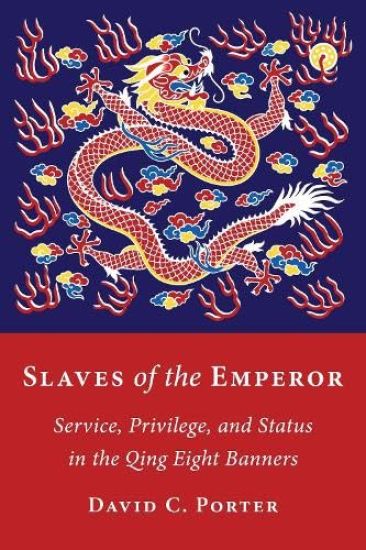
Slaves of the Emperor

Slaves of the Emperor

David C. Porter

Columbia University Press
2023
sidottu
Shortlisted, 2024 Wallace K. Ferguson Prize, Canadian Historical AssociationChina’s last imperial dynasty governed a vast and culturally diverse territory, encompassing a wide range of local political systems and regional elites. But the Qing empire was built and held together by a single imperial elite: the more than two million members of the hereditary Eight Banner system who were at the core of both the military and the bureaucracy. The banner population was multiethnic, linked by shared membership in a clearly demarcated status group defined in law and administrative practice. Banner people were bound to the court by an exchange of loyal service for institutionalized privilege, a relationship symbolically conceptualized as one of slave to master.Slaves of the Emperor explores the Qing approach to one of the fundamental challenges of early modern state-building: how to develop an effective bureaucracy with increasing administrative capacity to govern a growing polity while retaining the loyalty of the ruling family’s most important supporters. David C. Porter traces how the banner system created a service elite through its processes of incorporating new members, its employment of bannermen as technical specialists, its imposition of service obligations on women as well as men, and its response to fiscal and ideological challenges. Placing Qing practices in comparative perspective, he uncovers crucial parallels to similar institutions in Tokugawa Japan, imperial Russia, and the Ottoman Empire. Slaves of the Emperor provides a new framework for understanding the structure and function of elites both in China and across Eurasia in the early modern period.
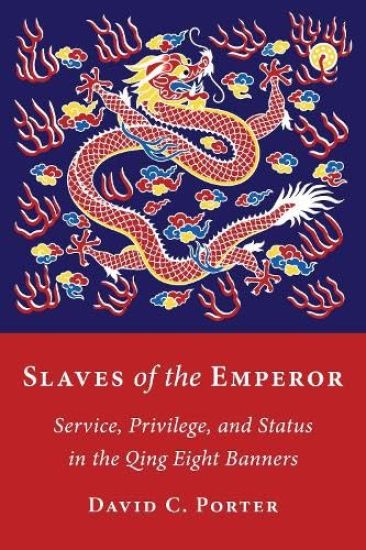
Slaves of the Emperor

Slaves of the Emperor

David C. Porter

Columbia University Press
2023
pokkari
Shortlisted, 2024 Wallace K. Ferguson Prize, Canadian Historical AssociationChina’s last imperial dynasty governed a vast and culturally diverse territory, encompassing a wide range of local political systems and regional elites. But the Qing empire was built and held together by a single imperial elite: the more than two million members of the hereditary Eight Banner system who were at the core of both the military and the bureaucracy. The banner population was multiethnic, linked by shared membership in a clearly demarcated status group defined in law and administrative practice. Banner people were bound to the court by an exchange of loyal service for institutionalized privilege, a relationship symbolically conceptualized as one of slave to master.Slaves of the Emperor explores the Qing approach to one of the fundamental challenges of early modern state-building: how to develop an effective bureaucracy with increasing administrative capacity to govern a growing polity while retaining the loyalty of the ruling family’s most important supporters. David C. Porter traces how the banner system created a service elite through its processes of incorporating new members, its employment of bannermen as technical specialists, its imposition of service obligations on women as well as men, and its response to fiscal and ideological challenges. Placing Qing practices in comparative perspective, he uncovers crucial parallels to similar institutions in Tokugawa Japan, imperial Russia, and the Ottoman Empire. Slaves of the Emperor provides a new framework for understanding the structure and function of elites both in China and across Eurasia in the early modern period.
Guilty!

Guilty!

David C Hanss

Lulu.com
2019
pokkari
Guilty is a novel written by David C Hanss. It is the story of a Teacher who was wrongly convicted of Murder, it took him over five years to prove his innocence whist on the run from the Police. Other Crime Novels by David C Hanss She kept Going The Killer Catchers The Smart Secretary
She Kept Going

She Kept Going

David C Hanss

Lulu.com
2019
pokkari
The story of a young widow whose husband had died under strange circumstances whilst working in a government laboratory. Other crime novels from David C Hanss: The Killer Catchers Guilty? The Smart Secretary
The Smart Secretary

The Smart Secretary

David C Hanss

Lulu.com
2019
pokkari
The secretary of a banker has been arrested on a charge of fraud. She left on a round-the-world cruise, but the case caught up with her. Other crime novels by David C Hanss Guilty! She kept going The killer Catchers
Shouting Down the Silence

Shouting Down the Silence

David C Dougherty

University of Illinois Press
2010
sidottu
Shouting Down the Silence presents the first complete biography of Stanley Elkin, a preeminent novelist who consistently won high marks from critics but whose complexities of style seemed destined to elude the popular acclaim he hoped to attain. From the publication of his second novel, A Bad Man, in 1967 to his death in 1995, Elkin was tormented by the desire for both material and artistic success. Elkin's novels were taught in colleges and universities, his fiction received high praise from critics and reviewers (two of his novels won National Book Critics Circle Awards), and his short stories were widely anthologized--and yet he was unable to achieve renown beyond the avant-garde, or to escape the stigma of being an "academic writer." He wanted to be Faulkner, but he had trouble being Elkin.Drawing on personal interviews and an intimate knowledge of Elkins's life and works, David C. Dougherty captures Elkin's early life as the son of a charismatic, intimidating, and remarkably successful Jewish immigrant from Russia, as well as his later career at Washington University in St. Louis. A frequent participant at the annual Bread Loaf Writers' conference, he was the friend--and sometime antagonist--of other important writers, particularly Saul Bellow, William Gass, Howard Nemerov, and Robert Coover. Despite failed attempts to bridge the gap from his academic post to wide popular success, Elkin continued to write essays, stories, and novels that garnered unerring praise. His was a classic dilemma of an intellectual aesthete loath to make use of the common devices of popular appeal. The book details the ambition, the success, the friction, and the foibles of a writer who won fame, but not the fame he wanted.
Charles Ives in the Mirror

Charles Ives in the Mirror

David C Paul

University of Illinois Press
2013
sidottu
American composer Charles Ives (1874–1954) has gone from being a virtual unknown to become one of the most respected and lauded composers in American music. In this sweeping survey of intellectual and musical history, David C. Paul tells the new story of how Ives's music was shaped by shifting conceptions of American identity within and outside of musical culture, charting the changes in the reception of Ives across the twentieth century and into the twenty-first century. Paul focuses on the critics, composers, performers, and scholars whose contributions were most influential in shaping the critical discourse on Ives, many of them marquee names of American musical culture themselves, including Henry Cowell, Aaron Copland, Elliott Carter, and Leonard Bernstein. Paul explores both how Ives positioned his music amid changing philosophical and aesthetic currents and how others interpreted his contributions to American music. Although Ives's initial efforts to find a public in the early twenties attracted a few devotees, the resurgence of interest in the American literary past during the thirties made a concert staple of his "Concord" Sonata, a work dedicated to nineteenth-century transcendentalist writers. Paul shows how Ives was subsequently deployed as an icon of American freedom during the early Cold War period and how he came to be instigated at the head of a line of "American maverick" composers. Paul also examines why a recent cadre of scholars has beset the composer with Gilded Age social anxieties. By embedding Ives' reception within the changing developments of a wide range of fields including intellectual history, American studies, literature, musicology, and American politics and society in general, Charles Ives in the Mirror: American Histories of an Iconic Composer greatly advances our understanding of Ives and his influence on nearly a century of American culture.
Charles Ives in the Mirror

Charles Ives in the Mirror

David C Paul

University of Illinois Press
2014
nidottu
American composer Charles Ives (1874–1954) has gone from being a virtual unknown to become one of the most respected and lauded composers in American music. In this sweeping survey of intellectual and musical history, David C. Paul tells the new story of how Ives's music was shaped by shifting conceptions of American identity within and outside of musical culture, charting the changes in the reception of Ives across the twentieth century and into the twenty-first century. Paul focuses on the critics, composers, performers, and scholars whose contributions were most influential in shaping the critical discourse on Ives, many of them marquee names of American musical culture themselves, including Henry Cowell, Aaron Copland, Elliott Carter, and Leonard Bernstein. Paul explores both how Ives positioned his music amid changing philosophical and aesthetic currents and how others interpreted his contributions to American music. Although Ives's initial efforts to find a public in the early twenties attracted a few devotees, the resurgence of interest in the American literary past during the thirties made a concert staple of his "Concord" Sonata, a work dedicated to nineteenth-century transcendentalist writers. Paul shows how Ives was subsequently deployed as an icon of American freedom during the early Cold War period and how he came to be instigated at the head of a line of "American maverick" composers. Paul also examines why a recent cadre of scholars has beset the composer with Gilded Age social anxieties. By embedding Ives' reception within the changing developments of a wide range of fields including intellectual history, American studies, literature, musicology, and American politics and society in general, Charles Ives in the Mirror: American Histories of an Iconic Composer greatly advances our understanding of Ives and his influence on nearly a century of American culture.
Creator, Are You Listening?

Creator, Are You Listening?

David C. Jacobson

Indiana University Press
2007
sidottu
In an anthology that is both scholarly and accessible to readers of contemporary poetry, David C. Jacobson examines the search for God in the work of six prominent Israeli poets—Yehuda Amichai, Admiel Kosman, Rivka Miriam, Zelda Mishkovsky, Hava Pinhas-Cohen, and Asher Reich. In the book's introduction, Jacobson explores the central role that poetry has always played and continues to play in our understanding of the religious experience. The work of each poet is then preceded by an introduction which establishes the historical and biographical contexts of the poems discussed. The poetry appears in the original Hebrew as well as Jacobson's graceful English translations.