Kirjahaku
Etsi kirjoja tekijän nimen, kirjan nimen tai ISBN:n perusteella.
1000 tulosta hakusanalla David Carter
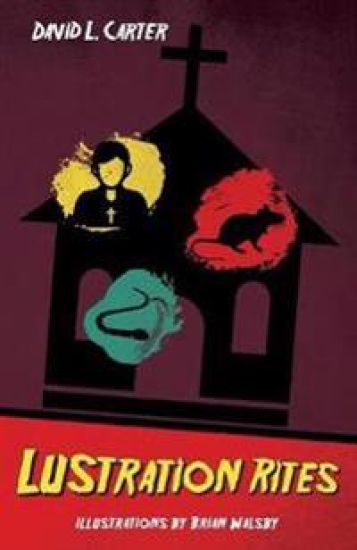
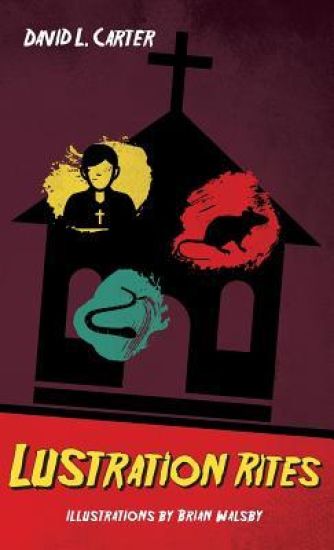
Vermin. Vandalism. Violence. A foul stench pollutes the atmosphere within St. Aloysius Episcopal Church. Reverend Silas DeBassompierre is a young clergyman with a lot of enemies within his congregation; and he trusts no one, not even his capable and devoted administrative assistant, Grace. Is Satan responsible for the strange phenomena at St. Aloysius, or is a force far more subtle and sinister at work to sabotage the reverend's ministry? More than what meets the eye will inevitably be revealed when a tormented priest on the edge of the abyss performs . . . Lustration Rites ""David Carter does it again in Lustration Rites. Like his previous debut novel Familiar, the bizarre plot is nightmarish and Kafkaesque, but underneath is a simple allegory of corruption and crisis. Carter delivers a literary novel that digs deep into the world of theology and philosophy."" --William K. Lawrence, Author of The Punk and the Professor David L. Carter holds degrees in theology, English literature, and library science, and is the author of the novel Familiar. He lives in North Carolina.



Building Self-Esteem brings you easy-to-follow techniques for improving your self-image, so you can achieve a realistic and positive view of yourself and live a happier and more successful life. A positive self-image can help you to improve your relationships and focus on what matters to you, whether that's dealing with feelings of inadequacy, exploring your creativity, or improving physical fitness.Based on psychological assessments and practical journaling exercises, Building Self-Esteem enables you to uncover your needs, preferences and concerns, and to move away from whatever is holding you back.
Baptizing buzzards Preaching to pigeons Clancy is a rat on a mission from God...to bring the Gospel to the various non-human animals that roam the churchyard of St. Aloysius. But as his congregation grows, so does the capacity for conflict. When tempers inevitably flare and the worm turns, will the Reverend Rat be able to shepherd his flock into the Peaceable Kingdom? "Carter weaves a delightful, refreshing, and, at times, surprising tale of a rat, Clancy, who is called to preach and to found a truly diverse church of creatures, great and small. Their personal and community dynamics mirror those of human churches though with enough distance and difference to provoke insightful and creative alternatives." -Rev. Dr. William Kondrath, author of God's Tapestry: Understanding and Celebrating Differences and Facing Feelings in Faith Communities"David Carter...(creates) the character of Clancy, a church-dwelling rodent who is inspired to preach the gospel by covertly listening to Sunday services... What makes this work is that Clancy himself is new to his faith, which means he has to sort out its various ethical and practical dilemmas before he can convert others. In the process, Carter spins an endearing and whimsical story that is...a book that any worm, vulture or human might enjoy." -Darrell Laurant, author of The Kudzu Kid and Inspiration Street
"...every single creature on this earth-or in it-has evil in it's heart, even if it doesn't have a heart..."The wages of sin is death, and the Rat Reverend Clancy is determined to deliver the various non-human creatures that make up his congregation from Satan's snares But when new members, old animosities, and his own weaknesses stand in the way of forgiveness, will this holy rodent find the courage to face his demons?
The Rat Reverend Clancy and the Seven Heavenly Virtues
David L Carter
Apocryphile Press
2024
pokkari
Determined to be all things to all creatures, the Rat Reverend Clancy has his paws full juggling the demands of his increasingly diverse and dynamic congregation of urban wildlife. When it becomes clear that their beloved pastor is all too non-human, it's then up to the faithful themselves to offer their own particular gifts for ministry in order to keep the Sprit moving. But when the ghosts of the past come back to haunt one of their own, and when the line between virtue and vice becomes blurry, who 's to say what ought to be done? Can the members of St. Aloysius Jr. discover within themselves and one another the strengths necessary to meet the challenges of uncertainty? Eventually, the question comes down to: "Who can find a virtuous buzzard? For her price is far above rubies "


The Music Has Gone Out of the Movement
Carter David C.
The University of North Carolina Press
2014
nidottu
After the passage of sweeping civil rights and voting rights legislation in 1964 and 1965, the civil rights movement stood poised to build on considerable momentum. In a famous speech at Howard University in 1965, President Lyndon B. Johnson declared that victory in the next battle for civil rights would be measured in ""equal results"" rather than equal rights and opportunities. It seemed that for a brief moment the White House and champions of racial equality shared the same objectives and priorities. Finding common ground proved elusive, however, in a climate of growing social and political unrest marked by urban riots, the Vietnam War, and resurgent conservatism. Examining grassroots movements and organizations and their complicated relationships with the federal government and state authorities between 1965 and 1968, David C. Carter takes readers through the inner workings of local civil rights coalitions as they tried to maintain strength within their organizations while facing both overt and subtle opposition from state and federal officials. He also highlights internal debates and divisions within the White House and the executive branch, demonstrating that the federal government's relationship to the movement and its major goals was never as clear-cut as the president's progressive rhetoric suggested.Carter reveals the complex and often tense relationships between the Johnson administration and activist groups advocating further social change, and he extends the traditional timeline of the civil rights movement beyond the passage of the Voting Rights Act.

Film directors from East Asia frequently win top prizes at international film festivals, but in the West little is known about them nor about the cultures that produced them. It is not all martial arts, flying warriors, historical pageants and tea ceremonies. China, Hong Kong, Taiwan, Japan and North and South Korea went through periods of great political turmoil and rapid modernisation in the 20th century. The films of these countries reflect these changes and the conflicts between modern lifestyles and traditional values. In some cases, it is capitalism versus communism, in others materialism versus spiritual concerns. This book provides an ideal reference work on all the major directors, with details of their films and checklists for the films of each country, useful for both ardent fan and serious student alike. It explores the common cultural heritage of the countries and their mutual influence. The films of China, Japan and Korea, for example, reflect their shared Buddhist and Confucian heritage. The films of China and North Korea are conditioned by Communist ideology. Early Korean cinema was dominated by the effects of Japanese colonial domination, and the Japanese cinema greatly influenced that of Taiwan.

Herman and the noble and proud Ernestine, two young lovers, find themselves confronted with a pair of libertines who will stop at nothing - not even the confines of the law - to assuage their desires. Count Oxtiern, villainous and dissolute, and his accomplice Madame Scholtz, a widow of lusty temperament, will shrink from nothing, no lie, no treachery is beneath them in their quest for sexual fulfilment. But does crime really never pay? Or can virtue vanquish vice?

Introduces a number of bugs, such as the Shiny Raindrop Bug and Chick-Chick Bug, through touch-and-feel elements, pop-up pages, bold illustrations, and fun-shaped flaps. By the creator of Stinky Bugs.


Martin Carter Selected Poems / Poesías Escogidas
David Dabydeen; Kwame Dawes
Peepal Tree Press Ltd
1999
nidottu
This dual language selection of Martin Carter's poems, edited by David Dabydeen, translated into Spanish by Salvador Ortiz-Carbonares and with an introduction by Gemma Robinson, will establish very clearly that Carter is a major South American poet, in the company of Valejo, Neruda and Paz. "What we have is enough to prove, if proof has been needed... that Martin Carter is, without reservation, one of the finest poets to have emerged in the Caribbean region. And the varied subtlety and strength of his poetry carries him without any doubt into the first rank of world poets. Long after the politics which prompted a number of his poems have been forgotten, and long after the society which he often so scathingly indicted has been changed utterly the poetry will continue to strike a chord among new generations." Ian McDonald The late Martin Carter was without doubt one of the Caribbean's major poets, only less well known than Walcott and Brathwaite because he rarely left his native Guyana. He came to notice first for his Poems of Resistance (1954) written out of his experiences of the anti-colonial struggle which included his imprisonment by the British for his political activities. His work has been a major influence on the current generation of Caribbean poets as John Agard, David Dabydeen, Fred D'Aguiar, Kwame Dawes, Linton Kwesi Johnson and Grace Nichols among others have elsewhere testified. Martin Carter was born in Guyana in 1927. He first came to attention with Poems of Resistance in 1954. He is unquestionably one of the three great West Indian poets of his generation. He died in 1997.
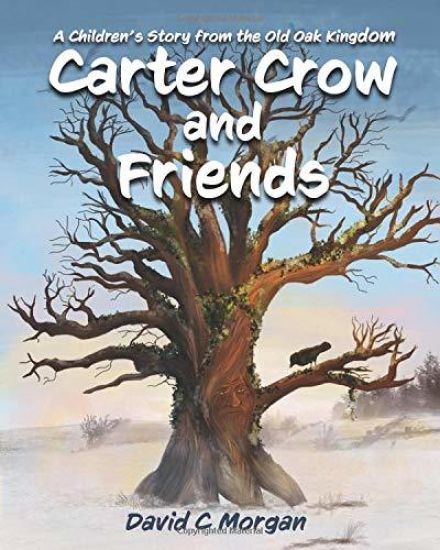
An ancient oak tree stands alone among the rolling hills of the English countryside, a hidden home to a small community of birds. Carter Crow, the guardian of the Oak Kingdom, travels to the distant hills and discovers that things are not always as they first appear. Friendship starts with a smile.