Kirjojen hintavertailu. Mukana 12 396 906 kirjaa ja 12 kauppaa.

Kirjahaku

Etsi kirjoja tekijän nimen, kirjan nimen tai ISBN:n perusteella.

1000 tulosta hakusanalla David Cowan

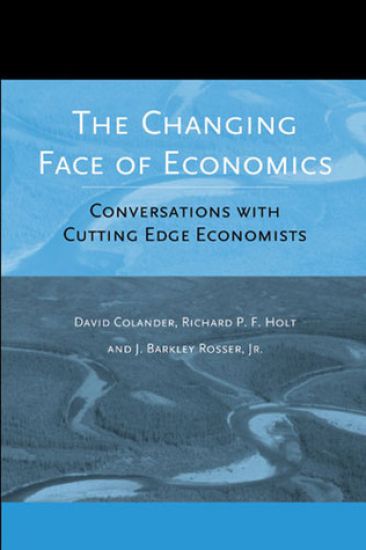
The Changing Face of Economics

The Changing Face of Economics

David Colander; Richard P. F. Holt; J. Barkley Rosser

The University of Michigan Press
2004
nidottu
The Changing Face of Economics gives the reader a sense of the modern economics profession and how it is changing. The volume does so with a set of nine interviews with cutting edge economists, followed by interviews with two Nobel Prize winners, Paul Samuelson and Kenneth Arrow, reflecting on the changes that are occurring. What results is a clear picture of today's economics--and it is no longer standard neoclassical economics.The interviews and commentary together demonstrate that economics is currently undergoing a fundamental shift in method and is moving away from traditional neoclassical economics into a dynamic set of new methods and approaches. These new approaches include work in behavioral economics, experimental economics, evolutionary game theory and ecological approaches, complexity and nonlinear dynamics, methodological analysis, and agent-based modeling.David E. Colander is Professor of Economics, Middlebury College.J. Barkley Rosser, Jr., is Professor of Economics and Kirby L. Kramer Jr. Professor of Business Administration, James Madison University.Richard P. F. Holt is Professor of Churchill Honors and Economics, Southern Oregon University.
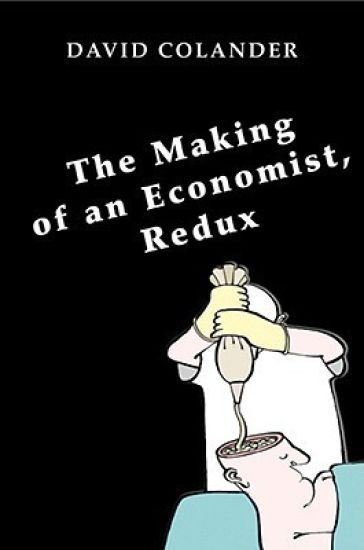
The Making of an Economist, Redux

The Making of an Economist, Redux

David Colander

Princeton University Press
2008
pokkari
Economists seem to be everywhere in the media these days. But what exactly do today's economists do? What and how are they taught? Updating David Colander and Arjo Klamer's classic The Making of an Economist, this book shows what is happening in elite U.S. economics Ph.D. programs. By examining these programs, Colander gives a view of cutting-edge economics--and a glimpse at its likely future. And by comparing economics education today to the findings of the original book, the new book shows how much--and in what ways--the field has changed over the past two decades. The original book led to a reexamination of graduate education by the profession, and has been essential reading for prospective graduate students. Like its predecessor, The Making of an Economist, Redux is likely to provoke discussion within economics and beyond. The book includes new interviews with students at Harvard, Princeton, Stanford, MIT, Chicago, and Columbia. In these conversations, the students--the next generation of elite economists--colorfully and frankly describe what they think of their field and what graduate economics education is really like. The book concludes with reflections by Colander, Klamer, and Robert Solow. This inside look at the making of economists will interest anyone who wants to better understand the economics profession. An indispensible tool for anyone thinking about graduate education in economics, this edition is complete with colorful interviews and predictions about the future of cutting-edge economics.
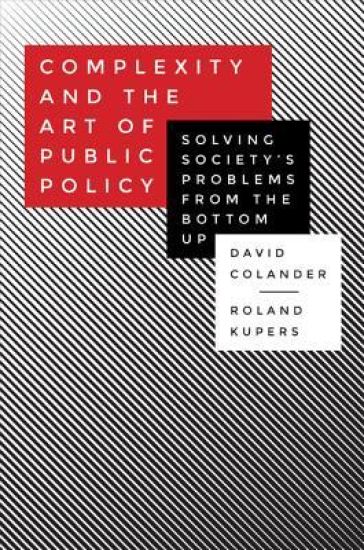
Complexity and the Art of Public Policy

Complexity and the Art of Public Policy

David Colander; Roland Kupers

Princeton University Press
2016
pokkari
Complexity science--made possible by modern analytical and computational advances--is changing the way we think about social systems and social theory. Unfortunately, economists' policy models have not kept up and are stuck in either a market fundamentalist or government control narrative. While these standard narratives are useful in some cases, they are damaging in others, directing thinking away from creative, innovative policy solutions. Complexity and the Art of Public Policy outlines a new, more flexible policy narrative, which envisions society as a complex evolving system that is uncontrollable but can be influenced. David Colander and Roland Kupers describe how economists and society became locked into the current policy framework, and lay out fresh alternatives for framing policy questions. Offering original solutions to stubborn problems, the complexity narrative builds on broader philosophical traditions, such as those in the work of John Stuart Mill, to suggest initiatives that the authors call "activist laissez-faire" policies. Colander and Kupers develop innovative bottom-up solutions that, through new institutional structures such as for-benefit corporations, channel individuals' social instincts into solving societal problems, making profits a tool for change rather than a goal. They argue that a central role for government in this complexity framework is to foster an ecostructure within which diverse forms of social entrepreneurship can emerge and blossom.
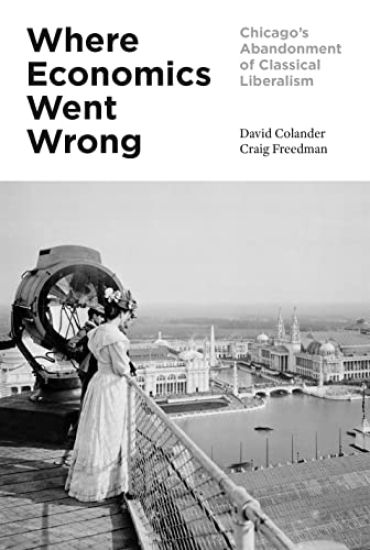
Where Economics Went Wrong

Where Economics Went Wrong

David Colander; Craig Freedman

Princeton University Press
2018
sidottu
How modern economics abandoned classical liberalism and lost its wayMilton Friedman once predicted that advances in scientific economics would resolve debates about whether raising the minimum wage is good policy. Decades later, Friedman’s prediction has not come true. In Where Economics Went Wrong, David Colander and Craig Freedman argue that it never will. Why? Because economic policy, when done correctly, is an art and a craft. It is not, and cannot be, a science. The authors explain why classical liberal economists understood this essential difference, why modern economists abandoned it, and why now is the time for the profession to return to its classical liberal roots.Carefully distinguishing policy from science and theory, classical liberal economists emphasized values and context, treating economic policy analysis as a moral science where a dialogue of sensibilities and judgments allowed for the same scientific basis to arrive at a variety of policy recommendations. Using the University of Chicago—one of the last bastions of classical liberal economics—as a case study, Colander and Freedman examine how both the MIT and Chicago variants of modern economics eschewed classical liberalism in their attempt to make economic policy analysis a science. By examining the way in which the discipline managed to lose its bearings, the authors delve into such issues as the development of welfare economics in relation to economic science, alternative voices within the Chicago School, and exactly how Friedman got it wrong.Contending that the division between science and prescription needs to be restored, Where Economics Went Wrong makes the case for a more nuanced and self-aware policy analysis by economists.
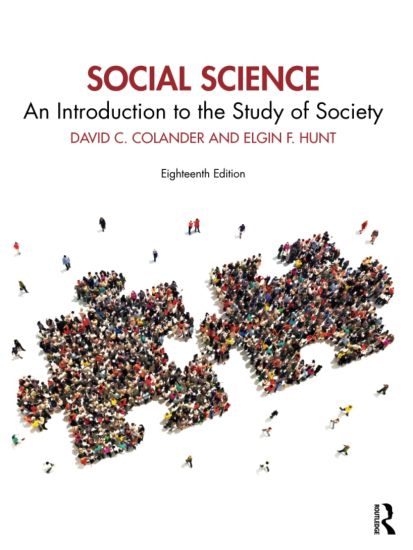
Social Science

Social Science

David Colander; Elgin Hunt

TAYLOR FRANCIS LTD
2022
nidottu
Now in its eigthteenth edition, Social Science: An Introduction to the Study of Society approaches its study from a common sense perspective, rather than a formalistic perspective more common in social science texts. Readers will see how seemingly diverse disciplines intermingle and connect to one another—anthropology and economics, for example. The goal of the book is to teach students critical thinking and problem-solving skills that will allow them to approach social issues in an objective and informed way. New to this edition are significant updates on: Debates about the limits of democracy, and the developing Chinese political alternative. Political, economic, and social implications of the Covid pandemic.Assessment of the Donald Trump presidency.Political, economic, and social implications of the movement from the Trump presidency to the Biden presidency.Implications of the multitrillion-dollar budget deficits the US government has been running.The emergence of populist movements throughout the world. The Chinese political and economic challenge to the United States. Recent developments in evolution theory. Examples, data, recommended readings, and Internet questions.Critical thinking questions.
Social Science

Social Science

David Colander; Elgin Hunt

TAYLOR FRANCIS LTD
2022
sidottu
Now in its eigthteenth edition, Social Science: An Introduction to the Study of Society approaches its study from a common sense perspective, rather than a formalistic perspective more common in social science texts. Readers will see how seemingly diverse disciplines intermingle and connect to one another—anthropology and economics, for example. The goal of the book is to teach students critical thinking and problem-solving skills that will allow them to approach social issues in an objective and informed way. New to this edition are significant updates on: Debates about the limits of democracy, and the developing Chinese political alternative. Political, economic, and social implications of the Covid pandemic.Assessment of the Donald Trump presidency.Political, economic, and social implications of the movement from the Trump presidency to the Biden presidency.Implications of the multitrillion-dollar budget deficits the US government has been running.The emergence of populist movements throughout the world. The Chinese political and economic challenge to the United States. Recent developments in evolution theory. Examples, data, recommended readings, and Internet questions.Critical thinking questions.
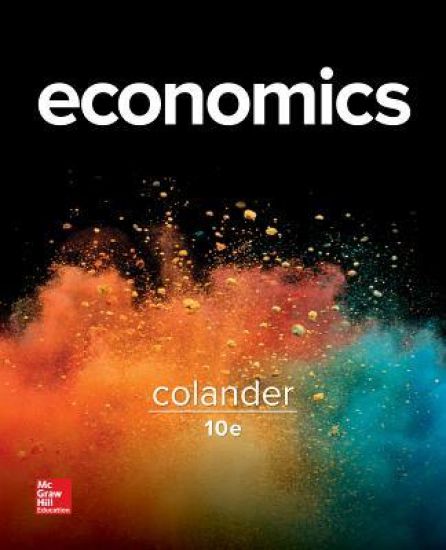
Economics

Economics

David Colander

McGraw-Hill Education
2016
sidottu
The integrated solutions for Colander’s Economics 10e have been specifically designed to help today’s students succeed in the principles of economics course. Colander’s trademark colloquial approach focuses on modern economics, institutions, history, and modeling, and is organized around learning objectives to make it easier for students to understand the material and for instructors to build assignments within Connect. McGraw-Hill’s adaptive learning component, LearnSmart, provides assignable modules that help students master core topics. Significant improvements in pedagogy such as reworked end-of-chapter problems, seamless integration within the Connect eBook, and instant feedback on assignments will engage students in the tenth edition like never before and instill the “economic sensibility” necessary to apply economic concepts to the real world.Connect is the only integrated learning system that empowers students by continuously adapting to deliver precisely what they need, when they need it, and how they need it, so that your class time is more engaging and effective.
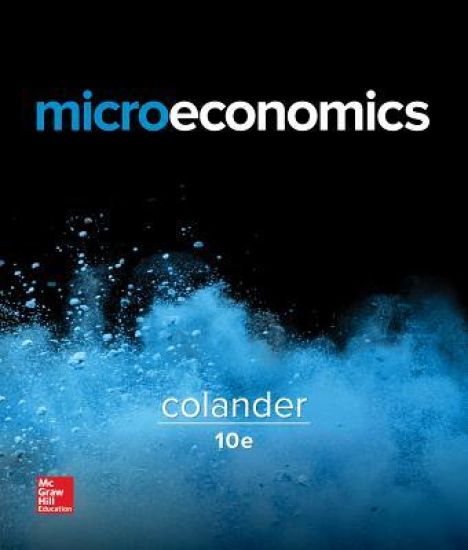
Microeconomics

Microeconomics

David Colander

McGraw-Hill Education
2016
nidottu
The integrated solutions for Colander ' Microeconomics 10e have been specifically designed to help today's students succeed in the principles of economics course. Colander's trademark colloquial approach focuses on modern economics, institutions, history, and modeling,and is organized around learning objectives to make it easier for students to understand the material and for instructors to build assignments within Connect. McGraw-Hill's adaptive learning component,LearnSmart, provides assignable modules that help students master core topics. Significant improvements in pedagogy such as reworked end-of-chapter problems, seamless integration within the Connect eBook,and instant feedback on assignments will engage students in the ninth edition like never before and instill the “economic sensibility” necessary to apply economic concepts to the real world.Connect is the only integrated learning system that empowers students by continuously adapting to deliver precisely what they need, when they need it, and how they need it, so that your class time is more engaging and effective.
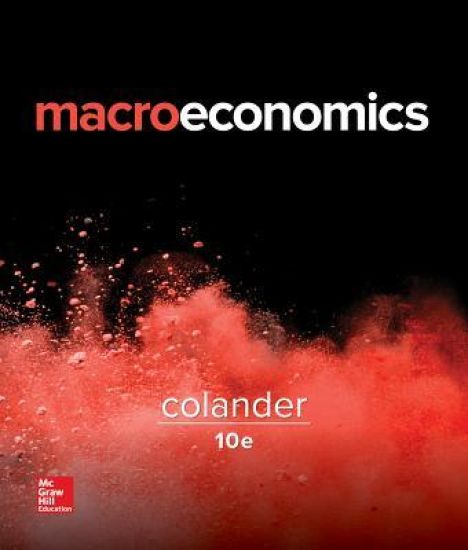
Macroeconomics

Macroeconomics

David Colander

McGraw-Hill Education
2016
nidottu
The integrated solutions for Colander's Macroeconomics 10e have been specifically designed to help today's students succeed in the principles of economics course. Colander's trademark colloquial approach focuses on modern economics, institutions, history, and modeling, and is organized around learning objectives to make it easier for students to understand the material. Significant improvements in pedagogy such as reworked end-of-chapter problems and instant feedback on assignments will engage students in the ninth edition like never before and instill the “economic sensibility” necessary to apply economic concepts to the real world.Connect is the only integrated learning system that empowers students by continuously adapting to deliver precisely what they need, when they need it, and how they need it, so that your class time is more engaging and effective.
The Lost Art of Economics

The Lost Art of Economics

David Colander

Edward Elgar Publishing Ltd
2001
sidottu
Economics is the study of a complex system in which simple laws are not always forthcoming. That complexity mandates three branches of the profession: positive, normative and the art of economics. The economics profession has focused on one of these - positive economics, and in doing so has lost the art of economics. In a series of provocative essays the author argues that most of what economists do is applied policy, which belongs in the art of economics, not in normative or positive economics. The essays explore the forces in academic institutions that have led economics to its current position, as well as the implications of the lost art for the economics profession and its future. In the end, the author is positive about the future of the profession, and predicts that in 2050 it will no longer be as Solow suggested it currently is - 'the overeducated in pursuit of the unknowable'. Instead it will be the 'appropriately educated in search of the knowable'.The essays are written in a highly accessible style, and can be enjoyed by most non-economists, as well as by those economists who don't take themselves too seriously. It can be usefully read by all economists, even those who do take themselves too seriously.
The Lost Art of Economics

The Lost Art of Economics

David Colander

Edward Elgar Publishing Ltd
2003
nidottu
Economics is the study of a complex system in which simple laws are not always forthcoming. That complexity mandates three branches of the profession: positive, normative and the art of economics. The economics profession has focused on one of these - positive economics, and in doing so has lost the art of economics. In a series of provocative essays the author argues that most of what economists do is applied policy, which belongs in the art of economics, not in normative or positive economics. The essays explore the forces in academic institutions that have led economics to its current position, as well as the implications of the lost art for the economics profession and its future. In the end, the author is positive about the future of the profession, and predicts that in 2050 it will no longer be as Solow suggested it currently is - 'the overeducated in pursuit of the unknowable'. Instead it will be the 'appropriately educated in search of the knowable'.The essays are written in a highly accessible style, and can be enjoyed by most non-economists, as well as by those economists who don't take themselves too seriously. It can be usefully read by all economists, even those who do take themselves too seriously.
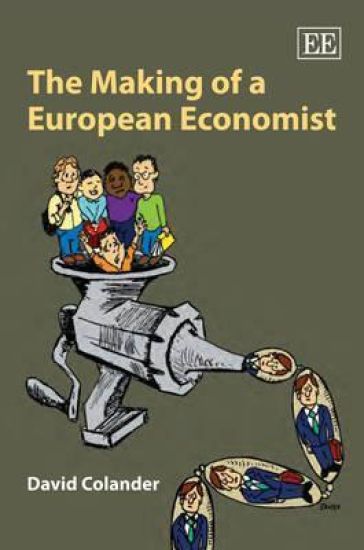
The Making of a European Economist

The Making of a European Economist

David Colander

Edward Elgar Publishing Ltd
2009
sidottu
David Colander's highly original and thought provoking book considers ongoing changes in graduate European economics education. Following up on his earlier classic studies of US graduate economic education, he studies the 'economist production function' in which universities take student 'raw material' and transform it into economists, In doing so he provides insight into economists and economics.He argues that until recently Europe had a different 'economist production function' than did the US; thus European economists were different from their US counterparts. However, this is now changing, and Colander suggests that the changes are not necessarily for the best. Specifically, he suggests that in their attempt to catch up with US programs, European economics is undermining some of their strengths-strengths that could allow them to leapfrog US economics in the future, and be the center of 21st century economics. Student views on the ongoing changes and ensuing difficulties are reported via surveys of, and interviews with, students in global European graduate programs. The conclusion draws broad policy implications from the study, and suggests a radically different market approach to funding economic research that Colander argues will help avoid the pitfalls into which European economics is now falling. This unique and path-breaking book will prove essential reading for economists, as well as academics, students and researchers with a special interest in economics education, the methodology of economics, or the history of economic thought.
The Making of a European Economist

The Making of a European Economist

David Colander

Edward Elgar Publishing Ltd
2009
nidottu
David Colander's highly original and thought provoking book considers ongoing changes in graduate European economics education. Following up on his earlier classic studies of US graduate economic education, he studies the 'economist production function' in which universities take student 'raw material' and transform it into economists, In doing so he provides insight into economists and economics.He argues that until recently Europe had a different 'economist production function' than did the US; thus European economists were different from their US counterparts. However, this is now changing, and Colander suggests that the changes are not necessarily for the best. Specifically, he suggests that in their attempt to catch up with US programs, European economics is undermining some of their strengths-strengths that could allow them to leapfrog US economics in the future, and be the center of 21st century economics. Student views on the ongoing changes and ensuing difficulties are reported via surveys of, and interviews with, students in global European graduate programs. The conclusion draws broad policy implications from the study, and suggests a radically different market approach to funding economic research that Colander argues will help avoid the pitfalls into which European economics is now falling. This unique and path-breaking book will prove essential reading for economists, as well as academics, students and researchers with a special interest in economics education, the methodology of economics, or the history of economic thought.
The Making Of An Economist

The Making Of An Economist

Arjo Klamer; David Colander

Routledge
2020
sidottu
This book focuses on the graduate education of a small group of economists—those at elite schools. It is intended for three audiences: aspiring economists, economists, and the lay public. The book reports conversations with MIT, Harvard, Chicago, and Columbia students.
The Making Of An Economist

The Making Of An Economist

Arjo Klamer; David Colander

TAYLOR FRANCIS LTD
2024
nidottu
This book focuses on the graduate education of a small group of economists—those at elite schools. It is intended for three audiences: aspiring economists, economists, and the lay public. The book reports conversations with MIT, Harvard, Chicago, and Columbia students.
Revolutionary Soldiers of Warren County, Pennsylvania

Revolutionary Soldiers of Warren County, Pennsylvania

Lucy M. Davis Cowan

Southern Historical Press
2023
nidottu
By: Lucy M. Davis Cowan, Pub. 1926, reprinted 2023, 98 pages, Index, soft cover, ISBN #978-1-63914-109-8.Warren County was created in 1800 from Allegheny and Lycoming counties. It sits in the Northwestern corner of the state boarding New York. This book is compilation of Revolutionary Soldiers who were buried in Warren County. Each entry is a mini biography of the soldier giving much data on the proven military service records, along with personal family data and connections. The author has also provided data on soldiers whose military service records who have not been proved. There is a section on tombstone inscriptions of Revolutionary Soldiers and their wives who were buried in Warren County, along with locations of their graves. The final chapter concludes with Warren County Pensioners.
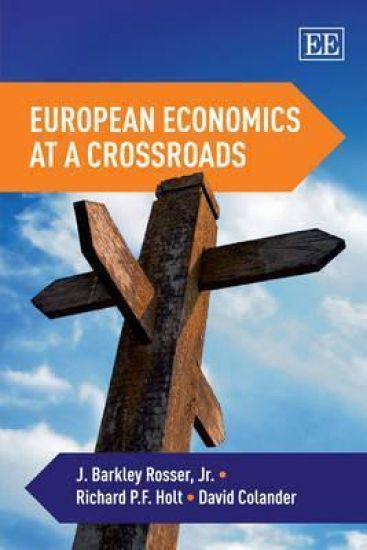
European Economics at a Crossroads

European Economics at a Crossroads

J. Barkley Rosser Jr; Richard P.F. Holt; David Colander

Edward Elgar Publishing Ltd
2010
sidottu
As Europe moves toward an integrated academic system, European economics is changing. This book discusses that change, along with the changes that are happening simultaneously within the economics profession. The authors argue that modern economics can no longer usefully be described as ‘neoclassical’, but is much better described as complexity economics. The complexity approach embraces rather than assumes away the complexities of social interaction. The authors also argue that despite all the problems with previous European academic structures, those structures allowed for more diversity than exists in US universities, and thus were often ahead of US universities in exploring new cutting-edge approaches. The authors further argue that by trying to judge themselves by US-centric measures and to copy US universities, the European economics profession is undermining some of the strengths of the older system – strengths on which it should be building. While the authors agree that European economics needs to go through major changes in the coming decade, they argue that by building on Europe’s strengths, rather than trying to follow a US example, Europe will be more likely to become the global leader in economics in the coming decades rather than a second-rate copy of the US. The book begins with two chapters spelling out the authors’ view of the changes in economics and European economics. This is followed by 11 interviews with a diverse set of innovative European economists from a range of European countries. In the interviews these European economists reflect on the ongoing changes in economics generally and in European economics specifically. These interviews demonstrate how the economics profession is moving away from traditional neoclassical economics into a dynamic set of new methods and approaches (incorporating work in behavioral economics, experimental economics, evolutionary game theory and ecological approaches, complexity and nonlinear dynamics, methodological analysis, and agent-based modelling) that the authors classify as complexity economics. This fascinating and easy-to-read book will prove a stimulating and thought-provoking read for those with an interest in economics, European education, and the nature of academic disciplines generally.