Kirjahaku
Etsi kirjoja tekijän nimen, kirjan nimen tai ISBN:n perusteella.
1000 tulosta hakusanalla David Craig
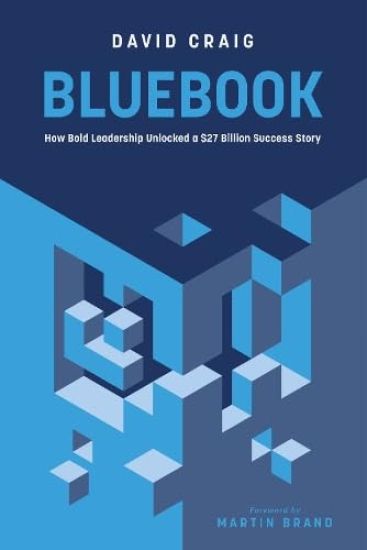
A smart, fast-paced, and entertaining read about how trust, vision, and partnership built something extraordinary. Whether you're into leadership, financial markets, or just a gripping business story, Bluebook delivers insight and inspiration in equal measure. At its heart is the Refinitiv deal, one of the most significant carve-outs in recent business history. Valued at $20 billion, Thomson Reuters Financial & Risk division was spun out, transformed, and ultimately sold to the London Stock Exchange Group for $27 billion just three years later. Led by CEO David Craig and backed by private equity giant Blackstone, this was more than a deal; it was a bold reinvention. It's a story of how data, leadership, and long-term vision created $7 billion in new value. In a world where information moves faster than certainty, Bluebook demonstrates what happens when clarity cuts through the noise. From corporate brinkmanship to cultural transformation, from brand rebirth to operational overhaul, this is the behind-the-scenes story of navigating complexity and driving impact. Part memoir, part masterclass, Bluebook is essential reading for anyone who's ever led change, survived a spinout, or wondered how great businesses are built.

When I Changed My Prayer Life, My Prayer Life Changed Me - A War Guide For Men
David Craig
Lulu.com
2026
nidottu
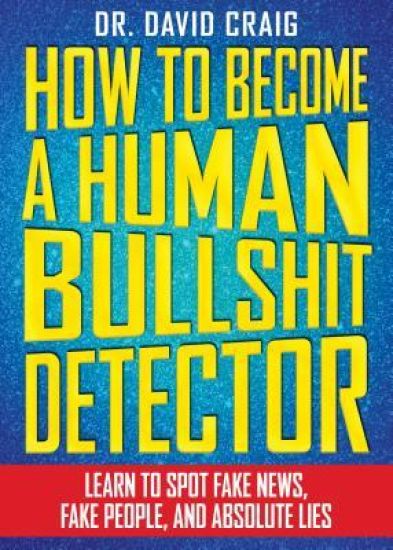
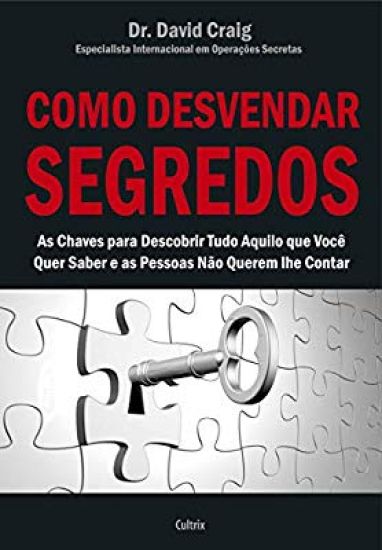
Lying is a normal part of human communication and is sometimes necessary to protect someone's feelings. At the same time, there are also malicious lies meant to deceive, cheat, and defraud. Especially in today's world, in which technology, media, and the government have blurred the lines between fact and fiction, you can't always rely on what comes out of someone's mouth or what you see on the internet or television. It doesn't take mind-reading superpowers to be able to tell when someone is lying--but it does take special skills and a little practice. In How to Become a Human Shit Detector, international expert in undercover operations Dr. David Craig provides readers with an easy-to-follow guide on applying lie-detection skills to your everyday life. From the simple skills of bargaining, making a purchase, or dealing with children, to the more serious business of negotiating a contract, identifying infidelity, or understanding lies in politics, Craig delivers simple but effective tips and techniques we can all use to see behind the fa ade and find our way to the truth. The culmination of more than twenty years of practical criminology and hundreds of hours of academic research, this book is the premier guide to the art of lie-detecting. Split into three parts, the book looks at understanding lies and how to detect lies, and it includes an easy reference section that summarizes all the main points. The mystery of what a person is really thinking is finally unlocked in this fascinating and informative book.
To find more information about Rowman and Littlefield titles, please visit www.rowmanlittlefield.com.
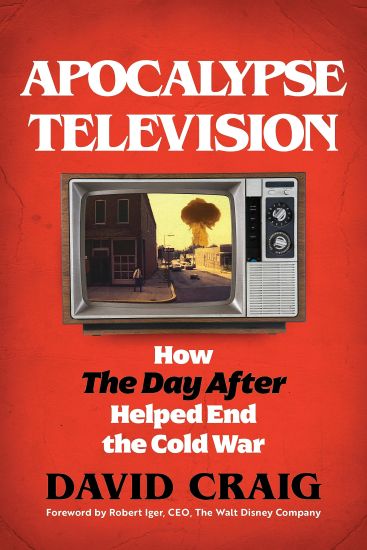
On November 20, 1983, a three-hour made-for-TV movie The Day After premiered on ABC. Set in the heartland of Lawrence, Kansas, the film depicted the events before, during, and after a Soviet nuclear attack with vivid scenes of the post-apocalyptic hellscape that would follow. The film was viewed by over 100 million Americans and remains the highest rated TV movie in history. After the premiere, ABC News aired an episode of Viewpoint, a live special featuring some of the most prominent public intellectuals of the debating the virtues of the Arms Race and the prospect of a winnable nuclear war. The response to the film proved more powerful than perhaps any film or television program in the history of media. Aside from its record-shattering Nielsen ratings, it enjoyed critical acclaim as well as international box office success in theatrical screenings.The path to primetime for The Day After proved nearly as treacherous as the film’s narrative. Battles ensued behind the scenes at the network, between the network and the filmmakers, with Broadcast Standards and Ad Sales, in the edit room and on the set, including the “nuke-mares” experienced by the cast. After the director was pushed aside, he contemplated suicide while also engineering a comeback through the press. But these skirmishes pale in comparison to the culture wars triggered by the film in the press, alongside a growing Nuclear Freeze movement, and from a united, pro-nuclear Right. Once efforts to alter the script failed, the White House conducted a full-throttled propaganda campaign to hijack the film’s message.Before The Day After features a dramatic insider’s account of the making of and backlash against The Day After. No other book has told this story in similar fashion, venturing behind-the-scenes of the programming and news divisions at ABC, Reagan officials in the White House who mounted the propaganda campaign, rogue publicists who hijacked the film to promote a Nuclear Freeze, the backlash from the conservative movement and Religious Right, the challenges encountered by film’s production team from conception to reception, and the experiences of the citizens of Lawrence, Kansas, where the film was set and shot, if also, ground zero in America’s nuclear heartland.
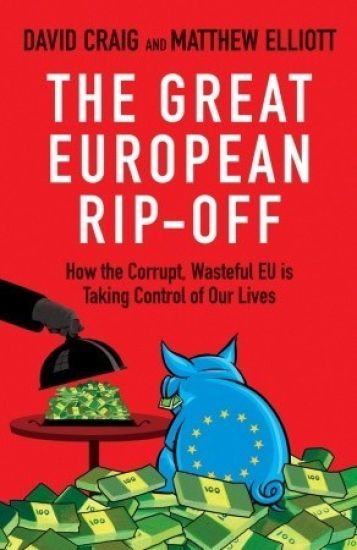
In this EU referendum year, it's time for people across Europe to look at what really goes on in Brussels in our name. It has been estimated that the EU costs us around £1,000 billion a year - an incredible £2000 for every man, woman and child in Europe. So what do we get for our money? Politicians and administrators selflessly working to bring us efficient government? Well-targeted regulations that promote economic prosperity? A safe and free society? A well-protected environment? Help for people in poorer countries? Or is our money being squandered by a self-serving euro-elite of unaccountable politicians and incompetent bureaucrats, or else devoured in a feeding frenzy of fraud and corruption where a few lucky insiders become unimaginably rich at our expense? And is the tsunami of regulation pouring out of Brussels in reality strangling industry, destroying jobs, restricting personal freedom, desecrating the environment and further impoverishing the developing world?Using their extensive network of insider sources, David Craig and Matthew Elliott smash through the secrecy and disinformation that are the Brussels hallmark to reveal what our European rulers are really getting up to. The result is a horrifying story of bureaucracy, hypocrisy and kleptocracy - and how we are all suffering as a result.
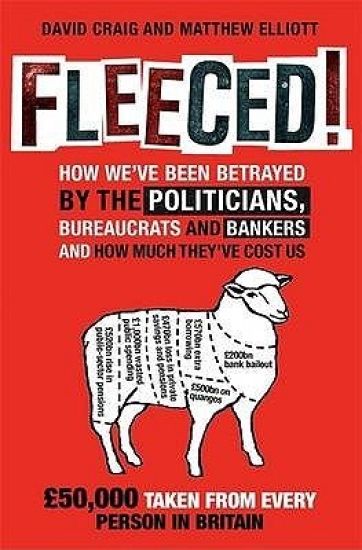
Over the past decade some £3 trillion - equivalent to £50,000 for every person in Britain - has been taken from us by the ruling elites. Half was wasted in a splurge of poorly-managed public spending in the 'boom', while the other half evaporated in the 'bust' - siphoned off by city bonuses, vaporised by a collapse in pension savings and extorted to bail out the banking sector. In their explosive new book, David Craig and Matthew Elliott trace where the money has gone and who has become richer as a result. They name and shame the 'guilty': the incompetent bureaucrats that fail to deliver the services the taxpayer deserves; the multitude of ineffective regulators and watchdogs; the politicians that have betrayed our democracy and enriched themselves; and the self-serving and arrogant city bankers. Moreover, they calculate the enormous debt that awaits the British taxpayer as a result of our rulers' avarice and economic mismanagement. Fleeced! charts the greatest impoverishment and tax swindle of the public in British history.
Yes, this book is for you You will laugh. You will cry But you will not read I AM BEST and not be challenged to see yourself in the life of Dan Alexander. The features of his life may be very different from your own, but in essence, he is every person who grows up with hidden wounds that come to the surface in the WORST of times. I AM BEST is the fictional story of a man who is challenged to overcome his WORST life for his BEST one through a series of unusual and unexpected adventures into his own family history. While he is professionally investigating a train wreck in the Midwest, he encounters three colorful individuals who guide him into a discovery of events and experiences that have profoundly shaped his life. As the story unfolds, he is faced with an incredible opportunity to step out and embrace a fresh perspective of his identity, or to retreat back into the failing world of his familiar addictions. I AM BEST is based upon a positive theology of grace, cutting-edge brain neuroscience, and proven joy-based recovery principles. Every reader will learn how to identify characteristics of their WORST life, and embrace aspects of their own BEST self, all while taking a fantastic journey through compelling story. You will read I AM BEST and want to share it with everyone you know. Everyone deserves a chance at finding and living their very BEST life.
Wanghong as Social Media Entertainment in China
David Craig; Jian Lin; Stuart Cunningham
Springer Nature Switzerland AG
2021
sidottu
In Chinese, the term wanghong refers to creators, social media entrepreneurs alternatively known as KOLs (key opinion leaders) and zhubo (showroom hosts), influencers and micro-celebrities. Wanghong also refers to an emerging media ecology in which these creators cultivate online communities for cultural and commercial value by harnessing Chinese social media platforms, like Weibo, WeChat, Douyu, Huya, Bilibili, Douyin, and Kuaishuo. Framed by the concepts of cultural, creative, and social industries, the book maps the development of wanghong policies and platforms, labor and management, content and culture, as they operate in contrast to its non-Chinese counterpart, social media entertainment, driven by platforms like YouTube, Facebook, Instagram, and Twitch. As evidenced by the backlash to TikTok, the threat of competition from global wanghong signals advancing platform nationalism.
Wanghong as Social Media Entertainment in China
David Craig; Jian Lin; Stuart Cunningham
Springer Nature Switzerland AG
2022
nidottu
In Chinese, the term wanghong refers to creators, social media entrepreneurs alternatively known as KOLs (key opinion leaders) and zhubo (showroom hosts), influencers and micro-celebrities. Wanghong also refers to an emerging media ecology in which these creators cultivate online communities for cultural and commercial value by harnessing Chinese social media platforms, like Weibo, WeChat, Douyu, Huya, Bilibili, Douyin, and Kuaishuo. Framed by the concepts of cultural, creative, and social industries, the book maps the development of wanghong policies and platforms, labor and management, content and culture, as they operate in contrast to its non-Chinese counterpart, social media entertainment, driven by platforms like YouTube, Facebook, Instagram, and Twitch. As evidenced by the backlash to TikTok, the threat of competition from global wanghong signals advancing platform nationalism.
Wanghong als Social-Media-Entertainment in China
David Craig; Jian Lin; Stuart Cunningham
Springer Nature Switzerland AG
2026
sidottu
Winner, 2020 Outstanding Book Award, given by the International Communication Association Honorable Mention, 2020 Nancy Baym Book Award, given by the Association of Internet Researchers How the transformation of social media platforms and user-experience have redefined the entertainment industry In a little over a decade, competing social media platforms, including YouTube, Facebook, Twitter, Instagram, and Snapchat, have given rise to a new creative industry: social media entertainment. Operating at the intersection of the entertainment and interactivity, communication and content industries, social media entertainment creators have harnessed these platforms to generate new kinds of content separate from the century-long model of intellectual property control in the traditional entertainment industry. Social media entertainment has expanded rapidly and the traditional entertainment industry has been forced to cede significant power and influence to content creators, their fans, and subscribers. Digital platforms have created a natural market for embedded advertising, changing the worlds of marketing and communication in their wake. Combined, these factors have produced new, radically shifting demands on the entertainment industry, posing new challenges for screen regimes, media scholars, industry professionals, content creators, and audiences alike. Stuart Cunningham and David Craig chronicle the rise of social media entertainment and its impact on media consumption and production. A massive, industry-defining study with insight from over 100 industry insiders, Social Media Entertainment explores the latest transformations in the entertainment industry in this time of digital disruption.
Winner, 2020 Outstanding Book Award, given by the International Communication Association Honorable Mention, 2020 Nancy Baym Book Award, given by the Association of Internet Researchers How the transformation of social media platforms and user-experience have redefined the entertainment industry In a little over a decade, competing social media platforms, including YouTube, Facebook, Twitter, Instagram, and Snapchat, have given rise to a new creative industry: social media entertainment. Operating at the intersection of the entertainment and interactivity, communication and content industries, social media entertainment creators have harnessed these platforms to generate new kinds of content separate from the century-long model of intellectual property control in the traditional entertainment industry. Social media entertainment has expanded rapidly and the traditional entertainment industry has been forced to cede significant power and influence to content creators, their fans, and subscribers. Digital platforms have created a natural market for embedded advertising, changing the worlds of marketing and communication in their wake. Combined, these factors have produced new, radically shifting demands on the entertainment industry, posing new challenges for screen regimes, media scholars, industry professionals, content creators, and audiences alike. Stuart Cunningham and David Craig chronicle the rise of social media entertainment and its impact on media consumption and production. A massive, industry-defining study with insight from over 100 industry insiders, Social Media Entertainment explores the latest transformations in the entertainment industry in this time of digital disruption.
Development’s current focus – poverty reduction and good governance – signals a turn away from the older neoliberal preoccupation with structural adjustment, privatization and downsizing the state. For some, the new emphases on empowering and securing the poor through basic service delivery, local partnership, decentralization and institution building constitute a decisive break with the past and a whole set of new development possibilities beyond neoliberalism. Taking a wider historical perspective, this book charts the emergence of poverty reduction and governance at the centre of development. It shows that the Poverty Reduction paradigm does indeed mark a shift in the wider liberal project that has underpinned development: precisely what is new, and what this means for how the poor are governed, are described here in detail. This book provides a compelling history of development doctrine and practice, and in particular offers the first comprehensive account of the last twenty years, and development’s shift towards a new political economy of institution building, decentralized governance and local partnerships. The story is illustrated with extensive case studies from first hand experience in Vietnam, Uganda, Pakistan and New Zealand.
Development’s current focus – poverty reduction and good governance – signals a turn away from the older neoliberal preoccupation with structural adjustment, privatization and downsizing the state. For some, the new emphases on empowering and securing the poor through basic service delivery, local partnership, decentralization and institution building constitute a decisive break with the past and a whole set of new development possibilities beyond neoliberalism. Taking a wider historical perspective, this book charts the emergence of poverty reduction and governance at the centre of development. It shows that the Poverty Reduction paradigm does indeed mark a shift in the wider liberal project that has underpinned development: precisely what is new, and what this means for how the poor are governed, are described here in detail. This book provides a compelling history of development doctrine and practice, and in particular offers the first comprehensive account of the last twenty years, and development’s shift towards a new political economy of institution building, decentralized governance and local partnerships. The story is illustrated with extensive case studies from first hand experience in Vietnam, Uganda, Pakistan and New Zealand.
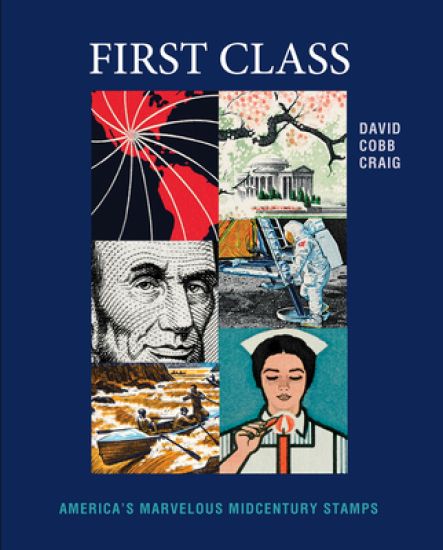
A rare, magnified look at America's best-designed stamps from the mid-20th century Every picture tells a story—even one on a postage stamp. Presented enormously enlarged, the 128 stamps in this book chronicle a stylish era of design: mid-20th-century America. Spanning the late 1950s to the early 1970s, these mini-masterpieces were created when the US post office started to use lavish color on its stamps, and hire the best midcentury talents to design them. That talent roster includes Japanese American children’s book illustrator Gyo Fujikawa, barrier-busting Black graphic artist Georg Olden, Bauhaus master Herbert Bayer, pop artist Robert Indiana, sultan of psychedelia Peter Max, and others. This book divulges the stories behind their tiny pieces of art. Photographed at five, ten, and even fifteen times their actual size, each stamp is presented with a morsel of fun info that will broadly appeal to stamp collectors, history and nostalgia buffs, midcentury design fans, and everyone who likes to geek out on magnified views of teeny images.