Kirjojen hintavertailu. Mukana 12 409 100 kirjaa ja 12 kauppaa.

Kirjahaku

Etsi kirjoja tekijän nimen, kirjan nimen tai ISBN:n perusteella.

1000 tulosta hakusanalla David D. Lopez

Analyse thermique et dynamique et conception d'un système de freinage

Analyse thermique et dynamique et conception d'un système de freinage

Franklin Lacerda de a F Júnior; David D S Da Silva

Editions Notre Savoir
2023
pokkari
Les diff rents syst mes d'un v hicule lui permettent de se d placer en toute s curit . Parmi ces syst mes, l'un des plus importants est le syst me de freinage. Le syst me de freinage favorise l'arr t du v hicule de mani re efficace et s re. Pour ce faire, il est n cessaire de le dimensionner correctement, afin d' viter l'apparition de d faillances lors de son activation. Lors du freinage, les nergies cin tique et potentielle d'un v hicule sont converties en nergie thermique par le frottement du disque avec la plaquette. La surchauffe des disques peut causer des probl mes et entra ner leur rupture. Cette tude vise donc analyser la capacit structurelle et de dissipation de la chaleur des disques d'une moto de 250 cm3, afin de s'assurer que le frein ne se brise pas en cours d'utilisation.

Brand Warfare: 10 Rules for Building the Killer Brand

Brand Warfare: 10 Rules for Building the Killer Brand

David D'Alessandro

McGraw-Hill Professional
2002
nidottu
This book is "BusinessWeek", "Wall Street Journal Business" and "New York Times Business" Bestseller! "A blunt, entertaining, provocative, relentless, and no-holds barred account of how to build a great image or brand." - James Carville, Author, and Democratic Strategist.In a world where consumers have infinite choices, it's almost impossible to compete without a compelling brand. Creating one, however, requires vision, daring, and the ability to understand the consumer. Above all, brand building requires knowledge of the pitfalls and the opportunities in every business decision. The care and feeding of brands is a battle; "Brand Warfare" provides the strategic ammunition needed to win. "D'Alessandro is that refreshing rarity: a businessman who tells it like it is. And he does just that in his gripping new page-turner." - "Chicago Sun-Times". "With its engaging voice and pull-no-punches tone, this book stands out from the marketing crowd." - "Harvard Business Review". "Practical, psychologically astute and clearly written, this book has much to offer businessfolk of all stripes." - "Publishers Weekly".
Executive Warfare: 10 Rules of Engagement for Winning Your War for Success
The New York Times BestsellerWIN THE WAR FOR SUCCESSIt's not enough anymore to be smart, hard-working, and able to show results; At this level, everybody is smart, hard-working, and able to show results. Now it's a game for grown-ups. What really sets you apart is the relationships you build with people of influence. These people can include your peers, your employees, your organization's directors, reporters, vendors, and regulators-as well as the people directly above you in the organizational hierarchy. In senior management, you no longer answer to just one boss. There is now a hazy matrix of hundreds of bosses both inside and outside the office, any one of whom can stop you cold or give you a tremendous push forward. Executive Warfare offers concrete advice for handling all of them, including YOUR PEERS: They are the most valuable of allies or the most dangerous of enemiesTHE CEO: Her office is often where the real fairy dust is kept. Make sure you have a good relationship hereTHE BOARD OF DIRECTORS: They won't judge you fairly if all they see of you is your PowerPointsYOUR DIRECT REPORTS: They are your vital organs, so treat them accordingly. And if you find a blood clot among them-excise that person before he kills youYOUR RIVALS: It's not always wise to shoot at them, but if you do, do not shoot to woundIn his bestsellers Brand Warfare and Career Warfare, author David D'Alessandro offered sharp advice for building a brand and building a career. Now Executive Warfare is the advanced class for the truly ambitious. Learn what it takes to rise to the top-and to do the even harder thing, which is survive there.
Career Warfare: 10 Rules for Building a Sucessful Personal Brand on the Business Battlefield
“A refreshing message . . . from someonewho has fought many corporate wars.”—The New York TimesWith the latest stories from D’Alessandro’s neverendingcollection of corporate derring-do and newinsight on the global battlefield, the nationally bestsellingCareer Warfare is more essential than ever whennavigating your way to success.“D’Alessandro dares to speak the truth. If you don’tmanage your own reputation, those around you will.This is no theoretical exercise. In corporate America,people talk about you every day. You can affect whatthey say.“With a cut-the-crap sharp eye for the passions,yearnings, and follies that drive every organization,D’Alessandro draws apart the drapes and revealswhat it really takes to get ahead in business.”—James Carville, author and Democratic Strategist“With good jobs becoming harder to find,D’Alessandro’s sage advice is more timely andimportant than ever, especially for those who aretrying to build their personal brands and enhancetheir careers at the same time.”—Tom Neff, Chairman, U.S., Spencer Stuart“Smart, strategic, and useful career advice fromsomeone who has actually achieved success in thereal world.”—Harvey Mackay, author of the#1 New York Times bestseller Swim With TheSharks Without Being Eaten Alive
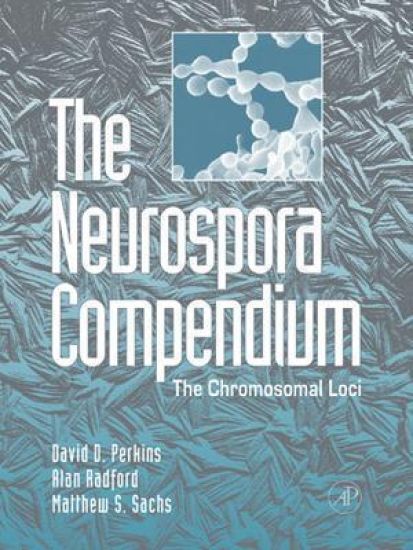
The Neurospora Compendium

The Neurospora Compendium

David D. Perkins; Alan Radford; Matthew S. Sachs

Academic Press Inc
2000
sidottu
The fungi have been major players in the molecular revolution that has transformed biology. Because they can be manipulated as microorganisms, yeast and Neurospora provide information that is difficult to acquire with plants and animals, and experimental findings with fungi often throw light on corresponding processes in plants and animals. The filamentous fungus Neurospora crassa has become a valuable model organism because of its favorable features for genetic analysis and because of the vast store of information that has been acquired during 75 years of research. This compendium provides researchers and students with a concise account of current knowledge about the genes and genome of Neurospora, setting the stage for research that will follow completion of the genome sequence.This book, which is fully documented and abundantly illustrated, will be an indispensable tool in any laboratory that uses fungi for research in molecular genetics, classical genetics, developmental genetics, or cell biology.
Interference

Interference

David D. Nolte

Oxford University Press
2023
sidottu
Ever wonder why soap bubbles become invisible right before they pop? Or why lenses are so blue they look purple? How is it possible to image black holes at the heart of distant galaxies? The answer to all these questions is Interference. This book tells the story of the science of optical interferometry - mankind's most sensitive form of measurement - and of the scientists who tamed light to make outstanding discoveries, from lasers and holograms to astronomy and quantum physics. In the past several years, interferometry has been used to discover exoplanets orbiting distant stars, to take the first image of a black hole, to detect the first gravitational waves and to create the first programmable quantum computer. This list of achievements points to the fertile and active field of interferometry for which this book provides a convenient and up - to - date guide for a wide audience interested in the science of light.
Medieval Marriage

Medieval Marriage

David d'Avray

Oxford University Press
2005
sidottu
This study shows how marriage symbolism emerged from the world of texts to become a social force affecting ordinary people. It covers the whole medieval period but identifies the decades around 1200 as decisive. New arguments for regarding preaching as a mass medium from the thirteenth century are presented, building on the author's Medieval Marriage Sermons. In marriage preaching symbolism was central. Marriage symbolism also became a social force through law, and lay behind the combination of monogamy and indissolubility which made the medieval Church's marriage system a unique development in world history. Symbolism is not presented as an explanation on its own: it interacted with other causal factors, notably the eleventh-century Gregorian Reform's drive for celibacy, which made the higher clergy like a third gender and less sympathetic to patriarchal polygamous tendencies. Sexual intercourse as a symbol of Christ's union with the Church became central, not just in mysticism but in society as structured by Church law. Symbolism also explains apparently bizarre rules, such as the exemption from capital punishment of clerics in minor orders provided that they married a virgin not a widow. The rules about blessing second marriages are also connected with this nexus of thought. The book is based on a wide range of manuscript sources: sermons, canon law commentaries, Apostolic Penitentiary registers, papal bulls, a gaol delivery roll, and pastoral handbooks. The collection of documents at the end of the book expands the source base for the history of medieval marriage generally as well as underpinning the thesis about symbolism.
Galileo Unbound

Galileo Unbound

David D. Nolte

Oxford University Press
2018
sidottu
Galileo Unbound traces the journey that brought us from Galileo's law of free fall to today's geneticists measuring evolutionary drift, entangled quantum particles moving among many worlds, and our lives as trajectories traversing a health space with thousands of dimensions. Remarkably, common themes persist that predict the evolution of species as readily as the orbits of planets or the collapse of stars into black holes. This book tells the history of spaces of expanding dimension and increasing abstraction and how they continue today to give new insight into the physics of complex systems. Galileo published the first modern law of motion, the Law of Fall, that was ideal and simple, laying the foundation upon which Newton built the first theory of dynamics. Early in the twentieth century, geometry became the cause of motion rather than the result when Einstein envisioned the fabric of space-time warped by mass and energy, forcing light rays to bend past the Sun. Possibly more radical was Feynman's dilemma of quantum particles taking all paths at once -- setting the stage for the modern fields of quantum field theory and quantum computing. Yet as concepts of motion have evolved, one thing has remained constant, the need to track ever more complex changes and to capture their essence, to find patterns in the chaos as we try to predict and control our world.
Introduction to Modern Dynamics

Introduction to Modern Dynamics

David D. Nolte

Oxford University Press
2019
sidottu
The best parts of physics are the last topics that our students ever see. These are the exciting new frontiers of nonlinear and complex systems that are at the forefront of university research and are the basis of many high-tech businesses. Topics such as traffic on the World Wide Web, the spread of epidemics through globally-mobile populations, or how the synchronization of global economies are governed by universal principles just as profound as Newton's laws. Nonetheless, the conventional university physics curriculum reserves most of these topics for graduate study because of the assumed need for advanced mathematics. However, by using only linear algebra and calculus, combined with exploratory computer simulations, all of these topics become accessible to advanced undergraduate students. The structure of this book combines the three main topics of modern dynamics - chaos theory, dynamics on complex networks, and general relativity - into a coherent framework. By taking a geometric view of physics, concentrating on the time evolution of physical systems as trajectories through abstract spaces, these topics share a common and simple mathematical language through which any student can gain a unified physical intuition. Given the growing importance of complex dynamical systems in many areas of science and technology, this text provides students with an up-to-date foundation for their future careers. This second edition has an updated introductory chapter and has added key topics to help students prepare for their GRE physics subject exam. It also has expanded chapters on Hamiltonian dynamics, Hamiltonian chaos, and Econophysics, while increasing the number of homework problems at the end of each chapter. The second edition is designed to fulfill the textbook needs of any advanced undergraduate course in mechanics.
Introduction to Modern Dynamics

Introduction to Modern Dynamics

David D. Nolte

Oxford University Press
2019
nidottu
The best parts of physics are the last topics that our students ever see. These are the exciting new frontiers of nonlinear and complex systems that are at the forefront of university research and are the basis of many high-tech businesses. Topics such as traffic on the World Wide Web, the spread of epidemics through globally-mobile populations, or how the synchronization of global economies are governed by universal principles just as profound as Newton's laws. Nonetheless, the conventional university physics curriculum reserves most of these topics for graduate study because of the assumed need for advanced mathematics. However, by using only linear algebra and calculus, combined with exploratory computer simulations, all of these topics become accessible to advanced undergraduate students. The structure of this book combines the three main topics of modern dynamics - chaos theory, dynamics on complex networks, and general relativity - into a coherent framework. By taking a geometric view of physics, concentrating on the time evolution of physical systems as trajectories through abstract spaces, these topics share a common and simple mathematical language through which any student can gain a unified physical intuition. Given the growing importance of complex dynamical systems in many areas of science and technology, this text provides students with an up-to-date foundation for their future careers. This second edition has an updated introductory chapter and has added key topics to help students prepare for their GRE physics subject exam. It also has expanded chapters on Hamiltonian dynamics, Hamiltonian chaos, and Econophysics, while increasing the number of homework problems at the end of each chapter. The second edition is designed to fulfill the textbook needs of any advanced undergraduate course in mechanics.
Nations, States, and Violence

Nations, States, and Violence

David D. Laitin

Oxford University Press
2007
sidottu
Nations, States, and Violence presents a revisionist view of the sources of nationalism, the relationship of the nation to culture, and the implications of nationalism and cultural heterogeneity for the future of the nation-state. It accepts the now-standard view that national identities are not inherited traits but constructed communities in order to serve political ends. But the resulting national identities do not emerge from some metaphorical plebiscite as had been suggested by some; rather they result from efforts by people to coordinate their identities with people who share at least some cultural traits with them. Coordination leads to powerful social and cultural ties that are hard to unravel, and this explains the persistence of national identities. Understood as the result of coordination dynamics, the implications of national homogeneity and heterogeneity are explored. The book shows that national heterogeneity is not, as it is sometimes accused of being, a source of hatred and r s1ence. Nonetheless, there are advantages to homogeneity for the production of public goods and economic growth. Whatever the positive implications of homogeneity, the book shows that in the current world, classic nation-states are defunct. Heterogeneity is proliferating not only due to migration but also because small groups in many states once thought to be homogeneous are coordinating to demand national recognition. With the prohibitive costs of eliminating cultural heterogeneity, citizens and leaders need to learn how best to manage, or even take advantage of, national diversity within their countries. Management of diversity demands that we understand the coordination aspects of national heterogeneity, a perspective that this book provides. In addition to providing a powerful theory of coordination and cultural diversity, the book provides a host of engaging vignettes of Somalia, Spain, Estonia, and Nigeria, where the author has conducted original field research. The result is a book where theory is combined with interpretations of current issues on nationalism, economic growth, and ethnic violence.
Medieval Marriage

Medieval Marriage

David d'Avray

Oxford University Press
2007
nidottu
This study shows how marriage symbolism emerged from the world of texts to become a social force affecting ordinary people. It covers the whole medieval period but identifies the decades around 1200 as decisive. New arguments for regarding preaching as a mass medium from the thirteenth century are presented, building on the author's Medieval Marriage Sermons. In marriage preaching symbolism was central. Marriage symbolism also became a social force through law, and lay behind the combination of monogamy and indissolubility which made the medieval Church's marriage system a unique development in world history. Symbolism is not presented as an explanation on its own: it interacted with other causal factors, notably the eleventh-century Gregorian Reform's drive for celibacy, which made the higher clergy like a third gender and less sympathetic to patriarchal polygamous tendencies. Sexual intercourse as a symbol of Christ's union with the Church became central, not just in mysticism but in society as structured by Church law. Symbolism also explains apparently bizarre rules, such as the exemption from capital punishment of clerics in minor orders provided that they married a virgin not a widow. The rules about blessing second marriages are also connected with this nexus of thought. The book is based on a wide range of manuscript sources: sermons, canon law commentaries, Apostolic Penitentiary registers, papal bulls, a gaol delivery roll, and pastoral handbooks. The collection of documents at the end of the book expands the source base for the history of medieval marriage generally as well as underpinning the thesis about symbolism.
Introduction to Modern Dynamics

Introduction to Modern Dynamics

David D. Nolte

Oxford University Press
2014
sidottu
The best parts of physics are the last topics that our students ever see. These are the exciting new frontiers of nonlinear and complex systems that are at the forefront of university research and are the basis of many high-tech businesses. Topics such as traffic on the World Wide Web, the spread of epidemics through globally-mobile populations, or the synchronization of global economies are governed by universal principles just as profound as Newton's laws. Nonetheless, the conventional university physics curriculum reserves most of these topics for advanced graduate study. Two justifications are given for this situation: first, that the mathematical tools needed to understand these topics are beyond the skill set of undergraduate students, and second, that these are speciality topics with no common theme and little overlap. Introduction to Modern Dynamics dispels these myths. The structure of this book combines the three main topics of modern dynamics - chaos theory, dynamics on complex networks, and general relativity - into a coherent framework. By taking a geometric view of physics, concentrating on the time evolution of physical systems as trajectories through abstract spaces, these topics share a common and simple mathematical language through which any student can gain a unified physical intuition. Given the growing importance of complex dynamical systems in many areas of science and technology, this text provides students with an up-to-date foundation for their future careers.
Introduction to Modern Dynamics

Introduction to Modern Dynamics

David D. Nolte

Oxford University Press
2014
nidottu
The best parts of physics are the last topics that our students ever see. These are the exciting new frontiers of nonlinear and complex systems that are at the forefront of university research and are the basis of many high-tech businesses. Topics such as traffic on the World Wide Web, the spread of epidemics through globally-mobile populations, or the synchronization of global economies are governed by universal principles just as profound as Newton's laws. Nonetheless, the conventional university physics curriculum reserves most of these topics for advanced graduate study. Two justifications are given for this situation: first, that the mathematical tools needed to understand these topics are beyond the skill set of undergraduate students, and second, that these are speciality topics with no common theme and little overlap. Introduction to Modern Dynamics dispels these myths. The structure of this book combines the three main topics of modern dynamics - chaos theory, dynamics on complex networks, and general relativity - into a coherent framework. By taking a geometric view of physics, concentrating on the time evolution of physical systems as trajectories through abstract spaces, these topics share a common and simple mathematical language through which any student can gain a unified physical intuition. Given the growing importance of complex dynamical systems in many areas of science and technology, this text provides students with an up-to-date foundation for their future careers.
The UNCITRAL Arbitration Rules

The UNCITRAL Arbitration Rules

David D. Caron; Lee M. Caplan

Oxford University Press
2013
sidottu
Reaching past the secrecy so often met in arbitration, the second edition of this commentary explains clearly and fully the workings of the UNCITRAL Rules of Arbitral Procedure recommended for use in 1976 by the United Nations. This new edition fully takes account of the revised Rules adopted in 2010 while maintaining coverage of the original Rules where these remain relevant. The differences between the old and the new Rules are clearly indicated and explained. Pulling together difficult to obtain sources from the Iran-United States Claims Tribunal, arbitrations under Chapter 11 of the North American Free Trade Agreement, and ad hoc arbitrations, it illuminates the shape the UNCITRAL Rules take in practice. The authors cogently critique that practice in the light of the negotiating history of the rules and solutions adopted by the other major private rules of arbitral procedure. To aid the specialist in the field, the practice of these various tribunals is extensively extracted and reproduced. Rich both in its analysis and sources, this text is indispensable for those working in or studying international arbitration.
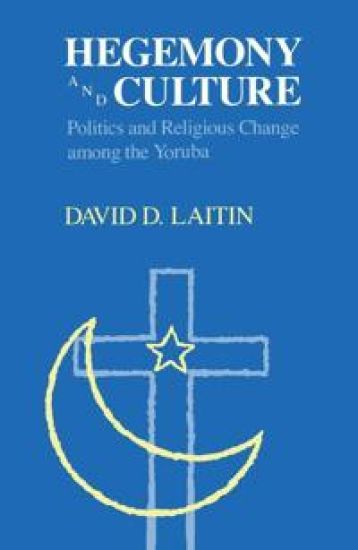
Hegemony and Culture

Hegemony and Culture

David D. Laitin

University of Chicago Press
1986
nidottu
In this ambitious work, David D. Laitin explores the politics of religious change among the Yoruba of Nigeria, then uses his findings to expand leading theories of ethnic and religious politics.