Kirjojen hintavertailu. Mukana 11 627 362 kirjaa ja 12 kauppaa.

Kirjahaku

Etsi kirjoja tekijän nimen, kirjan nimen tai ISBN:n perusteella.

1000 tulosta hakusanalla David E.

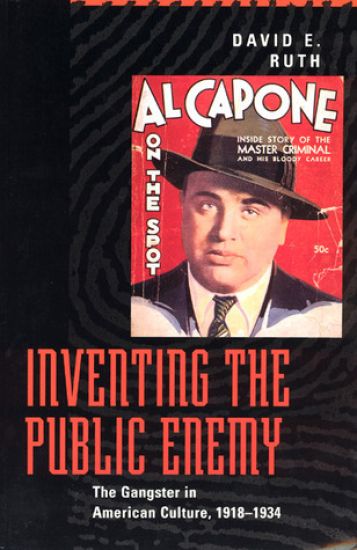
Inventing the Public Enemy

Inventing the Public Enemy

David E. Ruth

University of Chicago Press
1996
nidottu
In this account of mass media images, David Ruth looks at Al Capone and other "invented" gangsters of the 1920s and 1930s. The subject of innumerable newspaper and magazine articles, novels and Hollywood movies, the gangster was a compelling figure for Americans preoccupied with crime and the social turmoil it symbolized. Ruth shows that the media gangster was less a reflection of reality than a projection created from Americans' values, concerns and ideas about what would sell. We see efficient criminal executives demonstrating the multifarious uses of organization; dapper, big-spending gangsters highlighting the promises and perils of the emerging consumer society; and gunmen and molls guiding an uncertain public through the shifting terrain of modern gender roles. In this study, Ruth reveals how the public enemy provides a far-ranging critique of modern culture.

See Jane Run

See Jane Run

David E. Campbell; Christina Wolbrecht

THE UNIVERSITY OF CHICAGO PRESS
2025
sidottu
The definitive analysis of how the presence of women politicians affects young people. From Kamala Harris to Nikki Haley, women in public life are widely expected to inspire young people, especially girls, to follow in their footsteps. See Jane Run provides the definitive analysis of women politicians as role models. With wide-ranging data and attention to gender, race, and party, David E. Campbell and Christina Wolbrecht find that women in politics help convince young people, regardless of gender, that women are capable of political leadership. For young women, women role models enhance faith in democracy and inspire political engagement, including running for office themselves. As role models, women politicians help ensure a more inclusive democracy.
See Jane Run

See Jane Run

David E. Campbell; Christina Wolbrecht

THE UNIVERSITY OF CHICAGO PRESS
2025
nidottu
The definitive analysis of how the presence of women politicians affects young people. From Kamala Harris to Nikki Haley, women in public life are widely expected to inspire young people, especially girls, to follow in their footsteps. See Jane Run provides the definitive analysis of women politicians as role models. With wide-ranging data and attention to gender, race, and party, David E. Campbell and Christina Wolbrecht find that women in politics help convince young people, regardless of gender, that women are capable of political leadership. For young women, women role models enhance faith in democracy and inspire political engagement, including running for office themselves. As role models, women politicians help ensure a more inclusive democracy.
Toronto Edwardian

Toronto Edwardian

David E. Winterton; Michael McClelland

MCGILL-QUEEN'S UNIVERSITY PRESS
2026
sidottu
Beginning his career as an independent architect in the mid-1870s, Frank Darling came to prominence as the principal of Darling & Pearson Architects, designing a plethora of delightful bank buildings in the early twentieth century. Darling’s work aligned with the national ambitions of his clients and gave shape to Britain’s global imperial project on Canadian soil. In Toronto Edwardian David Winterton positions Darling as a leading architectural figure of the era. He demonstrates that the Canadian Edwardian Grand Manner was not merely an architectural interlude: it was pivotal to the development of Canada’s cultural identity and of the possibility of a national architecture in the early twentieth century. Darling was the first Canadian architect with a truly national presence, with built projects in every province – over 360 known buildings – ranging from elaborate urban designs to prefabricated banks that rose up in many towns and villages west of Lake Superior. Winterton has drawn from institutional archives and consulted with local historians, heritage professionals, and scholars to meticulously reconstruct the story of Frank Darling and his work. First exploring biographical, cultural, and patronage contexts, then focusing on the design and construction of fine houses, academic buildings, banks, and even the country’s first skyscrapers, Toronto Edwardian features new and previously unpublished photographs that illuminate the firm’s considerable influence and provide a visual record of Darling’s approach to style. Toronto Edwardian richly illustrates the breadth of Darling’s architectural creation and compellingly articulates the Edwardian period’s importance to Canadian architecture.
My DaDa and Me

My DaDa and Me

David E Yeates; Duchess E Yeates

Tellwell Talent
2021
pokkari
My Dada and Me is a story that is narrated by a little girl named Duchess. She describes her daily routine and experiences with her father. Her father (Dada) is a single parent who is very proud of his daughter. Dada values the time that he spends with Duchess as he cares for her and nurtures her each day. This book gives the reader a perspective of the relationship between a father and his daughter at a young age and how important it is for a little girl to view her father as her constancy.
My DaDa and Me

My DaDa and Me

David E Yeates; Duchess E Yeates

Tellwell Talent
2021
sidottu
My Dada and Me is a story that is narrated by a little girl named Duchess. She describes her daily routine and experiences with her father. Her father (Dada) is a single parent who is very proud of his daughter. Dada values the time that he spends with Duchess as he cares for her and nurtures her each day. This book gives the reader a perspective of the relationship between a father and his daughter at a young age and how important it is for a little girl to view her father as her constancy.
Art on Trial

Art on Trial

David E. Gussak

Columbia University Press
2013
sidottu
A man kidnaps his two children, murders one, and attempts to kill the other. The prosecution seeks the death penalty, while the defense employs an unusual strategy to avoid the sentence. The defendant's attorneys turn to more than 100 examples of his artwork, created over many years, to determine whether he was mentally ill at the time he committed the crimes. Detailing an outstanding example of the use of forensic art therapy in a capital murder case, David Gussak, an art therapist contracted by the defense to analyze the images that were to be presented as evidence, recounts his findings and his testimony in court, as well as the future implications of his work for criminal proceedings. Gussak describes the role of the art therapist as an expert witness in a murder case, the way to use art as evidence, and the conclusions and assessments that professionals can draw from a defendant's artworks. He examines the effectiveness of expert testimony as communicated by the prosecution, defense, and court, and weighs the moral, ethical, and legal consequences of relying on such evidence. For professionals and general readers, this gripping volume presents a convincing account of the ability of art to reflect a damaged and dangerous psyche. A leading text on an emerging field, Art on Trial demonstrates the practical applications of an innovative approach to clinical assessment and treatment.
Art on Trial

Art on Trial

David E. Gussak

Columbia University Press
2015
pokkari
A man kidnaps his two children, murders one, and attempts to kill the other. The prosecution seeks the death penalty, while the defense employs an unusual strategy to avoid the sentence. The defendant's attorneys turn to more than 100 examples of his artwork, created over many years, to determine whether he was mentally ill at the time he committed the crimes. Detailing an outstanding example of the use of forensic art therapy in a capital murder case, David Gussak, an art therapist contracted by the defense to analyze the images that were to be presented as evidence, recounts his findings and his testimony in court, as well as the future implications of his work for criminal proceedings. Gussak describes the role of the art therapist as an expert witness in a murder case, the way to use art as evidence, and the conclusions and assessments that professionals can draw from a defendant's artworks. He examines the effectiveness of expert testimony as communicated by the prosecution, defense, and court, and weighs the moral, ethical, and legal consequences of relying on such evidence. For professionals and general readers, this gripping volume presents a convincing account of the ability of art to reflect a damaged and dangerous psyche. A leading text on an emerging field, Art on Trial demonstrates the practical applications of an innovative approach to clinical assessment and treatment.
I'm Born a Winner

I'm Born a Winner

David E Hall

Lulu.com
2017
pokkari
Inspired by the triumphant turnaround in the lives of former down- and- out students; I'm born a winner shows how to rebound from self-inflicted wounds or socially imposed barriers and succeed. Using the principle of self-discovery as the key to an authentic life, 'Am Born a winner explains how to identify and reject limiting beliefs about yourselves and accept yourself as a way to unlock your creative imagination, and build the life of your dreams. Emphasizing that we are all born with the capacity to win; the writer warns us not to unnecessarily criticize ourselves for past failings nor envy those who seem lucky. Rather, be reminded that though some may have won through privilege or talent, even more can win through effort.
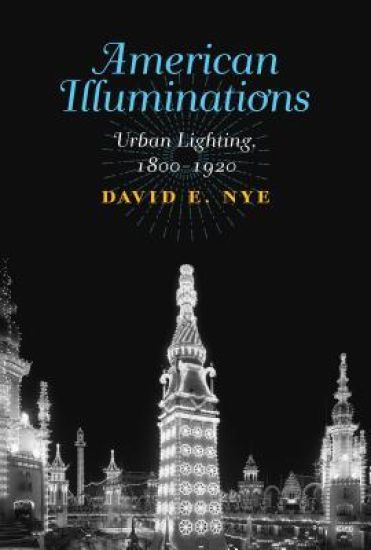
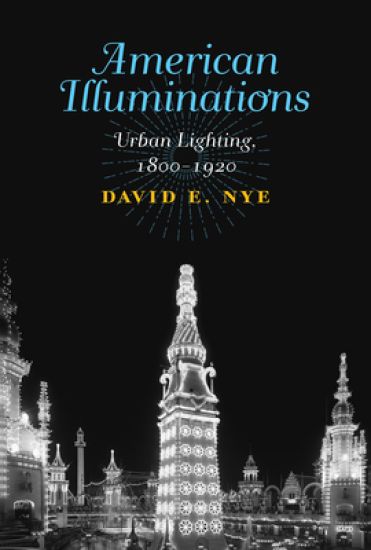
American Illuminations

American Illuminations

David E. Nye

MIT Press
2018
sidottu
How Americans adapted European royal illuminations for patriotic celebrations, spectacular expositions, and intensely bright commercial lighting to create the world's most dazzling and glamorous cities.Illuminated fetes and civic celebrations began in Renaissance Italy and spread through the courts of Europe. Their fireworks, torches, lamps, and special effects glorified the monarch, marked the birth of a prince, or celebrated military victory. Nineteenth-century Americans rejected such monarchial pomp and adapted spectacular lighting to their democratic, commercial culture. In American Illuminations, David Nye explains how they experimented with gas and electric light to create illuminated cityscapes far brighter and more dynamic than those of Europe, and how these illuminations became symbols of modernity and the conquest of nature.Americans used gaslight and electricity in parades, expositions, advertising, elections, and political spectacles. In the 1880s, cities erected powerful arc lights on towers to create artificial moonlight. By the 1890s they adopted more intensive, commercial lighting that defined distinct zones of light and glamorized the city's White Ways, skyscrapers, bridges, department stores, theaters, and dance halls. Poor and blighted areas disappeared into the shadows. American illuminations also became integral parts of national political campaigns, presidential inaugurations, and victory celebrations after the Spanish-American War and World War I.
The Great Energy Transition

The Great Energy Transition

David E. Nye

MIT PRESS LTD
2026
nidottu
How new forms of energy transformed every aspect of American life in a span of 50 years, from 1876 to 1929--and how it seeded our current polarization. The Era of Reform. The Gilded Age. The Progressive Era. What historians often divide into discrete eras was one period of profound change: a massive, multipronged energy transition. Oil, gas, and electricity were woven into a culture that had to heal sectional differences after the Civil War, absorb an enormous influx of immigrants, shift from a rural to an urban society, and adopt a scientific understanding of nature. Every job, business, house, and street underwent a transformation so rapid and radical that Americans simply could not grasp the larger pattern. The concepts of "technology" and an "energy transition" had yet to emerge, and observers struggled to understand their experiences using inadequate terms such as "kaleidoscopic change," "applied science," and "the machine age." In The Great Energy Transition, David Nye documents this transformation--and explains our failure to see it for what it was. In this disorienting transformation, Nye locates the roots of today's cultural polarization. The great energy transition accelerated demographic and economic trends, including higher wages, increasing longevity, the commodification of experience, engineering nature, corporatism, urbanization, resistance to science, and racial segregation. At the same time, the book points to the innovations and institutions that held the country together, from national parks and monuments to mass consumption and newly invented media events.
Image Worlds

Image Worlds

David E. Nye

MIT Press
1985
pokkari
By viewing the corporation as a communicator, Image Worlds links the histories of labor, business, consumption, engineering, and photography, providing a new perspective on one of the largest and most representative corporations.General Electric was one of the first modern industrial corporations to use photographs and other media resources to create images of itself; and the GE archives, comprising well over a million images, form one of the largest privately held collections in the world. To produce this venturesome book, David Nye has used these vast archives to develop a new approach to corporate ideology through corporate iconography.Image Worlds embraces symbols, intentional signs, and photographs on the one hand and the history of institutional and technological development on the other. It views photography as a developing technology with a history of its own, and presents the corporation as a communicator as well as a producer and employer.Illustrated with nearly 60 photographs from the archives, the book identifies five "image markets" that GE sought to organize and address. Company engineers, workers, and managers received publications designed to appeal to their presumed interests. Some of these grew into public journals with a scientific-educational mission; others were restricted in circulation even within the company. At the same time, illustrated mass-media advertising was created to reach potential consumers of GE products. Advertising that presented an image of GE as a place where "progress was the most important product." While GE was promoting this enlightened image, the company was also using its resources to reach the voting public, hoping to gain their support for private electrification in the national debate over municipal power.
America's Assembly Line

America's Assembly Line

David E. Nye

MIT Press
2015
pokkari
From the Model T to today's "lean manufacturing": the assembly line as crucial, yet controversial, agent of social and economic transformation.The mechanized assembly line was invented in 1913 and has been in continuous operation ever since. It is the most familiar form of mass production. Both praised as a boon to workers and condemned for exploiting them, it has been celebrated and satirized. (We can still picture Chaplin's little tramp trying to keep up with a factory conveyor belt.) In America's Assembly Line, David Nye examines the industrial innovation that made the United States productive and wealthy in the twentieth century.The assembly line-developed at the Ford Motor Company in 1913 for the mass production of Model Ts-first created and then served an expanding mass market. It also transformed industrial labor. By 1980, Japan had reinvented the assembly line as a system of "lean manufacturing"; American industry reluctantly adopted the new approach. Nye describes this evolution and the new global landscape of increasingly automated factories, with fewer industrial jobs in America and questionable working conditions in developing countries. A century after Ford's pioneering innovation, the assembly line continues to evolve toward more sustainable manufacturing.
Conflicted American Landscapes

Conflicted American Landscapes

David E. Nye

MIT Press
2021
nidottu
How conflicting ideas of nature threaten to fracture America's identity.Amber waves of grain, purple mountain majesties: American invest much of their national identity in sites of natural beauty. And yet American lands today are torn by conflicts over science, religion, identity, and politics. Creationists believe that the Biblical flood carved American landscapes less than 10,000 years ago; environmentalists protest pipelines; Western states argue that the federal government's land policies throttle free enterprise; Native Americans demand protection for sacred sites. In this book, David Nye looks at Americans' irreconcilably conflicting ideas about nature.
Electrifying America

Electrifying America

David E. Nye

MIT Press
1992
pokkari
How did electricity enter everyday life in America? Using Muncie, Indiana-the Lynds' now iconic Middletown-as a touchstone, David Nye explores how electricity seeped into and redefined American culture. With an eye for telling details from archival sources and a broad understanding of cultural and social history, he creates a thought-provoking panorama of a technology fundamental to modern life. Emphasizing the experiences of ordinary men and women rather than the lives of inventors and entrepreneurs, Nye treats electrification as a set of technical possibilities that were selectively adopted to create the streetcar suburb, the amusement park, the "Great White Way," the assembly line, the electrified home, and the industrialized farm. He shows how electricity touched every part of American life, how it became an extension of political ideologies, how it virtually created the image of the modern city, and how it even pervaded colloquial speech, confirming the values of high energy and speed that have become hallmarks of the twentieth century. He also pursues the social meaning of electrification as expressed in utopian ideas and exhibits at world's fairs, and explores the evocation of electrical landscapes in painting, literature, and photography. Electrifying America combines chronology and topicality to examine the major forms of light and power as they came into general use. It shows that in the city electrification promoted a more varied landscape and made possible new art forms and new consumption environments. In the factory, electricity permitted a complete redesign of the size and scale of operations, shifting power away from the shop floor to managers. Electrical appliances redefined domestic work and transformed the landscape of the home, while on the farm electricity laid the foundation for today's agribusiness.
American Technological Sublime

American Technological Sublime

David E. Nye

MIT Press
1996
pokkari
American Technological Sublime continues the exploration of the social construction of technology that David Nye began in his award-winning book Electrifying America. Here Nye examines the continuing appeal of the "technological sublime" (a term coined by Perry Miller) as a key to the nation's history, using as examples the natural sites, architectural forms, and technological achievements that ordinary people have valued intensely.Technology has long played a central role in the formation of Americans' sense of selfhood. From the first canal systems through the moon landing, Americans have, for better or worse, derived unity from the common feeling of awe inspired by large-scale applications of technological prowess. American Technological Sublime continues the exploration of the social construction of technology that David Nye began in his award-winning book Electrifying America. Here Nye examines the continuing appeal of the "technological sublime" (a term coined by Perry Miller) as a key to the nation's history, using as examples the natural sites, architectural forms, and technological achievements that ordinary people have valued intensely.American Technological Sublime is a study of the politics of perception in industrial society. Arranged chronologically, it suggests that the sublime itself has a history - that sublime experiences are emotional configurations that emerge from new social and technological conditions, and that each new configuration to some extent undermines and displaces the older versions. After giving a short history of the sublime as an aesthetic category, Nye describes the reemergence and democratization of the concept in the early nineteenth century as an expression of the American sense of specialness.What has filled the American public with wonder, awe, even terror? David Nye selects the Grand Canyon, Niagara Falls, the eruption of Mt. St. Helens, the Erie Canal, the first transcontinental railroad, Eads Bridge, Brooklyn Bridge, the major international expositions, the Hudson-Fulton Celebration of 1909, the Empire State Building, and Boulder Dam. He then looks at the atom bomb tests and the Apollo mission as examples of the increasing ambivalence of the technological sublime in the postwar world. The festivities surrounding the rededication of the Statue of Liberty in 1986 become a touchstone reflecting the transformation of the American experience of the sublime over two centuries. Nye concludes with a vision of the modern-day "consumer sublime" as manifested in the fantasy world of Las Vegas.