Kirjojen hintavertailu. Mukana 11 342 296 kirjaa ja 12 kauppaa.

Kirjahaku

Etsi kirjoja tekijän nimen, kirjan nimen tai ISBN:n perusteella.

1000 tulosta hakusanalla David F Bates

Introduction to Applied Mathematics for Environmental Science

Introduction to Applied Mathematics for Environmental Science

David F. Parkhurst

Springer-Verlag New York Inc.
2006
sidottu
For many years, first as a student and later as a teacher, I have ob­ served graduate students in ecology and other environmental sci­ ences who had been required as undergraduates to take calculus courses. Those courses have often emphasized how to prove theo­ rems about the beautiful, logical structure of calculus, but have ne­ glected applications. Most of the time, the students have come out of such courses with little or no appreciation of how to apply calculus in their own work. Based on these observations, I developed a course de­ signed in part to re-teach calculus as an everyday tool in ecology and other environmental sciences. I emphasized derivations—working with story problems (sometimes quite complex ones)—in that course, and now in this book. The present textbook has developed out of my notes for that course. Its basic purpose is to describe various types of mathemati­ cal structures and how they can be apphed in environmental science. Thus, linear and non-linear algebraic equations, derivatives and in­ tegrals, and ordinary and partial differential equations are the basic kinds of structures, or types of mathematical models, discussed. For each, the discussion follows a pattern something like this: 1. An example of the type of structure, as apphed to environmental science, is given. 2. Next, a description of the structure is presented. 3. Usually, this is followed by other examples of how the structure arises in environmental science. 4. The analytic methods of solving and learning from the structure are discussed.

The Life of Frederick Douglass

The Life of Frederick Douglass

David F. Walker

Ten Speed Press
2019
nidottu
A graphic novel biography of the escaped slave, abolitionist, public speaker, and most photographed man of the nineteenth century, based on his autobiographical writings and speeches, spotlighting the key events and people that shaped the life of this great American. Recently returned to the cultural spotlight, Frederick Douglass's impact on American history is felt even in today's current events. Comic book writer and filmmaker David F. Walker joins with the art team of Damon Smyth and Marissa Louise to bring the long, exciting, and influential life of Douglass to life in comic book form. Taking you from Douglass's life as a young slave through his forbidden education to his escape and growing prominence as a speaker, abolitionist, and influential cultural figure during the Civil War and beyond, Frederick Douglass presents a complete illustrated portrait of the man who stood up and spoke out for freedom and equality. Along the way, special features provide additional background on the history of slavery in the United States, the development of photography (which would play a key role in the spread of Douglass's image and influence), and the Civil War. Told from Douglass's point of view and based on his own writings, Frederick Douglass provides an up-close-and-personal look at a history-making American who was larger than life.
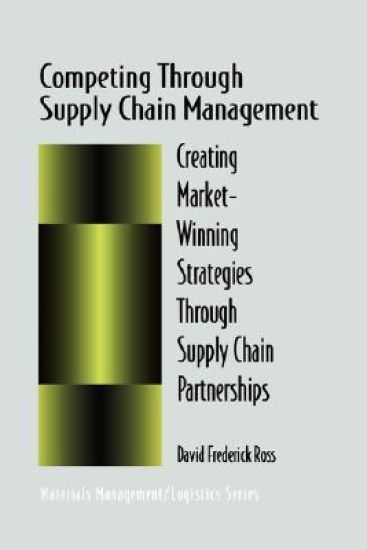
Competing Through Supply Chain Management

Competing Through Supply Chain Management

David F. Ross

Chapman and Hall
1997
sidottu
SCM is one of the hottest topics in manufacturing and distribution, and like JIT and TQC it requires a corporate commitment. This book provides both fundamental principles of SCM as well as a set of guidelines to assist in practical application of SCM. It will be one of the first books on the market that deals exclusively with SCM and its application. Readers in the academic, management sciences, sales, marketing and government environments will find this book of particular interest.
Education, Markets, and the Public Good
David F. Labaree has spent the last twenty years researching, thinking and writing about some of the key and enduring issues in the history of education and education policy and politics. Here, he brings together twelve of his key writings in one place. Starting with a specially written introduction, 'Getting It Wrong', which gives an ironic overview of how the ideas in his work have evolved over time and throws light on the process of scholarly production, the chapters cover such topics as:the structure of the educational system conflicting purposes of educationthe core problems of practice in teaching and teacher education barriers to curriculum reform. An ideal resource for anyone wanting to know more about the development of schools and schooling and David Labaree's contribution to these important fields.
Education, Markets, and the Public Good
David F. Labaree has spent the last twenty years researching, thinking and writing about some of the key and enduring issues in the history of education and education policy and politics. Here, he brings together twelve of his key writings in one place. Starting with a specially written introduction, 'Getting It Wrong', which gives an ironic overview of how the ideas in his work have evolved over time and throws light on the process of scholarly production, the chapters cover such topics as:the structure of the educational system conflicting purposes of educationthe core problems of practice in teaching and teacher education barriers to curriculum reform. An ideal resource for anyone wanting to know more about the development of schools and schooling and David Labaree's contribution to these important fields.
Emptiness Appraised

Emptiness Appraised

David F. Burton

Routledge
2015
nidottu
Emptiness means that all entities are empty of, or lack, inherent existence - entities have a merely conceptual, constructed existence. Though Nagarjuna advocates the Middle Way, his philosophy of emptiness nevertheless entails nihilism, and his critiques of the Nyaya theory of knowledge are shown to be unconvincing.
Development and Globalization

Development and Globalization

David F. Ruccio

Routledge
2010
sidottu
Since the mid-1980s, David F. Ruccio has been developing a new framework of Marxian class analysis and applying it to various issues in socialist planning, Third World development, and capitalist globalization. The aim of this collection is to show, through a series of concrete examples, how Marxian class analysis can be used to challenge existing modes of thought and to produce new insights about the problems of capitalist development and the possibilities of imagining and creating noncapitalist economies.The book consists of fifteen essays, plus an introductory chapter situating the author’s work in a larger intellectual and political context. The topics covered range from planning theory to the role of the state in the Nicaraguan Revolution, from radical theories of underdevelopment to the Third World debt crisis, and from a critical engagement with regulation theory to contemporary discussions of globalization and imperialism.
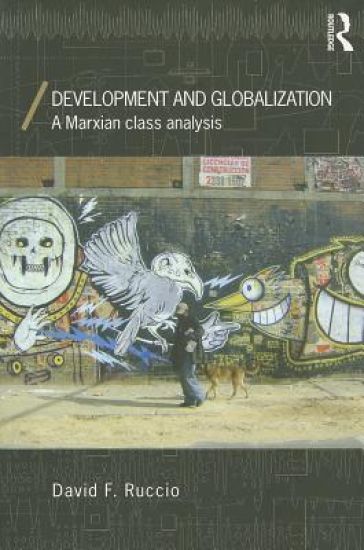
Development and Globalization

Development and Globalization

David F. Ruccio

Routledge
2010
nidottu
Since the mid-1980s, David F. Ruccio has been developing a new framework of Marxian class analysis and applying it to various issues in socialist planning, Third World development, and capitalist globalization. The aim of this collection is to show, through a series of concrete examples, how Marxian class analysis can be used to challenge existing modes of thought and to produce new insights about the problems of capitalist development and the possibilities of imagining and creating noncapitalist economies.The book consists of fifteen essays, plus an introductory chapter situating the author’s work in a larger intellectual and political context. The topics covered range from planning theory to the role of the state in the Nicaraguan Revolution, from radical theories of underdevelopment to the Third World debt crisis, and from a critical engagement with regulation theory to contemporary discussions of globalization and imperialism.
A World History of Tax Rebellions

A World History of Tax Rebellions

David F. Burg

Routledge
2003
sidottu
A World History of Tax Rebellions is an exhaustive reference source for over 4,300 years of riots, rebellions, protests, and war triggered by abusive taxation and tax collecting systems around the world. Each of the chronologically arranged entries focuses on a specific historical event, analyzing its roots, and socio-economic context.
The Academic Deanship

The Academic Deanship

David F. Bright; Mary P. Richards

John Wiley Sons Inc
2010
nidottu
A deanship is now seen as more of a phase in an overall academic career than as a permanent shift from teaching to administration. In fact, the nature of the job itself has changed, as has the range of likely options at the end of a dean's tenure. This book serves as a guide for the aspiring or new dean, offering practical advice on how to approach the interview process and the new job, as well as providing a thoughtful assessment of the deanship in its wider context. The authors--both experienced academic deans at a variety of institutions--encourage the new or experienced dean to reflect on the larger issues, and address the realities of deaning from several perspectives in efforts to illuminate both the challenges and rewards of the job.
Foreign Exchange Operations

Foreign Exchange Operations

David F. DeRosa

John Wiley Sons Inc
2013
sidottu
The ultimate nuts-and-bolts guide to foreign exchange operations The foreign exchange landscape is particularly risky since so much of the world is unregulated and takes place over the counter (off exchange). Brilliant traders and money managers who are profitable may find themselves underperforming, or worse, losing, simply because they failed to establish strong operations. In this book, David DeRosa provides industry players with everything they need for strong operational functions from all the types of trades to execution, master trading agreements, documentation, settlement, margin and collateral, and prime brokerage services. Contains vital work flow solutions for trading in the volatile foreign exchange marketplaceOffers information for mastering the operational aspect of foreign exchange trading to help determine best partners such as prime brokers and othersWritten by David DeRosa a leading foreign exchange expert who has consulted to hundreds of financial institutions Foreign Exchange Operations helps traders mitigate risks and offers a guide to all aspects of trading operations from mastering trading agreements to margin documentation.
Analog-to-Digital and Digital-to-Analog Conversion Techniques
Stresses how A/D and D/A converters operate, their important parameters and how to choose the best type for an application. Contains pertinent information on analog switches and comparators; reference voltages; how to power, ground and shield analog circuitry used in conversion systems to obtain desired accuracy and dynamic range. Features one of the few operational descriptions of code wheels used to perform rotational-to-digital conversion. Organized to allow readers to go directly to the subject conversion data of interest.
Bodies and Ruins

Bodies and Ruins

David F. Crew

The University of Michigan Press
2020
nidottu
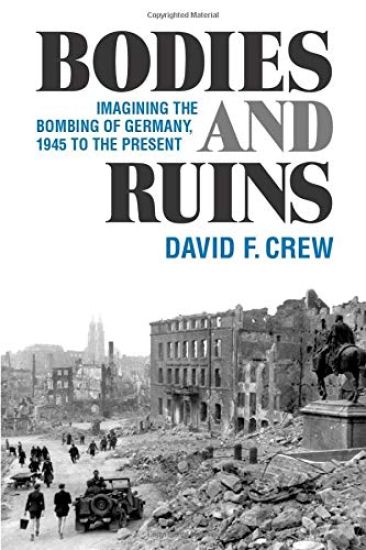
Bodies and Ruins explores changing German memories of World War II as it analyzes the construction of narratives in the postwar period including the depiction of the bombing of individual German cities. The book offers a corrective notion rising in the late 1990s notion that discussions of the Allied bombing were long overdue, because Germans who had endured the bombings had largely been condemned to silence after 1945. David Crew shows that far from being marginalized in postwar historical consciousness, the bombing war was in fact a central strand of German memory and identity. Local narratives of the bombing war, including photographic books, had already established themselves as important “vectors of memory” in the late 1940s and early 1950s. The bombing war had allowed Germans to see themselves as victims at a time when the Allied liberation of the concentration camps and the Nuremberg trials presented Germans to the world as perpetrators or at least as accomplices. The bombing war continued to serve this function even as Germans became more and more willing directly to confront the genocide of European Jews—which by the 1960s was beginning to be referred to as the Holocaust.Bodies and Ruins examines a range of local publications that carried photographic images of German cities destroyed in the air war, images that soon entered the visual memory of World War II. Despite its obvious importance, historians have paid very little attention to the visual representation of the bombing war. This book follows the search for what were considered to be the “right” stories and the “right” pictures of the bombing war in local publications and picture books from 1945 to the present, and is intended for historians as well as general readers interested in World War II, the Allied bombing of German cities, the Holocaust, the history of memory and photographic/visual history.
Bodies and Ruins

Bodies and Ruins

David F. Crew

The University of Michigan Press
2017
sidottu
Bodies and Ruins explores changing German memories of World War II as it analyzes the construction of narratives in the postwar period including the depiction of the bombing of individual German cities. The book offers a corrective notion rising in the late 1990s notion that discussions of the Allied bombing were long overdue, because Germans who had endured the bombings had largely been condemned to silence after 1945. David Crew shows that far from being marginalized in postwar historical consciousness, the bombing war was in fact a central strand of German memory and identity. Local narratives of the bombing war, including photographic books, had already established themselves as important “vectors of memory” in the late 1940s and early 1950s. The bombing war had allowed Germans to see themselves as victims at a time when the Allied liberation of the concentration camps and the Nuremberg trials presented Germans to the world as perpetrators or at least as accomplices. The bombing war continued to serve this function even as Germans became more and more willing directly to confront the genocide of European Jews—which by the 1960s was beginning to be referred to as the Holocaust.Bodies and Ruins examines a range of local publications that carried photographic images of German cities destroyed in the air war, images that soon entered the visual memory of World War II. Despite its obvious importance, historians have paid very little attention to the visual representation of the bombing war. This book follows the search for what were considered to be the “right” stories and the “right” pictures of the bombing war in local publications and picture books from 1945 to the present, and is intended for historians as well as general readers interested in World War II, the Allied bombing of German cities, the Holocaust, the history of memory and photographic/visual history.
Hello, Doctor (a Rookie Reader)

Hello, Doctor (a Rookie Reader)

David F. Marx

C. Press/F. Watts Trade
2001
nidottu
A fun and engaging way for young children to figure out concepts and solving problems on his or her own.Rookie Readers (Ages 5-7) have provided entertaining, high-quality introductions to reading for more than a generation. Each title features full-color, often hilarious illustrations and engaging stories that always involve a young child figuring out concepts or solving problems on his or her own. A little boy does everything the doctor tells him to do when he goes for his check-up.
The Transformation of Positivism

The Transformation of Positivism

David F. Lindenfeld

University of California Press
2022
pokkari
European intellectual history of the late 19th and early 20th centuries presents a picture of extraordinary creative richness. Many historians have looked at this period as one of a "revolt against positivism in the attempts of thinkers such as Freud, Weber, Dilthey, and Durkheim to encompass and submit to strict investigation the irrational aspects of human behavior. At the same time, however, other thinkers such as Russell, Frege, Husserl, Wittgenstein, and Meinong were seeking to revise and expand the notion of reason itself through investigation of language and its relation to logic and psychology; this trend might be seen as a "revolt within positivism." David Lindenfeld shows that these two trends were integrally related in the thought of the Austrian philosopher Alexius Meinong, and that he was representative of the major trends of the age. Meinong played a role in several intellectual movements which are now thought of as distinct. He, like Husserl, studied under the philosopher Fraz Brentano, whose ideas inspired the phenomenological movement. In addition, however, Meinong exerted a decisive influence on Bertrand Russell in the early 1900's and thus also figures prominently in the history of British analytical philosophy. Furthermore, he developed a theory of values and their meaning which dealt with many of the issues raised by German social philosophers such as Weber and Dilthey. Finally, Meinong has an acknowledged place in the history of psychology, where he is cited as a precursor of the Gestalt psychology of Wertheimer, Kohler and Koffka. The first part of The Transformation of Positivism locates the background of Meinong's thought in the long-run traditions of British empiricism as well as in the political and social conditions of Austria in the late 19th century. The second part traces Meinong's intellectual development as he participated in the movement away from "psychologism"--the tendency to reduce all philosophical and social questions to psychological ones. After 1900, Meinong moved to a new concern with language and semantics, culminating in his "theory of objects." The third part shows how positivism, experimental psychology, and phenomenology developed away from Meinong's concepts to emerge as distinct, even opposed, by the 1920's. This title is part of UC Press's Voices Revived program, which commemorates University of California Press's mission to seek out and cultivate the brightest minds and give them voice, reach, and impact. Drawing on a backlist dating to 1893, Voices Revived makes high-quality, peer-reviewed scholarship accessible once again using print-on-demand technology. This title was originally published in 1980.
The Transformation of Positivism

The Transformation of Positivism

David F. Lindenfeld

University of California Press
2022
sidottu
European intellectual history of the late 19th and early 20th centuries presents a picture of extraordinary creative richness. Many historians have looked at this period as one of a "revolt against positivism in the attempts of thinkers such as Freud, Weber, Dilthey, and Durkheim to encompass and submit to strict investigation the irrational aspects of human behavior. At the same time, however, other thinkers such as Russell, Frege, Husserl, Wittgenstein, and Meinong were seeking to revise and expand the notion of reason itself through investigation of language and its relation to logic and psychology; this trend might be seen as a "revolt within positivism." David Lindenfeld shows that these two trends were integrally related in the thought of the Austrian philosopher Alexius Meinong, and that he was representative of the major trends of the age. Meinong played a role in several intellectual movements which are now thought of as distinct. He, like Husserl, studied under the philosopher Fraz Brentano, whose ideas inspired the phenomenological movement. In addition, however, Meinong exerted a decisive influence on Bertrand Russell in the early 1900's and thus also figures prominently in the history of British analytical philosophy. Furthermore, he developed a theory of values and their meaning which dealt with many of the issues raised by German social philosophers such as Weber and Dilthey. Finally, Meinong has an acknowledged place in the history of psychology, where he is cited as a precursor of the Gestalt psychology of Wertheimer, Kohler and Koffka. The first part of The Transformation of Positivism locates the background of Meinong's thought in the long-run traditions of British empiricism as well as in the political and social conditions of Austria in the late 19th century. The second part traces Meinong's intellectual development as he participated in the movement away from "psychologism"--the tendency to reduce all philosophical and social questions to psychological ones. After 1900, Meinong moved to a new concern with language and semantics, culminating in his "theory of objects." The third part shows how positivism, experimental psychology, and phenomenology developed away from Meinong's concepts to emerge as distinct, even opposed, by the 1920's. This title is part of UC Press's Voices Revived program, which commemorates University of California Press's mission to seek out and cultivate the brightest minds and give them voice, reach, and impact. Drawing on a backlist dating to 1893, Voices Revived makes high-quality, peer-reviewed scholarship accessible once again using print-on-demand technology. This title was originally published in 1980.
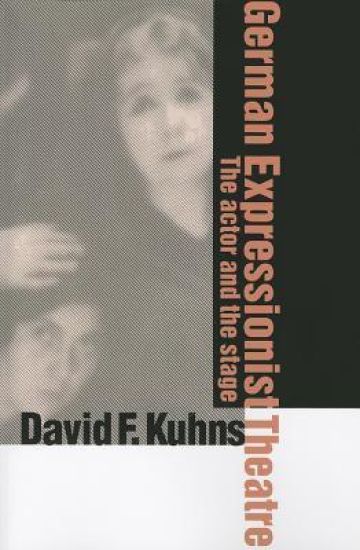
German Expressionist Theatre

German Expressionist Theatre

David F. Kuhns

Cambridge University Press
2006
pokkari
German Expressionist Theatre: The Actor and the Stage considers the powerfully stylized, anti-realistic styles of acting on the German Expressionist stage from 1916 to 1921. It relates this striking departure from the dominant European acting tradition of realism to the specific cultural crises that enveloped the German nation during the course of its involvement in World War I. This book describes three distinct Expressionist acting styles, all of which in their own ways attempted to show how symbolic stage performance could be a powerful rhetorical resource for a culture struggling to come to terms with the crises of historical change. The examination of Expressionist script and actor memoirs allows for an unprecedented focus on description and analysis of acting itself.
The Observation and Analysis of Stellar Photospheres

The Observation and Analysis of Stellar Photospheres

David F. Gray

Cambridge University Press
2008
pokkari
The Observation and Analysis of Stellar Photospheres describes the equipment, observational techniques, and analysis used in the investigation of stellar photospheres. This third edition builds on the success of the previous editions, improving the presentation, and revising topics and results to keep up to date with the latest research. The first half of the book develops the tools of analysis and the second half demonstrates how they can be applied. Topics covered include radiation transfer, models of stellar photospheres, spectroscopic equipment, observing stellar spectra, and techniques for measuring stellar characteristics. Useful real star data can be found throughout the text and in the appendices, and there are extensive references to the primary literature. This comprehensive textbook is suitable for advanced undergraduates and graduate students of stellar physics. Each chapter contains exercises to test understanding and a wealth of useful reference material is included.