Kirjojen hintavertailu. Mukana 11 516 202 kirjaa ja 12 kauppaa.

Kirjahaku

Etsi kirjoja tekijän nimen, kirjan nimen tai ISBN:n perusteella.

1000 tulosta hakusanalla David Peace

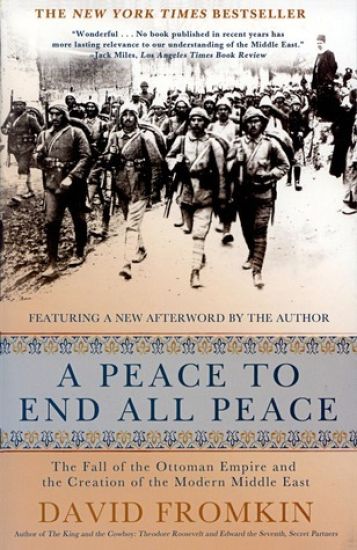
A Peace to End All Peace, 20th Anniversary Edition: The Fall of the Ottoman Empire and the Creation of the Modern Middle East
Published with a new afterword from the author--the classic, bestselling account of how the modern Middle East was created The Middle East has long been a region of rival religions, ideologies, nationalisms, and ambitions. All of these conflicts--including the hostilities between Arabs and Israelis, and the violent challenges posed by Iraq's competing sects--are rooted in the region's political inheritance: the arrangements, unities, and divisions imposed by the Allies after the First World War. In A Peace to End All Peace, David Fromkin reveals how and why the Allies drew lines on an empty map that remade the geography and politics of the Middle East. Focusing on the formative years of 1914 to 1922, when all seemed possible, he delivers in this sweeping and magisterial book the definitive account of this defining time, showing how the choices narrowed and the Middle East began along a road that led to the conflicts and confusion that continue to this day. A new afterword from Fromkin, written for this edition of the book, includes his invaluable, updated assessment of this region of the world today, and on what this history has to teach us.
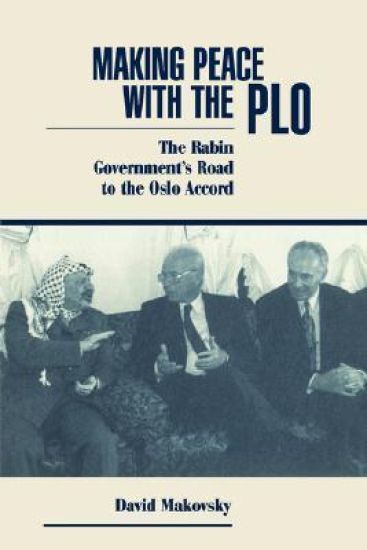
Making Peace With The Plo

Making Peace With The Plo

David Makovsky

Westview Press Inc
1995
nidottu
This book explores the personal, domestic, regional, and international factors that led Israel's Prime Minister Yitzhak Rabin and other top aides to negotiate the peace accords. It describes in fascinating detail the intricacies of the Israel-Palestine Liberation Organization (PLO) bargaining.
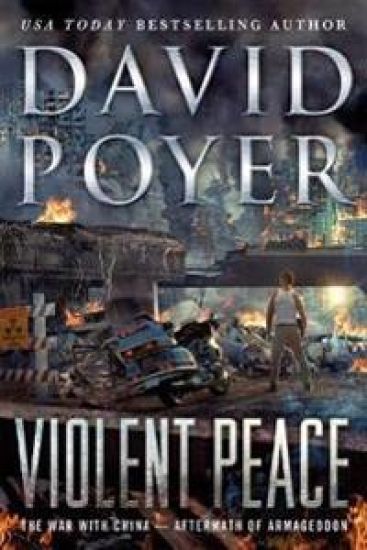
Violent Peace

Violent Peace

David Poyer

St Martin's Press
2021
sidottu
In the next installment of David Poyer’s critically-acclaimed War with China series, mutual exhaustion after a massive nuclear exchange is giving way to a Violent Peace. While Admiral Dan Lenson motorcycles across a post-Armageddon US in search of his missing daughter, his wife Blair Titus lands in a spookily deserted, riot-torn Beijing to negotiate the reunification of Taiwan with the rest of China, and try to create a democratic government. But a CIA-sponsored Islamic insurgency in Xianjiang province is hurtling out of control. Andres Korzenowski, a young case officer, must decide whether ex-SEAL Master Chief Teddy Oberg - now the leader of a ruthless jihad - should be extracted, left in place, or terminated. Meanwhile, Captain Cheryl Staurulakis and USS Savo Island are recalled to sea, to forestall a Russian fleet intent on grabbing a resource-rich Manchuria. The violent and equivocal termination of the war between China and the Allies has brought not peace, but dangerous realignments in the endless game of great power chess. Will the end of one world war simply be the signal for the beginning of another?
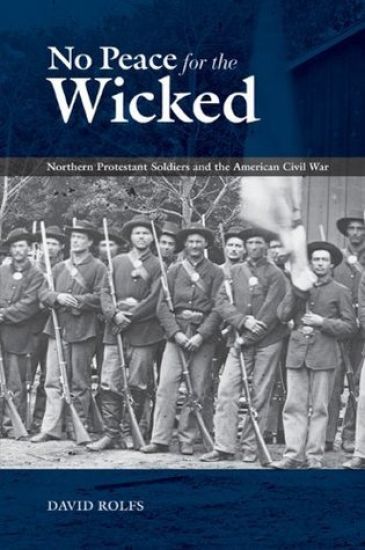
No Peace for the Wicked

No Peace for the Wicked

David Rolfs

University of Tennessee Press
2009
sidottu
In the spring of 1861, young men throughout the Northern states rallied around the Union flag, eager to punish the Confederate renegades who had brazenly inaugurated civil war by firing on Fort Sumter. Often driven by their Protestant religious beliefs, many northern soldiers believed they were enlisting in a just war to save their Christian government from a “wicked” Southern rebellion.These Protestant soldiers' faith was severely tested by the hardships and tragedies they experienced in the Civil War. The vast majority easily justified their wartime service by reminding themselves and their loved ones that they were engaged in a holy cause to preserve the world's only Christian republic. Others were genuinely haunted by the horrific violence of a seemingly endless civil war, and began to entertain serious doubts about their faith. The first comprehensive work of its kind, David Rolfs' No Peace for the Wicked sheds new light on the Northern Protestant soldiers' religious worldview and the various ways they used it to justify and interpret their wartime experiences. Drawing extensively from the letters, diaries and published collections of hundreds of religious soldiers, Rolfs effectively resurrects both these soldiers' religious ideals and their most profound spiritual doubts and conflicts. No Peace for the Wicked also explores the importance of “just war” theory in the formulation of Union military strategy and tactics, and examines why the most religious generation in U.S. history fought America's bloodiest war.David Rolfs earned his doctorate at Florida State University and is currently an instructor of history at Maclay College Preparatory School in Tallahassee, Florida.
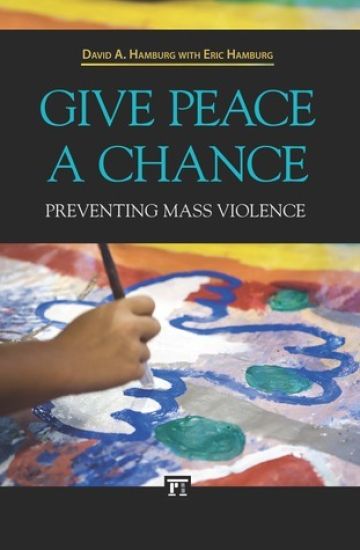
Give Peace a Chance

Give Peace a Chance

David A. Hamburg; Eric Hamburg

Paradigm
2012
sidottu
In Give Peace a Chance, the distinguished Dr. Hamburg teams up with his filmmaker son to tell the story of selected significant peace achievements over the past 25 years. Including lessons from personal experience, pithy quotes from interviews with international dignitaries, and the insights of a documentary sensibility, this book reflects upon striking moments in peace history and inflects them with the perspective of preventive medicine. From Jane Goodall's rainforest research station, to a hostage taking in Eastern Africa, to the Reagan-Gorbachev post-summit epiphany in Reykjavik, the Hamburgs take us there. They then distill the wisdom of these and many other encounters into an essential "six pillars of prevention"-education, early action, democracy building, socioeconomic development, human rights, and arms control. These six pillars are essential not only to reflections upon the past, but to future prospects emerging from recent challenges to peace-the Arab Spring, the violent repression in Syria, and the brewing faceoff with Iran. Features of this engaging text: Combines personal experience(including involvement in a hostage rescue mission) with ongoing research in a variety of areas over 50+ years. Includes feature quotes and vignettes from international figures including Kofi Annan, Sam Nunn, and Hillary Clinton, among many others. Builds upon six key pillars of prevention: education, early warning, democracy, development, human rights, and arms control. Concludes with prescriptions for peace action in four key areas: the US and Western democracies, the UN, the EU, and NATO. Offers carefully selected Recommended Readings for every chapter. See Stanford University's website for twenty-nine videotaped interviews with world leaders in the prevention of mass violence at http://lib.stanford.edu/preventing-genocide/list-interviews
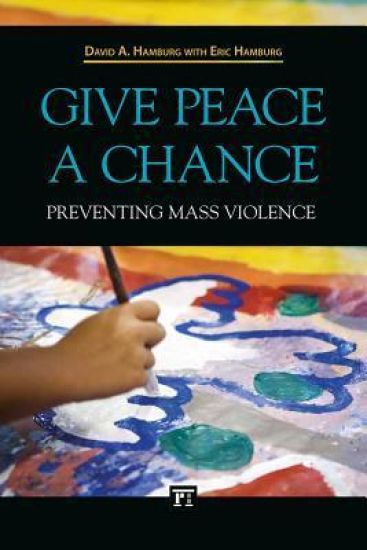
Give Peace a Chance

Give Peace a Chance

David A. Hamburg; Eric Hamburg

Paradigm
2013
nidottu
In Give Peace a Chance, the distinguished Dr. Hamburg teams up with his filmmaker son to tell the story of selected significant peace achievements over the past 25 years. Including lessons from personal experience, pithy quotes from interviews with international dignitaries, and the insights of a documentary sensibility, this book reflects upon striking moments in peace history and inflects them with the perspective of preventive medicine. From Jane Goodall's rainforest research station, to a hostage taking in Eastern Africa, to the Reagan-Gorbachev post-summit epiphany in Reykjavik, the Hamburgs take us there. They then distill the wisdom of these and many other encounters into an essential "six pillars of prevention"-education, early action, democracy building, socioeconomic development, human rights, and arms control. These six pillars are essential not only to reflections upon the past, but to future prospects emerging from recent challenges to peace-the Arab Spring, the violent repression in Syria, and the brewing faceoff with Iran. Features of this engaging text: Combines personal experience(including involvement in a hostage rescue mission) with ongoing research in a variety of areas over 50+ years. Includes feature quotes and vignettes from international figures including Kofi Annan, Sam Nunn, and Hillary Clinton, among many others. Builds upon six key pillars of prevention: education, early warning, democracy, development, human rights, and arms control. Concludes with prescriptions for peace action in four key areas: the US and Western democracies, the UN, the EU, and NATO. Offers carefully selected Recommended Readings for every chapter. See Stanford University's website for twenty-nine videotaped interviews with world leaders in the prevention of mass violence at http://lib.stanford.edu/preventing-genocide/list-interviews
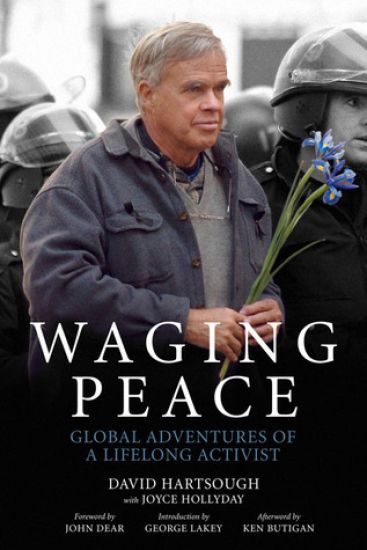
Waging Peace

Waging Peace

David Hartsough; Joyce Hollyday

PM Press
2014
nidottu
David Hartsough knows how to get in the way. He has used his body to block Navy ships headed for Vietnam and trains loaded with munitions on their way to El Salvador and Nicaragua. He has crossed borders to meet "the enemy" in East Berlin, Castro's Cuba, and present-day Iran. He has marched with mothers confronting a violent regime in Guatemala and stood with refugees threatened by death squads in the Philippines. Hartsough's stories inspire, educate, and encourage readers to find ways to work for a more just and peaceful world. Inspired by the examples of Mahatma Gandhi and Martin Luther King Jr., Hartsough has spent his life experimenting with the power of active nonviolence. Engaging stories on every page provide a peace activist's eyewitness account of many of the major historical events of the past 60 years, including the Civil Rights and anti-Vietnam War movements in the United States as well as the little-known but equally significant nonviolent efforts in the Soviet Union, Kosovo, Palestine, Sri Lanka, and the Philippines. "Waging Peace" is a testament to the difference one person can make; however, it is more than one man's memoir: it shows how this struggle is waged all over the world by ordinary people committed to ending the spiral of violence and war.
Christian Peace Principles

Christian Peace Principles

David W T Brattston

Wipf Stock Publishers
2023
pokkari
What were the "peace principles" of the early Christian Church? What did believers view as the proper response to unprovoked personal attacks and disputes among themselves? How did Christians view violence in sports, capital punishment, war, abortion, and euthanasia? Brattston examines these topics using New Testament and other Christian sources dating from before the middle of the third century. In so doing, he provides modern Christians with important clarity on early Christian thought.
Christian Peace Principles

Christian Peace Principles

David W T Brattston

Wipf Stock Publishers
2023
sidottu
What were the "peace principles" of the early Christian Church? What did believers view as the proper response to unprovoked personal attacks and disputes among themselves? How did Christians view violence in sports, capital punishment, war, abortion, and euthanasia? Brattston examines these topics using New Testament and other Christian sources dating from before the middle of the third century. In so doing, he provides modern Christians with important clarity on early Christian thought.
Peace Peaceful London

Peace Peaceful London

David Hampshire

City Books
2019
nidottu
London is one of the world's most exciting cities, but it's also one of the noisiest; a bustling, chaotic, frenetic, over-crowded, manic metropolis of over 8 million people, where it can be difficult to find somewhere to grab a little peace and quiet. Nevertheless, if you know where to look London has a wealth of peaceful places - places to relax, chill out, contemplate, meditate, sit, reflect, browse, read, chat, nap, walk, think, study or even work (if you must) - where the city's volume is muted or even switched off completely. Peaceful Places contains over 200 of the author's and his friends', colleagues' and acquaintances' favourite locations throughout the city, from restful gardens and serene churches to silent libraries and inspiring galleries; intimate hotels to blissful spas and cosy caf s; smart shops and atmospheric markets to appealing restaurants and charming tea rooms; quiet museums and sweeping parks to relaxing walks and friendly pubs - and much more. Moreover, these places haven't just been selected for their quietude but also for their excellence: every entry has something special to offer, be it a warm welcome, excellent food/drink, fascinating history, attractive ambience, glorious scenery or tempting goods for sale. Peace is a relative term, however, and not all places are whisper-quiet all the time; even churches have bell-ringing and organ practice, and many parks host noisy school parties and sports events. You can, of course, expect bookshops, libraries, galleries, museums and spas (and churches and parks!) to be tranquil most of the time, but even caf s, restaurants, pubs and bars can be surprisingly quiet - although you may need to time your visit a little more carefully. With regard to the latter, we have chosen venues with gardens, terraces, panoramic views and cosy corners - places where you can find a bit of personal space and grab some 'me' time along with your refreshments. So whether you're seeking a place to recharge your batteries, rest your head, revive your spirits, restock your larder or refuel your body; somewhere to inspire, soothe or uplift your mood; or you just wish to discover a part of London that's a few steps further off the beaten track, Peaceful Places will steer you in the right direction.