Kirjojen hintavertailu. Mukana 11 342 296 kirjaa ja 12 kauppaa.

Kirjahaku

Etsi kirjoja tekijän nimen, kirjan nimen tai ISBN:n perusteella.

1000 tulosta hakusanalla David R.

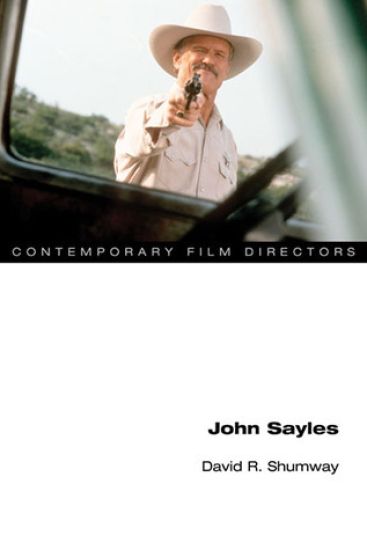
John Sayles

John Sayles

David R. Shumway

University of Illinois Press
2012
sidottu
John Sayles is the very paradigm of the contemporary independent filmmaker. By raising much of the funding for his films himself, Sayles functions more independently than most directors, and he has used his freedom to write and produce films with a distinctive personal style and often clearly expressed political positions. From The Return of the Secaucus Seven to Sunshine State, his films have consistently expressed progressive political positions on issues including race, gender, sexuality, class, and disability. In this study, David R. Shumway examines the defining characteristic of Sayles's cinema: its realism. Positing the filmmaker as a critical realist, Shumway explores Sayles's attention to narrative in critically acclaimed and popular films such as Matewan, Eight Men Out, Passion Fish, and Lone Star. The study also details the conditions under which Sayles's films have been produced, distributed, and exhibited, affecting the way in which these films have been understood and appreciated. In the process, Shumway presents Sayles as a teacher who tells historically accurate stories that invite audiences to consider the human world they all inhabit.
John Sayles

John Sayles

David R. Shumway

University of Illinois Press
2012
nidottu
John Sayles is the very paradigm of the contemporary independent filmmaker. By raising much of the funding for his films himself, Sayles functions more independently than most directors, and he has used his freedom to write and produce films with a distinctive personal style and often clearly expressed political positions. From The Return of the Secaucus Seven to Sunshine State, his films have consistently expressed progressive political positions on issues including race, gender, sexuality, class, and disability. In this study, David R. Shumway examines the defining characteristic of Sayles's cinema: its realism. Positing the filmmaker as a critical realist, Shumway explores Sayles's attention to narrative in critically acclaimed and popular films such as Matewan, Eight Men Out, Passion Fish, and Lone Star. The study also details the conditions under which Sayles's films have been produced, distributed, and exhibited, affecting the way in which these films have been understood and appreciated. In the process, Shumway presents Sayles as a teacher who tells historically accurate stories that invite audiences to consider the human world they all inhabit.
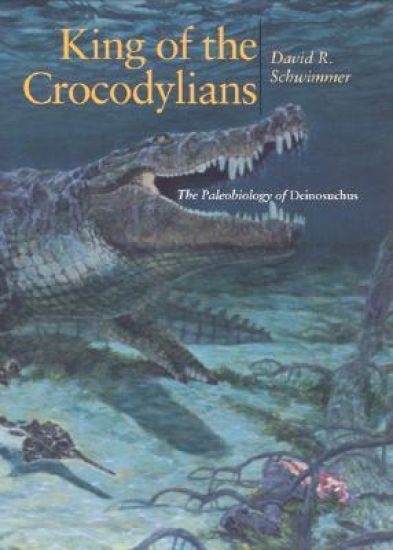
King of the Crocodylians

King of the Crocodylians

David R. Schwimmer

Indiana University Press
2002
sidottu
Toward the end of the Age of Dinosaurs, during a time known as the Late Cretaceous, a new type of giant predator appeared along the southern coasts of North America. It was a huge species of crocodylian called Deinosuchus. Neither a crocodile nor an alligator, it was an ancestor of both modern groups; it reached weights of many tons and it had some features unique to its own species. Average-sized individuals were bigger than the carnivorous dinosaurs with which they co-existed; the largest specimens were the size of a T-rex. King of the Crocodylians, the biography of these giant beasts, tells the long history of their discovery and reports on new research about their makeup. The book also deals with the ancient life and geology of the coastal areas where Deinosuchus thrived, its competitors, and its prey, which probably included carnivorous dinosaurs. There is also detailed discussion of the methods used to determine the size of these giant animals, the dating of the fossils, the nature of their living environments, and how we know who ate whom 80 million years ago.
Artificial Intelligence

Artificial Intelligence

David R. Martinez; Bruke Kifle

MIT PRESS LTD
2024
sidottu
The first text to take a systems engineering approach to artificial intelligence (AI), from architecture principles to the development and deployment of AI capabilities. Most books on artificial intelligence (AI) focus on a single functional building block, such as machine learning or human-machine teaming. Artificial Intelligence takes a more holistic approach, addressing AI from the view of systems engineering. The book centers on the people-process-technology triad that is critical to successful development of AI products and services. Development starts with an AI design, based on the AI system architecture, and culminates with successful deployment of the AI capabilities. Directed toward AI developers and operational users, this accessibly written volume of the MIT Lincoln Laboratory Series can also serve as a text for undergraduate seniors and graduate-level students and as a reference book. Key features: In-depth look at modern computing technologies Systems engineering description and means to successfully undertake an AI product or service development through deploymentExisting methods for applying machine learning operations (MLOps)AI system architecture including a description of each of the AI pipeline building blocksChallenges and approaches to attend to responsible AI in practice Tools to develop a strategic roadmap and techniques to foster an innovative team environment Multiple use cases that stem from the authors' MIT classes, as well as from AI practitioners, AI project managers, early-career AI team leaders, technical executives, and entrepreneurs Exercises and Jupyter notebook examples
School Choice

School Choice

David R. Garcia

MIT Press
2018
pokkari
An accessible guide to the major issues and arguments surrounding school choice.The issues and arguments surrounding school choice are sometimes hijacked to make political points about government control, democratic ideals, the public good, and privatization. In this volume in the MIT Press Essential Knowledge series, David Garcia avoids partisan arguments to offer an accessible, objective, and comprehensive guide to school choice. He first outlines the different types of school choice, including home schooling, private schools, freedom-of-choice plans, magnet schools, charter schools, vouchers, and education savings accounts. Two themes emerge as particularly resonant in the American school choice debate: the long history of school desegregation, and debates over the roles and responsibilities of government. Is education a public good, for the collective benefit of society, or a private good, to benefit the individual?Garcia describes and evaluates the major arguments supporting school choice policies: the elimination of government bureaucracies, the introduction of competition into education through market forces, the promotion of parental choice, and the casting of school choice as a civil right. He examines the research on the effects of school choice and summarizes general trends. Finally, he considers how school choice policies are likely to evolve. He notes that the Trump administration's Secretary of Education, Betsy DeVos, is an advocate for school choice, and that the administration's budget allocations signal a deliberate shift from long-standing federal policies that provide supplemental funding for low-income schools. Instead, new policies provide incentives for low-income families to leave public schools altogether through choice. This book will be an essential resource for participating in the debates that are sure to follow.
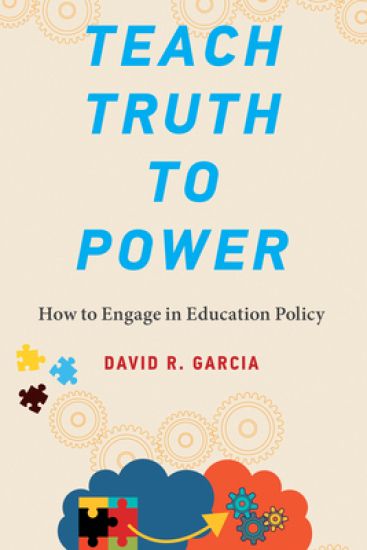
Teach Truth to Power

Teach Truth to Power

David R. Garcia

MIT PRESS LTD
2022
nidottu
How academics and researchers can influence education policy: putting research in a policy context, finding unexpected allies, interacting with politicians, and more. Scholarly books and journal articles routinely close with policy recommendations. Yet these recommendations rarely reach politicians. How can academics engage more effectively in the policy process? In Teach Truth to Power, David Garcia offers a how-to guide for scholars and researchers who want to influence education policy, explaining strategies for putting research in a policy context, getting "in the room" where policy happens, finding unexpected allies, interacting with politicians, and more. Countering conventional wisdom about research utilization (also referred to as knowledge mobilization), Garcia explains that engaging in education policy is not a science, it is a craft--a combination of acquired knowledge and intuition that must be learned through practice. Engaging in policy is an interpersonal process; academics who hope to influence policy have to get face-to-face with the politicians who create policy. Garcia's experience as trusted insider, researcher, and political candidate make him uniquely qualified to offer a roadmap that connects research to policy. He explains that academics can leverage their content expertise to build relationships with politicians (even before they are politicians); demonstrates the effectiveness of the research one-pager; and shows how academics can teach politicians to be champions of research.
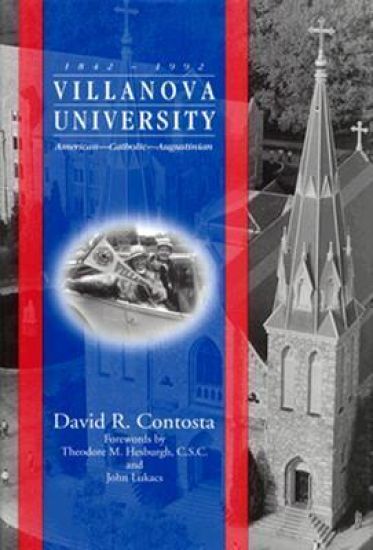
Villanova University, 1842–1992

Villanova University, 1842–1992

David R. Contosta

Pennsylvania State University Press
1995
sidottu
Villanova University is one of the nation's oldest and largest Catholic universities. Founded in 1842 by the Augustinian order, which continues to support the institution today, Villanova has seen great change and great continuity over its 150-year history. In Villanova University, 1842–1992, historian David Contosta presents a rich combination of text and photographs to recount the history of the school and the forces that shaped its growth.Unlike a traditional commissioned history, Contosta's account shows Villanova in the wider context of American society. He closely examines the American culture, Catholic attitudes and beliefs, and Augustinian order that he finds were most influential in forming Villanova as we know it today.
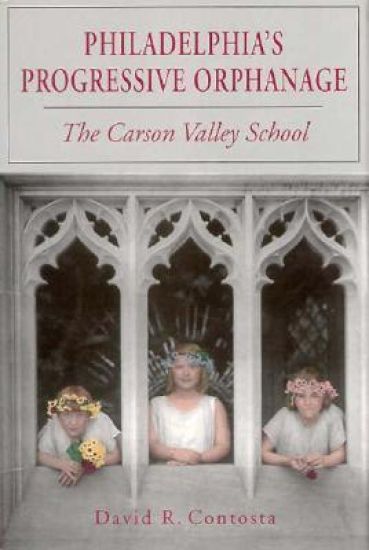
Philadelphia's Progressive Orphanage

Philadelphia's Progressive Orphanage

David R. Contosta

Pennsylvania State University Press
1997
sidottu
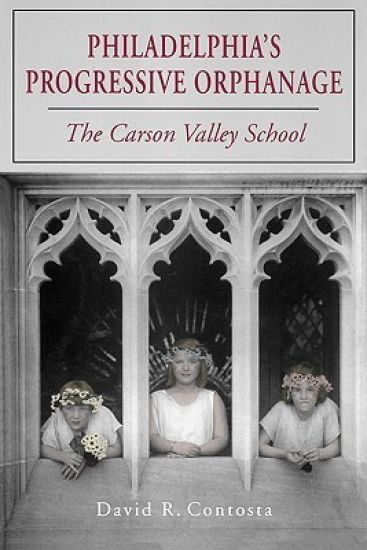
For more than seventy-five years, the Carson Valley School has served the needs of orphaned girls and other dependent children from Philadelphia and neighboring Pennsylvania counties. Its hundred-acre campus is remarkable for its rolling terrain, neo-medieval buildings, and design as a fantasy village.A legacy of the progressive education movement of the early decades of the twentieth century, the school was formally opened in 1918 as the Carson College for Orphan Girls. Its first president, Elsa Ueland, was a former settlement house worker who was a student of John Dewey and Maria Montessori, and her life story is closely intertwined with that of the school she oversaw for nearly half a century. The institution was originally endowed by the $5 million estate of Philadelphia trolley magnate Robert N. Carson, who had stipulated in his will that it could receive only white, parentless girls. Over the decades, Ueland and her successors were able to remove these restrictions, so that by the 1970s Carson Valley was admitting children regardless of race or gender, as well as neglected and dependent youths whose needs were every bit as pressing as those of orphans of earlier times. David Contosta's history of Carson Valley shows that it has long been a model of progressive education. Its faculty is dedicated to serving the individual needs of each child, preparing students to enter the workplace, and breaking down artificial barriers between school and the outside world. Drawing on Ueland's personal papers to communicate both her hopes for the Progressive era and her achievements during the early years of the school, Contosta tells how teachers and housemothers forged a unique collaboration that joined home and school in ways that other progressive educators could only dream of. He also notes the architectural significance of its enchanting facilities, which have played an integral part in the institution's treatment program. Philadelphia's Progressive Orphanage clearly shows not only how Carson Valley has been shaped by a multitude of social, cultural, and political forces, but also how many of the reforms of the Progressive era remain in place today. It establishes Carson's place in the history of education and child welfare and makes an important contribution to renewed debate about orphanages and dependent child care.
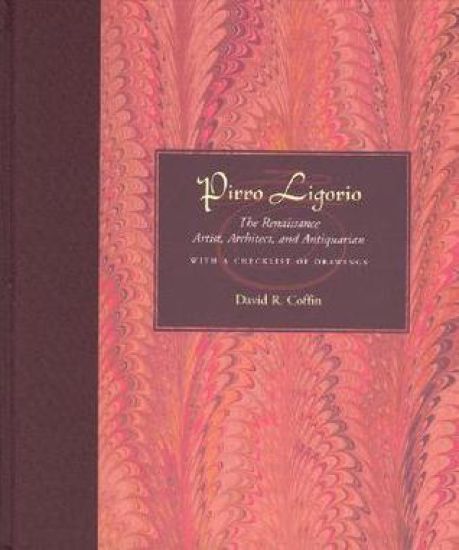
Pirro Ligorio

Pirro Ligorio

David R. Coffin

Pennsylvania State University Press
2004
sidottu
Pirro Ligorio (1510–1583), an Italian architect and antiquarian who designed the Casino of Pius IV and large portions of the gardens of the Villa d’Este, has long been a notoriously elusive subject because of his daunting erudition and because his notebooks and drawings are in collections scattered throughout the world. In this book David R. Coffin, one of America’s leading experts on Renaissance architecture and landscape architecture, mobilizes all available published and unpublished materials to offer the first comprehensive account of Ligorio’s life and multifaceted career. Coffin traces the unfolding of Ligorio’s life from his early years in Naples, to his work in Rome, where he served several popes and pored over Ancient ruins, through his residency in Ferrara as court antiquarian. In addition to illuminating Ligorio’s relationship to his patrons, Coffin sheds new light on Ligorio’s famed map of ancient Rome, a masterpiece that bears witness to Ligorio’s cartographic skills, his erudition, and his lifelong fascination with the eternal city. Copiously illustrated, Coffin’s biography includes a checklist of Ligorio’s drawings. It will be of interest to architectural historians, art historians, and all those involved with the study of Rome and of the classical heritage.
Philadelphia's Progressive Orphanage

Philadelphia's Progressive Orphanage

David R. Contosta

Pennsylvania State University Press
1997
pokkari
For more than seventy-five years, the Carson Valley School has served the needs of orphaned girls and other dependent children from Philadelphia and neighboring Pennsylvania counties. Its hundred-acre campus is remarkable for its rolling terrain, neo-medieval buildings, and design as a fantasy village.A legacy of the progressive education movement of the early decades of the twentieth century, the school was formally opened in 1918 as the Carson College for Orphan Girls. Its first president, Elsa Ueland, was a former settlement house worker who was a student of John Dewey and Maria Montessori, and her life story is closely intertwined with that of the school she oversaw for nearly half a century. The institution was originally endowed by the $5 million estate of Philadelphia trolley magnate Robert N. Carson, who had stipulated in his will that it could receive only white, parentless girls. Over the decades, Ueland and her successors were able to remove these restrictions, so that by the 1970s Carson Valley was admitting children regardless of race or gender, as well as neglected and dependent youths whose needs were every bit as pressing as those of orphans of earlier times. David Contosta's history of Carson Valley shows that it has long been a model of progressive education. Its faculty is dedicated to serving the individual needs of each child, preparing students to enter the workplace, and breaking down artificial barriers between school and the outside world. Drawing on Ueland's personal papers to communicate both her hopes for the Progressive era and her achievements during the early years of the school, Contosta tells how teachers and housemothers forged a unique collaboration that joined home and school in ways that other progressive educators could only dream of. He also notes the architectural significance of its enchanting facilities, which have played an integral part in the institution's treatment program. Philadelphia's Progressive Orphanage clearly shows not only how Carson Valley has been shaped by a multitude of social, cultural, and political forces, but also how many of the reforms of the Progressive era remain in place today. It establishes Carson's place in the history of education and child welfare and makes an important contribution to renewed debate about orphanages and dependent child care.
Conrad Richter

Conrad Richter

David R. Johnson

Pennsylvania State University Press
2002
pokkari
Conrad Richter: A Writer's Life is the story of an aspiring writer who failed and then, desperate for money, tried again and wrote himself out of penny-a-word pulp magazines and into a Pulitzer Prize and a National Book Award. Based upon unrestricted access to all of Richter's letters, journals, notebooks, and private papers, this biography offers an intimate account of Richter's personal struggle to achieve success in his own and in other people's terms. Johnson's biography will engage anyone interested in the art of biography and in a novelist's act of writing. Admirers of Richter's novels will also find much of interest in his life. So, too, will those who find value in the story of a man who, despite his sense of himself as an imperfect vessel for God's plan for human evolution, lived his life with as much grace, determination, and courage as he could.
Field Marshal Sir William Robertson

Field Marshal Sir William Robertson

David R. Woodward

Praeger Publishers Inc
1998
sidottu
Sir William Robertson served as the professional head of the British army and as the constitutional military adviser to both Asquith and Lloyd George from December 1915 to February 1918. This account, based on many new sources, critically examines his leadership of the general staff as the burden of fighting the main body of the German army shifted to the British. This study sheds light on the origins and conduct of the Somme and Passchendaele offensives, and the efforts to coordinate the Allied war effort, especially the controversial effort to subordinate Haig to General Nivelle and the creation of the Supreme War Council with its inter-allied staff. The civil-military conflict over the conduct of the war, especially the growing divide between Robertson and Lloyd George, receives special attention. The previously unexplored tension between Robertson and Haig who formed the most important military partnership in British history is also examined. This account represents the untold story of the higher direction of the war in Britain.
Airpower and Technology

Airpower and Technology

David R. Mets

Praeger Publishers Inc
2008
sidottu
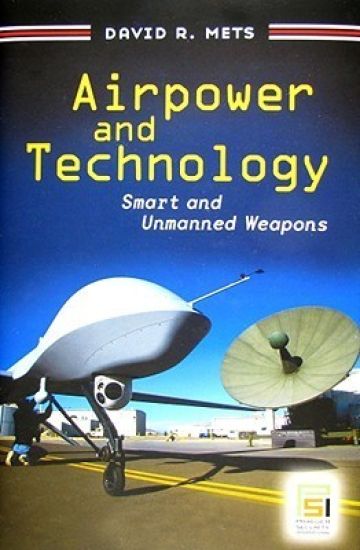
Is there a reason for the busy citizen-leader to read about air and space history, theory, and doctrine? Yes, asserts David Mets, because without some vision of what the future is likely to bring, we enter new conflicts unarmed with any ideas and highly vulnerable to confusion and paralysis. He wrote this book to help the aspirant American leader build a theory of war and air and space power, including an understanding of what doctrine is, and what its utility and limitations are. Since its earliest days, airpower has been one of the dominant forces used by the American military. American airmen, both Navy and Air Force, have been continually striving to achieve precision strikes in high altitude, at long range, or in darkness. The search for precision attack from standoff distances or altitudes has been imperative to national objectives with expenditure of American lives, treasure, and time. This work covers the whole history of American aviation with special attention to the development of smart weapons and unmanned aerial vehicles and the influence they have had on the effectiveness of airpower. In a chronological treatment, emphasizing theory and doctrine, technology, tactics, and strategy. Mets also details both combat experience and intellectual processes, lethal and non-lethal, involved in the preparation of airpower. In addition to the narrative discussion, the work offers sidebars and feature sections that facilitate the understanding of key weapons systems and operational challenges. It also offers A Dozen-Book Sampler for Your Reading on Air and Space Theory and Doctrine. The work concludes with a brief look at information warfare and with some speculations about the future. Through this thorough consideration of the evolution of American airpower and technology, Mets provides, not only a map of the past, but a guide to future generations of airpower and its potential for keeping the United States strong and safe.
Power, Institutions, and Leadership in War and Peace

Power, Institutions, and Leadership in War and Peace

David R. Mares; David Scott Palmer

University of Texas Press
2012
nidottu
In January 1995, fighting broke out between Ecuadorian and Peruvian military forces in a remote section of the Amazon. It took more than three years and the interplay of multiple actors and factors to achieve a definitive peace agreement, thus ending what had been the region's oldest unresolved border dispute. This conflict and its resolution provide insights about other unresolved and/or disputed land and sea boundaries which involve almost every country in the Western Hemisphere. Drawing on extensive field research at the time of the dispute and during its aftermath, including interviews with high-ranking diplomats and military officials, Power, Institutions, and Leadership in War and Peace is the first book-length study to relate this complex border dispute and its resolution to broader theories of conflict. The findings emphasize an emerging leadership approach in which individuals are not mere captives of power and institutions. In addition, the authors illuminate an overlap in national and international arenas in shaping effective articulation, perception, and selection of policy. In the “new” democratic Latin America that emerged in the late 1970s through the early 1990s, historical memory remains influential in shaping the context of disputes, in spite of presumed U.S. post–Cold War influence. This study offers important, broader perspectives on a hemisphere still rife with boundary disputes as a rising number of people and products (including arms) pass through these borderlands.
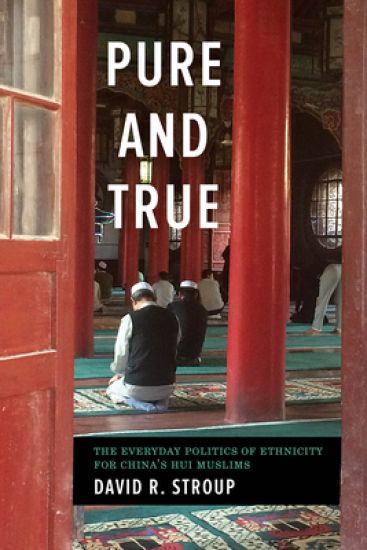
Pure and True

Pure and True

David R. Stroup

University of Washington Press
2022
sidottu
What are the boundaries of Hui identity?The Chinese Communist Party points to the Hui—China's largest Muslim ethnic group—as a model ethnic minority and touts its harmonious relations with the group as an example of the Party's great success in ethnic politics. The Hui number over ten million, but they lack a common homeland or a distinct language, and have long been partitioned by sect, class, region, and language. Despite these divisions, they still express a common ethnic identity. Why doesn't conflict plague relationships between the Hui and the state? And how do they navigate their ethnicity in a political climate that is increasingly hostile to Muslims?Pure and True draws on interviews with ordinary urban Hui—cooks, entrepreneurs, imams, students, and retirees—to explore the conduct of ethnic politics within Hui communities in the cities of Jinan, Beijing, Xining, and Yinchuan and between Hui and the Chinese party-state. By examining the ways in which Hui maintain ethnic identity through daily practices, it illuminates China's management of relations with its religious and ethnic minority communities. It finds that amid state-sponsored urbanization projects and in-country migration, the boundaries of Hui identity are contested primarily among groups of Hui rather than between Hui and the state. As a result, understandings of which daily habits should be considered "proper" or "correct" forms of Hui identity diverge along professional, class, regional, sectarian, and other lines. By channeling contentious politics toward internal boundaries, the state is able to manage ethnic politics and exert control.
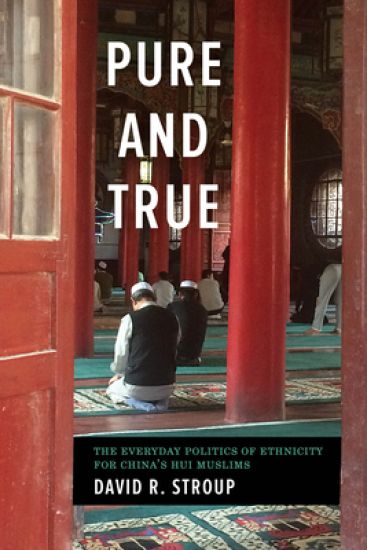
Pure and True

Pure and True

David R. Stroup

University of Washington Press
2022
pokkari
What are the boundaries of Hui identity?The Chinese Communist Party points to the Hui—China's largest Muslim ethnic group—as a model ethnic minority and touts its harmonious relations with the group as an example of the Party's great success in ethnic politics. The Hui number over ten million, but they lack a common homeland or a distinct language, and have long been partitioned by sect, class, region, and language. Despite these divisions, they still express a common ethnic identity. Why doesn't conflict plague relationships between the Hui and the state? And how do they navigate their ethnicity in a political climate that is increasingly hostile to Muslims?Pure and True draws on interviews with ordinary urban Hui—cooks, entrepreneurs, imams, students, and retirees—to explore the conduct of ethnic politics within Hui communities in the cities of Jinan, Beijing, Xining, and Yinchuan and between Hui and the Chinese party-state. By examining the ways in which Hui maintain ethnic identity through daily practices, it illuminates China's management of relations with its religious and ethnic minority communities. It finds that amid state-sponsored urbanization projects and in-country migration, the boundaries of Hui identity are contested primarily among groups of Hui rather than between Hui and the state. As a result, understandings of which daily habits should be considered "proper" or "correct" forms of Hui identity diverge along professional, class, regional, sectarian, and other lines. By channeling contentious politics toward internal boundaries, the state is able to manage ethnic politics and exert control.
Rhetoric and the Discourses of Power in Court Culture

Rhetoric and the Discourses of Power in Court Culture

David R. Knechtges; Eugene Vance

University of Washington Press
2005
sidottu
Key imperial and royal courts--in Han, Tang, and Song dynasty China; medieval and renaissance Europe; and Heian and Muromachi Japan--are examined in this comparative and interdisciplinary volume as loci of power and as entities that establish, influence, or counter the norms of a larger society. Contributions by twelve scholars are organized into sections on the rhetoric of persuasion, taste, communication, gender, and natural nobility. Writing from the perspectives of literature, history, and philosophy, the authors examine the use and purpose of rhetoric in their respective areas.In Rhetoric of Persuasion, we see that in both the third-century court of the last Han emperor and the fourteenth-century court of Edward II, rhetoric served to justify the deposition of a ruler and the establishment of a new regime. Rhetoric of Taste examines the court's influence on aesthetic values in China and Japan, specifically literary tastes in ninth-century China, the melding of literary and historical texts into a sort of national history in fifteenth-century Japan, and the embrace of literati painting innovations in twelfth-century China during a time when the literati themselves were out of favor. Rhetoric of Communication considers official communications to the throne in third-century China, the importance of secret communications in Charlemagne's court, and the implications of the use of classical Chinese in the Japanese court during the eighth and ninth centuries. Rhetoric of Gender offers the biography of a former Han emperor's favorite consort and studies the metaphorical possibilities of Tang palace plaints. Rhetoric of Natural Nobility focuses on Dante's efforts to confirm his nobility of soul as a poet, surmounting his non-noble ancestry, and the development of the texts that supported the political ideologies of the fifteenth-century Burgundian dukes Philip the Good and Charles the Bold.
Raising Hell for Justice

Raising Hell for Justice

David R. Obey

University of Wisconsin Press
2007
sidottu
David Obey has in his nearly forty years in the U.S. House of Representatives worked to bring economic and social justice to America's working families. In 2007 he assumed the chair of the Appropriations Committee and is positioned to pursue his priority concerns for affordable health care, education, environmental protection, and a foreign policy consistent with American democratic ideals. Here, in his autobiography, Obey looks back on his journey in politics beginning with his early years in the Wisconsin Legislature, when Wisconsin moved through eras of shifting balance between Republicans and Democrats. On a national level Obey traces, a few others have done, the dramatic changes in the workings of the U.S. Congress since his first election to the House in 1969. He discusses his own central role in the evolution of Congress and ethics reforms and his view of the recent Bush presidency - crucial chapters in our democracy, of interest to all who observe politics and modern U.S. history.
America's Congress

America's Congress

David R. Mayhew

Yale University Press
2002
pokkari
To understand American politics and government, we need to recognize not only that members of Congress are agents of societal interests and preferences but also that they act with a certain degree of autonomy and consequence in the country’s public sphere. In this illuminating book, a distinguished political scientist examines actions performed by members of Congress throughout American history, assessing their patterns and importance and their role in the American system of separation of powers.David R. Mayhew examines standard history books on the United States and identifies more than two thousand actions by individual members of the House and Senate that are significant enough to be mentioned. Mayhew offers insights into a wide range of matters, from the nature of congressional opposition to presidents and the surprising frequency of foreign policy actions to the timing of notable activity within congressional careers (and the way that congressional term limits might affect these performances). His book sheds new light on the contributions to U.S. history made by members of Congress.
Electoral Realignments

Electoral Realignments

David R. Mayhew

Yale University Press
2004
pokkari
The study of electoral realignments is one of the most influential and intellectually stimulating enterprises undertaken by American political scientists. Realignment theory has been seen as a science able to predict changes, and generations of students, journalists, pundits, and political scientists have been trained to be on the lookout for “signs” of new electoral realignments. Now a major political scientist argues that the essential claims of realignment theory are wrong—that American elections, parties, and policymaking are not (and never were) reconfigured according to the realignment calendar.David Mayhew examines fifteen key empirical claims of realignment theory in detail and shows us why each in turn does not hold up under scrutiny. It is time, he insists, to open the field to new ideas. We might, for example, adopt a more nominalistic, skeptical way of thinking about American elections that highlights contingency, short-term election strategies, and valence issues. Or we might examine such broad topics as bellicosity in early American history, or racial questions in much of our electoral history. But we must move on from an old orthodoxy and failed model of illumination.