Kirjojen hintavertailu. Mukana 12 363 183 kirjaa ja 12 kauppaa.

Kirjahaku

Etsi kirjoja tekijän nimen, kirjan nimen tai ISBN:n perusteella.

1000 tulosta hakusanalla David Sloma

Perspectives on Mass Communication History

Perspectives on Mass Communication History

Wm. David Sloan

Routledge Member of the Taylor and Francis Group
1991
sidottu
This unique volume is based on the philosophy that the teaching of history should emphasize critical thinking and attempt to involve the student intellectually, rather than simply provide names, dates, and places to memorize. The book approaches history not as a cut-and-dried recitation of a collection of facts but as multifaceted discipline. In examining the various perspectives historians have provided, the author brings a vitality to the study of history that students normally do not gain. The text is comprised of 24 historiographical essays, each of which discusses the major interpretations of a significant topic in mass communication history. Students are challenged to evaluate each approach critically and to develop their own explanations. As a textbook designed specifically for use in graduate level communication history courses, it should serve as a stimulating pedagogical tool.
Perspectives on Mass Communication History

Perspectives on Mass Communication History

Wm. David Sloan

Routledge Member of the Taylor and Francis Group
1991
nidottu
This unique volume is based on the philosophy that the teaching of history should emphasize critical thinking and attempt to involve the student intellectually, rather than simply provide names, dates, and places to memorize. The book approaches history not as a cut-and-dried recitation of a collection of facts but as multifaceted discipline. In examining the various perspectives historians have provided, the author brings a vitality to the study of history that students normally do not gain. The text is comprised of 24 historiographical essays, each of which discusses the major interpretations of a significant topic in mass communication history. Students are challenged to evaluate each approach critically and to develop their own explanations. As a textbook designed specifically for use in graduate level communication history courses, it should serve as a stimulating pedagogical tool.
Pulitzer Prize Editorials

Pulitzer Prize Editorials

Wm. David Sloan; Laird B. Anderson

Iowa State University Press
2003
nidottu
Since Joseph Pulitzer first established a prize for the best editorial in1917, the award’s prestige has grown steadily. Today the Pulitzer is acknowledged as the most distinguished prize in journalism. All 87 years of these prize-winning pieces are collected in the updated third edition of Pulitzer Prize Editorials: America’s Best Writing, 1917-2003. This book is an impressive anthology that illustrates the evolution of editorial writing over the decades. Each entry contains the entire, unabridged text of the prize-winning editorial from that year, and is preceded by a succinct introduction from the editors. From students learning the craft to accomplished opinion writers, Pulitzer Prize Editorials makes it possible for all students of editorial writing to learn from the bestrs.
What Every Engineer Should Know About Digital Accessibility

What Every Engineer Should Know About Digital Accessibility

Sarah Horton; David Sloan

TAYLOR FRANCIS LTD
2024
sidottu
Accessibility is a core quality of digital products to be deliberately addressed throughout the development lifecycle. What Every Engineer Should Know About Digital Accessibility will prepare readers to integrate digital accessibility into their engineering practices. Readers will learn how to accurately frame accessibility as an engineering challenge so they are able to address the correct problems in the correct way.Illustrated with diverse perspectives from accessibility practitioners and advocates, this book describes how people with disabilities use technology, the nature of accessibility barriers in the digital world, and the role of engineers in breaking down those barriers. Accessibility competence for current, emerging, and future technologies is addressed through a combination of guiding principles, core attributes and requirements, and accessibility-informed engineering practices.FEATURESDiscusses how technology can support inclusion for people with disabilities and how rigorous engineering processes help create quality user experiences without introducing accessibility barriersExplains foundational principles and guidelines that build core competency in digital accessibility as they are applied across diverse and emerging technology platformsHighlights practical insights into how engineering teams can effectively address accessibility throughout the technology development lifecycleUses international standards to define and measure accessibility qualityWritten to be accessible to non-experts in the subject area, What Every Engineer Should Know About Digital Accessibility is aimed at students, professionals, and researchers in the field of software engineering.A companion site supporting and extending the themes and topics from the book can be found at https://knowaboutaccessibility.org/
What Every Engineer Should Know About Digital Accessibility

What Every Engineer Should Know About Digital Accessibility

Sarah Horton; David Sloan

TAYLOR FRANCIS LTD
2024
nidottu
Accessibility is a core quality of digital products to be deliberately addressed throughout the development lifecycle. What Every Engineer Should Know About Digital Accessibility will prepare readers to integrate digital accessibility into their engineering practices. Readers will learn how to accurately frame accessibility as an engineering challenge so they are able to address the correct problems in the correct way.Illustrated with diverse perspectives from accessibility practitioners and advocates, this book describes how people with disabilities use technology, the nature of accessibility barriers in the digital world, and the role of engineers in breaking down those barriers. Accessibility competence for current, emerging, and future technologies is addressed through a combination of guiding principles, core attributes and requirements, and accessibility-informed engineering practices.FEATURESDiscusses how technology can support inclusion for people with disabilities and how rigorous engineering processes help create quality user experiences without introducing accessibility barriersExplains foundational principles and guidelines that build core competency in digital accessibility as they are applied across diverse and emerging technology platformsHighlights practical insights into how engineering teams can effectively address accessibility throughout the technology development lifecycleUses international standards to define and measure accessibility qualityWritten to be accessible to non-experts in the subject area, What Every Engineer Should Know About Digital Accessibility is aimed at students, professionals, and researchers in the field of software engineering.A companion site supporting and extending the themes and topics from the book can be found at https://knowaboutaccessibility.org/
Cold-Blooded Kindness

Cold-Blooded Kindness

Barbara Oakley; David Sloan Wilson

Prometheus Books
2011
sidottu
In this searing exploration of deadly codependency, the author takes the reader on a spellbinding voyage of discovery that examines the questions: Are some people naturally too caring? Is caring sometimes a mask for darker motives? Can science help us understand how our concerns for others can hurt everything we hold dear? This gripping story brings extraordinary insight to our deepest questions. Is kindness always the right answer? Is kindness always what it seems?
Is the Cemetery Dead?

Is the Cemetery Dead?

David Charles Sloane

University of Chicago Press
2018
sidottu
In modern society, we have professionalized our care for the dying and deceased in hospitals and hospices, churches and funeral homes, cemeteries and mausoleums to aid dazed and disoriented mourners. But these formal institutions can be alienating and cold, leaving people craving a more humane mourning and burial process. The burial treatment itself has come to be seen as wasteful and harmful-marked by chemicals, plush caskets, and manicured greens. Today's bereaved are therefore increasingly turning away from the old ways of death and searching for a more personalized, environmentally reponsible, and ethical means of grief. Is the Cemetery Dead? gets to the heart of the tragedy of death, chronicling how Americans are inventing new or adapting old traditions, burial places, and memorials. In illustrative prose, David Charles Sloane shows how people are taking control of their grief by bringing their relatives home to die, interning them in natural burial grounds, mourning them online, or memorializing them streetside with a shrine, ghost bike, or RIP mural. Today's mourners are increasingly breaking free of conventions to better embrace the person they want to remember. As Sloane shows, these changes threaten the future of the cemetery, causing cemeteries to seek to become more responsive institutions. A trained historian, Sloane is also descendent from multiple generations of cemetery managers and he grew up in Syracuse's Oakwood Cemetery. Enriched by these experiences, as well as his personal struggles with overwhelming grief, Is the Cemetery Dead? is a remarkable and accessible tour of our new American way of death.
Transform Your Health... Transform Your Life

Transform Your Health... Transform Your Life

David W Sloan

TEACH Services, Inc.
2022
pokkari
We not only have a physical makeup, but we have the mental, emotional, spiritual, financial, and social aspects as well. True optimal and vibrant health is only achieved when we consider all these areas. Dr. Sloan expounds on these various aspects of health through the acronym TRANSFORM. This acronym opens up the full spectrum of health that can be life-enhancing and life-changing when adopted into our lives The Lord placed it upon the author to share a message about how remarkably simple optimal health can be, when viewed through the various factors that make up our being. His hope and prayer is that readers find inspiration through his experience and are empowered to take back control of their health. God has gifted us with sovereignty over our health, giving us many health guidelines through His Word and blessing us with countless ways to restore and regain our health through lifestyle changes and simple, natural remedies. This is why the author has chosen the title, Transform Your Health... Transform Your Life.
Reading the Psalms with Jesus and the Apostles: The Understanding of the Psalms in Luke-Acts
Previous discussions of the Old Testament in Luke-Acts have focused on Luke's use of the Old Testament, i.e., how the Old Testament serves Luke's purpose in writing. This book considers how Luke understands the Old Testament, i.e., how Luke sees himself as faithful to Scripture. Therefore, this book focuses first on Luke's interpretation of the Psalms before turning to Luke's application of the Psalms, and in the process sheds new light on Psalms studies, Lukan studies, and studies of the New Testament use of the Old Testament. Luke's interpretation is studied in comparison to four different approaches to the Psalter: a historical reading, a cult-functional reading, a predictive reading, and a canonical reading, showing how Luke incorporates elements of each of these interpretive methods. The final chapter turns to the more typical questions of the function and the theological contribution of the psalm references in Luke-Acts.
Integrated Physiology and Pathophysiology

Integrated Physiology and Pathophysiology

Julian L Seifter; Elisa Walsh; David E Sloane

Elsevier - Health Sciences Division
2021
nidottu
Edited by physiology instructors who are also active clinicians, Integrated Physiology and Pathophysiology is a one-stop guide to key information you need for early clinical and medical training and practice. This unique, integrated textbook unites these two essential disciplines and focuses on the most relevant aspects for clinical application. A concise, review-like format, tables and diagrams, spaced repetition for effective learning, and self-assessment features help you gain and retain a firm understanding of basic physiology and pathophysiology. Integrated Physiology and Pathophysiology works equally well as a great starting point in your studies and as a review for boards. Shares the knowledge and expertise of an outstanding editorial team consisting of two practicing clinicians who also teach physiology and pathophysiology at Harvard Medical School, plus a top Harvard medical student. Provides an integrated approach to physiology and pathophysiology in a concise, bulleted format. Chapters are short and focus on clinically relevant, foundational concepts in clear, simple language. Employs focused repetition of key points, helping you quickly recall core concepts such as pressure-flow-resistance relationships, ion gradients and action potentials, and mass balance. You'll revisit these concepts in a variety of meaningful clinical contexts in different chapters; this "spaced learning" method of reinforcement promotes deeper and more flexible understanding and application. Includes Fast Facts boxes that emphasize take-home messages or definitions. Contains Integration boxes that link physiology and pathophysiology to pharmacology, genetics, and other related sciences. Presents clinical cases and with signs and symptoms, history, and laboratory data that bring pathophysiology to life. Features end-of-chapter board-type questions, complete with clear explanations of the answers, to help prepare you for standardized exams. Enhanced eBook version included with purchase. Your enhanced eBook allows you to access all of the text, figures, and references from the book on a variety of devices.
David Foster Wallace and the Body
David Foster Wallace and the Body is the first full-length study to focus on Wallace’s career-long fascination with the human body and the textual representation of the body. The book provides engaging, accessible close readings that highlight the importance of the overlooked, and yet central theme of all of this major American author’s works: having a body. Wallace repeatedly made clear that good fiction is about what it means to be a ‘human being’. A large part of what that means is having a body, and being conscious of the conflicts that arise, morally and physically, as a result; a fact with which, as Wallace forcefully and convincingly argues, we all desire ‘to be reconciled’. Given the ubiquity of the themes of embodiment in Wallace’s work, this study is an important addition to an expanding field. The book also opens up the themes addressed to interrogate aspects of contemporary literature, culture, and society more generally, placing Wallace’s works in the history of literary and philosophical engagements with the brute fact of embodiment.
David Foster Wallace and the Body

David Foster Wallace and the Body

Peter Sloane

Taylor Francis Ltd
2021
nidottu
David Foster Wallace and the Body is the first full-length study to focus on Wallace’s career-long fascination with the human body and the textual representation of the body. The book provides engaging, accessible close readings that highlight the importance of the overlooked, and yet central theme of all of this major American author’s works: having a body. Wallace repeatedly made clear that good fiction is about what it means to be a ‘human being’. A large part of what that means is having a body, and being conscious of the conflicts that arise, morally and physically, as a result; a fact with which, as Wallace forcefully and convincingly argues, we all desire ‘to be reconciled’. Given the ubiquity of the themes of embodiment in Wallace’s work, this study is an important addition to an expanding field. The book also opens up the themes addressed to interrogate aspects of contemporary literature, culture, and society more generally, placing Wallace’s works in the history of literary and philosophical engagements with the brute fact of embodiment.
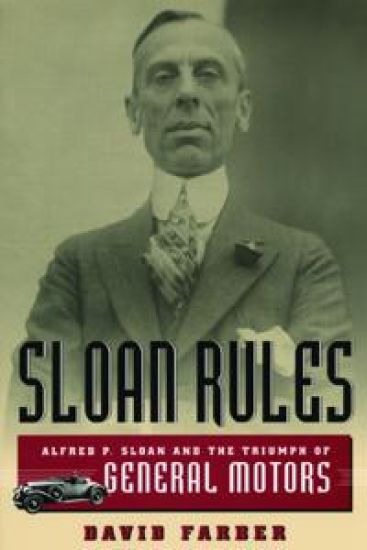
Sloan Rules

Sloan Rules

David Farber

University of Chicago Press
2005
nidottu
Alfred P. Sloan Jr. became the president of General Motors in 1923 and stepped down as its CEO in 1946. During this time, he led GM past the Ford Motor Company and on to international business triumph by virtue of his brilliant managerial practices and his insights into the new consumer economy he and GM helped to produce. Bill Gates has said that Sloan's 1964 management tome, My Years with General Motors, "is probably the best book to read if you want to read only one book about business." And if you want to read only one book about Sloan, that book should be historian David Farber's Sloan Rules.Here, for the first time, is a study of both the difficult man and the pathbreaking executive. Sloan Rules reveals the GM genius as not only a driven manager of men, machines, money, and markets but also a passionate and not always wise participant in the great events of his day. Sloan, for example, reviled Franklin Roosevelt and the New Deal; he firmly believed that politicians, government bureaucrats, and union leaders knew next to nothing about the workings of the new consumer economy, and he did his best to stop them from intervening in the private enterprise system. He was instrumental in transforming GM from the country's largest producer of cars into the mainstay of America's "Arsenal of Democracy" during World War II; after the war, he bet GM's future on renewed American prosperity and helped lead the country into a period of economic abundance. Through his business genius, his sometimes myopic social vision, and his vast fortune, Sloan was an architect of the corporate-dominated global society we live in today.David Farber's story of America's first corporate genius is biography of the highest order, a portrait of an extraordinarily compelling and skillful man who shaped his era and ours.
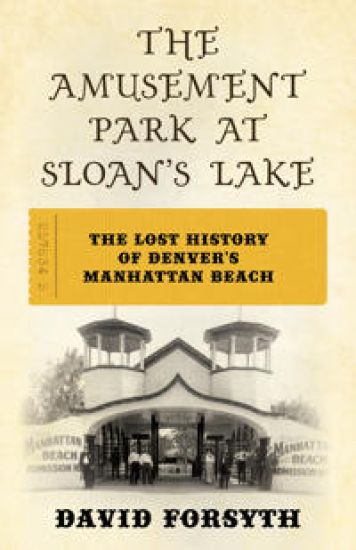
The Amusement Park at Sloan's Lake

The Amusement Park at Sloan's Lake

David Forsyth

ROWMAN LITTLEFIELD
2024
pokkari
Sloan’s Lake had a long history of entertaining Denver residents with boating, fishing, swimming, and a steamboat canal built in the 1870s. In 1890, Adam Graff and his partners opened a new park on the shore of Sloan’s Lake that would eventually become Manhattan Beach. Originally created as a summer pleasure resort with a highly respected summer theater, boating, fishing, and music, the park quickly expanded to include typical amusement attractions, including Denver’s first roller coaster and merry-go-round. When the concept of the amusement park was created in 1895 with the opening of Sea Lion Park on Coney Island in New York, Manhattan Beach was already a step ahead of rivals Elitch Gardens and Arlington Park. Operating from 1890 to 1914, Manhattan Beach Amusement Park was the first true amusement park in Denver and was enjoyed by residents and visitors for nearly twenty-five years as Denver tried to shake off its image as a dusty cow town from gold mining days and fought to be seen as a sophisticated and well-developed city.Manhattan Beach played an important role in amusement park history in the United States, but its full story has never before been told. Manhattan Beach’s story is an important addition to both Denver and Colorado’s history as it reflects the city’s growth during the late 1800s and early 1900s. The park has also inspired many legends, the most famous of which concerns Roger the Elephant, who arrived at Manhattan Beach in 1891, and his supposed death and burial in a swamp near the park. Much of what has been told about Manhattan Beach in the years since it closed is more myth than fact, as this book demonstrates. After the amusement park closed in 1914, the city of Denver purchased the land and turned it into Sloan’s Lake Park, which continues to be a gathering place for Denverites.
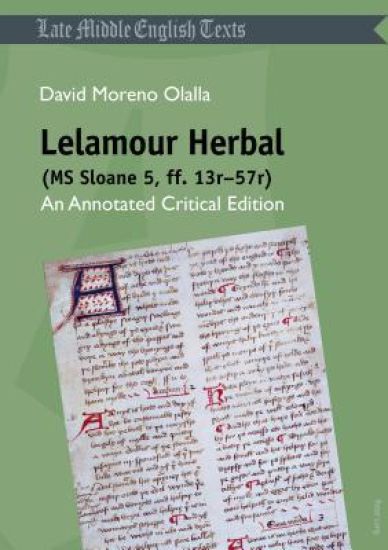
Lelamour Herbal (MS Sloane 5, ff. 13r–57r)

Lelamour Herbal (MS Sloane 5, ff. 13r–57r)

David Moreno Olalla

Peter Lang AG, Internationaler Verlag der Wissenschaften
2018
nidottu
One of the three most important medical herbals composed in Middle English, both in terms of physical length and for the number of species treated, and regularly quoted not only by the editors of the Oxford English Dictionary or the Middle English Dictionary but also by historians of Natural Sciences in Britain since the 1700s, a printed version of the treatise compiled in 1373 by the otherwise unknown Herefordian schoolmaster John Lelamour was surprisingly not yet available to the general public. The present volume fills this gap by offering a critical edition of the text contained in the sole extant copy, together with a detailed introduction discussing such topics as authorship and Quellenforschung, the dialect of the text, or the history of the manuscript; a large collection of explanatory notes which throw light on the textual transmission of the text, translation and copy mistakes, identification of parallel passages, and species identification; a full glosary, and two appendixes, one with the current botanical names of the plants mentioned in the text, and another crossreferencing diseases to the lines in the edition where these appear.