

Kirjahaku
Etsi kirjoja tekijän nimen, kirjan nimen tai ISBN:n perusteella.
1000 tulosta hakusanalla David Thomson
A Sudden Flicker of Light: A Revisionist History of Movies
David Thomson
SIMON SCHUSTER
2026
sidottu
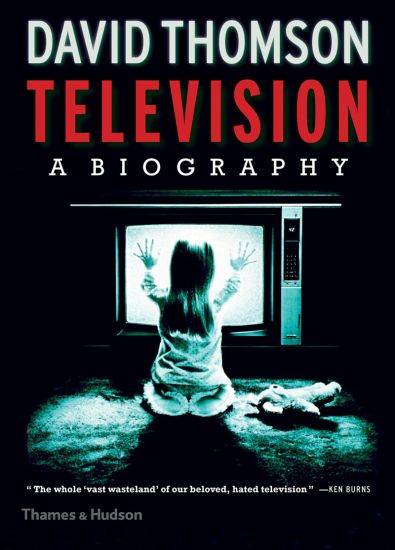
In just a few years, what used to be an immobile piece of living room furniture, which one had to sit in front of at appointed times in order to watch sponsored programming on a finite number of channels, morphed into a glowing cloud of screens with access to a near-endless supply of content available when and how viewers want it. With this phenomenon now a common cultural theme, a writer of David Thomson's stature delivering a critical history, or biography of the six-decade television era, will be a significant event which could not be more timely. With Television, the critic and film historian, who wrote what Sight and Sound's readers called the most important film book of the last 50 years, has finally turned his unique powers of observation to the medium that has swallowed film whole. Over 22 thematically organized chapters, Thomson brings his provocatively insightful and unique voice to the life of what was television. David Thomson surveying a Boschian landscape, illuminated by that singular glow always on and peopled by everyone from Donna Reed to Dennis Potter, will be the first complete history of the defining medium of our time.

There are few greater film lovers than David Thomson who, over fifty years, has built a reputation as one of the wisest and most penetrating voices on the art form. But every flicker of light has its shadow. In this profound reckoning, Thomson confronts the dark side of the movies—responsible for creating an alternate reality and fantasyland that has only deepened the isolation and disconnection of our society over the course of a century. Thomson explores the high and low points of film history with his usual brilliant insight—sharp and arresting readings of movies from Metropolis to Rear Window to The Godfather can be found in these pages. But he also shows the ways in which our love of voyeurism and villainy, and the passivity which the movies further engender, have led to a coarsening not just of a medium, but of the larger culture, including our political life. A bracing and polemical book, this is a powerful capstone to a distinguished career.

Goran Tomaševic´
David Thomson; Jean-François Leroy; Vincent Jolly Alain Mingam
Edition Lammerhuber
2023
sidottu
"This monograph offers vivid explanatory captions, but there is little additional text to distract from the powerful images that put a human face on conflict." — Communication Arts “Tomasevic’s images sear themselves into your consciousness. I have never seen such powerful imagery that not only captures the horror of war itself but also its heartrending impact on innocent civilians, on our sense of our own humanity. But they do much more than that. They have an iconic quality as if created with a painter’s eye for detail, composition and contrast.” - John Green, Morning Star “This powerful, terrible book conveys a Dantesque vision of our humanity. Admiration for Goran Tomaševic, a wonderful Caravaggio of photography!” - Francis Kochert, Académie nationale de Metz Goran Tomas?evic´ is a living legend. Not only has he survived for 30 years in crisis zones, but he has mastered the supreme art of photography, interpreting the world in a humanistic way, following in the footsteps of Robert Capa and James Nachtwey. This powerful, terrifying book conveys a Dantesque vision of our humanity. Current circumstances lead us to believe that this madness will go on and on. Goran is just 13 years old when his father gives him his first camera - an ancient FED 5V. And with it, his life begins to become a constant adventure, described in the 444 pages of this book. The quality of his reportage and the power of his images enabled him to join the Reuters agency in 1996 and, over the next 20 years, to become one of the most awarded photographers in the world. His œuvre can be called a photographic synthesis of the arts, an eminent contribution to the great path of photo reportage and an indispensable history of the last 30 years. Goran Tomaševic's credo: "If you want to present the facts authentically, you have to be where they are. That's the challenge." ? Text in English, German, and French.

This is Volume XIII of eighteen in a series on Political Sociology. Originally published in 1945, this books makes a systematic survey and analysis, as objective as possible, of the tendencies most likely to govern peace-making. The authors intended to avoid making any specific recommendations of their own as to how the labours of peace-making should be undertaken, and to confine themselves to a study of how they were likely to be undertaken in the light of past experience, contemporary proposals, and the present alignment of political powers in the world. In the process of study, discussion and writing, all three authors arrived at certain more definite conclusions. At the same time, the course of events and the increasingly clear trend of official policies seemed to justify more positive assertions and more constructive suggestions than had at first been thought possible. The book, therefore, takes its present hybrid form: of systematic analysis carried forward to certain statements and even recommendations.

This is Volume XIII of eighteen in a series on Political Sociology. Originally published in 1945, this books makes a systematic survey and analysis, as objective as possible, of the tendencies most likely to govern peace-making. The authors intended to avoid making any specific recommendations of their own as to how the labours of peace-making should be undertaken, and to confine themselves to a study of how they were likely to be undertaken in the light of past experience, contemporary proposals, and the present alignment of political powers in the world. In the process of study, discussion and writing, all three authors arrived at certain more definite conclusions. At the same time, the course of events and the increasingly clear trend of official policies seemed to justify more positive assertions and more constructive suggestions than had at first been thought possible. The book, therefore, takes its present hybrid form: of systematic analysis carried forward to certain statements and even recommendations.

Liberties Journal of Culture and Politics
Michael Ignatieff; Laura Kipnis; David Grossman; Ramachandra Guha; Thomas Chatterton Williams; Hannah Sullivan; Mark Lilla; Helen Vendler; Sean Wilentz; Adam Zagajewski; Louise Glück; James Wolcott; Andrea Marcolongo; Eli Lake; Sally Satel; Moshe Halbertal; Joshua Bennett; David Thomson; Julius Margolin; Clara Collier; Shawn McCreesh
Liberties Journal Foundation
2021
pokkari
Liberties - A Journal of Culture and Politics features new essays and poetry from some of today’s best writers and artists, along with introducing new talent, to inspire and impact the intellectual and creative lifeblood of culture and politics. This inaugural issue of Liberties includes: Michael Ignatieff on liberalism and the environment; Laura Kipnis cheers transgression; David Grossman on literature and peace; Ramachandra Guha on the Indian tragedy; Thomas Chatterton Williams on the real James Baldwin; Mark Lilla on the power of indifference; Helen Vendler on Yeats' The Second Coming; Sean Wilentz on abolition and American origins; Adam Zagajeweski on Gustav Mahler; James Wolcott on America’s modern Jacobins; Andrea Marcolongo on how language defines us; Eli Lake on the birth of American unexceptionalism; Sally Satel on the riddle of addiction; Moshe Halbertal on creating a democratic Jewish state; David Thomson on the wonder of Terrence Malick; Julius Margolin’s memoir confronting hatred; Clara Collier on plague literature; Shawn McCreesh’s personal look at a youthful community of addiction; new poetry from the most recent winner of the Nobel Prize in Literature, Louise Glück, Joshua Bennett, and Hannah Sullivan; and, Leon Wieseltier (editor) and Celeste Marcus (managing editor).
Liberties Journal of Culture and Politics
Giles Kepel; Ingrid Rowland; Vladimir Kara-Murza; Enrique Krauze; Paul Muldoon; Mitchell Abidor; Agnes Callard; Henri Cole; William Deresiewicz; Benjamin Moser; David Nirenberg; Peter Phillips; Becca Rothfeld; Paul Starr; David Thomson; Chaim Nacham Bialik
Liberties Journal Foundation
2021
pokkari
“A Meteor of Intelligent Substance” “Something was Missing in our Culture, and Here It Is” “Liberties sure is needed in these times.”In a short time since its launch, Liberties - A Journal of Culture and Politics, a quarterly, has become essential reading for those engaged in the cultural and political issues and causes of our time. The writers in Liberties offer deep experience from across borders, national identities, political affiliations and artistic achievements. As the introductory essay in the inaugural edition noted, “At this journal we are betting on what used to be called the common reader, who would rather reflect than belong and asks of our intellectual life more than a choice between orthodoxies.” Each issue of Liberties features original in-depth essays and compelling new poetry from some of the world's most significant writers, artists, and scholars, as well as introducing new talent, to inspire and impact the intellectual and creative lifeblood of today’s culture and politics. This spring issue of Liberties includes: Giles Kepel on the Murder of Samuel Paty; Ingrid Rowland’s Long Live the Classics!; Vladimir Kara-Murza Surviving Putin’s Poisons; Paul Starr on Reckoning with National Failure from Covid; Becca Rothfeld on Today's Sanctimony Literature; Enrique Krauze explores What is Latin America?; William Deresiewicz on Why Great Visual Art Forces Us to Think; Benjamin Moser on Rediscovering Frans Hals; David Nirenberg on What We Can Learn from Earlier Plagues; Agnes Callard’s view of Romance without Love, Love without Romance; Mitchell Abidor looks back to “Social Media” in 1895 to Understand a Crowd’s “Wisdom”; The Tallis Scholars' Peter Phillips on the Secrets of Josquin; David Thomson on Movies’ Poetic Desire; Poetry from Henri Cole, Chaim Nachman Bialik, and Paul Muldoon; and, Leon Wieseltier (editor) asks "Where Are the Americans?” and Celeste Marcus (managing editor) writes for a Pluralistic Heart.
Liberties Journal of Culture and Politics
Mamtimin Ala; Richard Thompson Ford; Jaroslaw Anders; Sean Wilentz; Ange Mlinko; Benjamin Moser; Jonathan Zimmerman; Leonard Cohen; Cass R. Sunstein; Mark Lilla; Helen Vendler; Holly Brewer; Shaul Tchernikhovsky; David Thomson
Liberties Journal Foundation
2021
pokkari
“A Meteor of Intelligent Substance”“Something was Missing in our Culture, and Here It Is”"Liberties is THE place to be. Change starts in the mind."Liberties, a journal of Culture and Politics, is essential reading for those engaged in the cultural and political issues and causes of our time. Liberties features serious, independent, stylish, and controversial essays by significant writers and leaders throughout the world; new poetry; and, introduces the next generation of writers and voices to inspire and impact the intellectual and creative lifeblood of today’s culture and politics.This issue of Liberties includes: new work from Nobel Prize winner Mario Vargas Llosa; drawings by Leonard Cohen published for the first time; Mamtimin Ala’s essay on China’s genocide of the Uyghurs; Jaroslaw Anders’ analysis of the crisis in Belarus; Cass R. Sunstein on liberalism inebriated; Richard Thompson Ford on what slavery does and does not explain; Sean Wilentz on the historical strategy of the Republican Party; Benjamin Moser writes about translation as a form of tourism in literary life; Jonathan Zimmerman on the scandal of college teaching; Mark Lilla on cults of innocence and their victims; Helen Vendler on Adrienne Rich; Holly Brewer on race and enlightenment; David Thomson asks, What shall we watch now?; Celeste Marcus (managing editor) on the legend of Alice Neel; Leon Wieseltier (editor) on Zionism’s beautiful stubbornness of survival; and new poetry from Ange Mlinko and Shaul Tchernikhovsky, translated by Robert Alter.
![Matthew Maris; an Illustrated Souvenir. Arranged by D. Croal Thomson. [Exhibition at] the French Gallery [November 1917 to January 1918]](/covers/9781024110746.jpg)
Matthew Maris; an Illustrated Souvenir. Arranged by D. Croal Thomson. [Exhibition at] the French Gallery [November 1917 to January 1918]
David Croal Thomson; Matthys Maris; London French Gallery
Hutson Street Press
2025
sidottu
![Matthew Maris; an Illustrated Souvenir. Arranged by D. Croal Thomson. [Exhibition at] the French Gallery [November 1917 to January 1918]](/covers/9781024115611.jpg)
Matthew Maris; an Illustrated Souvenir. Arranged by D. Croal Thomson. [Exhibition at] the French Gallery [November 1917 to January 1918]
David Croal Thomson; Matthys Maris; London French Gallery
Hutson Street Press
2025
pokkari

This work has been selected by scholars as being culturally important and is part of the knowledge base of civilization as we know it.This work is in the public domain in the United States of America, and possibly other nations. Within the United States, you may freely copy and distribute this work, as no entity (individual or corporate) has a copyright on the body of the work.Scholars believe, and we concur, that this work is important enough to be preserved, reproduced, and made generally available to the public. To ensure a quality reading experience, this work has been proofread and republished using a format that seamlessly blends the original graphical elements with text in an easy-to-read typeface.We appreciate your support of the preservation process, and thank you for being an important part of keeping this knowledge alive and relevant.


Life and Labours of Hablot Knight Browne
David Croal Thomson; Hablot K Browne
Hansebooks
2017
pokkari
Life and Labours of Hablot Knight Browne is an unchanged, high-quality reprint of the original edition of 1884. Hansebooks is editor of the literature on different topic areas such as research and science, travel and expeditions, cooking and nutrition, medicine, and other genres. As a publisher we focus on the preservation of historical literature. Many works of historical writers and scientists are available today as antiques only. Hansebooks newly publishes these books and contributes to the preservation of literature which has become rare and historical knowledge for the future.
The Life and Works of Thomas Bewick Being an Account of His Career and Achievements in Art, with a Notice of the Works of John Bewick
David Croal Thomson
Outlook Verlag
2024
nidottu