Kirjojen hintavertailu. Mukana 11 342 296 kirjaa ja 12 kauppaa.

Kirjahaku

Etsi kirjoja tekijän nimen, kirjan nimen tai ISBN:n perusteella.

1000 tulosta hakusanalla David V. Moskowitz

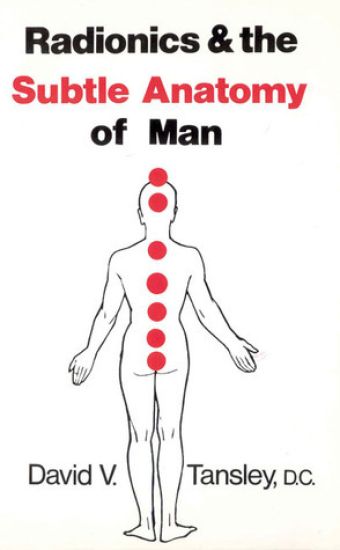
Radionics & The Subtle Anatomy Of Man

Radionics & The Subtle Anatomy Of Man

David V Tansley

C W Daniel Co Ltd
1972
nidottu
Radionics is defined as a method of diagnosis and therapy which is primarily concerned with the utilization of subtle force fields and energies, for the purpose of investigating and combating the causes of disease which ravage humanity and the other kingdoms of nature. But in examining the history and development of radionics from the pioneering work of Dr Albert Abrams and Ruth Drown to the latest experimental work at the de la Warr Laboratories, David Tansley discovered a curious paradox. In literature on the subject, and in the rate books which provide the very core of radionic therapeutic measures, there are plenty of references to man's physical organic systems, but little regarding the probability of underlying force fields which might govern and determine the health of the physical form.This book represents an informed endeavour to redress the balance by providing a simple yet practical outline of the subtle anatomy of man. The theory is not new: Abrams diagnosed at a distance, and Drown treated absent patients. David Tansley believes that the time is ripe for radionics to bear witness to an energy field of a more subtle nature: that is, in fact, its innate purpose.

African Americans in Minnesota

African Americans in Minnesota

David V. Taylor

Minnesota Historical Society Press
2002
nidottu
African Americans have had a profound influence on the history and culture of Minnesota from its earliest days to the present. Author David Vassar Taylor chronicles this rich story, using first-person accounts, newspaper articles, and a careful analysis of census records. During the territorial and early statehood periods, Blacks developed communities in St. Paul, Minneapolis, and Duluth, as well as rural areas, and established churches, businesses, and social organizations. Taylor recounts the triumphs and struggles of African Americans over the last two hundred years in a clear and concise narrative. He also introduces influential and notable people including George Bonga, the first African American born in the region during the fur trade era; Harriet and Dred Scott, whose two-year residence at Fort Snelling in the 1830s later led to a famous, though unsuccessful, legal challenge to the institution of slavery; John Quincy Adams, publisher of the state's first Black newspaper; Fredrick L. McGhee, the state's first Black lawyer; social workers Gertrude Brown and I. Myrtle Cardin; labor activist Nellie Stone Johnson; inventor Frederick McKinley Jones; community leaders, politicians, and civil servants including James Griffin, Sharon Sayles Belton, Alan Page, Jean Harris, and Dr. Richard Green; and nationally influential artists including August Wilson, Lou Bellamy, Prince, Jimmy Jam, and Terry Lewis.
Fishing is a Cinch: With the Inquiring Angler in Ontario and Quebec

Fishing is a Cinch: With the Inquiring Angler in Ontario and Quebec

David V. (David Victor) 1911- Reddick

Hassell Street Press
2021
sidottu
This work has been selected by scholars as being culturally important and is part of the knowledge base of civilization as we know it.This work is in the public domain in the United States of America, and possibly other nations. Within the United States, you may freely copy and distribute this work, as no entity (individual or corporate) has a copyright on the body of the work.Scholars believe, and we concur, that this work is important enough to be preserved, reproduced, and made generally available to the public. To ensure a quality reading experience, this work has been proofread and republished using a format that seamlessly blends the original graphical elements with text in an easy-to-read typeface.We appreciate your support of the preservation process, and thank you for being an important part of keeping this knowledge alive and relevant.
Galaxy_Novel_Number_23_Murder_In_Space_

Galaxy_Novel_Number_23_Murder_In_Space_

David V Reed

Hassell Street Press
2021
sidottu
This work has been selected by scholars as being culturally important and is part of the knowledge base of civilization as we know it.This work is in the public domain in the United States of America, and possibly other nations. Within the United States, you may freely copy and distribute this work, as no entity (individual or corporate) has a copyright on the body of the work.Scholars believe, and we concur, that this work is important enough to be preserved, reproduced, and made generally available to the public. To ensure a quality reading experience, this work has been proofread and republished using a format that seamlessly blends the original graphical elements with text in an easy-to-read typeface.We appreciate your support of the preservation process, and thank you for being an important part of keeping this knowledge alive and relevant.
Tapestries in Sand: the Spirit of Indian Sandpainting

Tapestries in Sand: the Spirit of Indian Sandpainting

David V. Villaseñor

Hassell Street Press
2021
sidottu
This work has been selected by scholars as being culturally important and is part of the knowledge base of civilization as we know it.This work is in the public domain in the United States of America, and possibly other nations. Within the United States, you may freely copy and distribute this work, as no entity (individual or corporate) has a copyright on the body of the work.Scholars believe, and we concur, that this work is important enough to be preserved, reproduced, and made generally available to the public. To ensure a quality reading experience, this work has been proofread and republished using a format that seamlessly blends the original graphical elements with text in an easy-to-read typeface.We appreciate your support of the preservation process, and thank you for being an important part of keeping this knowledge alive and relevant.
Trading Rhymes for Bread

Trading Rhymes for Bread

David V. 1900- Felts

Hassell Street Press
2021
nidottu
This work has been selected by scholars as being culturally important and is part of the knowledge base of civilization as we know it.This work is in the public domain in the United States of America, and possibly other nations. Within the United States, you may freely copy and distribute this work, as no entity (individual or corporate) has a copyright on the body of the work.Scholars believe, and we concur, that this work is important enough to be preserved, reproduced, and made generally available to the public. To ensure a quality reading experience, this work has been proofread and republished using a format that seamlessly blends the original graphical elements with text in an easy-to-read typeface.We appreciate your support of the preservation process, and thank you for being an important part of keeping this knowledge alive and relevant.
Fishing is a Cinch: With the Inquiring Angler in Ontario and Quebec

Fishing is a Cinch: With the Inquiring Angler in Ontario and Quebec

David V. (David Victor) 1911- Reddick

Hassell Street Press
2021
nidottu
This work has been selected by scholars as being culturally important and is part of the knowledge base of civilization as we know it.This work is in the public domain in the United States of America, and possibly other nations. Within the United States, you may freely copy and distribute this work, as no entity (individual or corporate) has a copyright on the body of the work.Scholars believe, and we concur, that this work is important enough to be preserved, reproduced, and made generally available to the public. To ensure a quality reading experience, this work has been proofread and republished using a format that seamlessly blends the original graphical elements with text in an easy-to-read typeface.We appreciate your support of the preservation process, and thank you for being an important part of keeping this knowledge alive and relevant.
Galaxy_Novel_Number_23_Murder_In_Space_

Galaxy_Novel_Number_23_Murder_In_Space_

David V Reed

Hassell Street Press
2021
nidottu
This work has been selected by scholars as being culturally important and is part of the knowledge base of civilization as we know it.This work is in the public domain in the United States of America, and possibly other nations. Within the United States, you may freely copy and distribute this work, as no entity (individual or corporate) has a copyright on the body of the work.Scholars believe, and we concur, that this work is important enough to be preserved, reproduced, and made generally available to the public. To ensure a quality reading experience, this work has been proofread and republished using a format that seamlessly blends the original graphical elements with text in an easy-to-read typeface.We appreciate your support of the preservation process, and thank you for being an important part of keeping this knowledge alive and relevant.
Tapestries in Sand: the Spirit of Indian Sandpainting

Tapestries in Sand: the Spirit of Indian Sandpainting

David V. Villaseñor

Hassell Street Press
2021
nidottu
This work has been selected by scholars as being culturally important and is part of the knowledge base of civilization as we know it.This work is in the public domain in the United States of America, and possibly other nations. Within the United States, you may freely copy and distribute this work, as no entity (individual or corporate) has a copyright on the body of the work.Scholars believe, and we concur, that this work is important enough to be preserved, reproduced, and made generally available to the public. To ensure a quality reading experience, this work has been proofread and republished using a format that seamlessly blends the original graphical elements with text in an easy-to-read typeface.We appreciate your support of the preservation process, and thank you for being an important part of keeping this knowledge alive and relevant.
Differential Equations for Engineers

Differential Equations for Engineers

David V. Kalbaugh

TAYLOR FRANCIS LTD
2021
nidottu
This book surveys the broad landscape of differential equations, including elements of partial differential equations (PDEs), and concisely presents the topics of most use to engineers. It introduces each topic with a motivating application drawn from electrical, mechanical, and aerospace engineering. The text has reviews of foundations, step-by-step explanations, and sets of solved problems. It fosters students’ abilities in the art of approximation and self-checking. The book addresses PDEs with and without boundary conditions, which demonstrates strong similarities with ordinary differential equations and clear illustrations of the nature of solutions. Furthermore, each chapter includes word problems and challenge problems. Several extended computing projects run throughout the text.
Introductory Physics for the Life Sciences: Mechanics (Volume One)
This textbook provides an accessible introduction to physics for undergraduate students in the life sciences, including those majoring in all branches of biology, biochemistry, and psychology and students working on pre-professional programs such as pre-medical, pre-dental, and physical therapy. The text is geared for the algebra-based physics course, often named College Physics in the United States. The order of topics studied are such that most of the problems in the text can be solved with the methods of Statics or Dynamics. That is, they require a free body diagram, the application of Newton’s Laws, and any necessary kinematics. Constructing the text with a standardized problem-solving methodology, simplifies this aspect of the course and allows students to focus on the application of physics to the study of biological systems. Along the way, students apply these techniques to find the tension in a tendon, the sedimentation rate of red blood cells in haemoglobin, the torques and forces on a bacterium employing a flagellum to propel itself through a viscous fluid, and the terminal velocity of a protein moving in a Gel Electrophoresis device. This is part one of a two-volume set; volume 2 introduces students to the conserved-quantities and applies these problem-solving techniques to topics in Thermodynamics, Electrical Circuits, Optics, and Atomic and Nuclear Physics always with continued focus on biological applications.Key Features: Organised and centred around analysis techniques, not traditional Mechanics and E&M. Presents a unified approach, in a different order, meaning that the same laboratories, equipment, and demonstrations can be used when teaching the course. Demonstrates to students that the analysis and concepts they are learning are critical to the understanding of biological systems.
Introductory Physics for the Life Sciences: (Volume 2)
This textbook provides an accessible introduction to physics for undergraduate students in the life sciences, including those majoring in all branches of biology, biochemistry, and psychology and students working on pre-professional programs such as pre-medical, pre-dental, and physical therapy. The text is geared for the algebra-based physics course, often named College Physics in the United States.The order of topics studied in this volume requires students to first understand a concept, such as the conservation of energy, momentum, voltage, or current, the change in a quantity such as entropy, or the rules of ray and wave optics. Then, students apply these concepts to solve problems in the areas of thermodynamics, electrical circuit, optics, and atomic and nuclear physics.Throughout the text these quantity-based applications are used to understand systems that are critical to the understanding of biological systems, such as the entropy of evolution, the signal down the axon of a nerve cell, the optics of the eye, and the operation of a laser.This is part 2 of a two-volume set; volume 1 introduced students to the methods of mechanics and applied these problem-solving techniques to explicitly biological topics such as the sedimentation rate of red blood cells in haemoglobin, the torques and forces on a bacterium employing a flagellum to propel itself through a viscous fluid, and the terminal velocity of a protein moving in a gel electrophoresis device.Key features:Organized and centered around analysis techniques, not traditional mechanics and E&MPresents a unified approach, in a different order, meaning that the same laboratories, equipment, and demonstrations can be used when teaching the courseDemonstrates to students that the analysis and concepts they are learning are critical to the understanding of biological systems
Introductory Physics for the Life Sciences: Mechanics (Volume One)
This textbook provides an accessible introduction to physics for undergraduate students in the life sciences, including those majoring in all branches of biology, biochemistry, and psychology and students working on pre-professional programs such as pre-medical, pre-dental, and physical therapy. The text is geared for the algebra-based physics course, often named College Physics in the United States. The order of topics studied are such that most of the problems in the text can be solved with the methods of Statics or Dynamics. That is, they require a free body diagram, the application of Newton’s Laws, and any necessary kinematics. Constructing the text with a standardized problem-solving methodology, simplifies this aspect of the course and allows students to focus on the application of physics to the study of biological systems. Along the way, students apply these techniques to find the tension in a tendon, the sedimentation rate of red blood cells in haemoglobin, the torques and forces on a bacterium employing a flagellum to propel itself through a viscous fluid, and the terminal velocity of a protein moving in a Gel Electrophoresis device. This is part one of a two-volume set; volume 2 introduces students to the conserved-quantities and applies these problem-solving techniques to topics in Thermodynamics, Electrical Circuits, Optics, and Atomic and Nuclear Physics always with continued focus on biological applications.Key Features: Organised and centred around analysis techniques, not traditional Mechanics and E&M. Presents a unified approach, in a different order, meaning that the same laboratories, equipment, and demonstrations can be used when teaching the course. Demonstrates to students that the analysis and concepts they are learning are critical to the understanding of biological systems.
Introductory Physics for the Life Sciences: (Volume 2)
This textbook provides an accessible introduction to physics for undergraduate students in the life sciences, including those majoring in all branches of biology, biochemistry, and psychology and students working on pre-professional programs such as pre-medical, pre-dental, and physical therapy. The text is geared for the algebra-based physics course, often named College Physics in the United States.The order of topics studied in this volume requires students to first understand a concept, such as the conservation of energy, momentum, voltage, or current, the change in a quantity such as entropy, or the rules of ray and wave optics. Then, students apply these concepts to solve problems in the areas of thermodynamics, electrical circuit, optics, and atomic and nuclear physics.Throughout the text these quantity-based applications are used to understand systems that are critical to the understanding of biological systems, such as the entropy of evolution, the signal down the axon of a nerve cell, the optics of the eye, and the operation of a laser.This is part 2 of a two-volume set; volume 1 introduced students to the methods of mechanics and applied these problem-solving techniques to explicitly biological topics such as the sedimentation rate of red blood cells in haemoglobin, the torques and forces on a bacterium employing a flagellum to propel itself through a viscous fluid, and the terminal velocity of a protein moving in a gel electrophoresis device.Key features:Organized and centered around analysis techniques, not traditional mechanics and E&MPresents a unified approach, in a different order, meaning that the same laboratories, equipment, and demonstrations can be used when teaching the courseDemonstrates to students that the analysis and concepts they are learning are critical to the understanding of biological systems
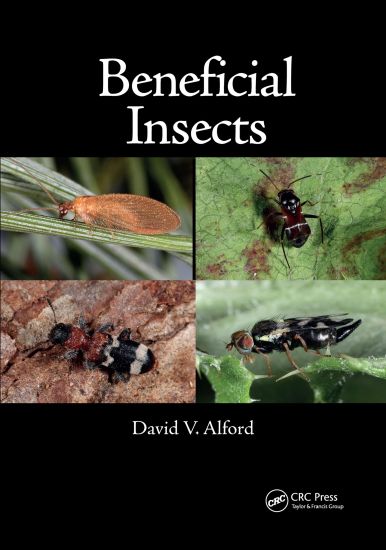
Beneficial Insects

Beneficial Insects

David V. Alford

TAYLOR FRANCIS LTD
2022
nidottu
Highly Recommended in CHOICE, Jan 2020, Vol 57, 5Insects are key components of life on our planet, and their presence is essential for maintaining balanced terrestrial ecosystems. Without insects humans would struggle to survive, and on a world scale food production would be severely compromised. Many plants and animals depend directly or indirectly on insects for their very survival, and this is particularly so in the case of insectivorous birds and other such creatures. The beneficial role of insects is often overlooked or misunderstood, and in farming circles their very presence on crops is often seen to be unwelcome. In reality, however, many insects are genuinely beneficial, as in the case of parasitic and predacious species. The use of chemical pesticides to control crop pests is becoming more tightly regulated and environmentally undesirable, and low-input farming, in which natural enemies of pests are encouraged to survive or increase, is becoming far more prevalent. Accordingly, Integrated Pest Management (IPM) and Integrated Crop Management (ICM) strategies are increasingly being developed, advocated and adopted.Features:Highlights information on many groups of insects and mites that act as natural enemies or biological control agents of phytophagous insects and mites, including plant pests.Profusely illustrated with high-quality colour photographs.Focuses mainly on insects and mites as natural enemies of plant pests, including parasitic and predacious species that have been accidentally or deliberately introduced in classical biological control programmes.Reviews the role of phytophagous European insects and mites in controlling or managing European plants that have become invasive weeds in other parts of the world, notably North America, Australia and New Zealand.
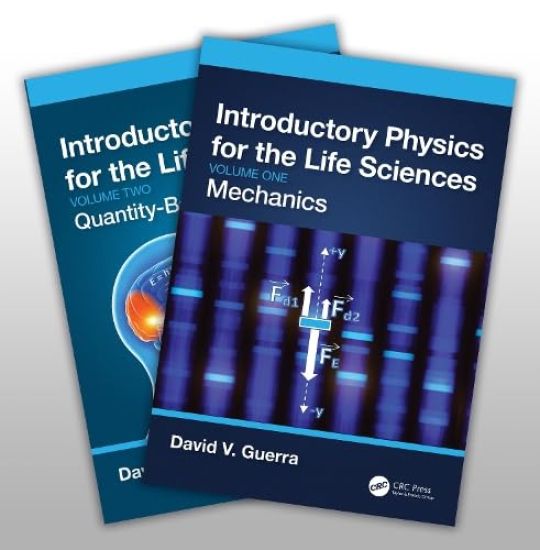
Introductory Physics for the Life Sciences - Two-Vol. Set
This textbook provides an accessible introduction to physics for undergraduate students in the life sciences, including those majoring in all branches of biology, biochemistry, and psychology and students working on pre-professional programs such as pre-medical, pre-dental, and physical therapy. The text is geared for the algebra-based physics course, often named College Physics in the United States. The order of topics studied are such that most of the problems in the text can be solved with the methods of Statics or Dynamics. That is, they require a free body diagram, the application of Newton’s Laws, and any necessary kinematics. Constructing the text with a standardized problem-solving methodology, simplifies this aspect of the course and allows students to focus on the application of physics to the study of biological systems. Along the way, students apply these techniques to find the tension in a tendon, the sedimentation rate of red blood cells in haemoglobin, the torques and forces on a bacterium employing a flagellum to propel itself through a viscous fluid, and the terminal velocity of a protein moving in a Gel Electrophoresis device. This is part one of a two-volume set; volume 2 introduces students to the conserved-quantities and applies these problem-solving techniques to topics in Thermodynamics, Electrical Circuits, Optics, and Atomic and Nuclear Physics always with continued focus on biological applications.Volume 1Key features: Organised and centred around analysis techniques, not traditional Mechanics and E&M. Presents a unified approach, in a different order, meaning that the same laboratories, equipment, and demonstrations can be used when teaching the course. Demonstrates to students that the analysis and concepts they are learning are critical to the understanding of biological systems.Volume 2Key features: Organised and centred around analysis techniques, not traditional Mechanics and E&M. Presents a unified approach, in a different order, meaning that the same laboratories, equipment, and demonstrations can be used when teaching the course. Demonstrates to students that the analysis and concepts they are learning are critical to the understanding of biological systems.
Introductory Physics for the Life Sciences - Two-Vol. Set
This textbook provides an accessible introduction to physics for undergraduate students in the life sciences, including those majoring in all branches of biology, biochemistry, and psychology and students working on pre-professional programs such as pre-medical, pre-dental, and physical therapy. The text is geared for the algebra-based physics course, often named College Physics in the United States. The order of topics studied are such that most of the problems in the text can be solved with the methods of Statics or Dynamics. That is, they require a free body diagram, the application of Newton’s Laws, and any necessary kinematics. Constructing the text with a standardized problem-solving methodology, simplifies this aspect of the course and allows students to focus on the application of physics to the study of biological systems. Along the way, students apply these techniques to find the tension in a tendon, the sedimentation rate of red blood cells in haemoglobin, the torques and forces on a bacterium employing a flagellum to propel itself through a viscous fluid, and the terminal velocity of a protein moving in a Gel Electrophoresis device. This is part one of a two-volume set; volume 2 introduces students to the conserved-quantities and applies these problem-solving techniques to topics in Thermodynamics, Electrical Circuits, Optics, and Atomic and Nuclear Physics always with continued focus on biological applications.Volume 1Key features: Organised and centred around analysis techniques, not traditional Mechanics and E&M. Presents a unified approach, in a different order, meaning that the same laboratories, equipment, and demonstrations can be used when teaching the course. Demonstrates to students that the analysis and concepts they are learning are critical to the understanding of biological systems.Volume 2Key features: Organised and centred around analysis techniques, not traditional Mechanics and E&M. Presents a unified approach, in a different order, meaning that the same laboratories, equipment, and demonstrations can be used when teaching the course. Demonstrates to students that the analysis and concepts they are learning are critical to the understanding of biological systems.
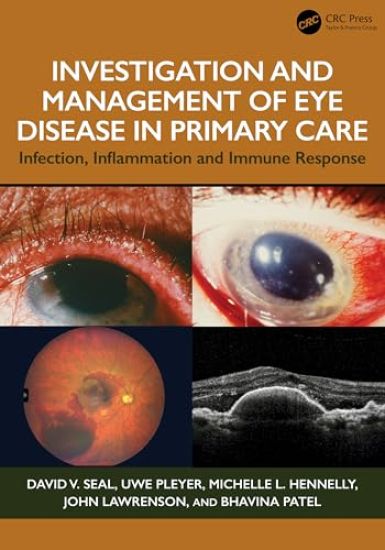
Investigation & Management of Eye Disease in Primary Care

Investigation & Management of Eye Disease in Primary Care

David V. Seal; Uwe Pleyer; Michelle L Hennelly; John Lawrenson; Bhavina Patel

TAYLOR FRANCIS LTD
2026
nidottu
This book provides practical guidance to primary care eye professionals. It is fully illustrated with online links for making an initial diagnosis with advice on management and therapy. It covers the common sight-threatening conditions including glaucoma, AMD, diabetes, cataract, inflammatory and immune-based diseases, conjunctival and corneal infections. Key Features: Introduces prescribing, pharmacokinetics and ocular pharmacopeia with epidemiological surveys and basic statistics. Helps eye care professionals diagnose, manage and treat common eye diseases in the community setting in the global health environment. Includes clinical ‘pearls’ for diagnosis and ocular emergencies.