Kirjojen hintavertailu. Mukana 12 595 353 kirjaa ja 12 kauppaa.

Kirjahaku

Etsi kirjoja tekijän nimen, kirjan nimen tai ISBN:n perusteella.

1000 tulosta hakusanalla David Williams

Milton's Leveller God

Milton's Leveller God

David Williams

McGill-Queen's University Press
2017
sidottu
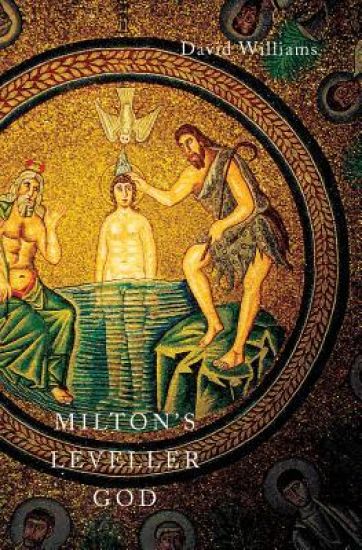
Three and a half centuries after Paradise Lost and Paradise Regain’d were written, do Milton’s epic poems still resonate with contemporary concerns? In Milton’s Leveller God, David Williams advances a progressive and democratic interpretation of Milton’s epics to show they are more relevant than ever. Exploring two blind spots in the critical tradition – the failure to read Milton’s poetry as drama and to recognize his depictions of heaven’s political and social evolution – Williams reads Milton’s “great argument” as a rejection of social hierarchy and of patriarchal government that is more attuned to the radical political thought developed by the Levellers during the English Revolution. He traces echoes between Milton’s texts and thousands of pages of Leveller writings that advocated for popular rule, extended suffrage, and religious tolerance, arguing that Milton’s God is still the unacknowledged ground of popular sovereignty. Williams demonstrates that Milton’s Leveller sympathies, expressed in his early prose, conflicted with his official duties for Oliver Cromwell’s government in the 1650s, but his association with the journalist Marchamont Nedham later freed him to imagine an egalitarian republic. In a work that connects the great epic poet in new ways to the politics of his time and our own, Milton’s Leveller God shows how the political landscape of Milton’s work fundamentally unsettles ancient hierarchies of soul and body, man and woman, reason and will, and ruler and ruled.
Milton's Leveller God

Milton's Leveller God

David Williams

McGill-Queen's University Press
2017
nidottu
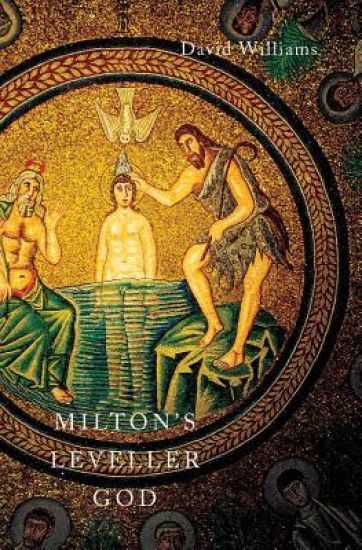
Three and a half centuries after Paradise Lost and Paradise Regain’d were written, do Milton’s epic poems still resonate with contemporary concerns? In Milton’s Leveller God, David Williams advances a progressive and democratic interpretation of Milton’s epics to show they are more relevant than ever. Exploring two blind spots in the critical tradition – the failure to read Milton’s poetry as drama and to recognize his depictions of heaven’s political and social evolution – Williams reads Milton’s “great argument” as a rejection of social hierarchy and of patriarchal government that is more attuned to the radical political thought developed by the Levellers during the English Revolution. He traces echoes between Milton’s texts and thousands of pages of Leveller writings that advocated for popular rule, extended suffrage, and religious tolerance, arguing that Milton’s God is still the unacknowledged ground of popular sovereignty. Williams demonstrates that Milton’s Leveller sympathies, expressed in his early prose, conflicted with his official duties for Oliver Cromwell’s government in the 1650s, but his association with the journalist Marchamont Nedham later freed him to imagine an egalitarian republic. In a work that connects the great epic poet in new ways to the politics of his time and our own, Milton’s Leveller God shows how the political landscape of Milton’s work fundamentally unsettles ancient hierarchies of soul and body, man and woman, reason and will, and ruler and ruled.
Rich Man's War

Rich Man's War

David Williams

University of Georgia Press
1999
sidottu
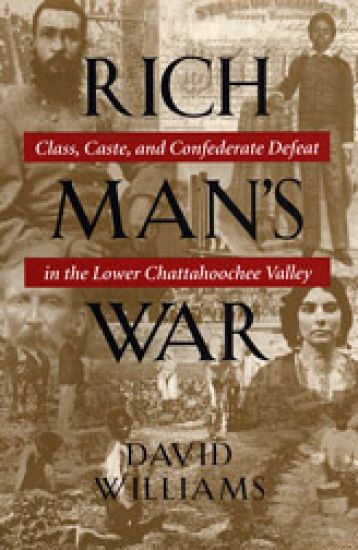
In Rich Man's War historian David Williams focuses on the Civil War experience of people in the Chattahoochee River Valley of Georgia and Alabama to illustrate how the exploitation of enslaved blacks and poor whites by a planter oligarchy generated overwhelming class conflict across the South, eventually leading to Confederate defeat.This conflict was so clearly highlighted by the perception that the Civil War was "a rich man's war and a poor man's fight" that growing numbers of oppressed whites and blacks openly rebelled against Confederate authority, undermining the fight for independence. After the war, however, the upper classes encouraged enmity between freedpeople and poor whites to prevent a class revolution. Trapped by racism and poverty, the poor remained in virtual economic slavery, still dominated by an almost unchanged planter elite.The publication of this book was supported by the Historic Chattahoochee Commission.
Deformed Discourse

Deformed Discourse

David Williams

University of Exeter Press
1997
sidottu
This fully-illustrated book explores the concept of the monster in the Middle Ages, examining its philosophical and theological roots and analysing its symbolic function in medieval literature and art. Fascinating and comprehensive, this study of the grotesque in medieval aesthetic expression successfully brings together medieval research and modern criticism.
Deformed Discourse

Deformed Discourse

David Williams

University of Exeter Press
1999
nidottu
Now published in paperback, this fully-illustrated book explores the concept of the monster in the Middle Ages, examining its philosophical and theological roots and analysing its symbolic function in medieval literature and art. Fascinating and comprehensive, this study of the grotesque in medieval aesthetic expression successfully brings together medieval research and modern criticism.
Murder in Advent

Murder in Advent

David Williams

PAN MACMILLAN
2024
pokkari
‘Mr Williams in knowledgeable and delectable top form’ Sunday TimesDuring the festive period, the cathedral town of Litchester is more used to carols by candlelight than flames and intrigue. However, when the proposed sale of the town‘s 1225 copy of the Magna Carta causes a dispute between members of the cathedral chapter, there are far-reaching consequences.Merchant banker Mark Treasure has been invited down to arbitrate the vicious disagreement, but finds himself dealing with more than he bargained for when the Dean’s verger is discovered murdered, his body left to burn along with the ecclesiastical library.As Treasure‘s investigation progresses and the evidence points to mayhem and skulduggery, he discovers that Litchester, once a town associated with peace and harmony, is in fact full of sins and secrets . . .‘An engrossing tale . . . all the elements of a classic mystery’ Library Journal
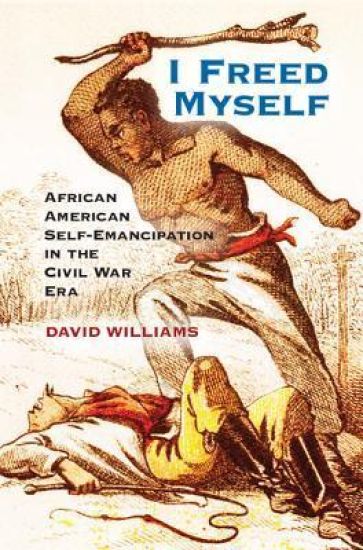
I Freed Myself

I Freed Myself

David Williams

Cambridge University Press
2014
sidottu
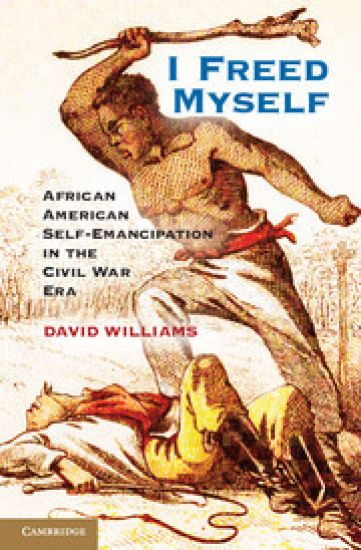
For a century and a half, Abraham Lincoln's signing of the Emancipation Proclamation has been the dominant narrative of African American freedom in the Civil War era. However, David Williams suggests that this portrayal marginalizes the role that African American slaves played in freeing themselves. At the Civil War's outset, Lincoln made clear his intent was to save the Union rather than free slaves - despite his personal distaste for slavery, he claimed no authority to interfere with the institution. By the second year of the war, though, when the Union army was in desperate need of black support, former slaves who escaped to Union lines struck a bargain: they would fight for the Union only if they were granted their freedom. Williams importantly demonstrates that freedom was not simply the absence of slavery but rather a dynamic process enacted by self-emancipated African American refugees, which compelled Lincoln to modify his war aims and place black freedom at the center of his wartime policies.
I Freed Myself

I Freed Myself

David Williams

Cambridge University Press
2014
pokkari
For a century and a half, Abraham Lincoln's signing of the Emancipation Proclamation has been the dominant narrative of African American freedom in the Civil War era. However, David Williams suggests that this portrayal marginalizes the role that African American slaves played in freeing themselves. At the Civil War's outset, Lincoln made clear his intent was to save the Union rather than free slaves - despite his personal distaste for slavery, he claimed no authority to interfere with the institution. By the second year of the war, though, when the Union army was in desperate need of black support, former slaves who escaped to Union lines struck a bargain: they would fight for the Union only if they were granted their freedom. Williams importantly demonstrates that freedom was not simply the absence of slavery but rather a dynamic process enacted by self-emancipated African American refugees, which compelled Lincoln to modify his war aims and place black freedom at the center of his wartime policies.
Japan: Beyond the End of History

Japan: Beyond the End of History

David Williams

Routledge
2017
sidottu
In this analysis of Japan's policy-making, David Williams places his argument within the debates about Japanese political economy in the United States and Britain, debates previously polarised between `market' and `ministry' views. He presents Japanese-style nationalist development as a serious challenge to Western values and theory.