The constraints of news production and the consequent limitations of news result directly in dissatisfaction throughout news audiences. News stories are frequently found to be inadequately informative to the extent that journalism is more inclined to generate political disenchantment, rather than prompt its audiences to pursue a fully engaged level of political participation in their societies. Journalism and Political Exclusion provides a multi-method, integrated analysis of news production and news audiences, including a long-term study of community activists in a central Canadian city. During the seven-year fieldwork period, different groups of research participants completed questionnaires, wrote news diaries, and were interviewed in their homes while viewing network television newscasts. Clarke shows that frustrations with the informational limitations of television and other news media are accelerated among women and the working-class often lack opportunities to access alternative information sources. The critical contribution of journalism to the production and reproduction of ideas about social reality is frequently acknowledged and assumed yet rarely investigated and demonstrated. Through an examination of the everyday realities of both news production and news reception, Journalism and Political Exclusion also shows how the current "crises" of professional journalism heighten the level of political exclusion experienced by various social groups.
Debra Majeed sheds light on families whose form and function conflict with U.S. civil law. Polygyny—multiple-wife marriage—has steadily emerged as an alternative to the low numbers of marriageable African American men and the high number of female-led households in black America.This book features the voices of women who welcome polygyny, oppose it, acquiesce to it, or even negotiate power in its practices. Majeed examines the choices available to African American Muslim women who are considering polygyny or who are living it. She calls attention to the ways in which interpretations of Islam’s primary sources are authorized or legitimated to regulate the rights of Muslim women. Highlighting the legal, emotional, and communal implications of polygyny, Majeed encourages Muslim communities to develop formal measures that ensure the welfare of women and children who are otherwise not recognized by the state.
In this social history of African American Muslim polygyny, Debra Majeed sheds light on the struggles of families whose form and function conflict with U.S. civil law. While all forms of polygamy are banned in the United States, polygyny has steadily emerged as an alternative force to the low numbers of marriageable African American men and the high number of female-led households in black America.Majeed situates African American Muslims in the center of this dialogue on polygyny, examining the choices available to women in these relationships and the scope of their rights. She calls attention to the efficacy of marital choice and the ways in which interpretationsof Islam's primary sources are authorized or legitimated to control the rights of Muslim women. Exploring how women share motivations, rationales, and consequences of living in polygynous families, Majeed highlights the legal, emotional, and communal implications while encouraging Muslim communities to develop formal measures that ensure the welfare of women and children who are otherwise not recognized by the state.
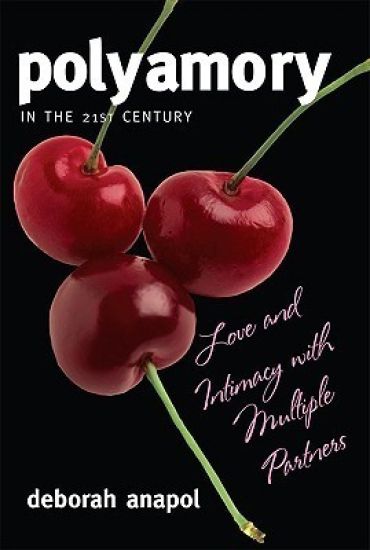
Unlike other books on this topic, Polyamory in the 21st Century weaves together research and facts to provide an informed and impartial analysis of polyamory as a lifestyle and as a movement, and to place it in a psychosocial as well as an historical context. Anecdotes and personal experiences allow the reader to develop a better understanding of polyamory and the people who practice and enjoy it. Anapol addresses the practical, the utopian, and the shadow sides of this intriguing, mysterious, yet often threatening lifestyle. It honestly addresses difficult issues such as the nature of commitment without exclusivity, balancing personal needs with loyalty to a partner, evaluating beliefs about love and relationship, the impact of polyamory on children, and the challenges that arise when one partner wants monogamy and another prefers polyamory. Without judgement, she explores this increasingly common practice, and reveals the true nature of a lifestyle that many do not understand.
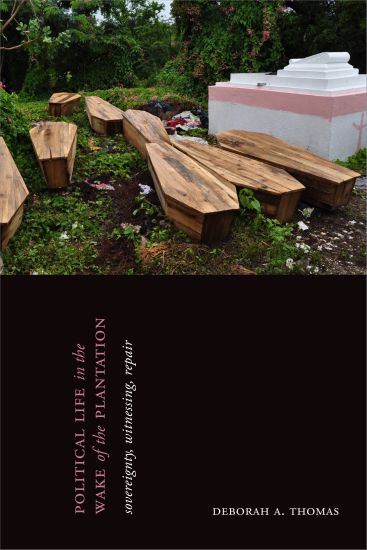
In 2010, Jamaican police and military forces entered the West Kingston community of Tivoli Gardens to apprehend Christopher “Dudus” Coke, who had been ordered for extradition to the United States on gun and drug-running charges. By the time Coke was detained, somewhere between seventy-five and two hundred civilians had been killed. In Political Life in the Wake of the Plantation, Deborah A. Thomas uses the incursion as a point of departure for theorizing the roots of contemporary state violence in Jamaica and in post-plantation societies in general. Drawing on visual, oral historical, and colonial archives, Thomas traces the long-term legacies of the plantation system and how its governing logics continue to shape and replicate forms of violence. She places affect at the center of sovereignty to destabilize disembodied narratives of liberalism and progress and to raise questions about recognition, repair, and accountability. In tying theories of politics, colonialism, race, and affect together with Jamaica's history, Thomas presents a robust framework for understanding what it means to be human in the plantation's wake.
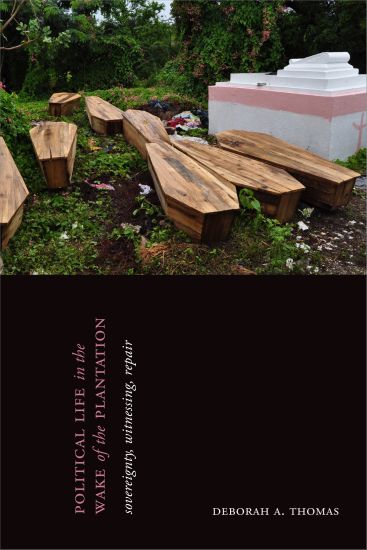
In 2010, Jamaican police and military forces entered the West Kingston community of Tivoli Gardens to apprehend Christopher “Dudus” Coke, who had been ordered for extradition to the United States on gun and drug-running charges. By the time Coke was detained, somewhere between seventy-five and two hundred civilians had been killed. In Political Life in the Wake of the Plantation, Deborah A. Thomas uses the incursion as a point of departure for theorizing the roots of contemporary state violence in Jamaica and in post-plantation societies in general. Drawing on visual, oral historical, and colonial archives, Thomas traces the long-term legacies of the plantation system and how its governing logics continue to shape and replicate forms of violence. She places affect at the center of sovereignty to destabilize disembodied narratives of liberalism and progress and to raise questions about recognition, repair, and accountability. In tying theories of politics, colonialism, race, and affect together with Jamaica's history, Thomas presents a robust framework for understanding what it means to be human in the plantation's wake.
Even powerful states face disaster if their armies do not adapt military doctrine to meet new challenges. Comparing the cases of the United States Army in Vietnam and the British Army during the Boer War and the Malayan Emergency, Political Institutions and Military Change offers an account of the conditions that help shape doctrine within military organizations. Drawing on the new institutional economics, Deborah D. Avant assumes that actors at every level will seek to enhance their political power. Military organizations will thus respond to civilian goals when military leaders expect rewards for their responsiveness. Tracing the evolution of civil-military relations in the United States and Britain, Avant highlights that a nation's political structure has a major impact on the structure of military organizations and their formation of military doctrine. Political Institutions and Military Change discusses how the structural differences between the British and US governments resulted in very different biases within the two armies, and how their political conditions and systems contributed to the relative ease with which the British Army adapted to new peripheral threats and the reluctance with which the US Army responded to change in Vietnam.
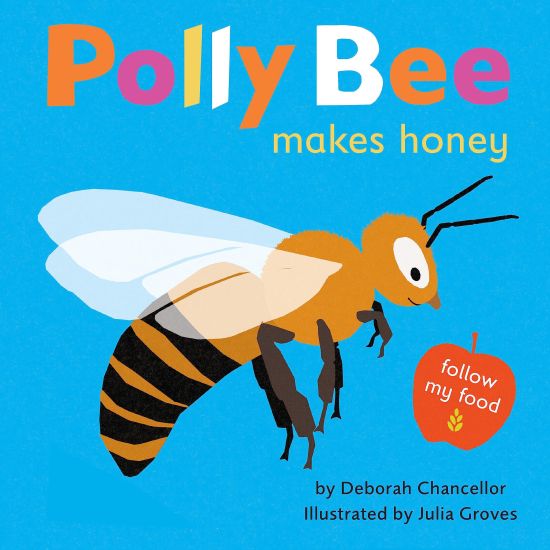
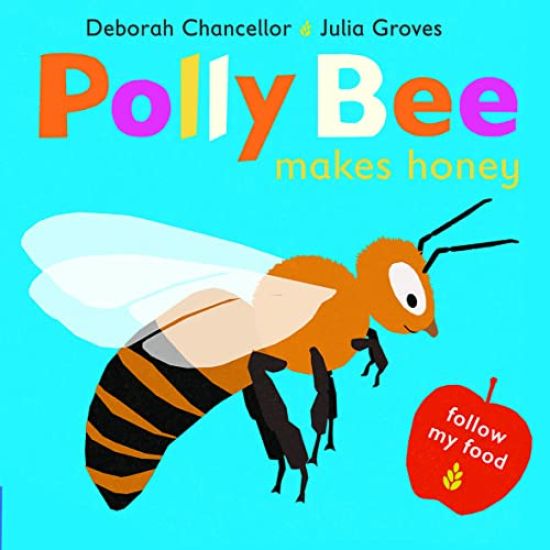
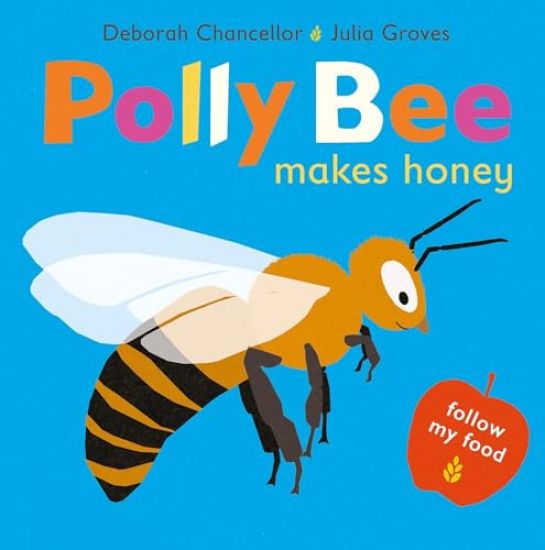
Follow Polly Bee as she flies to flowers, finds pollen and nectar, and helps make sticky honey in this stylish and fact-filled picture book, part of the new "Follow My Food" series that looks at the ways different foods are made. How is honey produced? And how does it get from the farm to the kitchen table? This simple story provides young readers a glimpse into a day in the life of a worker bee. From flower to hive to table, this engaging story will help kids understand where their food comes from, and it's ideal for teaching them about sustainability and the environment. Featuring attractive collage-style art and rich vocabulary, the book also includes information on beekeeping, fun facts about bees, and a simple recipe.
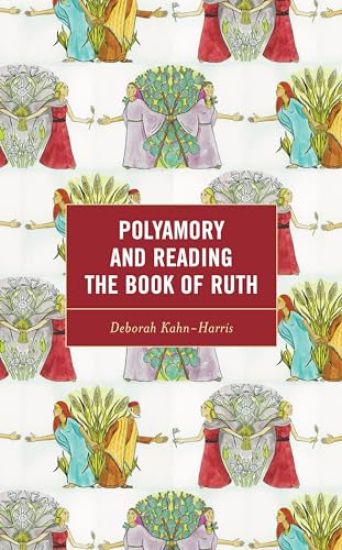
Polyamory and Reading the Book of Ruth is based on a simple premise- what if the Book of Ruth isn’t a love story in the vein of modern rom coms, but a different sort of love story? Many people are conditioned to read romance stories as resolving into happily married, dyadic couplings, most often heterosexual. But what if that’s not how to read the Book of Ruth? This book identifies a polyamorous hermeneutic and explores how it might be helpful in interpreting the Book of Ruth. Drawing on developments in both feminist and queer biblical studies, Deborah Kahn-Harris offers a close textual reading that focuses in on a triadic basis for examining the relationships in the Book of Ruth. The book closes with a contemporary ‘targumic’ reimagining of the Book of Ruth that defines more clearly this polyamorous reading.
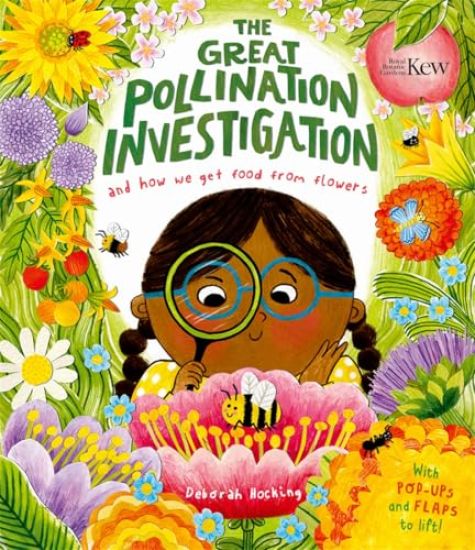
Flowers make the world SO lovely!But WHY are they so bright and beautiful? And HOW ON EARTH do they make food?Let's find out in THE GREAT POLLINATION INVESTIGATION!With lots of fun flaps to lift, take a look inside a flower and find out what all the little parts do, meet the amazing animals that carry pollen from bloom to bloom, and discover how seeds and fruits are made. Look for the adorable bees buzzing around on every page to help with the science bits!You can carry out your very own pollination investigation with the project at the back of the book and instructions on how to make a pollination wand to tickle your flowers!With gorgeously bright artwork by Deborah Hocking, fact-packed text checked by the experts at Royal Botanic Gardens Kew and flaps to lift, this innovative nonfiction picture book is an immersive and exciting read for ages 4 and up.
In this groundbreaking work on American public policy and human fertility control, policies and practices of the 70s, 80s, and 90s are reviewed and analyzed in each of the fifty states. Arguing that morality politics have helped make fertility policies contentious and complex, McFarlane and Meier conclude that current policies are inadequate for addressing unintended pregnancy and even contribute to high abortion rates. The authors offer alternative public policy designed to be more effective in the future.
A girl follows Polly the worker bee collecting pollen and nectar from various flowers, and bringing it back to the hive where it is stored in the honeycomb. We meet the queen bee and the drones, and finally see honey being harvested and enjoyed. Simple quiz and fun facts at the end explain more about bees and how they live.
A girl follows Polly the worker bee collecting pollen and nectar from various flowers, and bringing it back to the hive where it is stored in the honeycomb. We meet the queen bee and the drones, and finally see honey being harvested and enjoyed.This narrative non-fiction picture book for the very young also contains a simple quiz, a gallery of pictures, further information about bees and a recipe containing honey.Part of the FOLLOW MY FOOD collection, along with MILLY COW GIVES MILK, SHELLY HEN LAYS EGGS, GRANNY PIP GROWS FRUIT, which aim to give children an understanding of how food is produced, and make them aware of the value of farming and sustainability.
Vocabulary and small talk 50 key political terms and essential idiomatic expressions for politics and business situations. Useful tips on how to make small talk - even on a 'taboo' topic such as politics. A fun vocabulary test. Und noch was... die Begriffe und Redewendungen werden ins Deutsche bersetzt
This collection of articles presents a selection of Deborah Cameron’s work on language, gender and sex in one single volume. Arranged thematically, this book covers major developments in Anglo-American feminist linguistics, and Cameron’s responses to these, spanning the last twenty years.The collection’s overarching theme is the political relationship between language and gender: four distinctly themed sections demonstrate that a variety of forces affect gender relations, and gender representations, in different times and places. Cameron examines the connections between language and the (mis)representation of reality, and the role language plays in reproducing gender inequalities. More recent articles focus on representations of men and women as communicators, as well as the impact of sexuality on gender and gender relations, an increasingly prominent area of the author’s research.This timely study brings much of Cameron’s work together for the first time, and highlights characteristics of her work with which many readers will be familiar: a combination of linguistic and feminist political orientation; and a distinct focus on conflict in gender relations. Including a new introductory essay and eleven articles, three of which are previously unpublished, with short introductions to contextualize each piece, the collection is extremely useful for students and teachers on a variety of courses including English language and linguistics, women’s studies, gender studies and communication studies.
This collection of articles presents a selection of Deborah Cameron’s work on language, gender and sex in one single volume. Arranged thematically, this book covers major developments in Anglo-American feminist linguistics, and Cameron’s responses to these, spanning the last twenty years.The collection’s overarching theme is the political relationship between language and gender: four distinctly themed sections demonstrate that a variety of forces affect gender relations, and gender representations, in different times and places. Cameron examines the connections between language and the (mis)representation of reality, and the role language plays in reproducing gender inequalities. More recent articles focus on representations of men and women as communicators, as well as the impact of sexuality on gender and gender relations, an increasingly prominent area of the author’s research.This timely study brings much of Cameron’s work together for the first time, and highlights characteristics of her work with which many readers will be familiar: a combination of linguistic and feminist political orientation; and a distinct focus on conflict in gender relations. Including a new introductory essay and eleven articles, three of which are previously unpublished, with short introductions to contextualize each piece, the collection is extremely useful for students and teachers on a variety of courses including English language and linguistics, women’s studies, gender studies and communication studies.
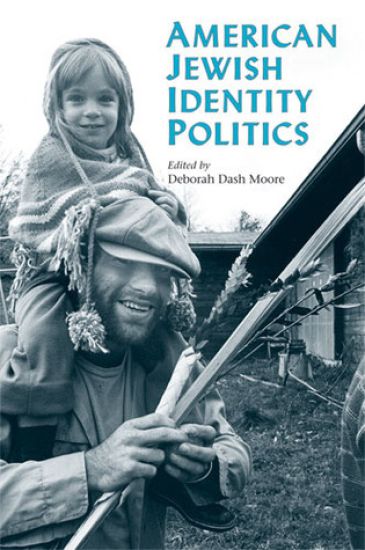
"Displays the full range of informed, thoughtful opinion on the place of Jews in the American politics of identity."---David A. Hollinger, Preston Hotchkis Professor of American History, University of California, Berkeley"A fascinating anthology whose essays crystallize the most salient features of American Jewish life in the second half of the twentieth century."---Beth S. Wenger, Katz Family Associate Professor of American Jewish History and Director of the Jewish Studies Program, University of Pennsylvania"A wonderful collection of important essays, indispensable for understanding the searing conflicts over faith, familial, and political commitments marking American Jewry's journey through the paradoxes of the post-Holocaust era."---Michael E. Staub, Professor of English, Baruch College, CUNY, and author of Torn at the Roots: The Crisis of Jewish Liberalism in Postwar America"This provocative anthology offers fascinating essays on Jewish culture, politics, religion, feminism, and much more. It is a must-read for all those interested in the intersection of Jewish life and identity politics in the modern period."---Joyce Antler, Samuel Lane Professor of American Jewish History and Culture, Brandeis University"This collection of essays invites the reader to engage with some of the best writing and thinking about American Jewish life by some of the finest scholars in the field. Deborah Moore's introduction offers an important framework to understand not only the essays, but the academic and political contexts in which they are rooted."---Riv-Ellen Prell, Professor and Chair, American Studies, University of Minnesota, and editor of Women Remaking American JudaismThis collection of essays explores changes among American Jews in their self-understanding during the last half of the 20th century. Written by scholars who grew up after World War II and the Holocaust who participated in political struggles in the 1960s and 1970s and who articulated many of the formative concepts of modern Jewish studies, this anthology provides a window into an era of social change. These men and women are among the leading scholars of Jewish history, society and culture. The volume is organized around contested themes in American Jewish life: the Holocaust and World War II, religious pluralism and authenticity, intermarriage and Jewish continuity. Thus, it offers one of the few opportunities for students to learn about these debates from participant scholars. The book includes a dozen photographs of contemporary Jewish experience in the United States by acclaimed Jewish photographer Bill Aron. Like the scholars of the essays, Aron participated in struggles within the Jewish community and the Jewish counterculture in the 1970s and 1980s. His images reflect shifting perspectives toward spirituality, community, feminism, and memory culture. The essays reflect several layers of identity politics. On one level, they interrogate the recent past of American Jews, starting with their experiences of World War II. Without the flourishing of identity politics and the white ethnic revival, many questions about American Jewish history might never have been explored. Those who adopted identity politics often saw Jews as an ethnic group in the United States, one connected both to other Americans and to Jews throughout the world and in the past. On another level, these essays express ideas nourished in universities during the turbulent 1970s and 1980s. Those years marked the expansion of Jewish studies as a field in the United States and the establishment of American Jewish studies as an area of specialization. Taken together they reveal the varied sources of American Jewish studies. Finally, one must note that in many cases these essays anticipate major books on the subject. Reading them now reveals how ideas took shape within the political pressures of the moment. These articles teach us not only about their subject but also about how issues were framed and debated during what might be called our fin de siecle, the end of the twentieth century and beginning of the twenty-first. The authors of these articles include several, most notably Arthur Green, Alvin Rosenfield, and the late Egon Mayer, who collectively could be thought of as the founding fathers of this new generation of Jewish scholars. Green in theology, Rosenfield in literature, and Mayer in sociology influenced younger academics such as Arnold Eisen. A slightly different relationship exists among the historians. Several come to their subject though the study of American history, including Hasia Diner, Stephen Whitfield, and Jonathan Sarna, while others approach through the portal of Jewish history, such as Paula Hyman and Jeffrey Gurock.
The wage arrears crisis has been one of the biggest problems facing contemporary Russia. At its peak, it has involved some $10 billion worth of unpaid wages and has affected approximately 70 percent of the workforce. Yet public protest in the country has been rather limited. The relative passivity of most Russians in the face of such desperate circumstances is a puzzle for students of both collective action and Russian politics. In Protest and the Politics of Blame, Debra Javeline shows that to understand the Russian public's reaction to wage delays, one must examine the ease or difficulty of attributing blame for the crisis. Previous studies have tried to explain the Russian response to economic hardship by focusing on the economic, organizational, psychological, cultural, and other obstacles that prevent Russians from acting collectively. Challenging the conventional wisdom by testing these alternative explanations with data from an original nationwide survey, Javeline finds that many of the alternative explanations come up short. Instead, she focuses on the need to specify blame among the dizzying number of culprits and potential problem solvers in the crisis, including Russia's central authorities, local authorities, and enterprise managers. Javeline shows that understanding causal relationships drives human behavior and that specificity in blame attribution for a problem influences whether people address that problem through protest. Debra Javeline is Assistant Professor of Political Science, Rice University.
"Displays the full range of informed, thoughtful opinion on the place of Jews in the American politics of identity."---David A. Hollinger, Preston Hotchkis Professor of American History, University of California, Berkeley"A fascinating anthology whose essays crystallize the most salient features of American Jewish life in the second half of the twentieth century."---Beth S. Wenger, Katz Family Associate Professor of American Jewish History and Director of the Jewish Studies Program, University of Pennsylvania"A wonderful collection of important essays, indispensable for understanding the searing conflicts over faith, familial, and political commitments marking American Jewry's journey through the paradoxes of the post-Holocaust era."---Michael E. Staub, Professor of English, Baruch College, CUNY, and author of Torn at the Roots: The Crisis of Jewish Liberalism in Postwar America"This provocative anthology offers fascinating essays on Jewish culture, politics, religion, feminism, and much more. It is a must-read for all those interested in the intersection of Jewish life and identity politics in the modern period."---Joyce Antler, Samuel Lane Professor of American Jewish History and Culture, Brandeis University"This collection of essays invites the reader to engage with some of the best writing and thinking about American Jewish life by some of the finest scholars in the field. Deborah Moore's introduction offers an important framework to understand not only the essays, but the academic and political contexts in which they are rooted."---Riv-Ellen Prell, Professor and Chair, American Studies, University of Minnesota, and editor of Women Remaking American JudaismThis collection of essays explores changes among American Jews in their self-understanding during the last half of the 20th century. Written by scholars who grew up after World War II and the Holocaust who participated in political struggles in the 1960s and 1970s and who articulated many of the formative concepts of modern Jewish studies, this anthology provides a window into an era of social change. These men and women are among the leading scholars of Jewish history, society and culture. The volume is organized around contested themes in American Jewish life: the Holocaust and World War II, religious pluralism and authenticity, intermarriage and Jewish continuity. Thus, it offers one of the few opportunities for students to learn about these debates from participant scholars. The book includes a dozen photographs of contemporary Jewish experience in the United States by acclaimed Jewish photographer Bill Aron. Like the scholars of the essays, Aron participated in struggles within the Jewish community and the Jewish counterculture in the 1970s and 1980s. His images reflect shifting perspectives toward spirituality, community, feminism, and memory culture. The essays reflect several layers of identity politics. On one level, they interrogate the recent past of American Jews, starting with their experiences of World War II. Without the flourishing of identity politics and the white ethnic revival, many questions about American Jewish history might never have been explored. Those who adopted identity politics often saw Jews as an ethnic group in the United States, one connected both to other Americans and to Jews throughout the world and in the past. On another level, these essays express ideas nourished in universities during the turbulent 1970s and 1980s. Those years marked the expansion of Jewish studies as a field in the United States and the establishment of American Jewish studies as an area of specialization. Taken together they reveal the varied sources of American Jewish studies. Finally, one must note that in many cases these essays anticipate major books on the subject. Reading them now reveals how ideas took shape within the political pressures of the moment. These articles teach us not only about their subject but also about how issues were framed and debated during what might be called our fin de siecle, the end of the twentieth century and beginning of the twenty-first. The authors of these articles include several, most notably Arthur Green, Alvin Rosenfield, and the late Egon Mayer, who collectively could be thought of as the founding fathers of this new generation of Jewish scholars. Green in theology, Rosenfield in literature, and Mayer in sociology influenced younger academics such as Arnold Eisen. A slightly different relationship exists among the historians. Several come to their subject though the study of American history, including Hasia Diner, Stephen Whitfield, and Jonathan Sarna, while others approach through the portal of Jewish history, such as Paula Hyman and Jeffrey Gurock.