This work has been selected by scholars as being culturally important, and is part of the knowledge base of civilization as we know it. This work was reproduced from the original artifact, and remains as true to the original work as possible. Therefore, you will see the original copyright references, library stamps (as most of these works have been housed in our most important libraries around the world), and other notations in the work.This work is in the public domain in the United States of America, and possibly other nations. Within the United States, you may freely copy and distribute this work, as no entity (individual or corporate) has a copyright on the body of the work.As a reproduction of a historical artifact, this work may contain missing or blurred pages, poor pictures, errant marks, etc. Scholars believe, and we concur, that this work is important enough to be preserved, reproduced, and made generally available to the public. We appreciate your support of the preservation process, and thank you for being an important part of keeping this knowledge alive and relevant.
This work has been selected by scholars as being culturally important, and is part of the knowledge base of civilization as we know it. This work was reproduced from the original artifact, and remains as true to the original work as possible. Therefore, you will see the original copyright references, library stamps (as most of these works have been housed in our most important libraries around the world), and other notations in the work.This work is in the public domain in the United States of America, and possibly other nations. Within the United States, you may freely copy and distribute this work, as no entity (individual or corporate) has a copyright on the body of the work.As a reproduction of a historical artifact, this work may contain missing or blurred pages, poor pictures, errant marks, etc. Scholars believe, and we concur, that this work is important enough to be preserved, reproduced, and made generally available to the public. We appreciate your support of the preservation process, and thank you for being an important part of keeping this knowledge alive and relevant.
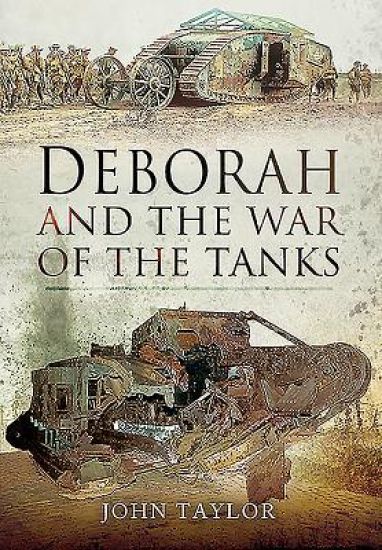
Deborah is a British First World War tank that rose from the grave after taking part in one of the most momentous battles in history. In November 1917 she played a leading role in the first successful massed tank attack at Cambrai. Eighty years later, in a remarkable feat of archaeology, the tank's buried remains were rediscovered and excavated, and are now preserved as a memorial to the battle and to the men who fought in it. John Taylor's book tells the tale of the tank and her crew and tracks down their descendants to uncover a human story every bit as compelling as the military one. A great achievement. One of the most remarkable treasures of First World War archaeology receives the treatment it deserves in this hugely detailed yet highly readable new history. Dan Snow
'A great achievement. One of the most remarkable treasures of First World War archaeology receives the treatment it deserves in this hugely detailed yet highly readable new history.' Dan SnowDeborah is a British First World War tank that rose from the grave after taking part in one of the most momentous battles in history. In November 1917 she played a leading role in the first successful massed tank attack at Cambrai. Eighty years later, in a remarkable feat of archaeology, the tank's buried remains were rediscovered and excavated, and are now preserved as a memorial to the battle and to the men who fought in it. John Taylor's book tells the tale of the tank and her crew and tracks down their descendants to uncover a human story every bit as compelling as the military one.






![[Deborah Weston's Diary] [manuscript]](/covers/9781376917130.jpg)