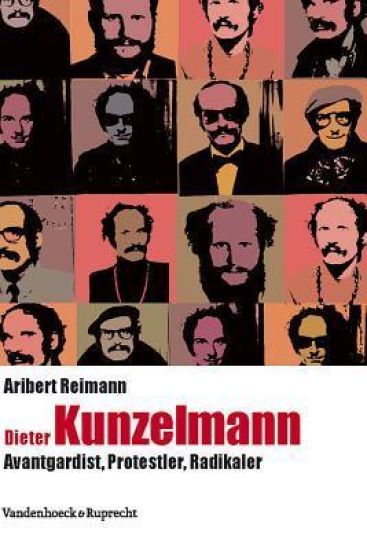
The biography of Commune I founder Dieter Kunzelmann combines the experiences of a youth in the Franconian province with the history of the subversive avant-garde around 1960, the so-called "cultural revolution" of the sixties and the increasing radicalization and militancy of the incipient German terrorism since 1969. In In every phase of this development, Kunzelmann played a central role in the activities of the mostly very small but influential groups that set creative, anarchic and ultimately violent accents in the oppositional upheavals of the old Federal Republic. His further path through the orthodox K-group scene of the seventies to the Berlin AL and the West Berlin House of Representatives complete a biography that was never representative of the protest movement or was typical of the generation, but with numerous symptomatic insights into the history of the Subversion made possible after 1945.
Observera att förlaget som ger ut denna produkt baserar innehållet i sina produkter på fria källor som Wikipedia. Boken är med stor sannolikhet endast ett utdrag ur dessa informationskällor, alltså inte en vanlig bok i den bemärkelsen.
Observera att förlaget som ger ut denna produkt baserar innehållet i sina produkter på fria källor som Wikipedia. Boken är med stor sannolikhet endast ett utdrag ur dessa informationskällor, alltså inte en vanlig bok i den bemärkelsen.
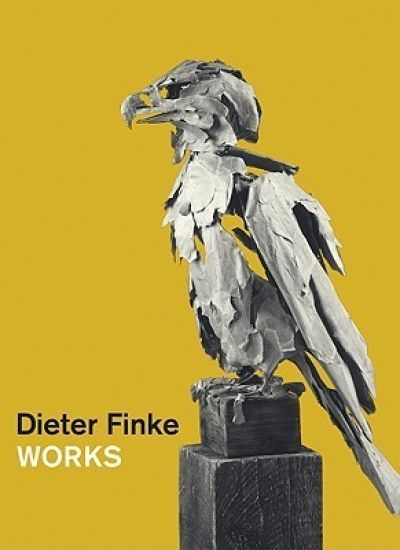
Sculptor Dieter Finke, born in Berlin in 1939, remains unmatched regarding the fascinating intensity he lends to his mainly animal sculptures. Much reduced in form, his animals have a special, inherent drama and expressiveness. He also employs unusual materials for his work such as wood and cardboard, which represent a particular challenge to a bronze caster. The bodies are dismembered and reassembled, and the construction always remains visible. Whether through his choice of material, formal realization or apparently fragile presentations, Finke always succeeds in portraying the brittle nature of relations between animals and man in a convincing manner.
Increasingly, scientific studies are indicating that in health matters, prayer works. In this guide, readers will find that daily ounce of spiritual encouragement they need. Not tied to any one particular diet, it can be used in conjunction with any healthy-eating program.
Are you sick and tired of yo-yo dieting?Do you want to finally get rid of those extra pounds once and for all?If you're ready to learn the basics of weight loss, this guide will help you.When you're looking to lose weight, it can often feel like there are so many conflicting pieces of information out there. There is a lot of noise and a lot of information overload. You don't know what will actually work for you and how to find it.You want something that's simple, but also effective. That's why we created this guide for woman who want to lose weight and keep it off We've spent years putting together the most comprehensive collection of diet and workout tips. All in one place.Why is the Smarter Dieter Secrets book different?Our guide has everything you need to succeed at weight loss - from recipes to strategies. Everything is laid out step by step so that you don't have to waste any time searching through websites, blogs or books trying to figure it all out on your own.Features: Understand the science behind weight lossLearn how to burn your belly fatUnderstand the food you should eat and the food you shouldn'tLose weight fastKeep your weight offAvoid dieting traps that can cause you to regain weight againLearn about the best workouts for womenGet great recipes for weight loss& much more You deserve to look and feel your best, and with Smarter Dieter Secrets, you can finally reach your weight loss goals.So don't wait any longer - start using our guide today and see the benefits for yourself
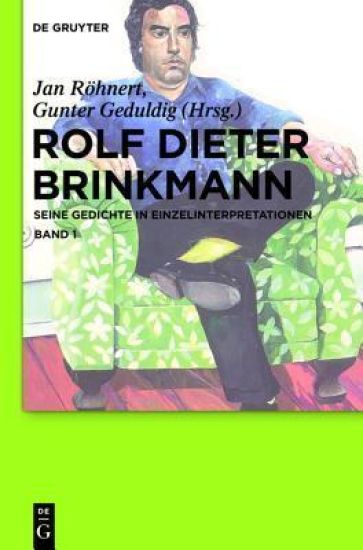
Since the 1970s Rolf Dieter Brinkmann (1940 1975) has been considered to be one of the most innovative German poets. In recognition of his importance as a modern classic, many of his poems presented and interpreted individually have been made accessible here for the first time in a critical text edition. Writers and literary scholars, among them a number of renowned Brinkmann experts, provide a comprehensive and reliable overview of the current knowledge on Brinkmann. Even for readers unfamiliar with the poet s work, this book offers a fascinating insight into his poems."
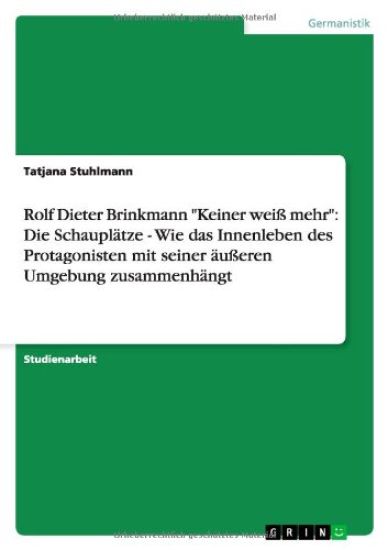
Studienarbeit aus dem Jahr 2011 im Fachbereich Germanistik - Neuere Deutsche Literatur, Note: 2,0, Ruhr-Universit t Bochum (Germanistisches Institut), Veranstaltung: Deutschsprachige Popliteratur, Sprache: Deutsch, Abstract: Gegenstand der vorliegenden Hausarbeit ist der Roman "Keiner wei mehr" von Rolf Dieter Brinkmann. Ich habe mich aus mehreren Gr nden daf r entschieden, gerade diesen im Seminar besprochenen Text zu vertiefen. Die Diskussion im Seminar war sehr anregend und es kam die Fragestellung auf, ob und inwiefern den Schaupl tzen eine aktive Bedeutung in dem Roman zugesprochen werden kann. Ich m chte mich also n her mit den Hauptschaupl tzen des Romans besch ftigen und untersuchen, inwiefern sie eine Rolle in der Handlung spielen. Die Fragen, die sich diese Arbeit dazu stellt, lauten: Spiegelt sich in der u eren Welt die innere Welt des Protagonisten wieder? Wie h ngt das Innenleben des Protagonisten mit seiner Umgebung zusammen? Um diese Fragen zu beantworten, werde ich mich n her mit der Wohnung des Protagonisten besch ftigen und herausarbeiten welche Strukturen darin zu finden sind, welche Rolle die Wohnung f r den Protagonisten und sein Empfinden spielt. Desweiteren m chte ich mich mit der Stadt, in welcher der Protagonist lebt, und mit seiner Fahrt nach Hannover besch ftigen. Den Aufenthalt in Hannover zu untersuchen ist wichtig, um herauszustellen, wie der Protagonist eine fremde Umgebung im Gegensatz zu seiner Heimat wahrnimmt und auf welche Weise diese unbekannte u ere Welt sein Innenleben beeinflusst. Mit diesen Untersuchungen verbunden, soll dabei auch der Roman charakterisiert und seine inhaltliche und sprachliche Form mit den diesbez glichen Besonderheiten dargestellt werden.
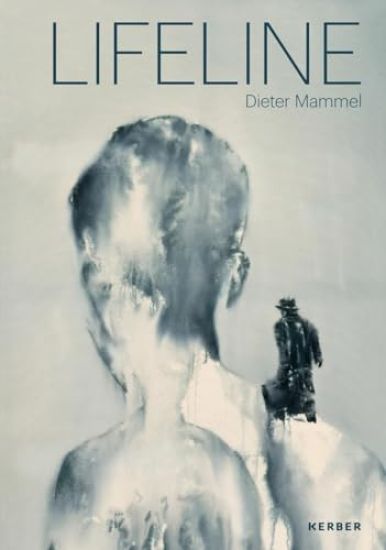
Painter Dieter Mammel examines themes of origin, escape and memory as timeless constants of human experience in the lifeline of society and his own. Accompanies a travelling exhibition 10 May â?? 4 August 2024, Romania, 30 August â??28 September 2024, Pantschowa, Serbia7 May 2025 â??18 January 2026, Germany. Text in English and German.
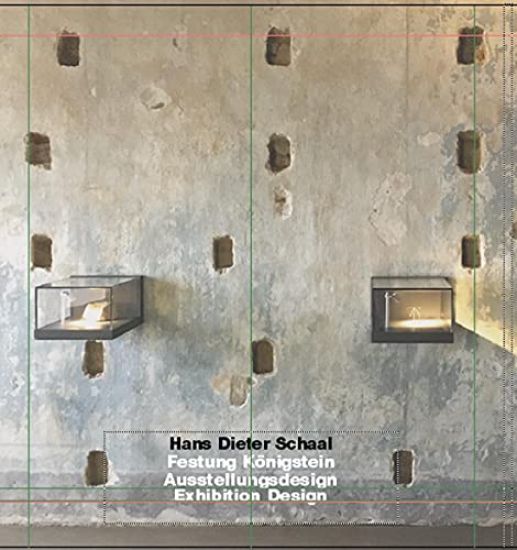
The Königstein Fortress, located not far from Dresden on a rocky plateau high above the Elbe River, is considered one of the most interesting and best preserved fortifications in Europe. It has a long eventful history dating back to the Bronze Age. Königstein was first mentioned in documents in 1241. It was not until the end of the 16th century that the former castle began to be expanded into a fortress, which was then constantly adapted to new conditions. However, it was spared from warlike destruction over all the centuries. Instead, it was sometimes used as a prison camp in times of war, for example during the Franco-Prussian War of 1870/71 and for the last time during the Second World War. In 1949, the then GDR set up a youth workshop in the fortress based on the teachings of Soviet pedagogue Anton Semyonovich Makarenko. In 1955, the GDRs Ministry of Culture finally converted Königstein into a museum and since 1991, now owned by the Free State of Saxony, it has undergone extensive structural renovation. The managing director of Festung Königstein gGmbH, Angelika Taube, became aware of Hans Dieter Schaal as early as 1997, and in the following years established an intensive collaboration with him, which has now resulted in six permanent and twelve temporary exhibitions. They illustrate the multifaceted history of the fortress in a way that clearly stands out from pure documentation and always creates something new and original from the factually given. This book presents these exhibitions in large-format colour illustrations. In addition, it contains descriptions and comments by Schaal that clarify the history of the exhibitions and also give the reader insights into the creative processes. Hans Dieter Schaal, born in Ulm in 1943, architect, stage designer, exhibition and landscape planner, makes the complexity of reality visible through his analytically differentiated stagings and brings its background into the field of vision of the attentive viewer. His works, the majority of which have been published by Edition Axel Menges, have since found an audience far beyond the borders of his native country. The author lives and works in a village near Biberach an der Riss.