Kirjojen hintavertailu. Mukana 11 244 527 kirjaa ja 12 kauppaa.

Kirjahaku

Etsi kirjoja tekijän nimen, kirjan nimen tai ISBN:n perusteella.

1000 tulosta hakusanalla Dmitri Mereschkowski

Dmitri Prigov

Dmitri Prigov

Sergey Chesnokov

Paul Mostinski
2018
pokkari
This book has been created based on the author's lecture on November 15, 2015 at the International conference dedicated to Dmitri Prigov's 75th Bithday "Prigov - 75" in Moscow, Russia.
Dmitri Shostakovich

Dmitri Shostakovich

Derek C. Hulme; Irina Shostakovich

Scarecrow Press
2002
sidottu
Dmitri Shostakovich (1906-75) was one of the greatest composers of the twentieth century, and the first major Soviet composer. He is also a figure of some controversy, following the publication in the West in 1979 of his memoirs Testimony. Derek Hulme's catalogue of the composer's works was first published privately in 1982. This third edition adds greatly to the information contained therein and brings it up to date. For each numbered work and all the known unnumbered compositions, Hulme provides a short description of the piece, and lists date of composition, dedicatee, forces the work employs, location of the autograph score, duration, arrangements of the work, premiere(s), an extensive list of recordings, and reference to bibliography items where the piece is discussed in any detail. The entries are presented in order of opus number, with unnumbered compositions inserted appropriately within this chronological sequence. The catalogue is supplemented by a series of appendices, which includes a chronological chart of the composer's life and work and a discussion of the monogram DSCH, a musical motif based on his name that permeates his compositions.
Dmitri Shostakovich Catalogue

Dmitri Shostakovich Catalogue

Derek C. Hulme; Irina Shostakovich

Scarecrow Press
2010
sidottu
Dmitri Shostakovich (1906-75) was one of the greatest composers of the 20th century, as well as the first major Soviet composer. In the fourth edition of Dmitri Shostakovich Catalogue: The First Hundred Years and Beyond, Derek C. Hulme names and describes all known musical compositions of the Russian composer. More than 175 major works are annotated and discussed, including such comprehensive details as titles and subtitles, dates of composition, instrumentation, and duration; information on dedications and premieres; arrangements by the composer and others; publication details; notes on bibliographical references and the location of the autograph score; and comprehensive chronological lists of vinyl, compact disc, and visual recordings. The entries are presented chronologically and by opus number, while indexes of names and compositions provide full accessibility. Several appendixes supplement the volume, guiding readers to further information in published sources and providing information on the composer's film, radio, television, and theatre productions; his abandoned projects and obscure works; and his recordings, including box sets and special USSR recordings. An appendix also discusses the monogram DSCH, a musical motif based on his name that permeates his compositions. This new edition also includes a comprehensive chronological chart of Shostakovich's works and historical events and several plates of memorabilia.
Dmitri Shostakovich

Dmitri Shostakovich

John Riley

I.B. Tauris
2004
nidottu
Of all the major Soviet composers who worked in the cinema, the most prominent was Dmitri Shostakovich who, in addition to over a hundred works for the stage and concert hall, wrote scores for almost forty films. Yet despite his reputation this work, when not completely overlooked, has been poorly judged by the same criteria as his other music. Likewise, while much attention has been paid to Soviet film, the crucial role played by the scores is all too often forgotten. This, the first book in English to look at Shostakovich's cinema career, discusses every film he scored, looking at the films themselves, tracing their relationship to the changing concerns and policies of the Soviet state and examining how the music works in context. John Riley also gives a fascinating account of the composer's life. This highly readable book will be welcomed equally by devotees of the composer; those interested in Soviet culture and cinema; and general film music enthusiasts.
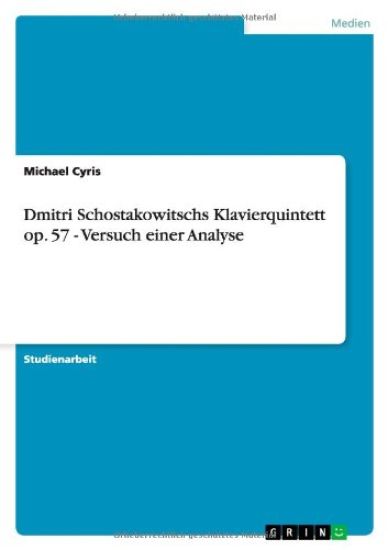
Dmitri Schostakowitschs Klavierquintett op. 57 - Versuch einer Analyse
Studienarbeit aus dem Jahr 2010 im Fachbereich Musikwissenschaft, Note: 1,3, Universit t Leipzig (Institut f r Musikwissenschaft), Veranstaltung: Klavierkammermusik, Sprache: Deutsch, Abstract: "Man mu Schostakowitsch Gerechtigkeit widerfahren lassen: Dem allgemeinen Eindruck nach enth lt seine Fuge unglaublich viel Neues ...]" So u ert sich der ebenfalls sowjetische Komponist Sergei Prokofjew zu einem der S tze aus Schostakowitschs Klavierquintett g-Moll op. 57 aus dem Jahr 1940. Auch wenn die Formulierung "dem allgemeinen Eindruck nach" etwas abf llig daherkommt scheint der Sch pfer von "Peter und der Wolf" doch dieses Kompliment recht ernst zu meinen. Auch ber die anderen S tze bildet sich Schostakowitschs Komponistenkollege eine Meinung. Der an zweiter Stelle erscheinende Fugensatz steche jedoch wie gesagt hervor. Aus der bachschen Tradition heraus unternahmen die Komponisten der nachfolgenden Generationen vielerlei Versuche originelle Fugen zu schreiben und dem damit dieser traditionellen Form ein gewisses Ma an Neuartigkeit beizubringen. Im Bezug hierauf r umt Prokofjew allenfalls Hindemith das Gelingen dieses Versuchs ein, der in seinen Sonaten ebenfalls mit fugenartigen Strukturen experimentierte. (Meyer 1998, S.173) Nicht vergessen werden darf, abgesehen von der Analyse einzelner Teils tze des Werks auch der historische Kontext der Entstehung und Rezeption des Klavierquintetts. Aus der Musikgeschichte heraus muss man Schostakowitsch ohnehin immer als Komponisten vor einem rumorenden politischen Hintergrund der Stalin- ra sehen und verstehen. Man denke hierbei etwa an die beiden Sinfonien, die Salingrader und die Leningrader Sinfonie. Ob es sich bei dem vorliegenden Werk ebenfalls um ein stark politisch konnotiertes und damit entweder revolution res oder traditionsbewusstes Werk handelt will die vorliegende Arbeit ergr nden. Dabei erfolgt zun chst die Er rterung des Entstehungshintergrunds des Werkes und seine Rezeption um dann gefolgt von der Analy
Dmitri Schostakowitsch

Dmitri Schostakowitsch

Florian Leiffheidt

Grin Publishing
2012
pokkari
Studienarbeit aus dem Jahr 2012 im Fachbereich Musikwissenschaft, Note: 1,3, Ernst-Moritz-Arndt-Universit t Greifswald (Kirchenmusik & Musikwissenschaft), Veranstaltung: "Ach Gott, wir haben nicht gewusst, was Krieg f r eine Plage ist " - Musik und Krieg von der Fr hen Neuzeit bis heute, Sprache: Deutsch, Abstract: Schon in fr hen Jahren wurde der Komponist Dmitri Schostakowitsch (19061975) mit politischen Ereignissen konfrontiert, als er als Elfj hriger Zeuge wurde, wie w hrend einer Kundgebung Demonstranten erschossen wurden. Als unmittelbare Reaktion darauf entstand die Komposition "Hymne an die Freiheit" bzw. "Trauermarsch f r die Opfer der Revolution." Ein Zeichen, zum einen f r den fr hen Beginn der kompositorischen F higkeit, zum anderen f r die Verflechtung von historisch-politischen Ereignissen im Umfeld Schostakowitsch und der Entstehung seiner Werke. Es folgte eine Karriere als Komponist, welche jedoch nicht zuletzt durch folgendes Ereignis immens ersch ttert wurde: 1936 besuchte Josef Stalin, sowjetischer Diktator, eine Auff hrung von Schostakowitschs Oper "Lady Macbeth von Mzensk," verlie jedoch seine Ehrenloge nach einer musikalisch umgesetzten Kopulations-Szene. Und dies geschah, ohne dass Stalin vorher noch einmal das Gespr ch mit Schostakowitsch als Komponisten suchte, was nicht nur der Abwertung des musikalischen Werkes, sondern in der damaligen Zeit einem Todesurteil gleichkam. Komponisten, welche als sogenannte Systemfeinde oder Formalisten galten, wurden in n chtlichen Abholaktionen verhaftet, verh rt, im schlimmsten Falle wurden sie in Gulags deportiert und ermordet. Auf den Eklat der Auff hrung folgte ein (vermutlich von Stalin selbst verfasster) Artikel in der sowjetischen Kulturzeitung Prawda, in dem Schostakowitsch jegliche musikalische F higkeit abgesprochen und ihm stattdessen "Chaos statt Musik" bescheinigt wurde. Nun stand auch Schostakowitsch im Visier des Geheimdienstes und musste tagt glich mit seiner Verhaftung rechnen. Anekdote
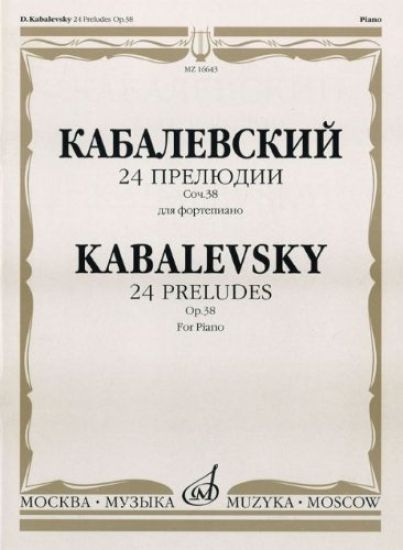
Dmitri Kabalevsky - for young performers. Piano music
Contents:Sonatina. Op. 13 No.1Six Pieces from the Thirty Children's Pieces series. Op. 27Like a waltzSongEtudeRondoScherzoSonatinaFour preludes from the 24 Prelude series. Op. 38Two variations from the series "Five easy variations on folk themes." Op. 51On the theme of Russian folk songOn the theme of Slovak folk songRondo Op. 59Two preludes and fugues from the cycle "Six Preludes and Fugues". Op. 61Summer morning on the lawnEvening song across the riverSpring games and dances. Op. 81
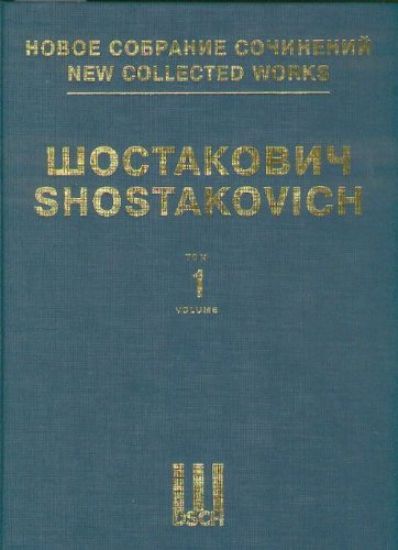
New collected works of Dmitri Shostakovich. Vol. 1. Symphony No. 1. Op. 10. Full Score
Dlja simfonicheskogo orkestra (s fortepiano) v chetyrjokh chastjakh:1. Allegretto-Allegro non troppo2. Allegro3. Lento-Largo attaca4. Lento-Allegro molto-Adagio-Largo-PrestoSostav orkestra:Piccolo (= Flauto III), 2 Flauti (II = Piccolo II), 2 Oboi,2 Clarinetti (B, A), 2 Fagotti4 Corni (F), 3 Trombe (I, II in B, III in F), 3 Tromboni, TubaTimpani, Triangolo, Tamburo, Piatti, Cassa, Tam-tamCampanelli, PianoArchiDlitelnost:Priblizitelno 33 minutySochinenie:Nachalo fevralja 1924 - 1 ijulja 1925; Petrograd/Leningrad - Moskva - Oranienbaum - Leningrad.Sochinenie nachato so vtoroj chasti. Klavir tretej chasti zakonchen v fevrale 1925.Poslednie izmenenija vneseny v ijune 1926 posle premery.Posvjaschena Mikhailu Vladimirovichu Kvadri.Pri podgotovke nastojaschego izdanija uchteny tri avtografa partitury Pervoj simfonii. Dva iz nikh khranjatsja v lichnykh fondakh Shostakovicha v Rossijskom gosudarstvennom arkhive literatury iiskusstv (RGALI): nepolnyj avtograf, v kotorom otsutstvuet pervyj list (pervye 20 taktov), - RGALI, f. 2048, op. 1, ed. khr. 1 i polnyj belovoj avtograf (PBA), posluzhivshij osnovoj pervogo izdanija proizvedenija (M., Muzsektor Gosizdata / Wien - New York, Universal Edition, 1927), - RGALI, f. 653, op. 1, ed. khr. 2262. Tretij, chernovoj avtograf khranitsja v Gosudarstvennom Tsentralnom muzee muzykalnoj kultury im. M. I. Glinki (GTSMMK), f. 32, ed. khr. 97.Uchteny takzhe prizhiznennye izdanija simfonii i izdanie 1987 goda (Shostakovich D. Sobranie sochinenij v 42-kh tomakh. T. 1. M., Muzyka. S. 1-122), tekst kotorogo i polozhen v osnovu nastojaschej publikatsii.Rannij avtograf partitury, datirovannyj 1923 godom, predstavljaet soboj pervonachalnuju orkestrovuju versiju sochinenija, kotoraja otlichaetsja ot okonchatelnoj nekotorymi osobennostjami instrumentovki. V chastnosti, v etoj versii ispolzovany dve, a ne tri truby i, sootvetstvenno, po-drugomu razlozheny akkordy v gruppe mednykh instrumentov.Naibolee nadjozhnym istochnikom estestvenno priznat PBA, po-vidimomu, spetsialno perepisannyj kompozitorom dlja izdatelstva. Imenno PBA byl vzjat za osnovu teksta v upomjanutom vyshe pervom tome Sobranija sochinenij (1987). Vmeste s tem pri podgotovke nastojaschego izdanija byli vyjavleny i ustraneny otdelnye netochnosti i opechatki publikatsii 1987 goda. Krome togo, uzhe posle vykhoda v svet Sobranija sochinenij v 42 tomakh stali izvestny nekotorye dopolnitelnye istochniki i avtorskie dokumenty, otnosjaschiesja k Pervoj simfonii, k ejo notnomu tekstu v osobennosti, kotorye takzhe uchteny v nashem izdanii.
New collected works of Dmitri Shostakovich. Vol. 2. Symphony No. 2. Dedication to October. Full Score
Shostakovich. Simfonija No. 2 ("Oktjabrju")Symphony No. 2 in (H-dur), Op. 14, "To October"God sozdanija 1927Data premery 06.11.1927Simfonija No. 2 si mazhor ("Oktjabrju"), op.14 - simfonija Dmitrija Shostakovicha, sozdannaja k desjatoj godovschine Oktjabrskoj revoljutsii. Vpervye ispolnena Leningradskim filarmonicheskim orkestrom i Akademiej khorovoj kapelly pod upravleniem Nikolaja Malko 5 nojabrja 1927 goda. Shostakovich pozzhe vernulsja k sobytijam revoljutsii v ego Dvenadtsatoj simfonii s podzagolovkom "1917 god".Simfonija sostoit iz dvukh chastej obschej prodolzhitelnostju okolo 20 minut:1) Largo2) Khor: "Oktjabrju" (na slova A. Bezymenskogo)Sostav orkestra: 2 flejty, flejta-pikkolo, 2 goboja, 2 klarneta, 2 fagota, 4 valtorny, 3 truby, 3 trombona, tuba, litavry, treugolnik, malyj baraban, tarelki, bolshoj baraban, zavodskoj gudok, kolokolchiki, strunnye; v zakljuchitelnom razdele smeshannyj khor.