Kirjojen hintavertailu. Mukana 11 342 296 kirjaa ja 12 kauppaa.

Kirjahaku

Etsi kirjoja tekijän nimen, kirjan nimen tai ISBN:n perusteella.

1000 tulosta hakusanalla Dominic

Dominic Letter Tracing for Kids Trace my Name Workbook: Tracing Books for Kids ages 3 - 5<br> Pre-K & Kindergarten Practice Workbook<br>
DOMINIC Name Tracing Workbook - Preschoolers Kindergarten Practice Workbook - Toddlers Writing Notebook - Learn How to Write DOMINIC - Preschoolers Activities Teaching your child the basics of writing is a difficult task especially if he or she is full of energy and finds it more difficult to focus. In order to give him a push in the first years of school or kindergartner, we are presenting a revolutionary way of teaching your baby the basics of the alphabet: the name tracing workbook for children. Why our workbook? The name tracing workbook has been designed specifically to teach children the basic of spelling and writing. By learning to write his own name, your child will develop the abilities and skills needed in the first years of schools while having fun. The 100 pages activity book is the perfect choice if you are searching to invest in your child's education from the beginning so don't hesitate and get him the only workbook he needs LEARNING THE FIRST LETTERS teaching your toddler the first letters and how to spell his or her name is difficult, which is why we have designed a special workbook that will make the learning process easier and a lot more fun, adding to the baby's educational fund. PERSONALIZED WORKING: the name is the first word any child should learn how to spell, but it is almost impossible to find special help for that task. DOMINIC Name Tracing Workbook is divided in 12 themed chapters that will teach your toddler how to spell his or her name in a fun and interactive way. WHAT IT CONTAINS: DOMINIC Name Tracing Workbook counts no less than 100 pages divided in 12 themed sheets that propose recognition activities, letter tracing practice and letter games, that are sure to teach your child the basics of writing and spelling. FOR TODDLERS: DOMINIC Name Tracing Workbook is made especially for children aged 3 to 6 so your son or daughter will be well prepared for both kindergarten and first grade Learning the alphabet will be a piece of cake if your kid will already have the foundation letter tracing so why not give him a head start in school. THE PERFECT GIFT: offering a present to a toddler that is both fun and parents-approved is an almost impossible task, but the name tracing workbook has it all: it is educational, personalized and made especially for youngsters ages 3 to 6 so, if you're trying to bring a smile on a kid's face, this is it
Dominic Holland Takes on Life

Dominic Holland Takes on Life

Dominic Holland

Dom Holland Books
2020
pokkari
During his career as an award winning comedian, Dominic Holland has fearlessly confronted thorny and controversial subjects. Posing hard questions such as;When is an onion actually peeled?When is the right time to wash a towel?And how many of us can genuinely claim to have more than one dance?Rest assured that his writing here is equally intrepid. In this important book, he demands answers to questions that other writers are too frightened to ask.Why is health and safety so dangerous?Where will the next Vivienne Westwood come from and how can we ensure this happens?Is the Mayor of London constipated? Thirty one hard hitting essays on the peculiarities of his life and yours. A provocative and unique work. It will make you smile. Make you think. It will cause you to reflect. It might even liberate you and allow you to move on with your life.Written for the toilet. A daily place of refuge and me-time in our frenetic world. A time for us to reflect on our lives and try to understand where things went so wrong. This book will agitate and assist this process. A laxative then to purge any regrets and replace them with wisdom and laughter.This is a self-help book masquerading in the humour section. An epistle to make you realise you are not alone. That you are enough. It might just be the most important book you ever read.Every toilet needs: a lock, paper, soap and this book, although not necessarily in this order.Full DisclaimerDominic Holland takes no prescription drugs. He has never been diagnosed with a mental condition. But it is known by his family that he is highly delusional. Whilst it is important to assert he is not considered to be a danger to himself or to anyone else, it is worth keeping this in mind when considering whether or not to purchase this book.
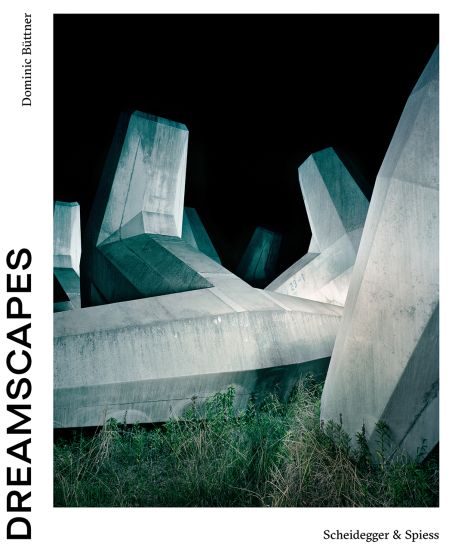
Dominic B¿ttner - Dreamscapes

Dominic B¿ttner - Dreamscapes

Scheidegger und Spiess AG, Verlag
2019
sidottu
Dreamscapes is a long-term artistic series by Swiss photographer Dominic Büttner. In it, Büttner records performances at night, both in natural and built environments. Holding a torch, he walks slowly away from a large-format view camera as a time exposure captures the scene, illuminated by moving light from which the artist himself is subsequently erased. By turns strange and yet somehow familiar, the fascinating landscapes show what an eerie place our everyday surroundings can be, depending on the light in which we experience them. Dominic Büttner—Dreamscapes is the first book to collect Büttner’s art, and it features eighty of his Dreamscapes alongside essays by photography and film expert Elisabeth Bronfen and freelance cultural publicist and editor Nadine Olonetzky.
Dominic Miller: Song Classics for Solo Guitar
Dominic Miller is one of the most esteemed artists in rock, pop, and jazz. Born in Argentina, Miller's journey took him from England to South America and France, shaping his diverse musical influences. It is partnership with Sting, which began in 1981 which was a defining aspect of his career, with Miller's contributions described by Sting himself as indispensable. Today, Miller continues to perform on world stages and is currently on tour across Europe in support of his new album Vagabond. With Dominic Miller: Song Classics for Solo Guitar, fans can explore Miller's favourite melodies arranged with tablature, fingerings, and chords. Whether you're an experienced musician or just beginning, this songbook will inspire and challenge you to improve your musical skills. This collection features 15 hit songs, including : Your Song (Elton John) - Wild World (Cat Stevens) - Blackbird (The Beatles) - The Winner Takes It All (ABBA) - Easy On Me (Adele) - Shape Of My Heart (Sting) and many more...
Dominic's Pride

Dominic's Pride

J L Campbell

J.L. Campbell
2021
pokkari
Women. Money. Parties. Dominic Whitehorn's life revolves around these staples until he wakes up to the reality that he's broke, and living in a foreign land. He hates his overbearing brother, and can't stand his mother's lectures. The only other source of help is his father, who suffers a heart attack. With tighter reins on the family business, and his loan called in, Dominic's problems multiply. To make matters worse, the woman he's interested in believes he's a lightweight, and another claims he's the father of her baby. Ashley Dennis knows Nick is a troubled soul because she's been there. They make an unlikely couple, but will her example and conviction be the catalyst he needs to turn his life around? ***Dominic's Pride is inspirational fiction with a focus on family and relationships.
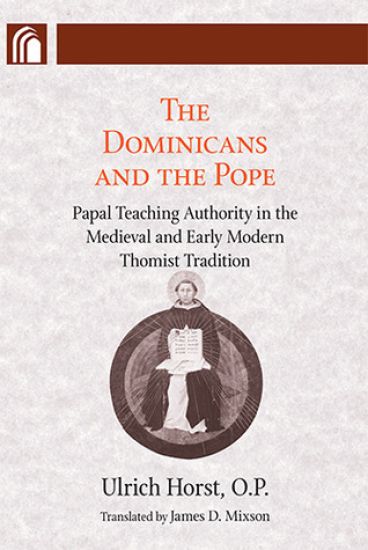
Dominicans and the Pope

Dominicans and the Pope

Ulrich Horst

University of Notre Dame Press
2006
nidottu
These essays examine papal teaching authority from Thomas Aquinas in the thirteenth century to the Dominican School of Salamanca in sixteenth century Spain. Fr. Ulrich Horst, O.P., an internationally renowned authority in historical theology, describes the various debates between the Dominicans and other orders over papal teaching authority, especially whether there should be limits placed on papal authority and, if so, what they might be. Horst reviews in a brief and masterful fashion the teaching of medieval and Catholic Reformation Dominican theologians about the teaching authority of the pope. He succinctly shows the differences within the order on the topic and makes clear how Dominicans tended to differ on the matter from theologians of other orders such as the Franciscans and, later, the Jesuits, whose views would eventually lead to the proclamation at Vatican I. In the first chapter, Horst discusses the canonization of St. Thomas, the lecture on the gospel of St. Matthew, and Summa Theologiae II-II 1, 10. Horst then examines the road to conflict under Pope John XXII and the position of a number of the Dominican theologians such Hervaeus Natalis, John of Naples, and Guido Terreni. In the last chapter, Horst brings to light the contributions of Francisco de Vitoria, Dominicus Sots, Melchior Cano, and Juan de la Peña, among others. Despite his distinguished career as a medievalist, little of Horst's imposing scholarly corpus has been translated into English. These lectures, then, mark an introduction of this formidable scholar to a wider audience.
Dominicans and the Pope

Dominicans and the Pope

Ulrich Horst

UNIVERSITY OF NOTRE DAME PRESS
2022
sidottu
These essays examine papal teaching authority from Thomas Aquinas in the thirteenth century to the Dominican School of Salamanca in sixteenth century Spain. Fr. Ulrich Horst, O.P., an internationally renowned authority in historical theology, describes the various debates between the Dominicans and other orders over papal teaching authority, especially whether there should be limits placed on papal authority and, if so, what they might be. Horst reviews in a brief and masterful fashion the teaching of medieval and Catholic Reformation Dominican theologians about the teaching authority of the pope. He succinctly shows the differences within the order on the topic and makes clear how Dominicans tended to differ on the matter from theologians of other orders such as the Franciscans and, later, the Jesuits, whose views would eventually lead to the proclamation at Vatican I. In the first chapter, Horst discusses the canonization of St. Thomas, the lecture on the gospel of St. Matthew, and Summa Theologiae II-II 1, 10. Horst then examines the road to conflict under Pope John XXII and the position of a number of the Dominican theologians such Hervaeus Natalis, John of Naples, and Guido Terreni. In the last chapter, Horst brings to light the contributions of Francisco de Vitoria, Dominicus Sots, Melchior Cano, and Juan de la Peña, among others. Despite his distinguished career as a medievalist, little of Horst's imposing scholarly corpus has been translated into English. These lectures, then, mark an introduction of this formidable scholar to a wider audience.

Dominican Sugar Plantations

Dominican Sugar Plantations

Martin Murphy

Praeger Publishers Inc
1991
sidottu
Primarily focusing on the organization of production and labor use practices in the Caribbean's second largest sugar industry, this work's historical, macroeconomic, political, and sociocultural components depict the reality of today's Dominican sugar economy. The Dominican Republic has been radically altered by its internationally oriented sugar economy--its society and national culture transformed and its political, legal, and economic structures modified. This book describes the progressive replacement of national labor in the sugar industry by foreign workers. Comparing the three distinct sugar corporations, it concludes that all three exploited foreign labor. The study refutes modern slavery charges through social science theory and extensive field research. Depicting living and working conditions in the fields, it concludes that slavery charges are the result of superficial analyses of symbols. More in-depth analyses display one of the most extreme forms of superexploitation in the twentieth century. Addressing present-day labor utilization strategies in the Dominican Republic sugar plantation system, Martin Murphy focuses on three areas: the logic of production, foreign labor integration, and a comparative analysis of three corporations. His first two chapters provide an overview of the historic and contemporary Dominican sugar industry. Historical patterns of labor recruitment and use are then presented in Chapter 3. Chapter 4 describes the basic logic of production and use of various types of labor for the plantations of the 1980s. Murphy's last four chapters address the question of heavy reliance on Haitian labor: Chapter 5 provides a history of Haitian migration; Chapter 6 discusses factors of expulsion and attraction which condition present-day Haitian migration to Dominican fields; Chapters 7 and 8 conclude with questions of Haitian ethnicity and its relationship to production organization.
Dominica Isle Of Adventure 3e

Dominica Isle Of Adventure 3e

Honychurch Lennox

Macmillan Education
1998
nidottu
Not to be confused with the Dominican Republic, this island lies between Guadeloupe and Martinique in the Windward Isles of the Eastern Caribbean. This is a guide to the country's history, national parks, tours and treks, towns and villages, and forts and ports. This edition has been updated.
Dominicans in New York City

Dominicans in New York City

Milagros Ricourt

Routledge
2002
sidottu
This volume forms part of the Latino Communities, Emerging Voices Political, Social, Cultural and Legal Issues series. This study explores the diverse struggles of incorporation pursued by immigrants from the Dominican Republic to one city in the United States- New York City. The Dominican Republic, the second largest country of the Greater Antilles in the Caribbean Sea, was the nation that sent the most immigrants to New York City during the 1980s and 1990s. This study chronicles the lives of Dominicans in New York City: their difficulties, their courage, and their boldness to incorporate themselves into American politics.
Dominicans, Muslims and Jews in the Medieval Crown of Aragon
With their active apostolate of preaching and teaching, Dominican friars were important promoters of Latin Christianity in the borderlands of medieval Spain and North Africa. Historians have long assumed that their efforts to convert or persecute non-Christian populations played a major role in worsening relations between Christians, Muslims and Jews in the era of crusade and reconquista. This study sheds light on the topic by setting Dominican participation in celebrated but short-lived projects such as Arabic language studia or anti-Jewish theological disputations alongside day-to-day realities of mendicant life in the medieval Crown of Aragon. From old Catalan centers like Barcelona to newly conquered Valencia and Islamic North Africa, the author shows that Dominican friars were on the whole conservative educators and disciplinarians rather than innovative missionaries - ever concerned to protect the spiritual well-being of the faithful by means of preaching, censorship and maintenance of existing barriers to interfaith communications.
Dominicans, Muslims and Jews in the Medieval Crown of Aragon
With their active apostolate of preaching and teaching, Dominican friars were important promoters of Latin Christianity in the borderlands of medieval Spain and North Africa. Historians have long assumed that their efforts to convert or persecute non-Christian populations played a major role in worsening relations between Christians, Muslims and Jews in the era of crusade and reconquista. This study sheds light on the topic by setting Dominican participation in celebrated but short-lived projects such as Arabic language studia or anti-Jewish theological disputations alongside day-to-day realities of mendicant life in the medieval Crown of Aragon. From old Catalan centers like Barcelona to newly conquered Valencia and Islamic North Africa, the author shows that Dominican friars were on the whole conservative educators and disciplinarians rather than innovative missionaries - ever concerned to protect the spiritual well-being of the faithful by means of preaching, censorship and maintenance of existing barriers to interfaith communications.
Dominican Women and Renaissance Art

Dominican Women and Renaissance Art

Ann Roberts

Ashgate Publishing Limited
2008
sidottu
Starting from an inventory and other documents, Ann Roberts has identified some 30 works of art that originated from the convent of San Domenico of Pisa. She here examines those objects commissioned for and made by the nuns during the fifteenth century; some of the objects included have never before been published. One of her goals in this study is to bring into the discussion of Renaissance art a body of images that have been previously overlooked, because they come from a non-Florentine context and because they do not fit modern notions of the "development" of Renaissance style. She also analyzes the function of the images - social as well as religious - within the context of a female Dominican convent. Finally, she offers descriptions of and documentation for the process of patronage as it was practiced by cloistered women, and the making of art in such enclosures. The author presents a catalogue of works, which gives basic data and bibliography for the objects described in the text. Roberts offers other valuable resources in the appendices, including unpublished C19th inventories of the objects in the convent at various moments, documents regarding the commission of works of art for the convent, letters written by the nuns, a list of the Prioresses of San Domenico, lists of nuns at different points in the fifteenth and early sixteenth century, and a list of the relics owned by the convent in the sixteenth century. Roberts firmly grounds her interpretation in the values of the Order to which the nuns belonged, and in the political and social concerns of their city.
Dominican Migration

Dominican Migration

University Press of Florida
2004
sidottu
Political and economic hardships have led over one million Dominicans to leave their homeland and settle in foreign countries - the United States, Spain, Venezuela, and other countries in Latin American and Europe. In essays covering subjects from politics to literature, this interdisciplinary work analyzes the Dominican diaspora as a multifaceted global phenomenon in which Dominican transmigrants live, work, and participate in two or more societies. It examines the forces that fueled the diasporic migration of Dominicans; the characteristics of the migration process; the main challenges to political and social incorporation; the formation of communities in New York, Spain, and other locales; and issues of gender in education, employment, and the household.
Dominican-Americans and the Politics of Empowerment
Aparicio examines the ways first- and second-generation Dominican-Americans in the dynamic northern Manhattan neighborhood of Washington Heights have shaped a new Dominican presence in local New York City politics. Through community organizing, they have formed coalitions with people of different national and ethnic backgrounds and other people of color, tackled local concerns, and created new routes for empowerment. The character of Dominican-American politics has changed since the first large wave of Dominican immigrants arrived in New York in the 1960s. Aparicio shows how second-generation activists, raised and educated in public institutions in the city, have expanded their network to include fellow Dominicans - both in the United States and abroad - as well as other ethnic and racial minorities, such as Puerto Ricans and African-Americans, who share common goals. Offering the perspectives of local organizers and members of Dominican-American organizations, Aparicio documents their thoughts on such issues as education, police brutality, civic participation, and politics. She also explores the ways in which they experience, reflect upon, and organize around issues of race and racialization processes, and how their experiences influence their political agendas and actions. This new story of immigration and empowerment highlights the complexity of any group's political development, making it useful for students of U.S. Latino and youth culture, as well as scholars of urban studies and politics, race, immigration, and transnationalism.
Dominican-Americans and the Politics of Empowerment
"An original and significant contribution to the growing field of Latino Studies that documents the emergence of a pan-ethnic and interracial sense of solidarity among Latinos and other 'people of color'."--Jorge Duany, University of Puerto Rico"Clearly written, well argued, intellectually engaging. . . . this book shows that one can only hope to understand the political development of New York Dominicans by meticulous observation of a convergence of multiple factors. . . . An unprecedented chronicle of the evolution of Dominicans as political beings in New York."--Silvio Torres-Saillant, Syracuse UniversityAparicio examines the ways first- and second-generation Dominican-Americans in the dynamic northern Manhattan neighborhood of Washington Heights have shaped a new Dominican presence in local New York City politics. Through community organizing, they have formed coalitions with people of different national and ethnic backgrounds and other people of color, tackled local concerns, and created new routes for empowerment.The character of Dominican-American politics has changed since the first large wave of Dominican immigrants arrived in New York in the 1960s. Aparicio shows how second-generation activists, raised and educated in public institutions in the city, have expanded their network to include fellow Dominicans--both in the United States and abroad--as well as other ethnic and racial minorities, such as Puerto Ricans and African-Americans, who share common goals. Offering the perspectives of local organizers and members of Dominican-American organizations, Aparicio documents their thoughts on such issues as education, police brutality, civic participation, and politics. She also explores the ways in which they experience, reflect upon, and organize around issues of race and racialization processes, and how their experiences influence their political agendas and actions.This new story of immigration and empowerment highlights the complexity of any group's political development, making it useful for students of U.S. Latino and youth culture, as well as scholars of urban studies and politics, race, immigration, and transnationalism. Ana Aparicio is assistant professor of anthropology and research associate for the Mauricio Gaston Institute for Latino Community Development and Public Policy at the University of Massachusetts, Boston.
Dominican Moon

Dominican Moon

Ken Norris

Talonbooks
2005
pokkari
Composed like a dark novel-in-verse, Dominican Moon is the second book in Ken Norris's travel trilogy. With Dante as his guide, he leaves behind the predominantly European terrain of the first book in this series, Limbo Road, and finds himself in the "terra incognita" of the Caribbean Sea. On his own contemporary voyage of discovery of the island of Hispaniola, the "new world" Columbus discovered in 1492, Norris encounters seductive lovers and moon-haunted tropical nights, dark Dominican rum and winter baseball, sugar cane fields and "the city of shortstops." At the heart of the book is an unsettling story of the deficiencies of love--of a perhaps not so divine comedy of those who didn't love enough--steeped in a clash of cultures wherein the third world willingly, even perversely, offers itself up as a farm-team for the first, fueled by the cataclysm of that other third world export, cocaine.