Kirjojen hintavertailu. Mukana 11 244 527 kirjaa ja 12 kauppaa.

Kirjahaku

Etsi kirjoja tekijän nimen, kirjan nimen tai ISBN:n perusteella.

1000 tulosta hakusanalla Doris Lessing

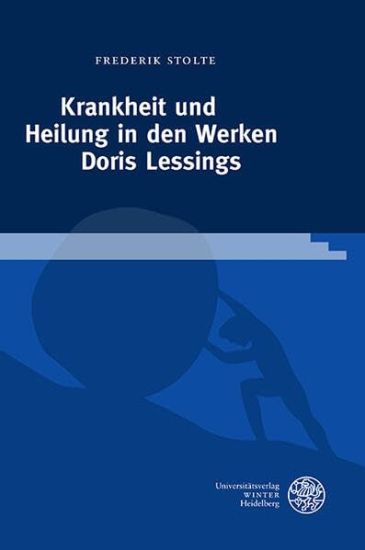
Krankheit Und Heilung in Den Werken Doris Lessings

Krankheit Und Heilung in Den Werken Doris Lessings

Frederik Stolte

Universitatsverlag Winter
2023
sidottu
Die Literaturnobelpreistragerin Doris Lessing hat ein umfangreiches Werk hinterlassen und beschaftigte sich uber 52 Jahre intensiv mit Krankheiten, Arztbildern und Methoden der Medizin. Ihre Darstellung lasst sich nicht auf einzelne Einflusse reduzieren, sondern greift eine ideologisierte und politisierte Medizin ebenso auf, wie Schwachen radikaler Gegenentwurfe. Systeme der Rassentrennung sowie marxistische und faschistoide Theorien werden in ihrer Brutalitat illustriert. Durch die Rezeption C. G. Jungs und wichtiger medizinhistorischer Motive erfolgt ein Gegenentwurf, der Leid und existentielle Umstande des Menschseins mit wissenschaftichen Methoden zu versohnen sucht. Soziale Dimensionen offenbaren den Arzt als "Sisyphos", der eigene Schwachen mit denen des Patienten aufgreift, um letztlich doch immer zu scheitern. Die Analyse der zeitlosen Gedankenexperimente Lessings bietet damit Klinikern und Patienten perspektivenreiche Einblicke in den medizinischen Alltag.
Reading Women's Worlds from Christine de Pizan to Doris Lessing
In this work, Jansen explores a recurring theme in writing by women: the dream of finding or creating a private and secluded retreat from the world of men. These imagined "women's worlds" may be very small, a single room, for example, but many women writers are much more ambitious, fantasizing about cities, even entire countries, created for and inhabited exclusively by women.
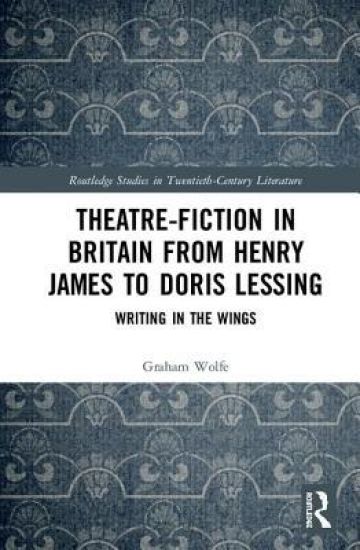
Theatre-Fiction in Britain from Henry James to Doris Lessing
This volume posits and explores an intermedial genre called theatre-fiction, understood in its broadest sense as referring to novels and stories that engage in concrete and sustained ways with theatre. Though theatre has made star appearances in dozens of literary fictions, including many by modern history’s most influential authors, no full-length study has dedicated itself specifically to theatre-fiction—in fact there has not even been a recognized name for the phenomenon. Focusing on Britain, where most of the world’s theatre-novels have been produced, and commencing in the late-nineteenth century, when theatre increasingly took on major roles in novels, Theatre-Fiction in Britain argues for the benefits of considering these works in relation to each other, to a history of development, and to the theatre of their time. New modes of intermedial analysis are modelled through close studies of Henry James, Somerset Maugham, Virginia Woolf, J. B. Priestley, Ngaio Marsh, Angela Carter, and Doris Lessing, all of whom were deeply involved in the theatre-world as playwrights, directors, reviewers, and theorists. Drawing as much on theatre scholarship as on literary theory, Theatre-Fiction in Britain presents theatre-fiction as one of the past century’s most vital means of exploring, reconsidering, and bringing forth theatre’s potentials.
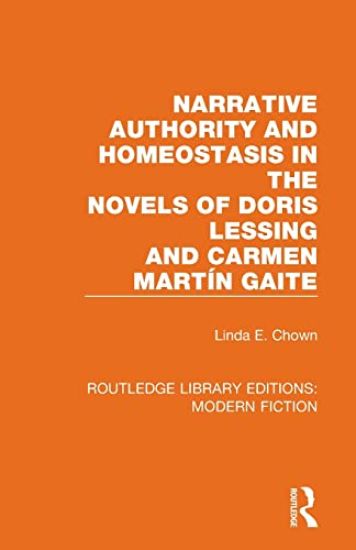
Narrative Authority and Homeostasis in the Novels of Doris Lessing and Carmen Martín Gaite
This study, originally published in 1990, assesses a shift in the presentation of self-consciousness in two pairs of novels by Doris Lessing and Carmen Martín Gaite: 1) Lessing’s The Summer Before the Dark (1973) and Martín Gaite’s Retahílas (1974) and 2) Lessing’s The Memoirs of a Survivor (1974) and Martín Gaite’s The Back Room (1978). Three major structural divisions facilitate examining implications of the novels for 1) feminism 2) literary narrative and 3) the lives of people-at-large.
Narrative Authority and Homeostasis in the Novels of Doris Lessing and Carmen Martín Gaite
This study, originally published in 1990, assesses a shift in the presentation of self-consciousness in two pairs of novels by Doris Lessing and Carmen Martín Gaite: 1) Lessing’s The Summer Before the Dark (1973) and Martín Gaite’s Retahílas (1974) and 2) Lessing’s The Memoirs of a Survivor (1974) and Martín Gaite’s The Back Room (1978). Three major structural divisions facilitate examining implications of the novels for 1) feminism 2) literary narrative and 3) the lives of people-at-large.
Theatre-Fiction in Britain from Henry James to Doris Lessing
This volume posits and explores an intermedial genre called theatre-fiction, understood in its broadest sense as referring to novels and stories that engage in concrete and sustained ways with theatre. Though theatre has made star appearances in dozens of literary fictions, including many by modern history’s most influential authors, no full-length study has dedicated itself specifically to theatre-fiction—in fact there has not even been a recognized name for the phenomenon. Focusing on Britain, where most of the world’s theatre-novels have been produced, and commencing in the late-nineteenth century, when theatre increasingly took on major roles in novels, Theatre-Fiction in Britain argues for the benefits of considering these works in relation to each other, to a history of development, and to the theatre of their time. New modes of intermedial analysis are modelled through close studies of Henry James, Somerset Maugham, Virginia Woolf, J. B. Priestley, Ngaio Marsh, Angela Carter, and Doris Lessing, all of whom were deeply involved in the theatre-world as playwrights, directors, reviewers, and theorists. Drawing as much on theatre scholarship as on literary theory, Theatre-Fiction in Britain presents theatre-fiction as one of the past century’s most vital means of exploring, reconsidering, and bringing forth theatre’s potentials.
Reading Women's Worlds from Christine de Pizan to Doris Lessing
In this work, Jansen explores a recurring theme in writing by women: the dream of finding or creating a private and secluded retreat from the world of men. These imagined "women's worlds" may be very small, a single room, for example, but many women writers are much more ambitious, fantasizing about cities, even entire countries, created for and inhabited exclusively by women.
Reading Women's Worlds from Christine de Pizan to Doris Lessing
In this work, Jansen explores a recurring theme in writing by women: the dream of finding or creating a private and secluded retreat from the world of men. These imagined "women's worlds" may be very small, a single room, for example, but many women writers are much more ambitious, fantasizing about cities, even entire countries, created for and inhabited exclusively by women.
New Critical Perspectives on Ageing Women in the Writings of Doris Lessing
This book uses some of Doris Lessing’s fictional texts as a springboard for making new contributions to the study of ageing, and more specifically, on the ageing of women. Lessing’s fiction invites a critical political, cultural and ethical reflection at the intersections between literature and culture in the final years of the twentieth century and the first few of the current one. Lessing’s narrative reflects on the complexity of older women’s lives, their acquiescence or disagreement with social norms, and how to negotiate the effects of the passage of time. The four chapters and conclusion discuss the various elements that serve as indicators of the well-being or ill-being of this diverse human group, including health, place of residence, neighbourliness, financial situation, public policies, and nature of relationships.
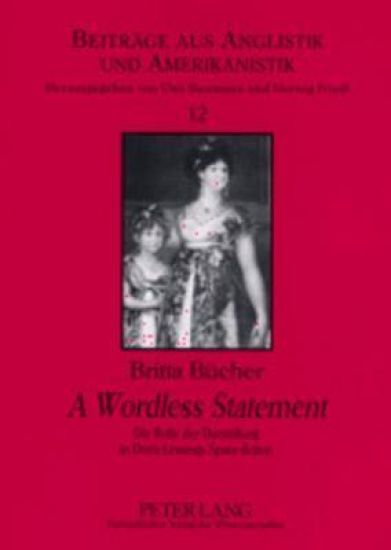
«a Wordless Statement»: Die Rolle Der Darstellung in Doris Lessings Space-Fiction

«a Wordless Statement»: Die Rolle Der Darstellung in Doris Lessings Space-Fiction

Britta Bücher

Peter Lang Gmbh, Internationaler Verlag Der W
2002
nidottu
In der literaturwissenschaftlichen Forschung sind Doris Lessings Romane bislang vielfach als blo e 'Ideenromane' und ihre formale Darstellung als mangelhaft abgetan worden. Im Gegensatz dazu will die vorliegende Studie nachweisen, da die Art der Darstellung eine wesentliche Rolle in den Texten der Autorin spielt: Anhand von Lessings Space-fiction-Romanen - Briefing for a Descent into Hell und den f nf Romanen der Reihe Canopus in Argos: Archives - wird aufgezeigt, da die Darstellungsformen in etlichen F llen als Spiegel thematischer Kernaspekte fungieren. Zu den analysierten Darstellungsformen geh ren unter anderem Erz hltechnik, Informationsvergabe, Bildlichkeit sowie rhetorische Elemente, wobei die Untersuchung neben der individuellen Gestaltung der einzelnen Texte auch formale und thematische Parallelen zwischen den Romanen ber cksichtigt.
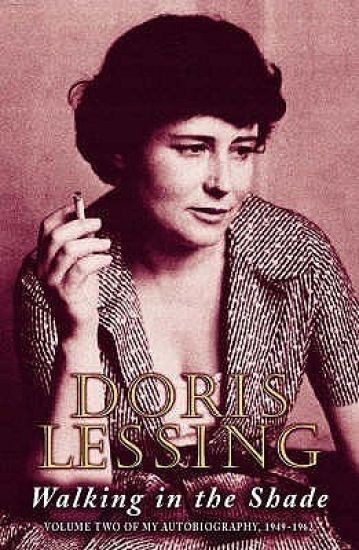
Walking in the Shade

Walking in the Shade

Doris Lessing

HARPERCOLLINS PUBLISHERS
1998
nidottu
The second volume of the autobiography of Doris Lessing, winner of the Nobel Prize for Literature. ‘Walking in the Shade’ begins in 1949, as Doris Lessing arrives in London with nothing but her young son and the manuscript of her first novel. With humour and clear-sightedness, she records her battles of the next decade: her involvement with communism, her love affairs, her struggle with poverty, the difficulties she faced as a young single mother. But as well there is the success of that first novel, ‘The Grass Is Singing’, and meetings with personalities and opinion-makers – Kenneth Tynan, John Osborne, Bertrand Russell and others.Describing, too, the genesis of ‘The Golden Notebook’, this book sees Lessing emerge as one of the most exciting, and groundbreaking, novelists of the post-war generation, and one of the twentieth century’s great writers.