Kirjojen hintavertailu. Mukana 11 699 587 kirjaa ja 12 kauppaa.

Kirjahaku

Etsi kirjoja tekijän nimen, kirjan nimen tai ISBN:n perusteella.

1000 tulosta hakusanalla Duke University

The Alumni Register of Duke University [serial]; 12 (1926)

The Alumni Register of Duke University [serial]; 12 (1926)

Duke University General Alumni Assoc

Hassell Street Press
2021
nidottu
This work has been selected by scholars as being culturally important and is part of the knowledge base of civilization as we know it.This work is in the public domain in the United States of America, and possibly other nations. Within the United States, you may freely copy and distribute this work, as no entity (individual or corporate) has a copyright on the body of the work.Scholars believe, and we concur, that this work is important enough to be preserved, reproduced, and made generally available to the public. To ensure a quality reading experience, this work has been proofread and republished using a format that seamlessly blends the original graphical elements with text in an easy-to-read typeface.We appreciate your support of the preservation process, and thank you for being an important part of keeping this knowledge alive and relevant.
The Alumni Register of Duke University [serial]; 15 (1929)

The Alumni Register of Duke University [serial]; 15 (1929)

Duke University General Alumni Assoc

Hassell Street Press
2021
nidottu
This work has been selected by scholars as being culturally important and is part of the knowledge base of civilization as we know it.This work is in the public domain in the United States of America, and possibly other nations. Within the United States, you may freely copy and distribute this work, as no entity (individual or corporate) has a copyright on the body of the work.Scholars believe, and we concur, that this work is important enough to be preserved, reproduced, and made generally available to the public. To ensure a quality reading experience, this work has been proofread and republished using a format that seamlessly blends the original graphical elements with text in an easy-to-read typeface.We appreciate your support of the preservation process, and thank you for being an important part of keeping this knowledge alive and relevant.
The Alumni Register of Duke University [serial]; 13 (1927)

The Alumni Register of Duke University [serial]; 13 (1927)

Duke University General Alumni Assoc

Hassell Street Press
2021
nidottu
This work has been selected by scholars as being culturally important and is part of the knowledge base of civilization as we know it.This work is in the public domain in the United States of America, and possibly other nations. Within the United States, you may freely copy and distribute this work, as no entity (individual or corporate) has a copyright on the body of the work.Scholars believe, and we concur, that this work is important enough to be preserved, reproduced, and made generally available to the public. To ensure a quality reading experience, this work has been proofread and republished using a format that seamlessly blends the original graphical elements with text in an easy-to-read typeface.We appreciate your support of the preservation process, and thank you for being an important part of keeping this knowledge alive and relevant.
The Alumni Register of Duke University [serial]; 14 (1928)

The Alumni Register of Duke University [serial]; 14 (1928)

Duke University General Alumni Assoc

Hassell Street Press
2021
nidottu
This work has been selected by scholars as being culturally important and is part of the knowledge base of civilization as we know it.This work is in the public domain in the United States of America, and possibly other nations. Within the United States, you may freely copy and distribute this work, as no entity (individual or corporate) has a copyright on the body of the work.Scholars believe, and we concur, that this work is important enough to be preserved, reproduced, and made generally available to the public. To ensure a quality reading experience, this work has been proofread and republished using a format that seamlessly blends the original graphical elements with text in an easy-to-read typeface.We appreciate your support of the preservation process, and thank you for being an important part of keeping this knowledge alive and relevant.
The Alumni Register of Duke University [serial]; 20 (1934)

The Alumni Register of Duke University [serial]; 20 (1934)

Duke University General Alumni Assoc

Hassell Street Press
2021
nidottu
This work has been selected by scholars as being culturally important and is part of the knowledge base of civilization as we know it.This work is in the public domain in the United States of America, and possibly other nations. Within the United States, you may freely copy and distribute this work, as no entity (individual or corporate) has a copyright on the body of the work.Scholars believe, and we concur, that this work is important enough to be preserved, reproduced, and made generally available to the public. To ensure a quality reading experience, this work has been proofread and republished using a format that seamlessly blends the original graphical elements with text in an easy-to-read typeface.We appreciate your support of the preservation process, and thank you for being an important part of keeping this knowledge alive and relevant.
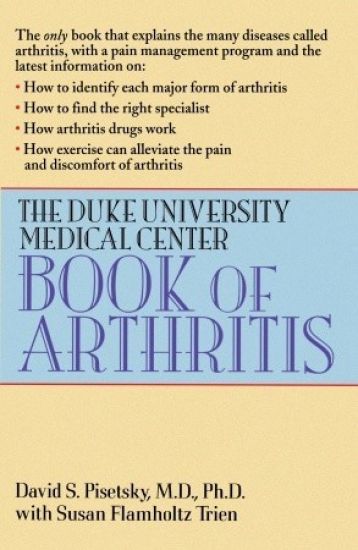
The Duke University Medical Center Book of Arthritis
"COMPREHENSIVE...A USEFUL SOURCE...RECOMMENDED."--Library JournalIf you are one of the nearly forty million people in the United States who suffers from some form of arthritis, you are probably confused by the myths and misinformation surrounding the illness. Arthritis is, in fact, not a single malady, but more than one hundred different diseases, each with its own cause, symptoms, characteristic progression, and treatment. Here, at last, from the world-renowned Duke University Medical Center, is an authoritative, complete, and fully up-to-date home reference for arthritis sufferers. It tells you:-- Who gets arthritis, and when-- How to identify arthritic diseases in their early stages-- What to expect at a complete examination-- How to become an active partner with your doctor in keeping your arthritis under control-- The actions and side effects of the primary drugs used to treat arthritis-- How to conduct an exercise program that is right for you-- How to alter your lifestyle and work habits to minimize your discomfortThe Duke Basic Arthritis Program is designed to relieve the symptoms of arthritis and prevent its complications. Taking into account your lifestyle, job, emotional make-up, and physical abilities, the Duke Basic Arthritis Program allows for an individualized treatment program based on the use of nonsteroidal anti-inflammatory drugs, daily rest, physical therapy, good health habits, and adjustments in your daily routines.Packed with up-to-the-minute information and written in a lucid, user-friendly style, this is an absolutely invaluable book for anyone with arthritis.
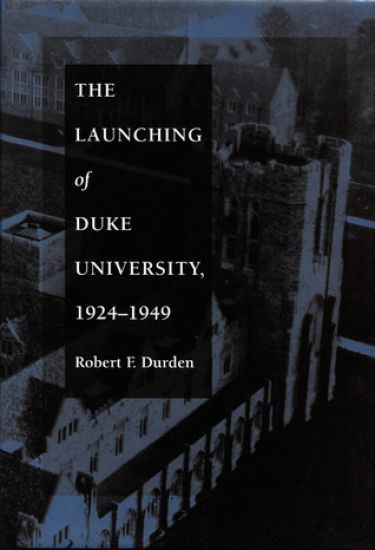
The Launching of Duke University, 1924–1949

The Launching of Duke University, 1924–1949

Robert F. Durden

Duke University Press
1993
sidottu
In this rich and authoritative history, distinguished historian Robert F. Durden tells the story of the formation of Duke University, beginning with its creation in 1924 as a new institution organized around Trinity College. As Durden reveals, this narrative belongs first and foremost to Duke University's original President, William Preston Few, whose visionary leadership successfully launched the building of the first voluntarily supported research university in the South. In focusing on Duke University's most formative and critical years-its first quarter century-Durden commemorates Few's remarkable successes while recognizing the painful realities and uncertainties of a young institution. Made possible by a gift from James B. Duke, the wealthiest member of the family that had underwritten Trinity College since 1890, Duke University was organized with Few as president. Few's goal was to turn Duke into a world-class institution of higher education and these early years saw the development of much of what we know as Duke University today. Drawing on extensive archival material culled over a ten-year period, Durden discusses the building of the Medical Center, the rebuilding of the School of Law, the acquisition of the Duke Forest and development of the School of Forestry, the nurturing of the Divinity School, and the enrichment of the Graduate School of Arts and Sciences.It was also during this period, as Durden details, that such treasures as the Sarah P. Duke Gardens were created, as well as some near treasures, as seen by the failed attempt to start an art museum. Although the story of the birth of this University belongs largely to William Preston Few, other people figure prominently and are discussed at length. Alice Baldwin, who led in the establishment of the Woman's College, emerges as a fascinating figure, as do William H. Wannamaker, James B. Duke, William Hanes Ackland, Robert L. Flowers, Justin Miller, and Wilburt Cornell Davision, among others.Although impressive growth occurred in Duke's formative years, tensions also arose. The need to strike an institutional balance between the twin demands of teaching and research, of regional versus national status, combined with continual shortages of funds, created occasional obstacles. The problem of two sets of trustees, one for the university and another for the Duke Endowment, loomed largest of all. As Few himself said, during these early years Duke successfully embarked on a long journey, for it was not until after World War II that Duke University consolidated the growth begun in the inter-war years. An important contribution to the history of Southern higher education as well as to Duke University, this book will be of great interest to historians, alumni, and friends of Duke University alike.
The Library of Duke University; 1949

The Library of Duke University; 1949

Friends of Duke University Library; Duke University Library

Hassell Street Press
2021
nidottu
This work has been selected by scholars as being culturally important and is part of the knowledge base of civilization as we know it.This work is in the public domain in the United States of America, and possibly other nations. Within the United States, you may freely copy and distribute this work, as no entity (individual or corporate) has a copyright on the body of the work.Scholars believe, and we concur, that this work is important enough to be preserved, reproduced, and made generally available to the public. To ensure a quality reading experience, this work has been proofread and republished using a format that seamlessly blends the original graphical elements with text in an easy-to-read typeface.We appreciate your support of the preservation process, and thank you for being an important part of keeping this knowledge alive and relevant.
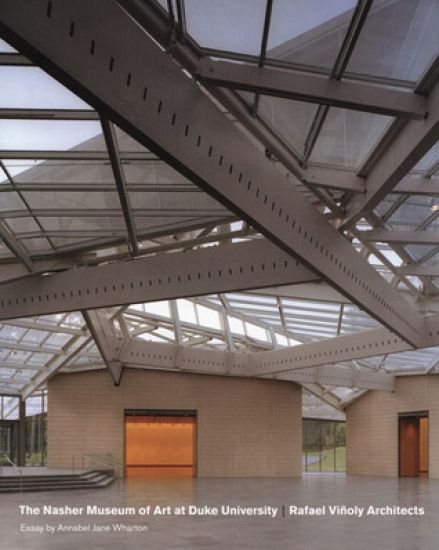
The Nasher Museum of Art at Duke University

The Nasher Museum of Art at Duke University

Duke University Museum of Art,U.S.
2005
pokkari
When world-renowned architect Rafael Viñoly was commissioned to design a major new center for the arts at Duke University, he set about creating his first museum in North America and the first stand-alone museum in Duke’s eighty-year history. The resulting 65,000-square-foot building has changed the cultural landscape of the university and indeed the Southeast.This book documents the genesis and design of the new museum, which opened on October 2, 2005. The building is named in honor of the family of Raymond D. Nasher, an internationally prominent art collector who graduated from Duke in 1943.The landmark building takes its place among Viñoly’s other distinguished designs, including the new home for jazz at Lincoln Center in New York and expansion projects for the Cleveland Museum of Art, the John F. Kennedy Center for the Performing Arts in Washington, D.C., and the Brooklyn Children’s Museum in New York. Among his other cultural projects are the Tokyo International Forum and the Kimmel Center for the Performing Arts in Philadelphia. He is designing the new Tampa Museum of Art and a new museum in the city of Colchester, England. He was part of the team that created the runner-up design for the new World Trade Center site in New York City.The brilliant core of the Nasher at Duke is a 13,000-square-foot glass and steel canopy rising to a height of 45 feet above the central gallery space. The faceted roof soars above the irregular pentagonal great hall, where five concrete pavilions fan out at different angles. The pavilions will house three large gallery spaces, an auditorium, offices, university and community classrooms, a museum shop, and a café with outdoor seating overlooking a sculpture garden. Set in the forest on Duke’s campus, the museum’s full-height glass walls and green slate floor connect the pavilions and further blur the division between building and nature.With an essay by art historian Annabel Jane Wharton, a design statement by museum architect Rafael Viñoly, a foreword by museum namesake Raymond D. Nasher, and photos by Brad Feinknopf and Jerry Blow, this book documents the building that will become a cornerstone for cultural activities for the university and the public.
The History of Infectious Diseases At Duke University In the Twentieth Century
In this detailed history of infectious diseases, John Hamilton draws upon his extensive experience with other faculty members and staff and delivers an insider's account of some of the more prevalent and/or serious diseases, the physicians and researchers studying them, and the programs supporting them at Duke University and its affiliate, the Durham VA Medical Center. Combining insights from his own experience and almost 100 interviews of current and former faculty members and staff and his complete access to the Medical Center Archives, he explores: Medical education, public health, and the disease portfolio before and during the 20th century in the world, the state and the city of Durham, North Carolina; Reasons why James B. "Buck" Duke invested his money into what became Duke University; Relevant personal and professional papers belonging to departed or deceased faculty; And provides extensive references for those who wish to delve into the science.
The History of Infectious Diseases At Duke University In the Twentieth Century
In this detailed history of infectious diseases, John Hamilton draws upon his extensive experience with other faculty members and staff and delivers an insider's account of some of the more prevalent and/or serious diseases, the physicians and researchers studying them, and the programs supporting them at Duke University and its affiliate, the Durham VA Medical Center. Combining insights from his own experience and almost 100 interviews of current and former faculty members and staff and his complete access to the Medical Center Archives, he explores: Medical education, public health, and the disease portfolio before and during the 20th century in the world, the state and the city of Durham, North Carolina; Reasons why James B. "Buck" Duke invested his money into what became Duke University; Relevant personal and professional papers belonging to departed or deceased faculty; And provides extensive references for those who wish to delve into the science.
Eric Ed016357: Campus Design Study, Duke University.
This work has been selected by scholars as being culturally important and is part of the knowledge base of civilization as we know it.This work is in the public domain in the United States of America, and possibly other nations. Within the United States, you may freely copy and distribute this work, as no entity (individual or corporate) has a copyright on the body of the work.Scholars believe, and we concur, that this work is important enough to be preserved, reproduced, and made generally available to the public. To ensure a quality reading experience, this work has been proofread and republished using a format that seamlessly blends the original graphical elements with text in an easy-to-read typeface.We appreciate your support of the preservation process, and thank you for being an important part of keeping this knowledge alive and relevant.