

Kirjahaku
Etsi kirjoja tekijän nimen, kirjan nimen tai ISBN:n perusteella.
1000 tulosta hakusanalla Edith A. Browne

Beneath the polished surface of the genteel environments delineated in Wharton's fiction, characters are competing fiercely for desirable mates, questing for social status and resources, and plotting ruthlessly to advance their relatives' fortunes in life. This book identifies these and other evolutionary issues central to her fiction, demonstrating their significance in terms of character, setting, plot, and theme. Connections to existing Wharton criticism are made throughout the book, so that readers can see how an evolutionary perspective enriches, refutes, or reconfigures insights derived from other critical approaches.


Charles Sept À Jumiège Édith, Ou Le Champ d'Hastings, Poèmes Suivis de Poésies
Ulric Guttinguer
Hachette Livre - BNF
2013
pokkari
Charles Sept a Jumiege; Edith, ou le Champ d'Hastings, poemes suivis de poesies, par Ulric GuttinguerDate de l'edition originale: 1827Ce livre est la reproduction fidele d'une oeuvre publiee avant 1920 et fait partie d'une collection de livres reimprimes a la demande editee par Hachette Livre, dans le cadre d'un partenariat avec la Bibliotheque nationale de France, offrant l'opportunite d'acceder a des ouvrages anciens et souvent rares issus des fonds patrimoniaux de la BnF.Les oeuvres faisant partie de cette collection ont ete numerisees par la BnF et sont presentes sur Gallica, sa bibliotheque numerique.En entreprenant de redonner vie a ces ouvrages au travers d'une collection de livres reimprimes a la demande, nous leur donnons la possibilite de rencontrer un public elargi et participons a la transmission de connaissances et de savoirs parfois difficilement accessibles.Nous avons cherche a concilier la reproduction fidele d'un livre ancien a partir de sa version numerisee avec le souci d'un confort de lecture optimal. Nous esperons que les ouvrages de cette nouvelle collection vous apporteront entiere satisfaction.Pour plus d'informations, rendez-vous sur www.hachettebnf.fr


A Group Test of Home Environment, by Edith Marie Burdick
Edith Marie B. 1895 Burdick
Hassell Street Press
2021
nidottu
This work has been selected by scholars as being culturally important and is part of the knowledge base of civilization as we know it.This work is in the public domain in the United States of America, and possibly other nations. Within the United States, you may freely copy and distribute this work, as no entity (individual or corporate) has a copyright on the body of the work.Scholars believe, and we concur, that this work is important enough to be preserved, reproduced, and made generally available to the public. To ensure a quality reading experience, this work has been proofread and republished using a format that seamlessly blends the original graphical elements with text in an easy-to-read typeface.We appreciate your support of the preservation process, and thank you for being an important part of keeping this knowledge alive and relevant.
A motor-flight through France (1908) by Edith Wharton (Illustrated)
Edith Wharton
Createspace Independent Publishing Platform
2015
nidottu
The Marne: a tale of the war (1918) by Edith Wharton
Edith Wharton
Createspace Independent Publishing Platform
2016
nidottu

A gift from the grave. By: Edith Wharton: Poems
Edith Wharton
Createspace Independent Publishing Platform
2017
nidottu
Edith Wharton ( born Edith Newbold Jones; January 24, 1862 - August 11, 1937) was a Pulitzer Prize-winning American novelist, short story writer, and designer. She was nominated for the Nobel Prize in Literature in 1927, 1928 and 1930. Wharton combined her insider's view of America's privileged classes with a brilliant, natural wit to write humorous, incisive novels and short stories of social and psychological insight. She was well acquainted with many of her era's other literary and public figures, including Theodore Roosevelt. Edith Wharton was born Edith Newbold Jones to George Frederic Jones and Lucretia Stevens Rhinelander at their brownstone at 14 West Twenty-third Street in New York City. She had two much older brothers, Frederic Rhinelander, who was sixteen, and Henry Edward, who was eleven. She was baptized April 20, 1862, Easter Sunday, at Grace Church.To her friends and family she was known as "Pussy Jones".The saying "keeping up with the Joneses" is said to refer to her father's family.She was also related to the Rensselaer family, the most prestigious of the old patroon families. She had a lifelong lovely friendship with her Rhinelander niece, landscape architect Beatrix Farrand of Reef Point in Bar Harbor, Maine. Edith was born during the Civil War; she was three years old when the South surrendered. After the war, the family traveled extensively in Europe.From 1866 to 1872, the Jones family visited France, Italy, Germany, and Spain.During her travels, the young Edith became fluent in French, German, and Italian. At the age of ten, she suffered from typhoid fever while the family was at a spa in the Black Forest. After the family returned to the United States in 1872, they spent their winters in New York and their summers in Newport, Rhode Island.While in Europe, she was educated by tutors and governesses. She rejected the standards of fashion and etiquette that were expected of young girls at the time, intended to enable women to marry well and to be displayed at balls and parties. She thought these requirements were superficial and oppressive. Edith wanted more education than she received, so she read from her father's library and from the libraries of her father's friends. Her mother forbade her to read novels until she was married, and Edith complied with this command. Edith began writing poetry and fiction as a young girl. She attempted to write a novel at age eleven. Her first publication was a translation of the German poem, "Was die Steine Erz hlen" ("What the Stones Tell") by Heinrich Karl Brugsch, which earned her $50. She was 15 at the time. Her family did not wish her name to appear in print because the names of upper class women of the time only appeared in print to announce birth, marriage, and death. Consequently, the poem was published under the name of a friend's father, E. A. Washburn. He was a cousin of Ralph Waldo Emerson and supported women's education. He played a pivotal role in Edith's efforts to educate herself, and he encouraged her ambition to write professionally.In 1877, at the age of 15, she secretly wrote a 30,000 word novella "Fast and Loose". In 1878 her father arranged for a collection of two dozen original poems and five translations, Verses, to be privately published. In 1880 she had five poems published anonymously in the Atlantic Monthly, then a revered literary magazine. Despite these early successes, she was not encouraged by her family nor her social circle, and though she continued to write, she did not publish anything again until her poem, "The Last Giustiniani", was published in Scribner's Magazine in October 1889. Edith was engaged to Henry Stevens in 1882 after a two-year courtship. The month the two were to marry, the engagement abruptly ended. In 1885, at age 23, she married Edward (Teddy) Robbins Wharton, who was 12 years her senior...
A motor-flight through France . By Edith Wharton (Illustrated)
Edith Wharton
Createspace Independent Publishing Platform
2017
nidottu
A motor-flight through France (1908). By: Edith Wharton (Illustrated).: France, Description and travel
Edith Wharton
Createspace Independent Publishing Platform
2017
nidottu
Edith Wharton ( born Edith Newbold Jones; January 24, 1862 - August 11, 1937) was an American novelist, short story writer, and designer. Wharton combined an insider's view of American aristocracy with a powerful prose style. Her novels and short stories realistically portrayed the lives and morals of the late nineteenth century, an era of decline and faded wealth. She won the Pulitzer Prize for Literature in 1921, and was the first woman to receive this honor. Wharton was acquainted with many of the well-known people of her day, both in America and in Europe, including President Theodore Roosevelt.Edith Wharton was born Edith Newbold Jones to George Frederic Jones and Lucretia Stevens Rhinelander at their brownstone at 14 West Twenty-third Street in New York City. She had two older brothers, Frederic Rhinelander, who was sixteen, and Henry Edward, who was eleven. She was baptized April 20, 1862, Easter Sunday, at Grace Church. To her friends and family she was known as "Pussy Jones."The saying "keeping up with the Joneses" is said to refer to her father's family. She was also related to the Rensselaers, the most prestigious of the old patroon families, who had received land grants from the former Dutch government of New York and New Jersey. She had a lifelong friendship with her niece, the landscape architect Beatrix Farrand of Reef Point in Bar Harbor, Maine. Wharton was born during the Civil War; she was three years old when the Confederate States surrendered. After the war, the family traveled extensively in Europe. From 1866 to 1872, the Jones family visited France, Italy, Germany, and Spain. During her travels, the young Edith became fluent in French, German, and Italian. At the age of ten, she suffered from typhoid fever while the family was at a spa in the Black Forest. After the family returned to the United States in 1872, they spent their winters in New York and their summers in Newport, Rhode Island. While in Europe, she was educated by tutors and governesses. She rejected the standards of fashion and etiquette that were expected of young girls at the time, which were intended to allow women to marry well and to be put on display at balls and parties. She considered these fashions superficial and oppressive. Edith wanted more education than she received, so she read from her father's library and from the libraries of her father's friends.Her mother forbade her to read novels until she was married, and Edith obeyed this command.Wharton began writing poetry and fiction as a young girl, and attempted to write her first novel at age eleven. At age 15, her first published work appeared, a translation of a German poem "Was die Steine Erz hlen" ("What the Stones Tell") by Heinrich Karl Brugsch, for which which she was paid $50. Her family did not want her name to appear in print, since writing was not considered a proper occupation for a society woman of her time. Consequently, the poem was published under the name of a friend's father, E. A. Washburn, a cousin of Ralph Waldo Emerson who supported women's education. He played a pivotal role in Edith's efforts to educate herself and encouraged her ambition to write professionally. In 1877, at the age of 15, she secretly wrote a 30,000 word novella "Fast and Loose." In 1878 her father arranged for a collection of two dozen original poems and five translations, Verses, to be privately published. In 1880 she had five poems published anonymously in the Atlantic Monthly, an important literary magazine.Despite these early successes, she was not encouraged by her family or her social circle, and though she continued to write, she did not publish anything more until her poem "The Last Giustiniani" was published in Scribner's Magazine in October 1889....


Edith Stein: The Life of a Philosopher and Carmelite
Teresia Renata Posselt
ICS Publications
2005
nidottu
The first biography of Edith Stein, written by her prioress in the Cologne Carmel, was out of print for half a century. The original text, "a wreath of recollections, lovingly woven together," is here re-edited and enhanced by scholarly perspectives, and also updated and corrected in the light of information that was not available to the author at the time. The book includes 9 photos.

![Through Connemara in a Governess Cart. by the Authors of an Irish Cousin Edith . Somerville and Martin Ross, Violet Martin. Illustrated by W. W. Russell, from Sketches by Edith . Somerville. [Reprinted from the Ladies' Pictorial.]](/covers/9781241126629.jpg)
Through Connemara in a Governess Cart. by the Authors of an Irish Cousin Edith . Somerville and Martin Ross, Violet Martin. Illustrated by W. W. Russell, from Sketches by Edith . Somerville. [Reprinted from the Ladies' Pictorial.]
Edith Onone Somerville; Martin Ross
British Library, Historical Print Editions
2011
pokkari
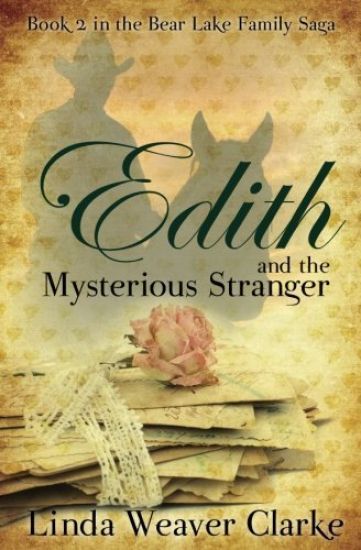
Edith and the Mysterious Stranger: A Family Saga in Bear Lake, Idaho
Linda Weaver Clarke
Createspace Independent Publishing Platform
2012
nidottu
Edith is a nurse and moves to Idaho to care for her cousin. Edith has wonderful qualities but never gives a man a second chance because her expectations are so high. However, all that changes when a mysterious stranger starts writing to her. For the first time, she gets to know a man's inner soul before making any harsh judgments. Whoever he is, this man is a mystery and the best thing that has ever happened to her. The question that puzzles her is whether or not he is as wonderful in person as he is in his letters.
Ethan Frome (1911) A NOVEL by Edith Wharton
Edith Wharton
Createspace Independent Publishing Platform
2015
nidottu
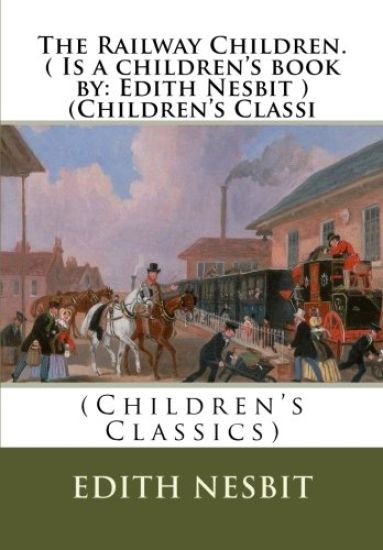
The Railway Children.( Is a children's book by: Edith Nesbit ) (Children's Classi
Edith Nesbit
Createspace Independent Publishing Platform
2016
nidottu
The Railway Children is a children's book by Edith Nesbit, originally serialised in The London Magazine during 1905 and first published in book form in 1906. It has been adapted for the screen several times, of which the 1970 film version is the best known. The Oxford Dictionary of National Biography credits Oswald Barron, who had a deep affection for Nesbit, with having provided the plot.he story concerns a family who move from London to "The Three Chimneys", a house near the railway in Yorkshire, after the father, who works at the Foreign Office, is imprisoned after being falsely accused of spying. The children befriend an Old Gentleman who regularly takes the 9:15 train near their home; he is eventually able to help prove their father's innocence, and the family is reunited. The family take care of a Russian exile, Mr Szczepansky, who came to England looking for his family (later located) and Jim, the grandson of the Old Gentleman, who suffers a broken leg in a tunnel. The theme of an innocent man being falsely imprisoned for espionage and finally vindicated might have been influenced by the Dreyfus Affair, which was a prominent worldwide news item a few years before the book was written. The Russian exile, persecuted by the Tsars for writing "a beautiful book about poor people and how to help them" and subsequently helped by the children, was most likely an amalgam of the real-life dissidents Sergius Stepniak and Peter Kropotkin who were both friends of the author.
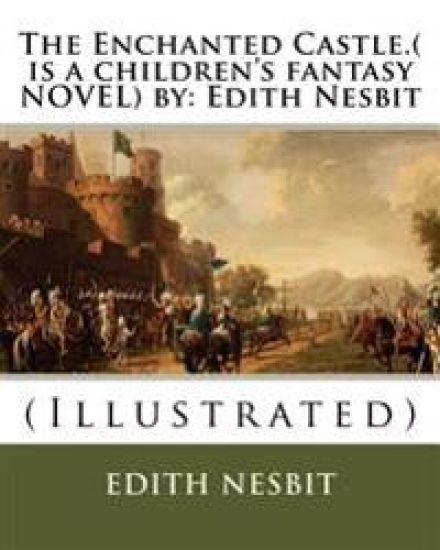
The Enchanted Castle.( is a children's fantasy NOVEL) by: Edith Nesbit: (Illustrated)
Edith Nesbit
Createspace Independent Publishing Platform
2016
nidottu

The Age of Innocence is a 1920 NOVEL by: Edith Wharton which won the 1921 Pulitzer Prize.
Edith Wharton
Createspace Independent Publishing Platform
2017
nidottu