

Kirjahaku
Etsi kirjoja tekijän nimen, kirjan nimen tai ISBN:n perusteella.
1000 tulosta hakusanalla Edward B. Fry

Slave Law and the Politics of Resistance in the Early Atlantic World
Edward B. Rugemer
Harvard University Press
2018
sidottu
Winner of the Jerry H. Bentley Book Prize, World History AssociationThe success of the English colony of Barbados in the seventeenth century, with its lucrative sugar plantations and enslaved African labor, spawned the slave societies of Jamaica in the western Caribbean and South Carolina on the American mainland. These became the most prosperous slave economies in the Anglo-American Atlantic, despite the rise of enlightened ideas of liberty and human dignity. Slave Law and the Politics of Resistance in the Early Atlantic World reveals the political dynamic between slave resistance and slaveholders’ power that marked the evolution of these societies. Edward Rugemer shows how this struggle led to the abolition of slavery through a law of British Parliament in one case and through violent civil war in the other.In both Jamaica and South Carolina, a draconian system of laws and enforcement allowed slave masters to maintain control over the people they enslaved, despite resistance and recurrent slave revolts. Brutal punishments, patrols, imprisonment, and state-sponsored slave catchers formed an almost impenetrable net of power. Yet slave resistance persisted, aided and abetted by rising abolitionist sentiment and activity in the Anglo-American world. In South Carolina, slaveholders exploited newly formed levers of federal power to deflect calls for abolition and to expand slavery in the young republic. In Jamaica, by contrast, whites fought a losing political battle against Caribbean rebels and British abolitionists who acted through Parliament.Rugemer’s comparative history spanning two hundred years of slave law and political resistance illuminates the evolution and ultimate collapse of slave societies in the Atlantic World.

The 5 Elements of Effective Thinking
Edward B. Burger; Michael Starbird
PRINCETON UNIVERSITY PRESS
2012
sidottu
The 5 Elements of Effective Thinking presents practical, lively, and inspiring ways for you to become more successful through better thinking. The idea is simple: You can learn how to think far better by adopting specific strategies. Brilliant people aren't a special breed--they just use their minds differently. By using the straightforward and thought-provoking techniques in The 5 Elements of Effective Thinking, you will regularly find imaginative solutions to difficult challenges, and you will discover new ways of looking at your world and yourself--revealing previously hidden opportunities. The book offers real-life stories, explicit action items, and concrete methods that allow you to attain a deeper understanding of any issue, exploit the power of failure as a step toward success, develop a habit of creating probing questions, see the world of ideas as an ever-flowing stream of thought, and embrace the uplifting reality that we are all capable of change. No matter who you are, the practical mind-sets introduced in the book will empower you to realize any goal in a more creative, intelligent, and effective manner. Filled with engaging examples that unlock truths about thinking in every walk of life, The 5 Elements of Effective Thinking is written for all who want to reach their fullest potential--including students, parents, teachers, businesspeople, professionals, athletes, artists, leaders, and lifelong learners. Whenever you are stuck, need a new idea, or want to learn and grow, The 5 Elements of Effective Thinking will inspire and guide you on your way. To share thinking stories, go to: http://5elementsofthinking.wordpress.com
How you can become better at solving real-world problems by learning creative puzzle-solving skillsWe solve countless problems—big and small—every day. With so much practice, why do we often have trouble making simple decisions—much less arriving at optimal solutions to important questions? Are we doomed to this muddle—or is there a practical way to learn to think more effectively and creatively? In this enlightening, entertaining, and inspiring book, Edward Burger shows how we can become far better at solving real-world problems by learning creative puzzle-solving skills using simple, effective thinking techniques.Making Up Your Own Mind teaches these techniques—including how to ask good questions, fail and try again, and change your mind—and then helps you practice them with fun verbal and visual puzzles. The goal is not to quickly solve each challenge but to come up with as many different ways of thinking about it as possible. As you see the puzzles in ever-greater depth, your mind will change, helping you become a more imaginative and creative thinker in daily life. And learning how to be a better thinker pays off in incalculable ways for anyone—including students, businesspeople, professionals, athletes, artists, leaders, and lifelong learners.A book about changing your mind and creating an even better version of yourself through mental play, Making Up Your Own Mind will delight and reward anyone who wants to learn how to find better solutions to life’s innumerable puzzles.And the puzzles extend to the thought-provoking format of the book itself because one of the later short chapters is printed upside down while another is printed in mirror image, further challenging the reader to see the world through different perspectives and make new meaning.

Making Up Your Own Mind: Thinking Effectively Through Creative Puzzle-Solving
Edward B. Burger
PRINCETON UNIVERSITY PRESS
2018
muu
How you can become better at solving real-world problems by learning creative puzzle-solving skillsWe solve countless problems--big and small--every day. With so much practice, why do we often have trouble making simple decisions--much less arriving at optimal solutions to important questions? Are we doomed to this muddle--or is there a practical way to learn to think more effectively and creatively? In this enlightening, entertaining, and inspiring book, Edward Burger shows how we can become far better at solving real-world problems by learning creative puzzle-solving skills using simple, effective thinking techniques.Making Up Your Own Mind teaches these techniques--including how to ask good questions, fail and try again, and change your mind--and then helps you practice them with fun verbal and visual puzzles. The goal is not to quickly solve each challenge but to come up with as many different ways of thinking about it as possible. As you see the puzzles in ever-greater depth, your mind will change, helping you become a more imaginative and creative thinker in daily life. And learning how to be a better thinker pays off in incalculable ways for anyone--including students, businesspeople, professionals, athletes, artists, leaders, and lifelong learners.A book about changing your mind and creating an even better version of yourself through mental play, Making Up Your Own Mind will delight and reward anyone who wants to learn how to find better solutions to life's innumerable puzzles.And the puzzles extend to the thought-provoking format of the book itself because one of the later short chapters is printed upside down while another is printed in mirror image, further challenging the reader to see the world through different perspectives and make new meaning.
Air raid sirens wail, searchlight beams flash across the sky, and the night is aflame with tracer fire and aerial explosions, as Allied bombers and German anti-aircraft units duel in the thundering darkness. Such "cinematic" scenes, played out with increasing frequency as World War II ground to a close, were more than mere stock material for movie melodramas. As Edward Westermann reveals, they point to a key but largely unappreciated aspect of the German war effort that has yet to get its full due.Long the neglected stepchild in studies of World War II air campaigns, German flak or anti-aircraft units have been frequently dismissed by American, British, and German historians (and by veterans of the European air war) as ineffective weapons that wasted valuable material and personnel resources desperately needed elsewhere by the Third Reich. Westermann emphatically disagrees with that view and makes a convincing case for the significant contributions made by the entire range of German anti-aircraft defenses.During the Allied air campaigns against the Third Reich, well over a million tons of bombs were dropped upon the German homeland, killing nearly 300,000 civilians, wounding another 780,000, and destroying more than 3,500,000 industrial and residential structures. Not surprisingly, that aerial Armageddon has inspired countless studies of both the victorious Allied bombing offensive and the ultimately doomed Luftwaffe defense of its own skies. By contrast, flak units have virtually been ignored, despite the fact that they employed more than a million men and women, were responsible for more than half of all Allied aircraft losses, forced Allied bombers to fly far above high-accuracy altitudes, and thus allowed Germany to hold out far longer than it might have otherwise.Westermann's definitive study sheds new light on every facet of the development and organization of this vital defense arm, including its artillery, radar, searchlight, barrage balloon, decoy sites, and command components. Highlighting the convergence of technology, strategy, doctrine, politics, and economics, Flak also provides revealing insights into German strategic thought, Hitler's obsession with micromanaging the war, and the lives of the members of the flak units themselves, including the large number of women, factory workers, and even POWs who participated.
When the German Wehrmacht swarmed across Eastern Europe, an elite corps followed close at its heels. Along with the SS and Gestapo, the Ordnungspolizei, or Uniformed Police, played a central role in Nazi genocide that until now has been generally neglected by historians of the war. Beginning with the invasion of Poland, the Uniformed Police were charged with following the army to curb resistance, pacify the countryside, patrol Jewish ghettos, and generally maintain order in the conquered territories. Edward Westermann examines how this force emerged as a primary instrument of annihilation, responsible for the murder of hundreds of thousands of the Third Reich’s political and racial enemies. In Hitler’s Police Battalions he reveals how the institutional mindset of these “ordinary policemen” allowed them to commit atrocities without a second thought. Westermann reveals initiatives pursued before the war by Heinrich Himmler and Kurt Daluege to create a culture within the existing police forces that fostered anti-Semitism and anti-Communism as institutional norms. Challenging prevailing interpretations of German culture, he draws on extensive archival research—including the testimony of former policemen—to illuminate this transformation. Purged of dissidents, indoctrinated to idolize Hitler, and trained in military combat, these police battalions repeatedly conducted actions against Jews, Slavs, gypsies, asocials, and other groups on their own initiative, even when they had the choice not to. In addition to documenting these atrocities, Westermann examines cooperation between the Ordnungspolizei and the SS and Gestapo, and the close relationship between police and Wehrmacht in the conduct of the anti-partisan campaign. Throughout, Westermann stresses the importance of ideological indoctrination within specific groups. It was the organizational culture of the Uniformed Police, he maintains, and not German culture in general that led these men to commit genocide. Hitler’s Police Battalions provides the most complete and comprehensive study to date of this neglected branch of Himmler’s SS and Police empire and adds a new dimension to our understanding of the Holocaust and the war on the Eastern front.

First published in 2002. In this title, Edward B. D'Auvergne chronicles the life of Pierre Loti, written with fervent sympathy. We journey with Loti from Brittany to Constantinople, from China to Morocco, from Egypt to Isfahan, breathing all the way the atmosphere and recognising the sources of the stories. Readers will find the biography of Pierre Loti as fascinating as the tales for which he is deservedly renowned. By writing of his life, D'Auvergne argues that those with an interest in literature may understand Loti better and, in turn, better understand his writing.
The Euro, Capital Markets, and Dollarization
Edward B. Flowers; Francis A. Lees
Rowman Littlefield Publishers
2002
nidottu
The Euro, Capital Markets, and Dollarization describes the economic and capital market results of the institution of the single currency, the euro, in Europe after January 2000. This startling event appears to foreshadow increased capital market efficiency, increased labor migration, massive cross-border mergers, the eastward spread of the monetary union, and the division of the world into currency blocs.




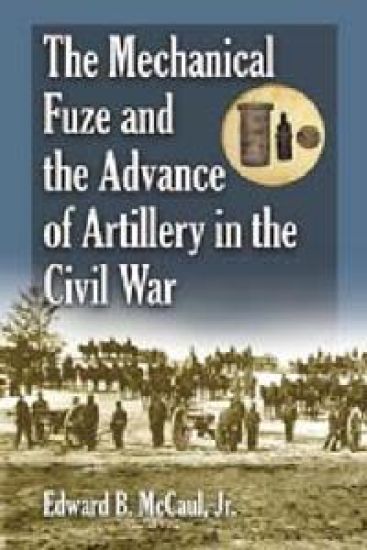
The Mechanical Fuze and the Advance of Artillery in the Civil War
Edward B. McCaul
McFarland Co Inc
2010
pokkari
The rifled artillery used during the Civil War created the need for a new and more reliable type of artillery fuze to light powder charges. This history explains how mechanically ignited fuzes were developed to improve accuracy, distance, and power of weaponry, and how the technical and manufacturing challenges of mating gunpowder and metal were met.

Of the many infantry brigades in Robert E. Lee's Army of Northern Virginia, John Bell Hood's Texas Brigade earned the reputation as perhaps the premier unit. From 1862 until Lee's surrender at Appomattox, the brigade fought in most of the major campaigns in the Eastern Theater and several more in the Western, including the Seven Days, Second Manassas (Second Bull Run), Sharpsburg (Antietam), Fredericksburg, Gettysburg, Chickamauga, Chattanooga, Knoxville, the Wilderness, Spotsylvania Court House, Cold Harbor, the siege of Richmond and Petersburg, and Appomattox. Distinguished for its fierce tenacity and fighting ability, the brigade suffered some of the war's highest casualties. This volume chronicles Hood's Texas Brigade from its formation through postwar commemorations, providing a soldier's-eye view of the daring and bravery of this remarkable unit.

Hitler's Ostkrieg and the Indian Wars
Edward B. Westermann
University of Oklahoma Press
2016
sidottu
As he prepared to wage his war of annihilation on the Eastern Front, Adolf Hitler repeatedly drew parallels between the Nazi quest for Lebensraum, or living space, in Eastern Europe and the United States's westward expansion under the banner of Manifest Destiny. The peoples of Eastern Europe were, he said, his ""redskins,"" and for his colonial fantasy of a ""German East"" he claimed a historical precedent in the United States's displacement and killing of the native population. Edward B. Westermann examines the validity, and value, of this claim in Hitler's Ostkrieg and the Indian Wars. The book takes an empirical approach that highlights areas of similarity and continuity, but also explores key distinctions and differences between these two national projects. The westward march of American empire and the Nazi conquest of the East offer clear parallels, not least that both cases fused a sense of national purpose with racial stereotypes that aided in the exclusion, expropriation, and killing of peoples. Westermann evaluates the philosophies of Manifest Destiny and Lebensraum that justified both conquests, the national and administrative policies that framed Nazi and U.S. governmental involvement in these efforts, the military strategies that supported each nation's political goals, and the role of massacre and atrocity in both processes. Important differences emerge: a goal of annihilation versus one of assimilation and acculturation; a planned military campaign versus a confused strategy of pacification and punishment; large-scale atrocity as routine versus massacre as exception. Comparative history at its best, Westermann's assessment of these two national projects provides crucial insights into not only their rhetoric and pronouncements but also the application of policy and ideology ""on the ground."" His sophisticated and nuanced revelations of the similarities and dissimilarities between these two cases will inform further study of genocide, as well as our understanding of the Nazi conquest of the East and the American conquest of the West.
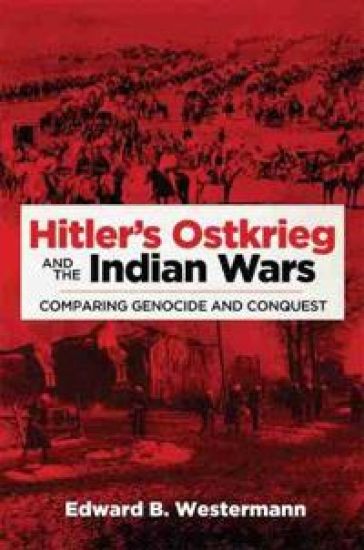
Hitler's Ostkrieg and the Indian Wars
Edward B. Westermann
University of Oklahoma Press
2019
nidottu
As he prepared to wage his war of annihilation on the Eastern Front, Adolf Hitler repeatedly drew parallels between the Nazi quest for Lebensraum, or living space, in Eastern Europe and the United States's westward expansion under the banner of Manifest Destiny. The peoples of Eastern Europe were, he said, his ""redskins,"" and for his colonial fantasy of a ""German East"" he claimed a historical precedent in the United States's displacement and killing of the native population. Edward B. Westermann examines the validity, and value, of this claim in Hitler's Ostkrieg and the Indian Wars. The book takes an empirical approach that highlights areas of similarity and continuity, but also explores key distinctions and differences between these two national projects. The westward march of American empire and the Nazi conquest of the East offer clear parallels, not least that both cases fused a sense of national purpose with racial stereotypes that aided in the exclusion, expropriation, and killing of peoples. Westermann evaluates the philosophies of Manifest Destiny and Lebensraum that justified both conquests, the national and administrative policies that framed Nazi and U.S. governmental involvement in these efforts, the military strategies that supported each nation's political goals, and the role of massacre and atrocity in both processes. Important differences emerge: a goal of annihilation versus one of assimilation and acculturation; a planned military campaign versus a confused strategy of pacification and punishment; large-scale atrocity as routine versus massacre as exception. Comparative history at its best, Westermann's assessment of these two national projects provides crucial insights into not only their rhetoric and pronouncements but also the application of policy and ideology ""on the ground."" His sophisticated and nuanced revelations of the similarities and dissimilarities between these two cases will inform further study of genocide, as well as our understanding of the Nazi conquest of the East and the American conquest of the West.

Industrial Peacemaker
Edward B. Shils; Walter J. Gershenfeld; Bernard Ingrster; William M. Weinberg
University of Pennsylvania Press
1979
sidottu
This book is a volume in the Penn Press Anniversary Collection. To mark its 125th anniversary in 2015, the University of Pennsylvania Press rereleased more than 1,100 titles from Penn Press's distinguished backlist from 1899-1999 that had fallen out of print. Spanning an entire century, the Anniversary Collection offers peer-reviewed scholarship in a wide range of subject areas.
"In 1989 New Zealand embarked on what is arguably the most thorough and dramatic transformation of a compulsory state education system ever undertaken by an industrialized country. Under a plan known as Tomorrow's Schools this island nation of 3.8 million people abolished its national Department of Education and turned control of its nearly 2,700 primary and secondary schools over to locally elected boards of trustees. Virtually overnight, one of the world's most tightly controlled public education systems became one of the most decentralized. Two years later, in 1991, with a new government in power, New Zealand enacted further reforms that introduced full parental choice of schools and encouraged the development of a competitive culture in the state education system. Debate rages in the United States about whether similar reforms would improve the performance of the country's troubled public school system. Judgments about the potential benefits of these ideas, as well as the general relevance of economic models to educational systems, tap into deeply held values, and discussion in the U.S. has been hampered by the lack of practical experience with them. The extended and widespread experiences of New Zealand, whose school system functions much like our own, provide U.S. policy makers with a wide range of appropriate insights and implications to consider as they gauge the merits of bold education reform. When Schools Compete is the first book to provide detailed quantitative and qualitative analysis of the New Zealand experiment. Combining the perceptive observations of a prominent education journalist and the analytical skills of an academic policy analyst, this book will help supporters and critics of market-based education reforms better anticipate the potential long-term consequences of applying ideas of market competition to the delivery of education."

"In 1989 New Zealand embarked on what is arguably the most thorough and dramatic transformation of a compulsory state education system ever undertaken by an industrialized country. Under a plan known as Tomorrow's Schools this island nation of 3.8 million people abolished its national Department of Education and turned control of its nearly 2,700 primary and secondary schools over to locally elected boards of trustees. Virtually overnight, one of the world's most tightly controlled public education systems became one of the most decentralized. Two years later, in 1991, with a new government in power, New Zealand enacted further reforms that introduced full parental choice of schools and encouraged the development of a competitive culture in the state education system. Debate rages in the United States about whether similar reforms would improve the performance of the country's troubled public school system. Judgments about the potential benefits of these ideas, as well as the general relevance of economic models to educational systems, tap into deeply held values, and discussion in the U.S. has been hampered by the lack of practical experience with them. The extended and widespread experiences of New Zealand, whose school system functions much like our own, provide U.S. policy makers with a wide range of appropriate insights and implications to consider as they gauge the merits of bold education reform. When Schools Compete is the first book to provide detailed quantitative and qualitative analysis of the New Zealand experiment. Combining the perceptive observations of a prominent education journalist and the analytical skills of an academic policy analyst, this book will help supporters and critics of market-based education reforms better anticipate the potential long-term consequences of applying ideas of market competition to the delivery of education."