Kirjojen hintavertailu. Mukana 11 244 527 kirjaa ja 12 kauppaa.

Kirjahaku

Etsi kirjoja tekijän nimen, kirjan nimen tai ISBN:n perusteella.

1000 tulosta hakusanalla Edward Chitham

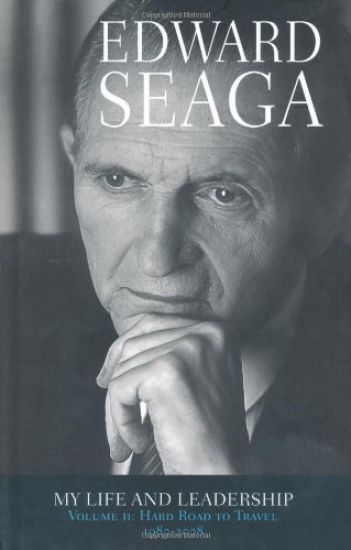
Edward Seaga My Life & Leadership Volume 2

Edward Seaga My Life & Leadership Volume 2

Seaga Edward

Macmillan Education
2010
nidottu
Edward Phillip George Seaga is one of the most outstanding Jamaican politicians - with a reputation for creativity, controversy and courage. His autobiography offers a unique insight into the emergence of modern Jamaica, a journey characterized by idealism and intrigue, conflict and triumph. The young protege of legendary National Hero, founder and leader of the Jamaica Labour Party, Sir Alexander Bustamante, Harvard graduate Edward Seaga was drawn to the roots of Jamaican folk society as a research student of the life of the poor in rural and inner-city communities. He rose dramatically through the political ranks to leadership of the JLP in 15 years, leading the party for the next 30 years. As the youngest parliamentarian, he gave notice in his signature speech on the 'haves and have-nots' that his mission was to pull up the poor without pulling down the rich - in a country with little wealth both capital and labour are mutually dependent for success. This was Bustamante's underlying pragmatic philosophy too. In 1980, the JLP stormed to election victory and Seaga became Prime Minister.His immediate task was to tackle the immense problems inherited from the Manley PNP government, a challenge that dominated Seaga's time in office. His detailed strategy for economic and social revival together with his analysis of the ongoing issues that confront Jamaica today provide the framework of this second volume of autobiography, closing with an absorbing account of Seaga's final years as leader of the JLP and the moving occasion of his farewell to the Parliament he served for so long.
Edward Bond: A Critical Study

Edward Bond: A Critical Study

P. Billingham

Palgrave Macmillan
2013
sidottu
This new study of one of Britain's greatest modern playwrights represents the first major, extended discussion of Edward Bond's work in over twenty years. The book combines rigorous and stimulating analysis and discussion of Bond's plays and ideas about drama and society. For the first time, there is also discussion of selected plays from his later, post-2000 period, including Innocence and Have I None, alongside explorations of widely studied plays such as Saved.
Edward Trencom's Nose

Edward Trencom's Nose

Giles Milton

Macmillan
2013
pokkari
Edward Trencom has bumbled through life, relying on his trusty nose to turn the family cheese shop into the most celebrated fromagerie in England. But his world is turned upside down when he stumbles across a crate of family papers. To his horror, Edward discovers that nine previous generations of his family have come to sticky ends because of their noses. When he investigates further, Edward finds himself caught up in a Byzantine riddle to which there is no obvious answer . . . Giles Milton’s deliciously comic debut novel is a mouth-watering blend of Louis de Bernieres, Tom Sharpe and P. G. Wodehouse with every page permeated by the pungent odour of cheese. 'The pong of ripe Limburger lingers impressively' - Observer 'Comic novels are difficult to write: any old halfwit can produce 400 pages of stinking high seriousness, but it takes a real wit to manage 400 pages of mild, fragrant good humour' Guardian
Edward the Confessor (Penguin Monarchs)
Edward the Confessor, the last great king of Anglo-Saxon England, canonized nearly 100 years after his death, is in part a figure of myths created in the late middle ages.In this revealing portrait of England's royal saint, David Woodman traces the course of Edward's twenty-four-year-long reign through the lens of contemporary sources, from the Anglo-Saxon Chronicle and the Vita AEdwardi Regis to the Bayeux Tapestry, to separate myth from history and uncover the complex politics of his life. He shows Edward to be a shrewd politician who, having endured a long period of exile from England in his youth, ascended the throne in 1042 and came to control a highly sophisticated and powerful administration.The twists and turns of Edward's reign are generally seen as a prelude to the Norman Conquest in 1066. Woodman explains clearly how events unfolded and personalities interacted but, unlike many, he shows a capable and impressive king at the centre of them.
Edward and Mark's Adventure

Edward and Mark's Adventure

James F Park

Lulu.com
2018
pokkari
The bright sunlight shone through Mark's green and white hooped curtains and filled his small room with hundreds of tiny green and white football shapes that always made him think of paradise because that's where his favourite football team played and where, one day, he hoped he'd be good enough to play for the Scottish champions and score the winning goal in The Champions League Final but not today because today was his school's sports day and that was something he wasn't looking forward to.
Edward Yang

Edward Yang

John Anderson

University of Illinois Press
2005
nidottu
Having largely given up on a career in film, Edward Yang had been working as a computer engineer for several years when he saw Herzog's Aguirre, Wrath of God. Inspired to return to film, Yang, along with a handful of other filmmakers, including the great Hou Hsiao-hsien, went on to found the Taiwanese New Wave of the early 1980s. Film critic John Anderson's Edward Yang offers a comprehensive overview of the work of the writer-director-already considered one of the most important filmmakers of the past twenty years-from his breakthrough feature That Day, on the Beach to the epic Yi-Yi. Rooted in questions about what it means to be Taiwanese, Yang's films reveal the complexity of life within the island's patchwork culture. Anderson identifies the key narrative strategies, formal devices, moral vision, and sociopolitical concerns shot through Yang's films. He explains what makes these films so distinctive by pinpointing the specific qualities of Yang's style and outlook.
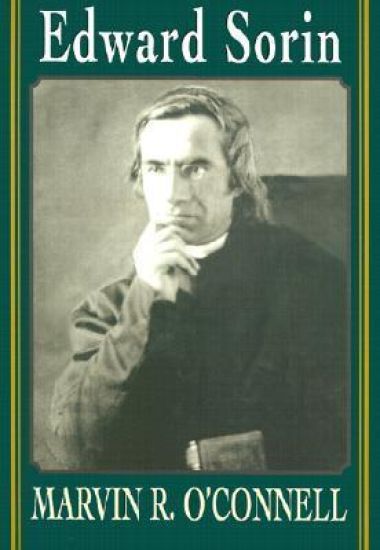
Edward Sorin

Edward Sorin

Marvin R. O'Connell

University of Notre Dame Press
2001
sidottu
This sweeping book offers the definitive account of the life and labors of Edward Sorin, founder of the University of Notre Dame. Born in the west of France in 1814, Sorin was ordained in 1838 and joined the newly founded Congregation of Holy Cross shortly thereafter. In 1841, Father Sorin, along with six Holy Cross brothers, was sent to establish a mission in Indiana. After a year's service in the Vincennes diocese's fledgling parochial schools, Sorin was offered a tract of land in the diocese's northernmost section—on the condition that a college be situated there. Father Sorin and his companions arrived at the lakeside property, located near the south bend of the St. Joseph River, in November 1842. The next year, the state of Indiana granted a charter to what Sorin proudly and reverently called the University of Notre Dame du Lac. In its early days, Father Sorin's "university" was composed of a few log shacks and a handful of half-educated brothers, only a few of whom could speak English. There was no money and hardly any students. But Father Sorin, by sheer willpower, was determined that his university would prosper. Basic to Father Sorin's success in this regard was his willingness to give free rein to gifted colleagues—men more intellectually sophisticated than himself—and his intuitive understanding of, and growing love for, the unique character of American culture. Edward Sorin is a lively, colorful history of the man who overcame great odds to found and grow one of the world's premier Catholic institutions of higher learning.
Edward L. Doheny

Edward L. Doheny

Dan LaBotz

Praeger Publishers Inc
1991
sidottu
If there had been a Life Styles of the Rich and Famous in the 1920s, the notorious oil tycoon Edward L. Doheny would surely have been featured. For at the peak of his powers, between 1904 and 1927, this L.A. hometown boy was one of the most important men of his times and, in fact, one of the richest and most powerful men in the world. As the first to discover oil in Los Angeles--which sparked an oil boom there--this multi-faceted entrepreneur profoundly influenced the growth of both Los Angeles and the state of California. Then, as one of its earliest developers, Doheny helped put Beverly Hills on the map. On an international scale, he established vast oil fields in Mexico and virtually controlled that country's oil industry. This petroleum state that Doheny created and ruled extended over Veracruz, Tamaulipas, and San Luis Patosi and was defended by a Doheny-financed army of 6,000 men. The oil baron's opposition to the various revolutionary governments is legendary and some historians believe that Doheny was responsible for the murder of Mexican President Carranza. Finally, Doheny played a major role in the Teapot Dome Scandal, the greatest political impropriety in U.S. history up to that time. Dan La Botz has taken this rich collection of material plus new information on Doheny's personal life and provided the first biography of a man who, for better or worse, left his mark on the nation's industrial and economic development. The ten-chapter biography integrates all Doheny's nefarious doings and gives a full account of his attempts to shape U.S. foreign policy. In addition to assessing Doheny's public life, the study reviews the causes of his son and his son's best friend's deaths. La Botz details how Doheny almost singlehandedly created the Fuel-oil Age by helping convert railroads from coal-burning to petroleum-burning engines and in the process opened up a huge market for petroleum as fuel. Edward L. Doheny, for the first time, gives a complete and accurate estimation of the oilman's part in the Teapot Dome Scandal, detailing how Doheny bribed his friend Albert Bacon Fall, a cabinet member of the U.S. Secretary of the Interior, and corrupted the highest levels of U.S. government in an attempt to control the U.S. Navy's oil reserve. As a biography, La Botz attempts to understand the major events of Doheny's personal life while concentrating on his role as economic and political leader. He also provides us with the history of the Doheny companies and a study of imperialism in its classical period. This in-depth biography will shed much light on the period for students and scholars of U.S. and Mexican history and will be read avidly by general readers interested in the growth of Los Angeles and the infancy of the oil industry.
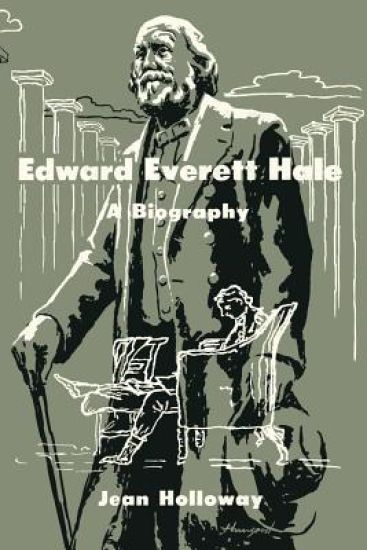
Edward Everett Hale

Edward Everett Hale

Jean Holloway

University of Texas Press
1965
pokkari
Edward Everett Hale is remembered by millions as the author of The Man Without a Country. This popular and gifted nineteenth-century writer was an outstanding and prolific contributor to the fields of journalism, fiction, essay, and history. He wrote more than 150 books and pamphlets (one novel sold more than a million copies in his lifetime) and was intimately associated with the publication of many of the early American journals, among them the North American Review, Atlantic Monthly, and Christian Examiner. He served as editor of Old and New and was a frequent contributor to the foremost newspapers and periodicals of his time. Yet the writings of this “journalist with a touch of genius” were only incidental to Hale’s Christian ministry in New England and in Washington, D.C., where he was for five years Chaplain of the Senate. His literary creed reflected that of his ministry, for Hale’s interpretation of the social gospel comprised an active concern with all phases of human affairs. Confidant of poets and editors, friend to diplomats and statesmen, Hale helped mold public opinions in economics, sociology, history, and politics through three-quarters of what he called “a most extraordinary century in history.” In recounting Hale’s life and times, Holloway vividly portrays this fascinating and often turbulent era.
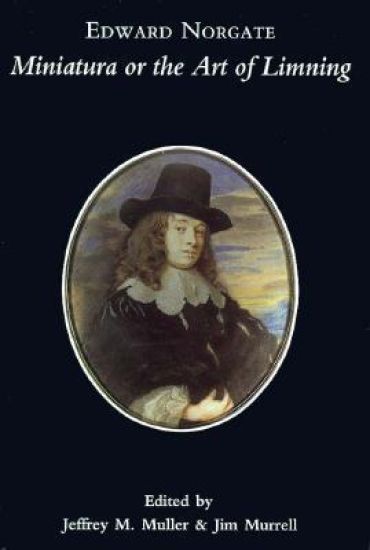
Edward Norgate

Edward Norgate

Edward Norgate

Yale University Press
1997
sidottu
Edward Norgate, aristocratic friend of Charles I and the Earl of Arundel, made his mark in seventeenth-century England as musician, herald, and courtier. He also wrote Miniatura, a widely circulated study of miniature painting in his era that serves today as both a guide to materials and techniques and a record of the artistic knowledge and taste of Charles' court. This new edition of Norgate's treatise, the first since 1919, introduces and fully annotates the text from technical and art historical perspectives, firmly establishing the prime importance of Norgate's work.The book provides a detailed account of Norgate's life and many interests, his readership, and his technique. The editors—a noted scholar of seventeenth-century art and an authority on the techniques and materials of miniature painting—closely examine Norgate's text and compare it with other contemporary treatises, placing his techniques in the context of the period. The treatise itself, first written in 1627-28 and then substantially revised in 1648, sets forth in great detail the methods of English miniaturists, from the composition and preparation of pigments and brushes to lighting in the studio. Norgate acknowledges indebtedness to Hilliard, comments on other artists' styles and techniques, and reveals through his own views the English aristocracy's interest in and assimilation of European artistic culture.Published for the Paul Mellon Center for Studies in British Art
Edward the Confessor

Edward the Confessor

Frank Barlow

Yale University Press
1997
pokkari
Frank Barlow's magisterial biography, first published in 1970 and now reissued with new material, rescues Edward the Confessor from contemporary myth and subsequent bogus scholarship. Disentangling verifiable fact from saintly legend, he vividly re-creates the final years of the Anglo-Danish monarchy and examines England before the Norman Conquest with deep insight and great historical understanding. "Deploying all the resources of formidable scholarship, [Barlow] has recovered the real Edward." — Spectator
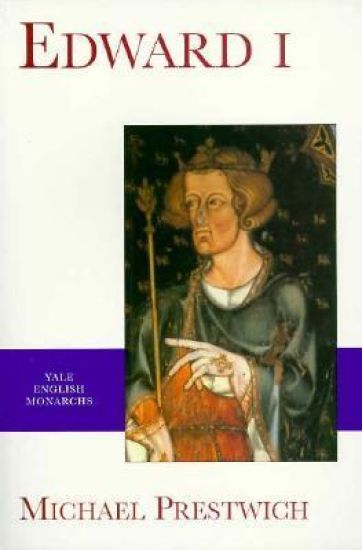
Edward I

Edward I

Michael Prestwich

Yale University Press
1997
pokkari
Edward I—one of the outstanding monarchs of the English Middle Ages—pioneered legal and parliamentary change in England, conquered Wales, and came close to conquering Scotland. A major player in European diplomacy and war, he acted as peacemaker during the 1280s but became involved in a bitter war with Philip IV a decade later. This book is the definitive account of a remarkable king and his long and significant reign. Widely praised when it was first published in 1988, it is now reissued with a new introduction and updated bibliographic guide.Praise for the earlier edition:"A masterly achievement. . . . A work of enduring value and one certain to remain the standard life for many years."—Times Literary Supplement"A fine book: learned, judicious, carefully thought out and skillfully presented. It is as near comprehensive as any single volume could be."—History Today"To have died more revered than any other English monarch was an outstanding achievement; and it is worthily commemorated by this outstanding addition to the . . . corpus of royal biographies."—Times Education Supplement
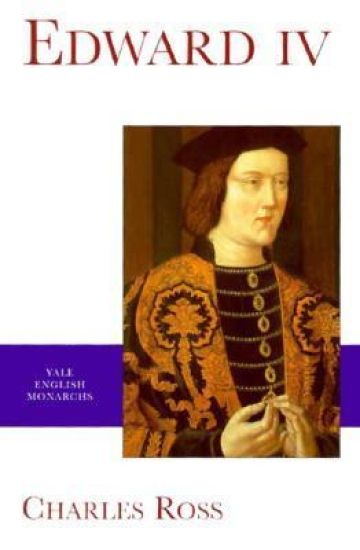
Edward IV

Edward IV

Charles Ross

Yale University Press
1998
pokkari
In his own time Edward IV was seen as an able and successful king who rescued England from the miseries of civil war and provided the country with firm, judicious, and popular government. The prejudices of later historians diminished this high reputation, until recent research confirmed Edward as a ruler of substantial achievement, whose methods and policies formed the foundation of early Tudor government. This classic study by Charles Ross places the reign firmly in the context of late medieval power politics, analyzing the methods by which a usurper sought to retain his throne and reassert the power of a monarchy seriously weakened by the feeble rule of Henry VI. Edward's relations with the politically active classes—the merchants, gentry, and nobility—form a major theme, and against this background Ross provides an evaluation of the many innovations in government on which the king's achievement rests.
Edward VI

Edward VI

Jennifer Loach

Yale University Press
2002
pokkari
Edward VI was the son of Henry VIII and his second wife, Jane Seymour. He ruled for only six years (1547-1553) and died at the age of sixteen. But these were years of fundamental importance in the history of the English state, and in particular of the English church. This new biography reveals for the first time that, despite his youth, Edward had a significant personal impact. Jennifer Loach draws a fresh portrait of the boy king as a highly precocious, well educated, intellectually confident, and remarkably decisive youth, with clear views on the future of the English church. Loach also offers a new understanding of Edward’s health, arguing that the cause of his death was a severe infection of the lungs rather than tuberculosis, the commonly accepted diagnosis. The author views Edward not as a sickly child but as a healthy and vigorous boy, devoted to hunting and tournaments like any young aristocrat of the day. This book tells the story of the monarch and of his time. It supplies the dramatic context in which the short reign of Edward VI was played out—the momentous religious changes, factional fights, and popular risings. And it offers vivid details on Edward’s increasing absorption in politics, his consciousness of his role as supreme head of the English church, his determination to lay the foundation for a Protestant regime, and how his failure in this ambition brought England to the brink of civil war.
Edward II

Edward II

Phillips Seymour

Yale University Press
2011
nidottu
The latest definitive biography in the acclaimed Yale English Monarchs series Edward II (1284–1327), King of England, Lord of Ireland, and Duke of Aquitaine, was the object of ignominy during his lifetime and calumny since it. Conventionally viewed as worthless, incapable of sustained policy, and significant only for his sporadic displays of ill-directed energy or a stubborn adherence to greedy and ambitious favorites, he has been presented as fit only to be deposed and replaced by someone more worthy of the throne. This definitive biography, the fruit of a lifetime’s study, does not present Edward II as a heroic or successful king: his deposition after a turbulent reign of nearly twenty years is proof enough that it went terribly wrong. But Seymour Phillips’ scrutiny of the multitude of available sources shows that a richer picture emerges, in line with the complexity of events and of the man himself. If Edward II was not a successful king, he was not fundamentally different in many ways from most English monarchs. The biography strikes a deft balance, taking full account of the problems the king faced in England, Scotland, and Ireland and in his relations with France. It also tackles the contentious issue of whether Edward II did not die in 1327, murdered under barbaric circumstances, but lived on as a captive in England and then a wanderer on the Continent. Eight hundred years on, a king’s life is properly examined.
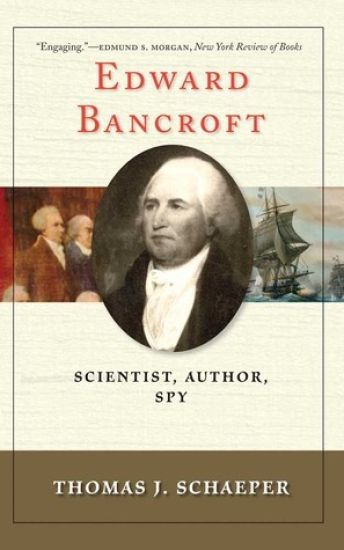
Edward Bancroft

Edward Bancroft

Thomas J. Schaeper

Yale University Press
2012
pokkari
The first complete biography of a little-known but fascinating figure in the history of espionage and the American Revolution A man of as many names as motives, Edward Bancroft is a singular figure in the history of Revolutionary America. Born in Massachusetts in 1745, Bancroft moved to England as a young man in the 1760s and began building a respectable résumé as both a scientist and a man of letters. In recognition of his works in natural history, Bancroft was unanimously elected to the Royal Society, and while working to secure French aid for the American Revolution, he became a close associate of such luminaries as Benjamin Franklin, Silas Deane, and John Adams. Though lauded in his time as a staunch American patriot, when the British diplomatic archives were opened in the late nineteenth century, it was revealed that Bancroft led a secret life as a British agent acting against French and American interests.In this book, the first complete biography of Bancroft, historian Thomas J. Schaeper reveals the full extent of the agent's deception during the crucial years of the American Revolution. Operating under aliases, working in ciphers, and leaving coded messages in the trees of Paris's Tuileries Gardens, Bancroft filtered information from unsuspecting figures including Franklin and Deane back to his contacts in Britain, navigating a complicated web of political allegiances. Through Schaeper's keen analysis of Bancroft's correspondence and diplomatic records, this biography reveals whether Bancroft should ultimately be considered a traitor to America or a patriot to Britain.
Edward III

Edward III

W Mark Ormrod

Yale University Press
2013
nidottu
A landmark biography of the charismatic king beloved of fourteenth-century England Edward III (1312-1377) was the most successful European ruler of his age. Reigning for over fifty years, he achieved spectacular military triumphs and overcame grave threats to his authority, from parliamentary revolt to the Black Death. Revered by his subjects as a chivalric dynamo, he initiated the Hundred Years' War and gloriously led his men into battle against the Scots and the French.In this illuminating biography, W. Mark Ormrod takes a deeper look at Edward to reveal the man beneath the military muscle. What emerges is Edward's clear sense of his duty to rebuild the prestige of the Crown, and through military gains and shifting diplomacy, to secure a legacy for posterity. New details of the splendor of Edward's court, lavish national celebrations, and innovative use of imagery establish the king's instinctive understanding of the bond between ruler and people. With fresh emphasis on how Edward's rule was affected by his family relationships-including his roles as traumatized son, loving husband, and dutiful father-Ormrod gives a valuable new dimension to our understanding of this remarkable warrior king.