During the First World War, more than eighteen thousand Red Cross nurses served with the Army and Navy Nurse Corps. Elizabeth Ashe was one of them and was Chief Nurse of Children's Bureau Department of Civil Affairs American Red Cross. She found her team overwhelmed with babies and orphan children who were injured, sick, and ill-cared-for. But they rose to the occasion. Ashe also spent time caring for wounded soldiers and saw first-hand the horrors of the Great War. She saw and heard the bombing and became inured to it. Since this book was published prior to the end of the war, Ashe may have hoped it would foster more support for the Red Cross efforts. The terse, vivid sentences of the letters create a picture of the scenes of suffering and the opportunities for service as they present themselves to the writer. Written under the stress of work and to those closest in her confidence, they bear the imprint of her character.
How to Weed Your Attic: Getting Rid of Junk without Destroying History provides answers to the question: when someone dies or it’s time to move --- or just clean out the attic, garage, or basement, what papers and other things should we save for the sake of history and what can we safely toss? After reading this clearly written book by a retired archivist and a retired museum curator, you can comfortably clean out your attic – or office, garage, basement, cupboards – with confidence that you’re not tossing out historically valuable (or invaluable) things, and that you will not ask your local museum to take things that really belong in a thrift store, junk yard, or recycle center. The book first describes how to identify historically important documents and artifacts. The authors explain a few simple rules: 1) a complete or long collection has more value than a partial one; 2) emotive material provides a richer picture than factual material; 3) unique usually has more value than mass produced; 4) documents and objects carry more information than they intend to; and 5) a 25-year rule exists without our consciously recognizing it. They then apply the rules and assess the probable historical value of four different types of materials: mass produced (from books to vehicles), individually created (from art work to toys), business materials (from governance documents to uniforms), and commemorative materials (from awards to wedding dresses). The book includes a brief description of the basics for preserving materials the reader wants to keep and references sources for more detail. It also recognizes that the reader may not want to keep stuff that clearly has historical value. For those readers, the authors describe how to donate materials to a cultural repository. In broad strokes, they explain how repositories differ, what the repository will want to know about the stuff you're offering, where an appraiser and/or tax advisor fits into the process, and what the reader can expect the repository to do and not do. Finally, the book addresses unexpected issues that may arise around questions of legal ownership and privacy. Throughout the book, the authors illustrate their points using photographs and vignettes.
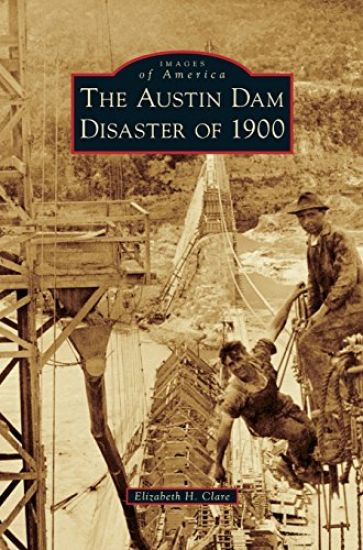
The Austin Dam Disaster of 1900 recreates the era of Gay Nineties Austin, then--as now--a city on the rise and on the make. In 1891, at the behest of ambitious city fathers, the little city of just 15,000 people gambled its future on a project of breathtaking size--a massive hydroelectric dam across the Colorado River. This book follows the epic construction project and the brief golden era of the pleasure resort at Lake McDonald. Though troubled and controversial from the get-go, the dam embodied all of Austin's dreams. Then, on Friday, April 6, 1900, it began to rain . . .