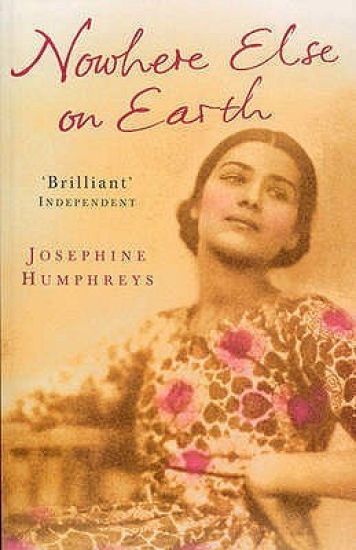
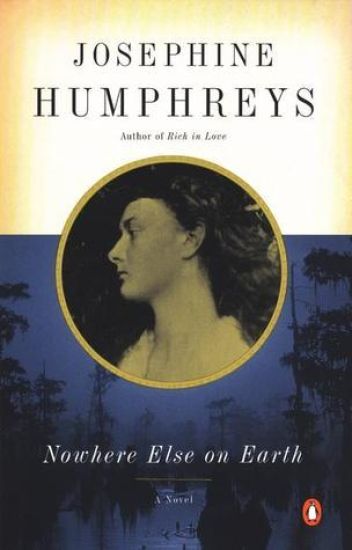
Brought up in a mixed-race community - part Scots, part Native American - in the forests of North Carolina in the mid-nineteenth century, Rhoda is the first of her family to be able to read and her parents have plans for her. But the coming of the Civil War brings labour conscription for her brothers, who become outlaws, unwilling to fight for the Confederacy; and when Rhoda falls in love with the outlaw leader Henry, her mother fears the relationship can only lead to disaster-Beautifully written and stunningly observed, Nowhere Else on Earth takes the reader into the backwaters of the American South and the chaos and anarchy of civil war, in the heart-breaking story of one of the most appealing heroines of recent fiction.
In the summer of 1864, sixteen-year-old Rhoda Strong lives in the Lumbee Indian settlement of Robeson County, North Carolina, which has become a pawn in the bloody struggle between the Union and Confederate armies. The community is besieged by the marauding Union Army as well as the desperate Home Guard who are hell-bent on conscripting the young men into deadly forced labor. Daughter of a Scotsman and his formidable Lumbee wife, Rhoda is fiercely loyal to her family and desperately fears for their safety, but her love for the outlaw hero Henry Berry Lowrie forces her to cast her lot with danger. Her struggle becomes part of the community's in a powerful story of love and survival. Nowhere Else on Earth is a moving saga that magnificently captures a little-known piece of American history.
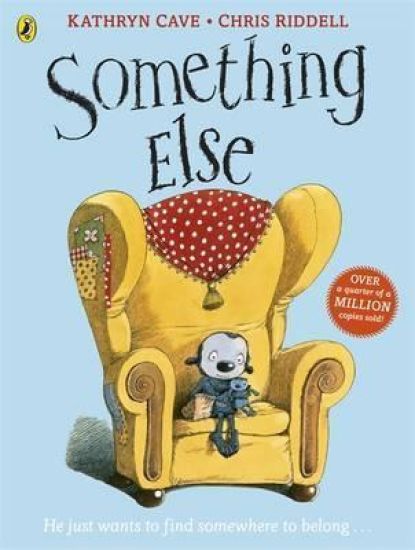
A simple story, about a small creature who does his best to join in with the others. But he's different. No matter how he tries, he just doesn't belong. Then Something turns up and wants to be friends. But Something Else isn't sure he's like him at all...Kathryn Cave's poignantly simple story is brought to life by Chris Riddell in this enchantingly original picture book - now reissued with a new cover look.
As she struggles to move from antagonism to common ground with Miss Xenobia Kezee, her sick, elderly, cantankerous mother-in-law, Paula Johnson confronts her own mother's death and her husband's detachment from the emotional life of his family.
In Britain today, opera is routinely called elitist. But things were not always so. Examining shifting cultural attitudes over the century from 1920 to 2020, Someone Else's Music reveals a hidden history of popular opera-going in Britain, which defies the opera-elitism stereotype. At the same time, the book traces how, when, and why that stereotype arose. It uses opera as a lens through which to examine the broader history of changing cultural values in the UK, from 1920s Reithian ideals about art's civilising qualities to contemporary culture wars. The controversies opera has prompted over the last century reveal a great deal about national identity — who Britons think they are and who they want to be. The book ranges widely across topics including education, public broadcasting, arts policy, and attitudes towards subsidy, and traces opera's surprisingly close relationship with popular culture. We meet a diverse cast of characters, including working-class East-End opera fans, opera-singing Welsh miners, soldiers discovering opera in wartime Italy, and holidaymakers watching it at Butlin's. The book is as much about the secretary camping out in the queue for gallery tickets as it is about the duchess in the stalls. But at what point did people start calling opera elitist and why? Analysing lasting stereotypes around opera, Wilson reveals them to be politically motivated, founded in deep-seated British anxieties about class, education, and national identity. Someone Else's Music is essential reading for anybody who wants to understand the debates we are having today about arts funding, accessibility and who opera is 'for'. It reveals that opera used to be for everyone - and shows us how it could be again.
Somewhere Else is a thousand miles away and right next-door. It's where fly-fishing takes you: a place and state of mind. In fourteen beautifully crafted stories Charles Rangeley-Wilson takes us around the world, from Arctic Quebec to upland Croatia, from the Scottish islands to the Northern Territories, always journeying into the heart of the landscape to meet ordinary, extraordinary people. Somewhere Else is a book about escaping from what you think you know, to find out how things really are.
Stephen Cooper, a middle-aged university professor who is suddenly utterly bored by his life, plots an intricate scheme with his lover. They arrange a spectacular forgery of a disappeared art relic, and in order to sell it, also craft new identities for themselves: together they become somebody else. "We move inside Cooper's chilly satisfaction as he and his lover-accomplice bring off one trick after another in the identity switching necessary to their scam. . . . And we're also brought close to the pain and rage . . . of the women whom Cooper (incorrigible to the end) deceives."—Benjamin DeMott, New York Times Book Review"An authentic and ingenious account of the ingeniously counterfeit in art and in life."—D. J. Enright"This offbeat romp intrigues with its ironic probing of life values at the same time that it provides lively entertainment."—Kirkus Reviews"An extended and absorbing mediation on the loss of integrity."—Chicago Sun-Times"Witty, sophisticated and intriguing, this tale of a forger is the genuine article: an example of the art of suspense and the suspense of art."—Jack Fuller"An entertainingly mordant psychological thriller."—Washington Times Magazine
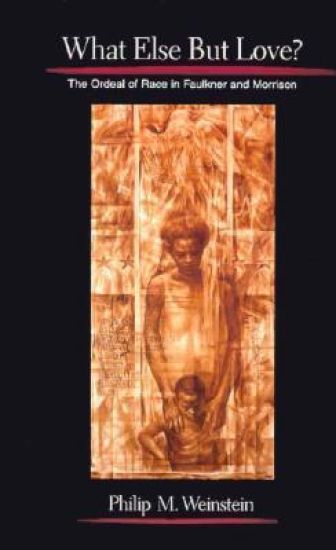
Weinstein investigates the stories blacks and whites, men and women, tell about each other through the work of two quintessential American novelists: William Faulkner and and Toni Morrison. Exploring deep-rooted understandings of race and gender and describing how differently their "Americanness" resonates in both writers' works, What Else But Love? considers the legacy of slavery in a variety of ways, from the meaning of mammies and mothers to the question of black manhood.
Weinstein investigates the stories blacks and whites, men and women, tell about each other through the work of two quintessential American novelists: William Faulkner and and Toni Morrison. Exploring deep-rooted understandings of race and gender and describing how differently their "Americanness" resonates in both writers' works, What Else But Love? considers the legacy of slavery in a variety of ways, from the meaning of mammies and mothers to the question of black manhood.
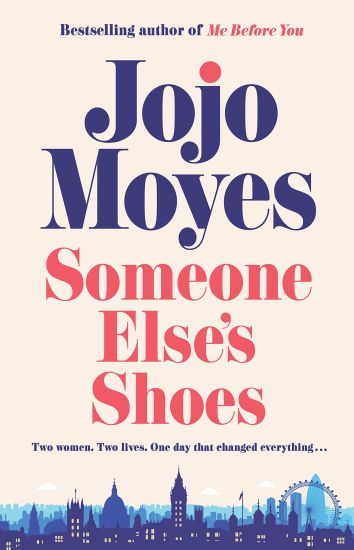
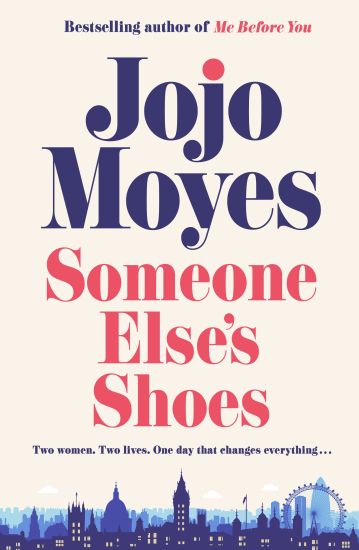
THE NO. 1 BESTSELLER AND A SUNDAY TIMES BOOK OF THE YEAR 2023'Giddily joyful. Moyes writes . . . with warmth and a wonderfully wicked sense of humour' THE TIMES'Delightful. Nobody writes women the way Jojo Moyes does - recognizably real and complex and funny and flawed' JODI PICOULT'Very few authors have the power to make you laugh on one page and cry on the next. Moyes is one of them' NEW YORK TIMES'So much fun. Beautiful about female friendship' MARIAN KEYES'A book we all need in our lives right now. A fabulous and funny romp' WOMAN & HOMEWho are you when you are forced to walk in someone else's shoes?__________MEET SAMShe's not got much, but she's grateful for what she has: a job she's just about clinging on to and a family who depend on her for everything. She knows she's one bad day away from losing it all - and just hopes today isn't it . . .MEET NISHAShe's got everything she always dreamed of - and more: a phenomenally rich husband; an international lifestyle; and . . . she's just been locked out of all of it after her husband initiates divorce proceedings . . .Sam and Nisha should never have crossed paths. But after a bag mix-up at the gym, their lives become intertwined - even as they spiral out of control.Each blames the other as they feel increasingly invisible, forgotten, lost - and desperately alone.But they're not.No woman is an island. Look around. Family. Friends. Strangers.Even the woman you believe just ruined your life might turn out to be your best friend.Because together you can do anything - like take back what is yours . . .__________'[A] captivating new blockbuster. Once you step into the lives of Sam and Nisha, you'll be racing through the pages. Relatable, memorable and engaging' DAILY EXPRESS'A paean to women's solidarity wrapped up in a very funny revenge-fuelled caper' THE TIMES'A warm, witty and uplifting novel . . . It's a joy to spend time with Jojo Moyes' flawed, likeable characters. Another winner from a fabulous author' SUNDAY EXPRESS'A love letter to the strength of female friendship and how women can really be there for each other' GOOD HOUSEKEEPING'Hard-hitting and laugh-aloud . . . Two women's lives intertwine and change profoundly in this story full of richly imagined characters' THE TIMES'Empathy and an extravagant plot collide in Moyes's big hug of a novel' MAIL ON SUNDAYSomeone Else’s Shoes: No 1 Sunday Times bestseller February 2023
A story of mix-ups, mess-ups and making the most of second chances, this is the new novel from international sensation Jojo Moyes, author of Me Before You and The Giver of Stars Who are you when you are forced to walk in someone else's shoes? Nisha Cantor and Sam Kemp are two very different women. Nisha, lives the globetrotting life of the seriously wealthy, until her husband inexplicably cuts her off entirely. She doesn't even have the shoes she was, until a moment ago, standing in. That's because Sam, struggling to keep herself and her family afloat - has accidentally taken Nisha's gym bag. Now Nisha's got nothing. And Sam's walking tall with shoes that catch eyes - and give her a career an unexpected boost. Except Nisha wants her life back - and she'll start with her shoes . . . Two women suddenly forced to walk in another's shoes. But having done so, can either ever return to the life they had? Are they changed for ever? Someone Else's Shoes is a funny, moving and heartfelt story about how, for any of us just one little thing can suddenly change everything. Praise for Jojo Moyes 'Moyes somehow manages to break your heart before restoring your faith in love' Sunday Express 'Storytelling at its best' Marie Claire 'A deeply satisfying book full of big emotions' Good Housekeeping 'Britain's best contemporary female author' Sun on Sunday
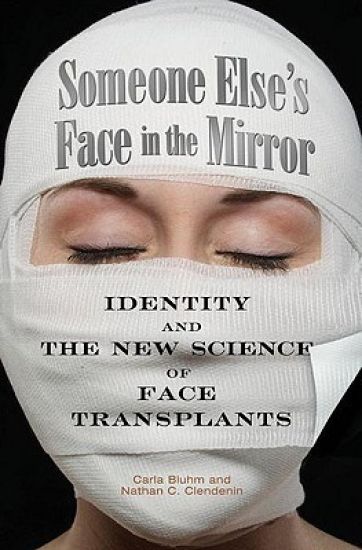
In 2005, surgeons in France removed part of the face from a cadaver and grafted it onto the head of a 38-year-old woman grossly disfigured by a dog attack. Three years later, in December, 2008, surgeons at the Cleveland Clinic announced they had performed the first U.S. face transplant. Although modern culture is accustomed to pushing medicine and the human body beyond all limits, the world's first partial face transplant and the seven that have followed have caused a stir that still reverberates globally. This book begins with the story of Isabelle Dinoire, the recipient of the first face transplant, and chronicles her surgery and battles with tissue rejection. Its scope widens with a look at how surgical teams, including three U.S. transplant teams, are in a global race to perform the first full face transplant, and at how medical history has led up to this point—with prior successful transplants ranging from body parts as simple as cornea to those as neurologically complicated as the heart, a hand, and a penis. The most novel among these surgeries—the face transplant—conjures up particular and expansive psychological issues. Authors Bluhm and Clendenin show how transplant recipients struggle with functional issues including a lifetime of anti-rejection drugs, a danger highlighted by the recent death of the second face transplant patient, in China. But just as challenging in the case of face transplant is the psychological effect on—and potential threat to—identity. Who are you, if suddenly your face—or a significant portion of it—is not what you were born with? What is it like to look in the mirror, and see a face that is not the one you have always had? Dinoire lamented, "It will never be me." That statement is an absolute simplification of the identity issues a face transplant can create, explain the authors. Bluhm and Clendenin show how, across history and media, humankind—via medicine, literature, film, and other media—has dreamed of a day when face transplants would be possible. With so many disfigurements occurring among the military in Iraq, and experimental face transplants too expensive for implementation in the private sector, it is likely that the U.S. military will take the reins and further face transplant techniques as quickly as possible to serve injured personnel.
There are places in America that are haunted. Few places are as rife with the supernatural as Amelia City, a metro virtually infested with the macabre, the bizarre, and the unknown. Even high schoolers aren't free of the things that lurk within the shadowed realms of Amelia, as a small group of such youths shall soon discover...
In his fourteenth collection, Stephen Dunn, “one of our indispensable poets” (Miami Herald), continues to probe brilliantly the unsaid and the elusive in the lives we live, in language that Gerald Stern has called “unbearably fearless and beautiful.”
Private schools always provide a better education than public schools. Or do they? Inner-city private schools, most of which are Catholic, suffer from the same problems neighboring public schools have including large class sizes, unqualified teachers, outdated curricula, lack of parental involvement and stressful family and community circumstances. Straightforward and authoritative, AllElse Equal challenges us to reconsider vital policy decisions and rethink the issues facing our current educational system.
In this detailed history of relations between blacks and whites in the post-civil rights era, journalist Tamar Jacoby looks at how the ideal of integration has fared since it was first advocated by Martin Luther King, Jr., arguing that though blacks have made enormous economic, political, and social progress, a true sense of community has remained elusive. Her story leads us through the volatile world of New York in the 1960s, the center of liberal idealism about race; Detroit in the 1970s, under its first black mayor, Coleman Young; and Atlanta in the 1980s and '90s, ruled by a coalition of white businessmen and black politicians. Based on extensive research and local reporting, her vivid, dramatic account evokes the special flavor of each city and decade, and gives voice to a host of ordinary individuals struggling to translate a vision into a reality.
This book, "Something Else Again", by Franklin P. Adams, is a replication of a book originally published before 1920. It has been restored by human beings, page by page, so that you may enjoy it in a form as close to the original as possible. This book was created using print-on-demand technology. Thank you for supporting classic literature.