
Kirjahaku
Etsi kirjoja tekijän nimen, kirjan nimen tai ISBN:n perusteella.
1000 tulosta hakusanalla Emilio Comba

Emilio, o de la educación de Jean-Jacques Rousseau (Guía de lectura)
ResumenExpress.com
2016
pokkari
ResumenExpress.com presenta y analiza en esta gu a de lectura Emilio, o de la educaci n, de Jean-Jacques Rousseau. En este ensayo, muy pol mico en su momento, el fil sofo suizo usa como pretexto a un alumno ficticio, Emilio, para desvelarnos sus ideas acerca de la educaci n. El autor, uno de los ilustrados m s c lebres, apuesta por unos preceptos en sinton a con la naturaleza, y recomienda la subdivisi n de la formaci n en cinco etapas, definidas por la edad, para formar las capacidades f sicas, intelectuales y morales del ni o. Ya no tienes que leer y resumir todo el libro, nosotros lo hemos hecho por ti Esta gu a incluye: - Un resumen completo del libro - Un estudio de los personajes - Las claves de lectura - Pistas para la reflexi n Por qu elegir ResumenExpress.com? Para aprender de forma r pida. Porque nuestras publicaciones est n escritas con un estilo claro y conciso que te ayudar a ganar tiempo y a entender las obras sin esfuerzo. Disponibles en formato impreso y digital, te acompa ar n en tu aventura literaria. Toma una dosis de literatura acelerada con ResumenExpress.com

Emilio Bacardi Moreau y La Novela Via Crucis
Dami N Infante Guerra; Damian Infante Guerra
Eae Editorial Academia Espanola
2012
pokkari
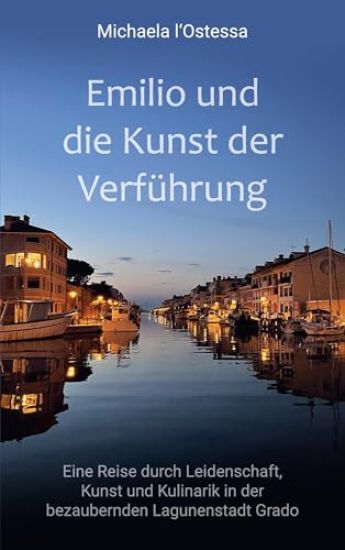
Willkommen in Grado, der charmanten Lagunenstadt an der italienischen Adriak ste Der 55-j hrige Emilio Bombolone und sein Dackel Biscotti sind stadtbekannt. Als gut situierter Flaneur und Connaisseur mit blitzblauen Augen genie t Emilio das Leben in vollen Z gen: Zwischen leidenschaftlichen Aff ren und kulinarischen Entdeckungen f hrt er Besucher durch die reiche Geschichte und die kulturellen Sch tze Grados. Als eine Ausstellung des vergessenen Secessionsk nstlers Joseph Maria Auchentaller bevorsteht, reisen zwei elegante Wienerinnen aus der Kunstbranche in die Stadt, um Emilio f r ihre Zwecke zu gewinnen. Doch ein gef hrlicher F lschungsplan droht nicht nur die Veranstaltung, sondern die gesamte Kunstwelt ins Chaos zu st rzen. Mit humorvollen Episoden, prickelnder Leidenschaft und einem spannenden Kunst-Kriminalfall entf hrt dieser Roman in die sonnendurchfluteten Gassen von Grado. Ein Genuss f r alle Sinne und die perfekte Urlaubslekt re

This title offers monographs on the most important Spanish, African and Latin American photographers. "The PhotoBolsillo" series is dedicated to publishing monographs on the most notable Spanish, African, and Latin American photographers of the recent past. Each small-format paperback features full-page, full-colour and black-and-white photographs representing the best of the artist's portfolio - each of which is captioned with title and year. Additionally there is a Chronology, plus lists of exhibitions and collections in which the photographer's work has been/is displayed, plus a brief appreciation of the artist by a "PhotoBolsillo" editor.
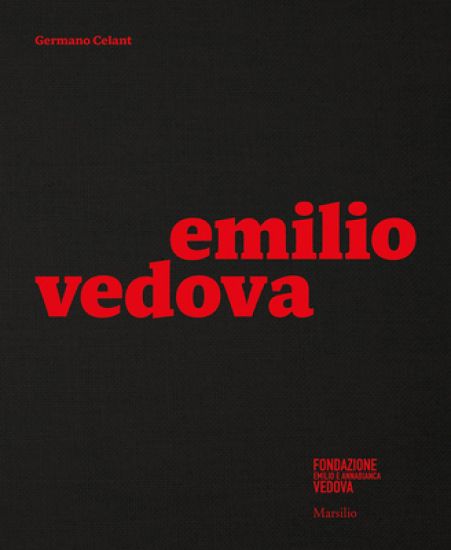
Emilio Vedova
Marsilio
2020
sidottu
A massive full-career retrospective for Arte Informale painter Emilio Vedova One hundred years after his birth, Emilio Vedova examines the career of the Italian painter Emilio Vedova (1919–2006), best known for his role in the postwar Arte Informale movement. The book surveys Vedova’s career in terms of the artist’s investigations of line and gesture: from the lively, energetic landscape drawings of the 1930s through his progress toward increasingly expressive, materially inventive work—like the Plurimi of the 1960s, in which the artist broke up the surface of a picture into multiple pieces. The publication’s account of Vedova’s career is enriched by an extensive set of illustrations: images of the artist’s works, plus reproductions of his personal photographs, texts and archival material that flesh out the artist’s historical and artistic context. Emilio Vedova offers a comprehensive overview of the work of a pivotal figure in postwar Italian art.

The first international monograph about Emilio Scanavino after his death, this book focuses on the wide breadth of his creative output, which began immediately after World War II and continued until the 1980s. He was one of the pioneers and protagonists of an innovative poetics of the sign, situating his practice between the Informel and Spazialismo movements and a new concept of the void. Scanavino s art is characterized by a distinctive human quality: the gesture is the focus, and the intention is to penetrate the meaning of reality. He aimed to overcome the traditional notion of abstraction as lyrical, surreal, or constructive, whilst incorporating it into a new relationship of the image with reality.
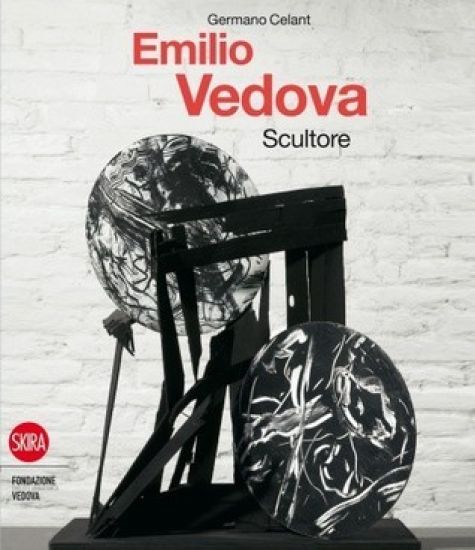
Emilio Vedova
Skira
2011
sidottu
The sculptural journey of a 20th-century master whose career began in Venice in the mid-1930s. Emilio Vedova’s artistic career began in Venice in the mid-1930s. He immediately felt the deep allure of grand Venetian painting and sculpture and, guided by the restless agitation and dynamic mobility of the baroque, was soon plunged into total and extreme three-dimensional involvement. The Emilio Vedova Scultore work originates precisely from his feeling of being a living and breathing part of the beloved spaces he encountered along his way, inexhaustible sources of stimuli and incitement, which he transformed into volumetric works of sculpture, architecture, opera and theatre.
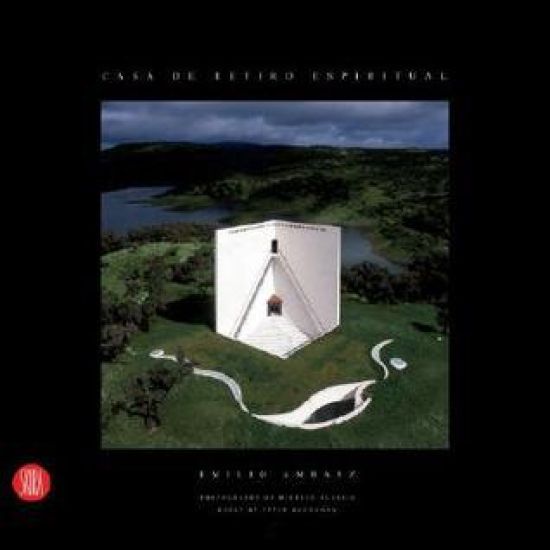
Emilio Ambasz: Casa de Retiro Espiritual
Skira
2005
sidottu
Dedicated to the legendary Casa de Retiro Espiritual, this book accompanies the MoMA exhibition of Ambasz's award-winning project. This illustrated volume includes an essay by Peter Buchanan, over 60 full-color photographs of the house, and an interactive CD Rom including aerial views, exterior and interior shots taken in daylight, and at night.
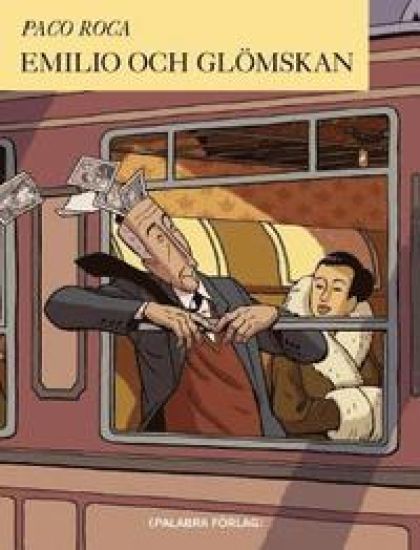
En serieroman om alzheimer och vänskap När den pensionerade bankdirektören Emilio får alzheimer måste han flytta in på ett äldreboende. En vänskap växer fram mellan Emilio och rumskamraten Miguel, som hjälper honom att dölja sina tilltagande minnesproblem för personalen. Vi får också möta de andra på boendet, som uppvisar olika symptom på demens, trovärdigt skildrade av Paco Roca.


Emilio Aguinaldo
VDM Publishing House
2010
nidottu
Observera att förlaget som ger ut denna produkt baserar innehållet i sina produkter på fria källor som Wikipedia. Boken är med stor sannolikhet endast ett utdrag ur dessa informationskällor, alltså inte en vanlig bok i den bemärkelsen.

Emilio Butragueno
VDM Publishing House
2010
nidottu
Observera att förlaget som ger ut denna produkt baserar innehållet i sina produkter på fria källor som Wikipedia. Boken är med stor sannolikhet endast ett utdrag ur dessa informationskällor, alltså inte en vanlig bok i den bemärkelsen.

Emilio Esteban Infantes
OmniScriptum
2026
pokkari

Selected Poems of Jose Emilio Pacheco
José Emilio Pacheco
New Directions Publishing Corporation
1987
sidottu
José Emilio Pacheco's Selected Poems is the first major retrospective gathering to appear in an English-Spanish bilingual format of the work of one of Mexico's foremost writers. Born in 1939, his talent was recognized early, and while still in his twenties he was already keeping company with the great Spanish-speaking poets of Latin America. A prolific poet and a perfectionist, Pacheco has since 1962 published seven volumes of poetry, including the National Poetry Prize-winning No me preguntes como pasa el tiempo (Don't Ask Me How the Time Goes By) in 1969. Tarde o temprano, collected poems of 1958 to 1980, contains the revisions on which the translations in the present volume are based. The Selected Poems is edited by George McWhirter of The University of British Columbia, who worked closely with Pacheco himself in choosing the poems and their English translations. Besides McWhirter's own versions are those by Thomas Hoeksema, Alastair Reid, and Linda Scheer, as well as Edward Dorn and Gordon Brotherston, Katherine Silver, and Elizabeth Umlas. Affirming the poet's stature, McWhirter writes: "In his singularity of vision and multiplicity of poetic forms, traditional and modern, José Emilio Pacheco spans past and present in both Latin American and peninsular Spanish poetry. It is a glittering and giant technical achievement, as brilliant and instantly visible as Hart Crane's The Bridge."

The Selected Poems of José Emilio Pacheco
José Emilio Pacheco
NEW DIRECTIONS PUBLISHING CORPORATION
2026
nidottu
Jos Emilio Pacheco's Selected Poems is a major bilingual retrospective of the poetry of one of Mexico's foremost writers. Born in 1939, Pacheco achieved recognition early, and while still in his twenties, he was already keeping company with the most important writers of his generation. A prolific poet and perfectionist, Pacheco published many volumes of poetry, including his famous 1969 collection No me preguntes como pasa el tiempo (Don't Ask Me How the Time Goes By). This edition is edited by George McWhirter of The University of British Columbia, who worked closely with Pacheco himself in choosing the poems and their English translations. Besides McWhirter's own versions are those by Edward Dorn, Alastair Reid, Katherine Silver, and others. As McWhirter writes: "In his singularity of vision and multiplicity of poetic forms, traditional and modern, Pacheco spans past and present in both Latin American and peninsular Spanish poetry. It is a glittering and giant technical achievement, as brilliant and instantly visible as Hart Crane's The Bridge."
Jose Emilio Pacheco And The Poets of the Shadows
Dr Ronald Friis
Bucknell University Press,U.S.
2001
sidottu
This book examines the treatment of literary influence in the first six books of poetry from Mexico's Jose Emilo Pacheco.
Vincent is a teen growing up in Barrio Logan. His family is concerned he's been getting into trouble and may be involved with gangs and drugs. So his grandfather calls in a relative from Mexico to help straighten him out: A relative Vincent's never heard of and no one ever talks about, "because he's of the old ways."Despite his strong resistance to getting "straightened out" and his mother's opposition to anyone teaching him about "the old ways," Vincent and his best friend begin a journey of learning about those old ways, the ancient spiritual side of their Mexican heritage. What they learn about the "secrets of the ancestors" pulls them away from the power of gangs and drugs and into their own personal power. Through it all, they worry what will happen to them when their "friends" find out the boys don't want to be in the gang.