Kirjojen hintavertailu. Mukana 12 390 323 kirjaa ja 12 kauppaa.

Kirjahaku

Etsi kirjoja tekijän nimen, kirjan nimen tai ISBN:n perusteella.

1000 tulosta hakusanalla Emmanuel Prag

The Emmanuel Falque Reader

The Emmanuel Falque Reader

Emmanuel Falque

BLOOMSBURY PUBLISHING PLC
2024
sidottu
Emmanuel Falque is one of the foremost philosophers working in the continental philosophy of religion today. This is the first English-language anthology to bring together extracts from Falque’s major works, key essays and even some previously unpublished material. Spanning his entire career to date, The Emmanuel Falque Reader is organised thematically and showcases the vast array of Falque’s interests, from his early work on medieval philosophy to his methodology, anthropology and Christian phenomenology. It also includes an Editor’s Introduction, which situates Falque within phenomenology’s so-called ‘theological turn’ and provides a comprehensive overview of his philosophy. Falque's thinking urges more careful consideration of human finitude, atheism in a secular age, and the interaction between philosophy and theology. Featuring a foreword by esteemed scholar Kevin Hart, this essential collection explores the new directions in which Falque is taking continental philosophy of religion.
The Emmanuel Falque Reader

The Emmanuel Falque Reader

Emmanuel Falque

BLOOMSBURY PUBLISHING PLC
2024
nidottu
Emmanuel Falque is one of the foremost philosophers working in the continental philosophy of religion today. This is the first English-language anthology to bring together extracts from Falque’s major works, key essays and even some previously unpublished material. Spanning his entire career to date, The Emmanuel Falque Reader is organised thematically and showcases the vast array of Falque’s interests, from his early work on medieval philosophy to his methodology, anthropology and Christian phenomenology. It also includes an Editor’s Introduction, which situates Falque within phenomenology’s so-called ‘theological turn’ and provides a comprehensive overview of his philosophy. Falque's thinking urges more careful consideration of human finitude, atheism in a secular age, and the interaction between philosophy and theology. Featuring a foreword by esteemed scholar Kevin Hart, this essential collection explores the new directions in which Falque is taking continental philosophy of religion.
Emmanuel Between Jews and the Jewish Saints

Emmanuel Between Jews and the Jewish Saints

Antony Michael Hylton

Lulu.com
2016
pokkari
The prophet Isaiah had a practice of naming children so they became signs and wonders regarding the fulfillment of the word of Yahuah in the life of Jerusalem, Judah and Samaria and Israel, and Assyria in the eight century BC. This is a study of the meanings and prophetic significance of some of the most important of these children.
Emmanuel Levinas’ Conceptual Affinities with Liberation Theology
Emmanuel Levinas’ Conceptual Affinities with Liberation Theology analyzes Levinas’ work in relation to two important liberation theologians, Gustavo Gutiérrez and Jon Sobrino, whose scholarship, like his, needs to be brought into greater contemporary debate about the subject’s encounter with the other. More specifically, this book argues that for Levinas, Gutiérrez, and Sobrino, commitment to the neighbor is the necessary context for «understanding» God. They posit the human other as the possibility of the subject’s subjectivity. To be human is to act with love toward one’s neighbor. Thus, the author articulates the possibility of reading Levinas’ philosophy as a revalidation of one of the truths of Christianity: the concern for the humanity of every human person as expressed in Christian theology in general and liberation theology in particular. In order to show the relevance of Levinas’ philosophy for Christian theology in general, the author discusses three Christian scholars, Enrique Dussel, Jean-Luc Marion, and Michael Purcell. Although they challenge some aspects of Levinas’ philosophy, they nevertheless see its significance for Christian theological anthropology. The discussion concludes by proposing Levinas’ philosophy and liberation theology’s turn to the neighbor as significant for addressing contemporary socio-political and ethnic conflicts in sub-Saharan Africa.
Emmanuel Levinas

Emmanuel Levinas

Abi Doukhan

Continuum Publishing Corporation
2012
sidottu
Our era is profoundly marked by the phenomenon of exile and it is has become increasingly urgent to rethink the concept of exile and our stance towards it. This renewed reflection on the problem of exile brings to the fore a number of questions regarding the traditionally negative connotation of exile. Is there not another way to understand the condition of exile? Permeated with references to the 'stranger', the 'other' and 'exteriority', the philosophy of Emmanuel Levinas signifies a positive understanding of exile. This original and compelling book distills from Levinas's philosophy a wisdom of exile, for the first time shedding a positive light on the condition of exile itself. Abi Doukhan argues that Levinas's philosophy can be understood as a comprehensive philosophy of exile, from his ethics to his thoughts on society, love, knowledge, spirituality and art, thereby presenting a comprehensive view of the philosophy of Levinas himself as well as a renewed understanding of the wealth and contribution of exile to a given society.
Emmanuel Levinas and the Politics of Non-Violence

Emmanuel Levinas and the Politics of Non-Violence

Victoria Tahmasebi-Birgani

University of Toronto Press
2014
sidottu
French philosopher and Talmudic commentator Emmanuel Levinas (1906–1995) has received considerable attention for his influence on philosophical and religious thought. In this book, Victoria Tahmasebi-Birgani provides the first examination of the applicability of Emmanuel Levinas’ work to social and political movements. Investigating his ethics of responsibility and his critique of the Western liberal imagination, Tahmasebi-Birgani advances the moral, political, and philosophical debates on the radical implications of Levinas’ work. Emmanuel Levinas and the Politics of Non-Violence is the first book to closely consider the affinity between Levinas’ ethical vision and Mohandas Gandhi’s radical yet non-violent political struggle. Situating Levinas’ insights within a transnational, transcontinental, and global framework, Tahmasebi-Birgani highlights Levinas’ continued relevance in an age in which violence is so often resorted to in the name of “justice” and “freedom.”
Emmanuel Book One

Emmanuel Book One

Jeff Hutchison

Westbow Press
2011
sidottu
For his whole life, fourteen year old Matthew Peters has been living in his older brothers shadow. David Peters is the star quarterback of the high school football team and his future looks bright. The town is buzzing with excitement and believes the teams chances to win the state championship are possible. Matthew and his friends, Mark, Luke and John are beginning their freshman year. Their lives are about to change forever as they have a strange encounter in the woods with a man calling himself Emmanuel. When Emmanuel performs a miracle before their eyes, they are astonished and wonder who he is. Could he be Jesus Christ? They become convinced when he continues to appear to them at unexpected times, helping them with the problems they are facing. When they deal with bullies, explore relationships with girls for the first time, and face family issues, Emmanuel is there every step of the way to guide them. Thus begins their journey as Emmanuel prepares them for the future.
Emmanuel Levinas

Emmanuel Levinas

Abi Doukhan

Bloomsbury Academic
2014
nidottu
Our era is profoundly marked by the phenomenon of exile and it is has become increasingly urgent to rethink the concept of exile and our stance towards it. This renewed reflection on the problem of exile brings to the fore a number of questions regarding the traditionally negative connotation of exile. Is there not another way to understand the condition of exile?Permeated with references to the 'stranger', the 'other' and 'exteriority', the philosophy of Emmanuel Levinas signifies a positive understanding of exile. This original and compelling book distills from Levinas's philosophy a wisdom of exile, for the first time shedding a positive light on the condition of exile itself. Abi Doukhan argues that Levinas's philosophy can be understood as a comprehensive philosophy of exile, from his ethics to his thoughts on society, love, knowledge, spirituality and art, thereby presenting a comprehensive view of the philosophy of Levinas himself as well as a renewed understanding of the wealth and contribution of exile to a given society.
Hello! My Name is Emmanuel

Hello! My Name is Emmanuel

Emmanuel Jean Russell

Tyndale House Publishers
2025
sidottu
An inspiring true story of Karen Kingsbury's adopted son celebrating new beginnings, found family, and faith.Hello My name is Emmanuel. I was born in beautiful Haiti and lived with my grandma who loved me very much. Grandma always told me my name meant something special. But when I faced a scary change that turned my world upside down, I met the One who would never leave me and discovered the true meaning behind my name.In this heartwarming children's book, you'll find: Inspiring parent resources for adoptionAn Interactive I Spy Map of HaitiHaitian Creole words hidden on each story pageAn endearing addition to read aloud time, this picture book gives an inside look at the adoption process from a child's perspective and will remind kids and parents alike that God is always with them.
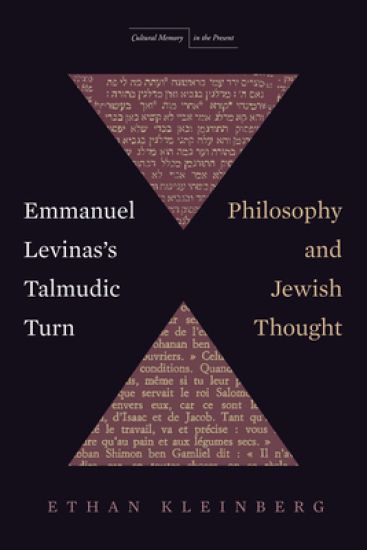
Emmanuel Levinas's Talmudic Turn

Emmanuel Levinas's Talmudic Turn

Ethan Kleinberg

Stanford University Press
2021
sidottu
In this rich intellectual history of the French-Jewish philosopher Emmanuel Levinas's Talmudic lectures in Paris, Ethan Kleinberg addresses Levinas's Jewish life and its relation to his philosophical writings while making an argument for the role and importance of Levinas's Talmudic lessons. Pairing each chapter with a related Talmudic lecture, Kleinberg uses the distinction Levinas presents between "God on Our Side" and "God on God's Side" to provide two discrete and at times conflicting approaches to Levinas's Talmudic readings. One is historically situated and argued from "our side" while the other uses Levinas's Talmudic readings themselves to approach the issues as timeless and derived from "God on God's own side." Bringing the two approaches together, Kleinberg asks whether the ethical message and moral urgency of Levinas's Talmudic lectures can be extended beyond the texts and beliefs of a chosen people, religion, or even the seemingly primary unit of the self. Touching on Western philosophy, French Enlightenment universalism, and the Lithuanian Talmudic tradition, Kleinberg provides readers with a boundary-pushing investigation into the origins, influences, and causes of Levinas's turn to and use of Talmud.
Emmanuel Levinas's Talmudic Turn

Emmanuel Levinas's Talmudic Turn

Ethan Kleinberg

Stanford University Press
2021
pokkari
In this rich intellectual history of the French-Jewish philosopher Emmanuel Levinas's Talmudic lectures in Paris, Ethan Kleinberg addresses Levinas's Jewish life and its relation to his philosophical writings while making an argument for the role and importance of Levinas's Talmudic lessons. Pairing each chapter with a related Talmudic lecture, Kleinberg uses the distinction Levinas presents between "God on Our Side" and "God on God's Side" to provide two discrete and at times conflicting approaches to Levinas's Talmudic readings. One is historically situated and argued from "our side" while the other uses Levinas's Talmudic readings themselves to approach the issues as timeless and derived from "God on God's own side." Bringing the two approaches together, Kleinberg asks whether the ethical message and moral urgency of Levinas's Talmudic lectures can be extended beyond the texts and beliefs of a chosen people, religion, or even the seemingly primary unit of the self. Touching on Western philosophy, French Enlightenment universalism, and the Lithuanian Talmudic tradition, Kleinberg provides readers with a boundary-pushing investigation into the origins, influences, and causes of Levinas's turn to and use of Talmud.