

Kirjahaku
Etsi kirjoja tekijän nimen, kirjan nimen tai ISBN:n perusteella.
1000 tulosta hakusanalla Eric D. Knapp
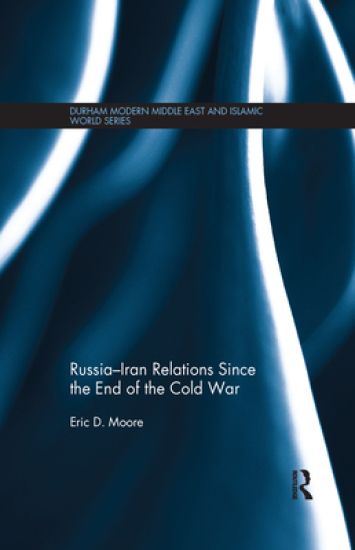
This book presents a comprehensive, systematic analysis of Russia– Iran relations in the period following the collapse of the Soviet Union in 1991. It discusses the key areas – such as trade, arms sales, nuclear developments, and potential areas of friction in the Caspian Sea – where co-operation is possible; charts different phases of increasing and declining co-operation; and relates these changes to security considerations and domestic factors in both countries. Throughout, the book argues that the potential for co-operation between the two countries is much greater than people realize, and it concludes by assessing how Russia–Iran relations are likely to develop in future.

Family Configurations develops current scholarship on families and intimate lives by demonstrating that family relationships, far from being fluid and inconsequential, are more structured and committed than ever. Based on a series of empirical studies carried out in the US and Europe, this volume reveals the diversity of family relationships that emerge as a result of various key family issues, emphasizing the supportive and disruptive interdependencies existing among large sets of family members beyond the nuclear family. By applying social network methods to uncover the relational patterns of contemporary families, and making use of rich empirical data, this book draws on recent developments in family sociology, social network analysis and kinship studies to present a fascinating interdisciplinary approach to the family.
Factors Affecting Innovation within Aeronautical Systems Center Organizations
Eric D Feil
Biblioscholar
2012
pokkari
Sub-Circuit Selection and Replacement Algorithms Modeled as Term Rewriting Systems
Eric D Simonaire
Biblioscholar
2012
pokkari

Thin Film Encapsulation of Radio Frequency Microelectromechanical Systems Switches
Eric D Marsh
Biblioscholar
2012
pokkari
An Analysis of Information Referenced Testing as an Air Force Assessment Tool
Eric D Larson
Biblioscholar
2012
pokkari


The Puzzle of 911: An investigation into the events of September 11, 2001 and why the pieces don't fit together
Eric D. Williams
Booksurge Publishing
2004
nidottu

9/11 101: 101 Key Points That Everyone Should Know And Consider That Prove 9/11 Was An Inside Job
Eric D. Williams
Booksurge Publishing
2006
nidottu

The Puzzle of Fascism: Could fascism arise in America or could it already be a Fascist State?
Eric D. Williams
Booksurge Publishing
2006
nidottu
Those who do not know history are doomed to repeat it. Using the historical record of fascist regimes, Eric D. Williams draws hauntingly similar characteristics used by former fascist regimes currently unfolding in the United States. Williams establishes eight undisputable points arising from the current administration, and offers valid points to stop the slide towards fascism by taking back America by the people, for the people.
Over 6.4 billion people participate in a $36.5 trillion global economy, designed and overseen by no one. How did this marvel of self-organized complexity evolve? How is wealth created within this system? And how can wealth be increased for the benefit of individuals, businesses, and society? In The Origin of Wealth, Eric D. Beinhocker argues that modern science provides a radical perspective on these age-old questions, with far-reaching implications. According to Beinhocker, wealth creation is the product of a simple but profoundly powerful evolutionary formula: differentiate, select, and amplify. In this view, the economy is a "complex adaptive system" in which physical technologies, social technologies, and business designs continuously interact to create novel products, new ideas, and increasing wealth. Taking readers on an entertaining journey through economic history, from the Stone Age to modern economy, Beinhocker explores how "complexity economics" provides provocative insights on issues ranging from creating adaptive organizations to the evolutionary workings of stock markets to new perspectives on government policies. A landmark book that shatters conventional economic theory, The Origin of Wealth will rewire our thinking about how we came to be here--and where we are going.

In recent years there has been an explosion of network data – that is, measu- ments that are either of or from a system conceptualized as a network – from se- ingly all corners of science. The combination of an increasingly pervasive interest in scienti c analysis at a systems level and the ever-growing capabilities for hi- throughput data collection in various elds has fueled this trend. Researchers from biology and bioinformatics to physics, from computer science to the information sciences, and from economics to sociology are more and more engaged in the c- lection and statistical analysis of data from a network-centric perspective. Accordingly, the contributions to statistical methods and modeling in this area have come from a similarly broad spectrum of areas, often independently of each other. Many books already have been written addressing network data and network problems in speci c individual disciplines. However, there is at present no single book that provides a modern treatment of a core body of knowledge for statistical analysis of network data that cuts across the various disciplines and is organized rather according to a statistical taxonomy of tasks and techniques. This book seeks to ll that gap and, as such, it aims to contribute to a growing trend in recent years to facilitate the exchange of knowledge across the pre-existing boundaries between those disciplines that play a role in what is coming to be called ‘network science.




Revelation Leader Guide; Books of Faith Series
Eric D. Barreto
Augsburg Fortress Publishing
2012
nidottu
Writing Theologically introduces writing not just as an academic exercise but as a way for students to communicate the good news in rapidly changing contexts, as well as to discover and craft their own sense of vocation and identity. Most important will be guiding students to how they might begin to claim and hone a distinctive theological voice that is particularly attuned to the contexts of writer and audience alike. In a collection of brief, readable essays, this volume, edited by Eric D. Barreto, emphasizes the vital skills, practices, and values involved in writing theologically. That is, how might students prepare themselves to communicate effectively and creatively, clearly and beautifully, the insights they gather during their time in seminary? Each contribution includes practical advice about best practices in writing theologically; however, the book also stresses why writing is vital in the self-understanding of the minister, as well as her or his public communication of the good news.

We are constantly engaged in processing data and sensory inputs all around us, even when we are not conscious of the many neural pathways our minds are traveling. So taking a step back to ponder the dimensions and practices of a particular way of thinking is a challenge. Even more important, however, is cultivating the habits of mind necessary in a life of ministry. This book, therefore, will grapple with the particular ways that the theological disciplines invite students to think but also the ways in which thinking theologically shapes a student's sense of self and his or her role in a wider community of belief and thought. Thinking theologically is not just a cerebral matter; thinking theologically invokes an embodied set of practices and values that shape individuals and communities alike. Thinking theologically demands both intellect and emotion, logic and compassion, mind and body. In fact, this book - as part of the Foundations for Learning series - will contend that these binaries are actually integrated wholes, not mutually exclusive options.