Kirjojen hintavertailu. Mukana 11 244 527 kirjaa ja 12 kauppaa.

Kirjahaku

Etsi kirjoja tekijän nimen, kirjan nimen tai ISBN:n perusteella.

1000 tulosta hakusanalla Eric J Butler Jr

Why You Hear What You Hear

Why You Hear What You Hear

Eric J. Heller

PRINCETON UNIVERSITY PRESS
2012
sidottu
Why You Hear What You Hear is the first book on the physics of sound for the nonspecialist to empower readers with a hands-on, ears-open approach that includes production, analysis, and perception of sound. The book makes possible a deep intuitive understanding of many aspects of sound, as opposed to the usual approach of mere description. This goal is aided by hundreds of original illustrations and examples, many of which the reader can reproduce and adjust using the same tools used by the author (e.g., very accessible applets for PC and Mac, and interactive web-based examples, simulations, and analysis tools will be found on the book's website: whyyouhearwhatyouhear.com.) Readers are positioned to build intuition by participating in discovery. This truly progressive introduction to sound engages and informs amateur and professional musicians, performers, teachers, sound engineers, students of many stripes, and indeed anyone interested in the auditory world. The book does not hesitate to follow entertaining and sometimes controversial side trips into the history and world of acoustics, reinforcing key concepts. You will discover how musical instruments really work, how pitch is perceived, and how sound can be amplified with no external power source. Sound is key to our lives, and is the most accessible portal to the vibratory universe. This book takes you there. * The first book on sound to offer interactive tools, building conceptual understanding via an experiential approach * Supplementary website (http://www.whyyouhearwhatyouhear.com) will provide Java, MAX, and other free, multiplatform, interactive graphical and sound applets * Extensive selection of original exercises available on the web with solutions * Nearly 400 full-color illustrations, many of simulations that students can do

The Semiclassical Way to Dynamics and Spectroscopy

The Semiclassical Way to Dynamics and Spectroscopy

Eric J. Heller

PRINCETON UNIVERSITY PRESS
2018
sidottu
A graduate-level text that examines the semiclassical approach to quantum mechanicsPhysical systems have been traditionally described in terms of either classical or quantum mechanics. But in recent years, semiclassical methods have developed rapidly, providing deep physical insight and computational tools for quantum dynamics and spectroscopy. In this book, Eric Heller introduces and develops this subject, demonstrating its power with many examples. In the first half of the book, Heller covers relevant aspects of classical mechanics, building from them the semiclassical way through the semiclassical limit of the Feynman path integral. The second half of the book applies this approach to various kinds of spectroscopy, such as molecular spectroscopy and electron imaging and quantum dynamical systems with an emphasis on tunneling. Adopting a distinctly time-dependent viewpoint, Heller argues for semiclassical theories from experimental and theoretical vantage points valuable to research in physics and chemistry. Featuring more than two hundred figures, the book provides a geometric, phase-space, and coordinate-space pathway to greater understanding.Filled with practical examples and applications, The Semiclassical Way to Dynamics and Spectroscopy is a comprehensive presentation of the tools necessary to successfully delve into this unique area of quantum mechanics.A comprehensive approach for using classical mechanics to do quantum mechanicsMore than two hundred figures to assist intuitionEmphasis on semiclassical Green function and wave packet perspective, as well as tunneling and spectroscopyChapters include quantum mechanics of classically chaotic systems, quantum scarring, and other modern dynamical topics
Comparative Religion

Comparative Religion

Eric J. Sharpe

Bristol Classical Press
1994
pokkari
This book is now firmly established as the standard treatment of its subject. The history of comparative religion is traced in detail from its beginnings in the nineteenth century, in the work of scholars such as Max Muller and anthropologists - such as Tylor, Lang, Robertson-Smith and Frazer - through the American psychologists of religion - such as Starbuck, Leuba, William James - to the period after the First World War, when the evolutionary approach was seriously called into question. It also examines the relevance of religion to Freud and Jung; the 'phenomenology of religion'; the tensions between comparative religion and theology; and the work of such outstanding personalities as Nathan Soederblom and Rudolf Otto. The last two chapters review the main issues raised since the Second World War.
Understanding Religion

Understanding Religion

Eric J. Sharpe

Bristol Classical Press
1997
pokkari
Clears the ground for students who are setting out to understand, rather than just to practice, religion. It discusses, among other things, the relationship between commitment to a particular tradition and the quest for intellectual understanding of religion "in the round", "holiness" as an identifying aspect of religion, functional "modes" of religion, and finally some questions connected with thesecularization process.Assuming throughout that theology and religious studies ought not to be seen as competing approaches, but as sources for complementary insights, it offers the student a fundamental introduction to an important area of inquiry.
The Prudence of Love

The Prudence of Love

Eric J. Silverman

Lexington Books
2009
sidottu
The Prudence of Love: How Possessing the Virtue of Love Benefits the Lover focuses upon the intersection of philosophical, theological, and psychological issues concerning love. Eric Silverman advocates an account of the virtue of love derived from Thomas Aquinas's account of charity and makes three claims concerning love's effect on a person's happiness. First, he argues that there are at least five distinct ways that possessing the virtue of love contributes to the lover's happiness. Surprisingly, only one of these benefits is primarily relational, while the other benefits are largely psychological. Second, Silverman argues that the combination of love's benefits typically increases the lover's overall level of happiness. Finally, he argues that possessing a loving disposition is a more reliable strategy for increasing one's overall happiness than possessing an unloving disposition. Throughout The Prudence of Love, Silverman demonstrates that love's benefits are identifiable according to all four major views of happiness.
The Prudence of Love

The Prudence of Love

Eric J. Silverman

Lexington Books
2010
nidottu
The Prudence of Love focuses upon the intersection of philosophical, theological, and psychological issues concerning love. Eric Silverman advocates an account of the virtue of love derived from Thomas Aquinas's account of charity and makes three claims concerning love's effect on a person's happiness. First, he argues that there are at least five distinct ways that possessing the virtue of love contributes to the lover's happiness. Surprisingly, only one of these benefits is primarily relational, while the other benefits are largely psychological. Second, Silverman argues that the combination of love's benefits typically increases the lover's overall level of happiness. Finally, he argues that possessing a loving disposition is a more reliable strategy for increasing one's overall happiness than possessing an unloving disposition. Throughout The Prudence of Love, Silverman demonstrates that love's benefits are identifiable according to all four major views of happiness.
Capital of Discontent

Capital of Discontent

Eric J. Hewitt

The History Press Ltd
2014
nidottu
The Industrial Revolution was a period of exceptional change in Britain, not only in terms of technology but also in law and order. The country’s social order was shifting and in some towns the response was violence. In Manchester, the ‘capital of discontent’, events related to the Plug Plots, Peterloo and the Chartists created a very real fear of revolution on the streets of England. In its efforts to combat the disorder, the newly established police force became mired in political controversy, providing some disturbing but often amusing examples of corruption and misconduct. Eric J. Hewitt examines the reactions of those who experienced the revolution in this ‘most dangerous’ of places, and tells of such characters as the notorious serial killer Charlie Peace, the supposedly corrupt Deputy Constable Joseph Nadin and the illiterate millworker-turned-Home Secretary John Robert Clynes. Fascinating, and certainly eye-opening, this up-to-date account of Industrial Revolution Manchester is a must-read.
Classification Made Simple

Classification Made Simple

Eric J. Hunter

Ashgate Publishing Limited
2009
nidottu
This established textbook introduces the essentials of classification as used for information processing. The third edition takes account of developments that have taken place since the second edition was published in 2002. Classification Made Simple provides a useful gateway to more advanced works and the study of specific schemes. As an introductory text, it will be invaluable to students of information work and to anyone inside or outside the information profession who needs to understand the manner in which classification can be utilized to facilitate and enhance organisation and retrieval.
The Most Misused Verses in the Bible – Surprising Ways God`s Word Is Misunderstood

The Most Misused Verses in the Bible – Surprising Ways God`s Word Is Misunderstood

Eric J. Bargerhuff

Bethany House Publishers, a division of Baker Publishing Group
2012
nidottu
High-Interest Guide Sure to Spark Curiosity and ConversationA surprising number of well-known Bible verses are commonly misused and misunderstood. Whether intentionally or not, people take important verses out of context, and pastor and Bible scholar Eric J. Bargerhuff has seen the effects: confusion, faulty decisions, sin being dismissed, and more. With a deft touch, he helps readers understand and apply sound principles of interpretation and application of twenty familiar verses. This concise high-interest approach appeals to the curious as well as readers concerned about incorrect theology.
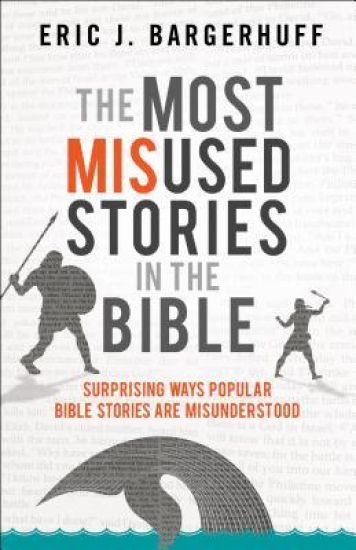
The Most Misused Stories in the Bible – Surprising Ways Popular Bible Stories Are Misunderstood

The Most Misused Stories in the Bible – Surprising Ways Popular Bible Stories Are Misunderstood

Eric J. Bargerhuff

Bethany House Publishers, a division of Baker Publishing Group
2017
nidottu
Are You Sure You Know What Your Favorite Bible Stories Mean?A surprising number of popular Bible stories are commonly misused or misunderstood, even by well-intentioned Christians. In this concise yet thorough book, Eric J. Bargerhuff helps you fully understand the meaning of David and Goliath, Jonah and the Big Fish, the Woman Caught in Adultery, and other well-known Bible stories.Providing fascinating historical and scriptural insights, Bargerhuff helps you sort through modern-day distortions of fourteen well-known Bible stories and grasp their original meaning and purpose for us today.
Why Is That in the Bible? – The Most Perplexing Verses and Stories––and What They Teach Us

Why Is That in the Bible? – The Most Perplexing Verses and Stories––and What They Teach Us

Eric J. Bargerhuff

Bethany House Publishers, a division of Baker Publishing Group
2020
nidottu
The Bible Passages You've Always Wondered about--ExplainedWhat should we make of the Bible story about a talking donkey? What about the passage in Joshua where the sun and moon stood still? Should biblical practices like women wearing head coverings still be followed today? The Bible serves as the foundation for all of Christian life, crossing time and transcending cultures, yet many passages are perplexing. Providing fascinating historical and scriptural insights, Eric J. Bargerhuff demystifies forty Bible verses and stories. Ranging from strange accounts, such as bears mauling forty-two boys (2 Kings 2), to hard-to-accept statements, such as Jesus saying we must hate our families in order to be his disciples (Luke 14), you will learn the context of each passage and how it applies to us today. Other fascinating accounts include· The Finger on the Wall· "Lead Us Not into Temptation"· Jeremiah's Linen Underwear· "No One Knows the Day or the Hour"· The Battle for Moses' Body· Death at CommunionIn all, this book will help you be more confident about interpreting all of God's Word accurately.
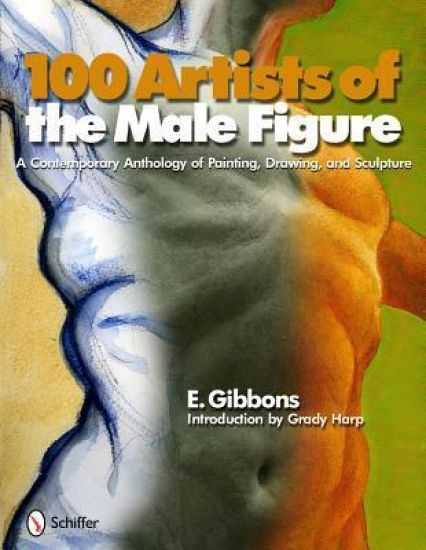
100 Artists of the Male Figure

100 Artists of the Male Figure

Eric J. Gibbons

Schiffer Publishing Ltd
2011
sidottu
Images of the classical female figure are more prevalent in the contemporary figurative art world, as the nude male has been shunned as too potent or treated as a sex symbol. This book bravely showcases works by male and female artists from around the world that focus on this classic subject. Painting, drawings, and sculptures display broad and varied styles, including portraiture, studies, Pop Art, abstract, and photorealism. Read each artist's approach to the male figure through candid personal statements. Nearly 400 works capture masculine beauty in many styles. This resource brings balance to the figurative art world and is an ideal reference for artists, curators, dealers, students, and collectors.
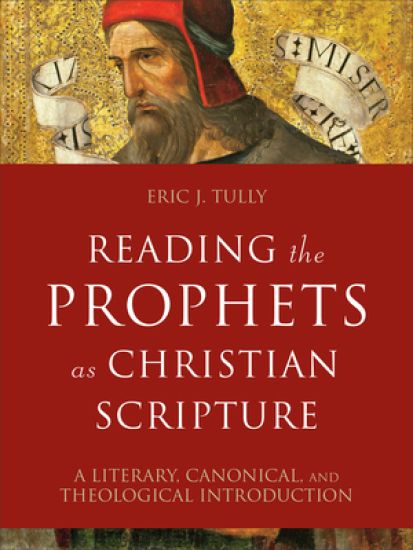
Reading the Prophets as Christian Scripture – A Literary, Canonical, and Theological Introduction
Southwestern Journal of Theology 2022 Book Award (Honorable Mention, Biblical Studies)This survey textbook is grounded in the view that the prophetic books of the Old Testament should be read as Christian Scripture. Although it covers critical issues such as authorship, background, and history, its primary focus is on the message and theology of the prophetic books and the contribution they make to the Christian canon. Particular attention is given to literary issues, such as the structure of each prophetic book. Full-color illustrations, diagrams, and artwork bring the text to life. Additional resources for instructors and students are available through Textbook eSources.
Clinical Psychiatry in Imperial Germany

Clinical Psychiatry in Imperial Germany

Eric J. Engstrom

Cornell University Press
2003
sidottu
The psychiatric profession in Germany changed radically from the mid-nineteenth century to the beginning of World War I. In a book that demonstrates his extensive archival knowledge and an impressive command of the primary literature, Eric J. Engstrom investigates the history of university psychiatric clinics in Imperial Germany from 1867 to 1914, emphasizing the clinical practices and professional debates surrounding the development of these institutions and their impact on the course of German psychiatry.The rise of university psychiatric clinics reflects, Engstrom tells us, a shift not only in asylum culture, but also in the ways in which social, political, and economic issues deeply influenced the practice of psychiatry. Equally convincing is Engstrom's argument that psychiatrists were responding to and working to shape the rapidly changing perceptions of madness in Imperial Germany. In a series of case studies, the book focuses on a number of important clinical spaces such as the laboratory, the ward, the lecture hall, and the polyclinic. Engstrom argues that within these spaces clinics developed their own disciplinary economies and that their emergence was inseparably intertwined with jurisdictional contests between competing scientific, administrative, didactic, and sociopolitical agendas.
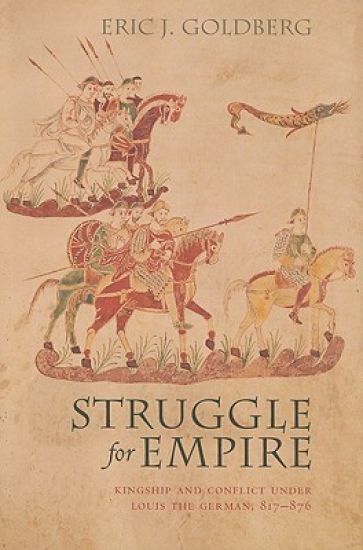
Struggle for Empire

Struggle for Empire

Eric J. Goldberg

Cornell University Press
2009
pokkari
Struggle for Empire explores the contest for kingdoms and power among Charlemagne's descendants that shaped the formation of Europe. It examines this pivotal era through the reign of Charlemagne's grandson, Louis the German (826–876), one of the longest-ruling Carolingian kings. Eric J. Goldberg's book brings the enigmatic Louis to life and makes a vital contribution to recent reevaluations of the late Carolingian age.In the Treaty of Verdun of 843, Louis inherited the eastern territories of the Carolingian empire, thereby laying the foundations for an east Frankish kingdom. But, as Goldberg emphasizes, Louis was never satisfied with his realm beyond the Rhine. Louis was a skilled and cultured ruler who modeled himself on Charlemagne, and he aspired to rebuild his grandfather's empire. This ambition to reunite Europe brought Louis into repeated conflict with other rulers: Carolingian kings, Byzantine emperors, Bulgar khans, Roman popes, and Slavic warlords. While Louis ultimately failed to reunify the empire, his fifty-year reign produced a period of remarkable political consolidation and cultural creativity in central Europe.By highlighting the ways in which dynastic rivalries, aristocratic rebellions, diplomacy, and warfare shaped Louis's reign, Struggle for Empire uncovers the dynamism and innovation of ninth-century kingship. To trace Louis's evolving policies, Goldberg moves beyond the evidence traditionally used to study his reign—the Annals of Fulda—and exploits the visual arts, liturgy, archeology, and especially charters. The result is a remarkably comprehensive and colorful picture of Carolingian kingship in action.
Faulkner

Faulkner

Eric J. Sundquist

Johns Hopkins University Press
1985
pokkari
Faulkner: The House Divided extends Abraham Lincoln's metaphor of a polarized nation to the twentieth-century. Southern psyche and the extraordinary career of its foremost spokeman. Through readings of The Sound and the Fury, As I Lay Dying, Sanctuary, Light in August, Absalom, Absalom!, and Go Down, Moses, Eric Sundquist probes William Faulner's complex attitudes toward the tragedy of the Civil War, toward Jim Crow laws, racial violence, and segregation, toward Black freedom and white fears.Faulkner's novels and their intricate narratice technique express the tragic passions, betrayed human sympathies, and potentially violent pressures for social change that governed the relationships between Blacks and whites. In this detailed and at times controversial study, now available for the first time in paperback, Sundquist examines the novelist's gradual discovery and artistic mastery of the racial problems that make up his own history and that of his country. "The novels that demand our attention now, as they always will," he writes, "are the ones in which the nation's most tragic and defining historical experience found its appropriately convulsive forms of expression and in which Faulkner became the great writer he has always been recognized to be."
Glory Enough for All

Glory Enough for All

Eric J. Wittenberg; Gordon C. Rhea

Bison Books
2007
pokkari
After the ferocious fighting at Cold Harbor, Virginia, in June 1864, Union Lt. Gen. Ulysses S. Grant ordered his cavalry, commanded by Maj. Gen. Philip H. Sheridan, to distract the Confederate forces opposing the Army of the Potomac. Glory Enough for All chronicles the battle that resulted when Confederate cavalry pursued and caught their Federal foes at Trevilian Station, Virginia, perhaps the only truly decisive cavalry battle of the American Civil War. Eric J. Wittenberg tells the stories of the men who fought there, including eight Medal of Honor winners and one Confederate whose death at Trevilian Station made him the third of three brothers to die in the service of Company A of the Fourth Virginia Cavalry. He also addresses the little-known but critical cavalry battle at Samaria (Saint Mary's) Church on June 24, 1864, where Union Brig. Gen. David N. Gregg's division was nearly destroyed. The only modern strategic analysis of the battle, Glory Enough for All challenges prevailing interpretations of General Sheridan and of the Union cavalry. Wittenberg shows that the outcome of Trevilian Station ultimately prolonged Grant's efforts to end the Civil War.
Biotech

Biotech

Eric J. Vettel

University of Pennsylvania Press
2008
pokkari
The seemingly unlimited reach of powerful biotechnologies and the attendant growth of the multibillion-dollar industry have raised difficult questions about the scientific discoveries, political assumptions, and cultural patterns that gave rise to for-profit biological research. Given such extraordinary stakes, a history of the commercial biotechnology industry must inquire far beyond the predictable attention to scientists, discovery, and corporate sales. It must pursue how something so complex as the biotechnology industry was born, poised to become both a vanguard for contemporary world capitalism and a focal point for polemic ethical debate. In Biotech, Eric J. Vettel chronicles the story behind genetic engineering, recombinant DNA, cloning, and stem-cell research. It is a story about the meteoric rise of government support for scientific research during the Cold War, about activists and student protesters in the Vietnam era pressing for a new purpose in science, about politicians creating policy that alters the course of science, and also about the release of powerful entrepreneurial energies in universities and in venture capital that few realized existed. Most of all, it is a story about people-not just biologists but also followers and opponents who knew nothing about the biological sciences yet cared deeply about how biological research was done and how the resulting knowledge was used. Vettel weaves together these stories to illustrate how the biotechnology industry was born in the San Francisco Bay area, examining the anomalies, ironies, and paradoxes that contributed to its rise. Culled from oral histories, university records, and private corporate archives, including Cetus, the world's first biotechnology company, this compelling history shows how a cultural and political revolution in the 1960s resulted in a new scientific order: the practical application of biological knowledge supported by private investors expecting profitable returns eclipsed basic research supported by government agencies.
English Renaissance Drama and the Specter of Spain

English Renaissance Drama and the Specter of Spain

Eric J. Griffin

University of Pennsylvania Press
2009
sidottu
The specter of Spain rarely figures in our discussions of the drama that is often regarded as the crowning achievement of the English literary Renaissance. Yet dramatists such as Thomas Kyd, Christopher Marlowe, and William Shakespeare are exactly contemporary with England's protracted conflict with the Spanish Empire, a traditional ally turned archetypical adversary. Were these playwrights really so mute with respect to their nation's Spanish troubles? Or have we failed-for reasons cultural and institutional-to hear the Hispanophobic crosstalk that permeated the drama no less than England's other public discourses? Imagining an early modern public sphere in which dramatists cross pens with proto-imperialists, Protestant polemicists, recusant apologists, and a Machiavellian network of propagandists that included high government officials as well as journeyman printers, Eric Griffin uncovers the rhetorical strategies through which the Hispanophobic perspectives that shaped the so-called Black Legend of Spanish Cruelty were written into English cultural memory. At the same time, he demonstrates that the English were as ready to invoke Spain in the spirit of envious emulation as to demonize the Spanish other as an ethnic agent of intolerance and oppression. Interrogating the Whiggish orientation that has continued to view the English Renaissance through a haze of Anglo-American triumphalism, English Renaissance Drama and the Specter of Spain recovers the voices of key Spanish participants and the "Hispanized" Catholic resistance, revealing how England and Spain continued to draw upon shared traditions and cultural resources, even during the moments of their most storied confrontation.
Hinterland Dreams

Hinterland Dreams

Eric J. Morser

University of Pennsylvania Press
2010
sidottu
In the 1840s, La Crosse, Wisconsin, was barely more than a trading post nestled on the banks of the Mississippi River. But by 1900 the sleepy frontier town had become a thriving city. Hinterland Dreams tracks the growth of this community and shows that government institutions and policies were as important as landscapes and urban boosters in determining the small Midwestern city's success. The businessmen and -women of La Crosse worked hard to attract government support during the nineteenth century. Federal, state, and municipal officials passed laws, issued rulings, provided resources, vested aldermen with financial and regulatory power, and created a lasting legal foundation that transformed the city and its economy. As historian Eric J. Morser demonstrates, the development of La Crosse and other small cities linked rural people to the wider world and provided large cities like Chicago with the lumber and other raw materials needed to grow even larger. He emphasizes the role of these municipalities, as well as their relationship to all levels of government, in the life of an industrializing nation. Punctuated with intriguing portraits of La Crosse's early citizens, Hinterland Dreams suggests a new way to understand the Midwest's urban past, one that has its roots in the small but vibrant cities that dotted the landscape. By mapping the richly textured political economy of La Crosse before 1900, the book highlights how the American state provided hinterland Midwesterners with potent tools to build cities and help define their region's history in profound and lasting ways.