Kirjojen hintavertailu. Mukana 12 363 565 kirjaa ja 12 kauppaa.

Kirjahaku

Etsi kirjoja tekijän nimen, kirjan nimen tai ISBN:n perusteella.

1000 tulosta hakusanalla Erica James

Oxford Reading Tree TreeTops Fiction: Level 11: Pack of 36

Oxford Reading Tree TreeTops Fiction: Level 11: Pack of 36

John Coldwell; David Cox; Erica James; Nick Warburton

Oxford University Press
2014
nidottu
Novels from top authors and illustrators with the variety children need to develop a love of reading! TreeTops Fiction contains a wide range of quality stories enabling children to explore and develop their own reading tastes and interests. It contains stories from a variety of genres including humour, sci-fi, adventure, mystery and historical fiction. These exciting stories are ideal for introducing children to a wide selection of authors and illustrators. There is huge variety to ensure every reader finds books they will enjoy and can read. Books contain inside cover notes to support children in their reading. Help with children's reading development also available at www.oxfordowl.co.uk. The books are finely levelled, making it easy to match every child to the right book. This pack contains 36 books, six of each of: Hard to Please, Bertha's Secret Battle, Coming Clean, Amy the Hedgehog Girl, Flans Across the River, Bertie Wiggns' Amazing Ears.

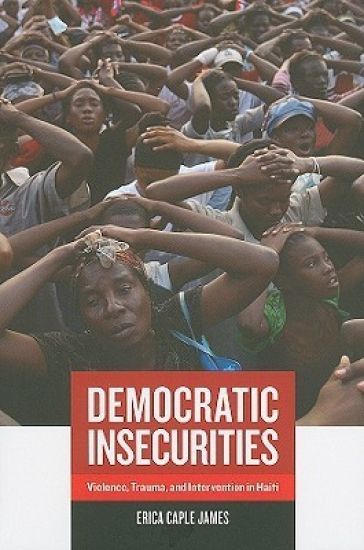
Democratic Insecurities

Democratic Insecurities

Erica Caple James

University of California Press
2010
sidottu
"Democratic Insecurities" focuses on the ethics of military and humanitarian intervention in Haiti, during and after Haiti's 1991 coup. In this remarkable ethnography of violence, Erica Caple James explores the traumas of Haitian victims whose experiences were denied by U.S. officials and recognized only selectively by other humanitarian providers. Using vivid first-person accounts from women survivors, James raises important new questions about humanitarian aid, structural violence, and political insecurity. She discusses the politics of postconflict assistance to Haiti and the challenges of promoting democracy, human rights, and justice in societies that experience chronic insecurity. Similarly, she finds that efforts to promote political development and psychosocial rehabilitation may fail because of competition, strife, and corruption among the individuals and institutions that implement such initiatives.
Democratic Insecurities

Democratic Insecurities

Erica Caple James

University of California Press
2010
pokkari
"Democratic Insecurities" focuses on the ethics of military and humanitarian intervention in Haiti, during and after Haiti's 1991 coup. In this remarkable ethnography of violence, Erica Caple James explores the traumas of Haitian victims whose experiences were denied by U.S. officials and recognized only selectively by other humanitarian providers. Using vivid first-person accounts from women survivors, James raises important new questions about humanitarian aid, structural violence, and political insecurity. She discusses the politics of postconflict assistance to Haiti and the challenges of promoting democracy, human rights, and justice in societies that experience chronic insecurity. Similarly, she finds that efforts to promote political development and psychosocial rehabilitation may fail because of competition, strife, and corruption among the individuals and institutions that implement such initiatives.
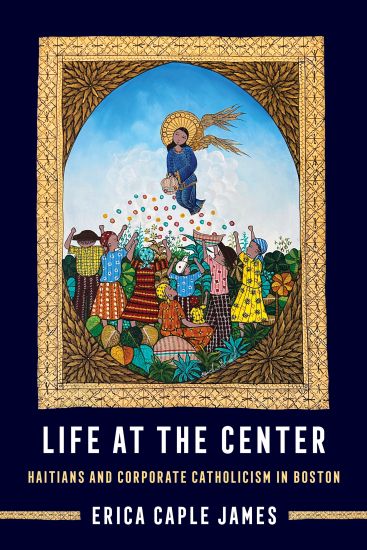
Life at the Center

Life at the Center

Erica Caple James

University of California Press
2024
pokkari
A free ebook version of this title is available through Luminos, University of California Press's Open Access publishing program. Visit www.luminosoa.org to learn more. In Life at the Center, Erica Caple James traces how faith-based and secular institutions in Boston have helped Haitian refugees and immigrants attain economic independence, health, security, and citizenship in the United States. Using the concept of “corporate Catholicism,” James documents several paradoxes of assistance arising among the Catholic Church, Catholic Charities, and the Haitian Multi-Service Center: how social assistance produces and reproduces structural inequalities between providers and recipients; how these inequities may deepen aid recipients’ dependence and lead to resistance to organized benevolence; how institutional financial deficits harmed clients and providers; and how the same modes of charity or philanthropy that previously caused harm can be redeployed to repair damage and rebuild “charitable brands.” The culmination of more than a decade of advocacy and research on behalf of the Haitians in Boston, this groundbreaking work exposes how Catholic corporations have strengthened—but also eroded—Haitians’ civic power.
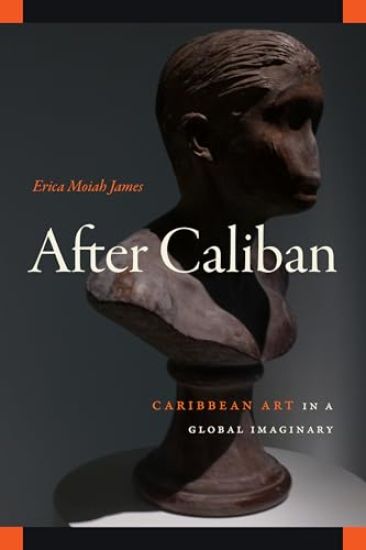
After Caliban: Caribbean Art in a Global Imaginary

After Caliban: Caribbean Art in a Global Imaginary

Erica Moiah James

DUKE UNIVERSITY PRESS
2025
sidottu
In After Caliban, Erica Moiah James examines the rise of global Caribbean artists in the 1990s and their production of a decolonized art history for the Caribbean. She draws on Aim C saire's rewriting of Shakespeare's The Tempest, in which Caliban becomes the sole author of his own story, dissolving his fixed position as colonized in relation to Prospero as colonizer. James shows how visual artists such as Marc Latamie, Janine Antoni, Belkis Ay n, Edouard Duval-Carri , and Christopher Cozier followed C saire's model by employing a range of practices and methodologies that refused marginalization. Just as C saire decolonized The Tempest, so too did these artists, who crafted a decolonial aesthetic that redefined their own cultural and historical narratives and positioned art as a key pathway toward a postcolonial future. By providing the foundation for a postcolonial, post-Caliban art world, these artists redefined the critical and popular notion of contemporary Caribbean art. At the same time, James argues, they fulfilled C saire's dream for a postcolonial Caribbean while creating a nonhegemonic art historical practice that exists beyond modern binaries and borders.
After Caliban: Caribbean Art in a Global Imaginary

After Caliban: Caribbean Art in a Global Imaginary

Erica Moiah James

DUKE UNIVERSITY PRESS
2025
nidottu
In After Caliban, Erica Moiah James examines the rise of global Caribbean artists in the 1990s and their production of a decolonized art history for the Caribbean. She draws on Aim C saire's rewriting of Shakespeare's The Tempest, in which Caliban becomes the sole author of his own story, dissolving his fixed position as colonized in relation to Prospero as colonizer. James shows how visual artists such as Marc Latamie, Janine Antoni, Belkis Ay n, Edouard Duval-Carri , and Christopher Cozier followed C saire's model by employing a range of practices and methodologies that refused marginalization. Just as C saire decolonized The Tempest, so too did these artists, who crafted a decolonial aesthetic that redefined their own cultural and historical narratives and positioned art as a key pathway toward a postcolonial future. By providing the foundation for a postcolonial, post-Caliban art world, these artists redefined the critical and popular notion of contemporary Caribbean art. At the same time, James argues, they fulfilled C saire's dream for a postcolonial Caribbean while creating a nonhegemonic art historical practice that exists beyond modern binaries and borders.
Undertaking Sensitive Research in the Health and Social Sciences

Undertaking Sensitive Research in the Health and Social Sciences

Virginia Dickson-Swift; Erica Lyn James; Pranee Liamputtong

Cambridge University Press
2008
pokkari
Undertaking qualitative research on sensitive topics often raises a variety of ethical problems. Based on empirical research, this book documents experiences throughout the entire research process: from conceptualization, ethics approval, fieldwork, to analysis and publication. It presents readers with stories from the researcher's perspective and synthesizes these experiences into a conceptual framework that will assist researchers to undertake qualitative research. Each section discusses potential pitfalls, provides quotes and stories and reviews the relevant literature and theory, providing readers with a description of the process of conducting sensitive research from the perspective of those actually doing the research. This is not a methodology textbook, rather, it discusses the issues faced by researchers during the conduct of qualitative research on sensitive topics, such as death and dying, sexuality, homelessness, HIV/AIDS, cancer. It provides practical recommendations for researchers and Research Ethics Committees. It will also be a useful resource for anyone interested in undertaking a research project on sensitive topics and for those teaching qualitative methods across a broad range of disciplines.
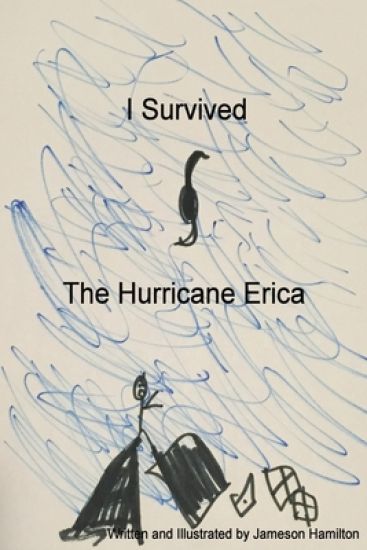
I Survived The Hurricane Erica

I Survived The Hurricane Erica

Jameson Hamilton

Createspace Independent Publishing Platform
2016
nidottu
A change that will wreck lots of stuff It is a beautiful day in Florida but not in South Carolina. When Jake and his dad Jonny travel to South Carolina, they hit the most dangerous storm, the hurricane. Hurricane Erica. Jake is stranded. He got thrown out the window without Jonny knowing. Will he survive this hurricane?
Haywaas' Question: What Is Reconciliation?

Haywaas' Question: What Is Reconciliation?

Gidin Jaad Erica Reid; James Reid

Wavemaker Press, Ltd.
2023
nidottu
After Haywaas sees his parents get frustrated while watching the news, this precocious 12-year-old begins a months-long journey navigating many different answers to what he thought was a simple question: what is reconciliation? Expertly crafted by a teacher-parent-author duo.
Grave Landscapes

Grave Landscapes

James R. Cothran; Erica Danylchak

University of South Carolina Press
2018
sidottu
During the Industrial Revolution people flocked to American cities. Overcrowding in these areas led to packed urban graveyards that were not only unsightly, but were also a source of public health fears. The solution was a revolutionary new type of American burial ground located in the countryside just beyond the city. This rural cemetery movement, which featured beautifully landscaped grounds and sculptural monuments, is documented by James R. Cothran and Erica Danylchak in Grave Landscapes: The Nineteenth-Century Rural Cemetery Movement.The movement began in Boston, where a group of reformers that included members of the Massachusetts Horticultural Society were grappling with the city’s mounting burial crisis. Inspired by the naturalistic garden style and melancholy-infused commemorative landscapes that had emerged in Europe, the group established a burial ground outside of Boston on an expansive tract of undulating, wooded land and added meandering roadways, picturesque ponds, ornamental trees and shrubs, and consoling memorials. They named it Mount Auburn and officially dedicated it as a rural cemetery.This groundbreaking endeavor set a powerful precedent that prompted the creation of similarly landscaped rural cemeteries outside of growing cities first in the Northeast, then in the Midwest and South, and later in the West. These burial landscapes became a cultural phenomenon attracting not only mourners seeking solace, but also urbanites seeking relief from the frenetic confines of the city. Rural cemeteries predated America’s public parks, and their popularity as picturesque retreats helped propel America’s public parks movement.This beautifully illustrated volume features more than 150 historic photographs, stereographs, postcards, engravings, maps, and contemporary images that illuminate the inspiration for rural cemeteries, their physical evolution, and the nature of the landscapes they inspired. Extended profiles of twenty-four rural cemeteries reveal the cursive design features of this distinctive landscape type prior to the American Civil War and its evolution afterward. Grave Landscapes details rural cemetery design characteristics to facilitate their identification and preservation and places rural cemeteries into the broader context of American landscape design to encourage appreciation of their broader influence on the design of public spaces.
Judd

Judd

Erica Cooke; Wouter Davidts; Tamar Margalit; Courtney Martin; Christine Mehring; James Meyer; Annie Ochmanek; Yasmil Raymond; Jeffrey Weiss

Museum of Modern Art
2020
sidottu
Die Psychologie der religiösen Mystik

Die Psychologie der religiösen Mystik

James H. Leuba; Erica Pfohl

Springer-Verlag Berlin and Heidelberg GmbH Co. K
1927
nidottu
Dieser Buchtitel ist Teil des Digitalisierungsprojekts Springer Book Archives mit Publikationen, die seit den Anfängen des Verlags von 1842 erschienen sind. Der Verlag stellt mit diesem Archiv Quellen für die historische wie auch die disziplingeschichtliche Forschung zur Verfügung, die jeweils im historischen Kontext betrachtet werden müssen. Dieser Titel erschien in der Zeit vor 1945 und wird daher in seiner zeittypischen politisch-ideologischen Ausrichtung vom Verlag nicht beworben.
Number Theory

Number Theory

James E. Pommersheim; Tim K. Marks; Erica L. Flapan

John Wiley Sons Inc
2010
sidottu
Number Theory: A Lively Introduction with Proofs, Applications, and Stories, is a new book that provides a rigorous yet accessible introduction to elementary number theory along with relevant applications. Readable discussions motivate new concepts and theorems before their formal definitions and statements are presented. Many theorems are preceded by Numerical Proof Previews, which are numerical examples that will help give students a concrete understanding of both the statements of the theorems and the ideas behind their proofs, before the statement and proof are formalized in more abstract terms. In addition, many applications of number theory are explained in detail throughout the text, including some that have rarely (if ever) appeared in textbooks. A unique feature of the book is that every chapter includes a math myth, a fictional story that introduces an important number theory topic in a friendly, inviting manner. Many of the exercise sets include in-depth Explorations, in which a series of exercises develop a topic that is related to the material in the section.
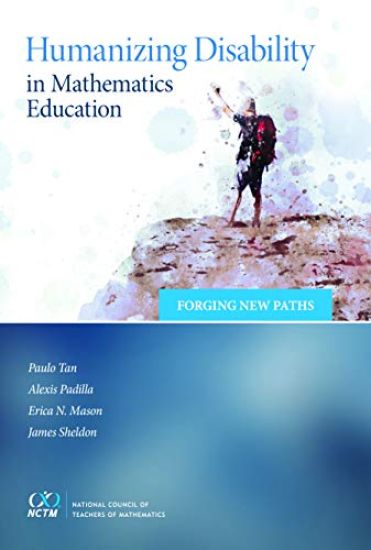
Humanizing Disability in Mathematics Education

Humanizing Disability in Mathematics Education

Paulo Tan; Alexis Padilla; Erica N. Mason; James Sheldon

National Council of Teachers of Mathematics,U.S.
2020
nidottu
Humanizing Disability in Mathematics Education: Forging New Paths is about enhancing the practices of mathematics teachers by extending the concepts of access, equity, and empowerment to include students living with all types of disabilities. These students are rarely thought of as mathematics doers and thinkers, and so are seldom offered opportunities to engage in mathematics in meaningful and connected ways. Humanizing Disability examines the current mindset and pedagogy that students with different learning needs encounter, and then offers strategies and practices to humanize the mathematics experience for these students.In the first part of the book, the authors lay out some key ideas about humanizing mathematics education for students with disabilities. As teachers of mathematics of teacher educators and students with disabilities, as well as with their own backgrounds as learners with identified disabilities, the authors’ case and perspective are informed by hands-on episodes of their work and their own lived experiences. Foundational to the authors’ advocacy are these compelling concepts:Students with disabilities are mathematics doers and thinkers.There are multiple ways of knowing and doing mathematics.The idea that disability is a tragedy must be resisted.Humanizing mathematics education is a matter of human rights to counter conventional, deficit-centered forms of education involving students with disabilities.Humanizing the mathematics education of students with disabilities enhances the learning of all. Theory and argument isn’t practice, so Humanizing Disability offers practical examples of implementation through the exploration of singular cases of how an Individual Education Plan (IEP) can be a powerful tool for access, equity, and inclusivity for the disabled learner; of using funds of knowledge and of identity to navigate the education system; and of building inclusive classrooms and communities.Humanizing Disability in Mathematics Education: Forging New Paths offers an inclusive way to think about mathematics education involving individuals with disabilities. It goes beyond the walls of the mathematics classrooms to address issues of dignity, access, and empowerment. For those whose mission it is to bring meaningful mathematics to each and every student, it is a must-have reference for your professional library.
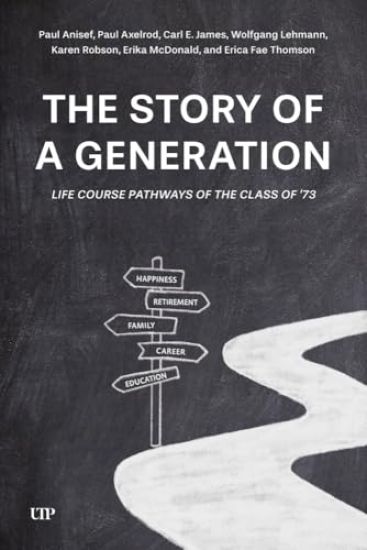
The Story of a Generation

The Story of a Generation

Paul Anisef; Paul Axelrod; Carl E. James; Wolfgan Lehmann; Karen Robson; Erika McDonald; Erica Fae Thomson

UNIVERSITY OF TORONTO PRESS
2025
sidottu
The Story of a Generation, a follow-up to Opportunity and Uncertainty: Life Course Experiences of the Class of ’73 (2000), continues where its predecessor left off. Through surveys and in-depth interviews with a high school class that graduated in 1973, the researchers uncover how these individuals – part of the late baby boomer generation – navigated a rapidly changing world.Through this process, some patterns emerged: parents’ education played a defining role in shaping their children’s futures, while technology revolutionized workplaces and homes. Gender roles shifted, with spouses sharing domestic duties – though not yet equally. And as they aged, this generation found themselves at the forefront of redefining retirement, balancing longer lives with evolving financial and social expectations. Beyond personal stories, The Story of a Generation offers a deeper understanding of how broader social forces – economic shifts, cultural changes, and technological advancements – interacted with individual choices. It’s more than just a study of one group of Canadians; it’s a reflection on how societies transform and how people adapt along the way. For anyone interested in sociology, history, or the human experience, this book provides a rare, intimate look at the passage of time – and the stories we leave behind.
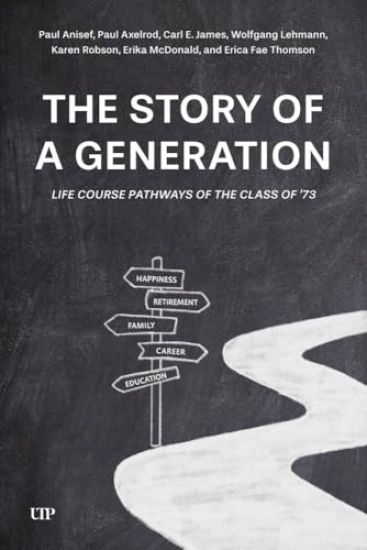
The Story of a Generation

The Story of a Generation

Paul Anisef; Paul Axelrod; Carl E. James; Wolfgan Lehmann; Karen Robson; Erika McDonald; Erica Fae Thomson

UNIVERSITY OF TORONTO PRESS
2025
pokkari
The Story of a Generation, a follow-up to Opportunity and Uncertainty: Life Course Experiences of the Class of ’73 (2000), continues where its predecessor left off. Through surveys and in-depth interviews with a high school class that graduated in 1973, the researchers uncover how these individuals – part of the late baby boomer generation – navigated a rapidly changing world.Through this process, some patterns emerged: parents’ education played a defining role in shaping their children’s futures, while technology revolutionized workplaces and homes. Gender roles shifted, with spouses sharing domestic duties – though not yet equally. And as they aged, this generation found themselves at the forefront of redefining retirement, balancing longer lives with evolving financial and social expectations. Beyond personal stories, The Story of a Generation offers a deeper understanding of how broader social forces – economic shifts, cultural changes, and technological advancements – interacted with individual choices. It’s more than just a study of one group of Canadians; it’s a reflection on how societies transform and how people adapt along the way. For anyone interested in sociology, history, or the human experience, this book provides a rare, intimate look at the passage of time – and the stories we leave behind.