Kirjojen hintavertailu. Mukana 12 397 299 kirjaa ja 12 kauppaa.

Kirjahaku

Etsi kirjoja tekijän nimen, kirjan nimen tai ISBN:n perusteella.

91 tulosta hakusanalla Ethyene Andrade Costa

Biology and Biotechnology of the Plant Hormone Ethylene II
The inflorescence of the monoecious maize plant is unique among the Gramineae in the sharp separation of the male and female structures. The male tassel at the terminus of the plant most often sheds pollen before the visual appearance of the receptive silks of th the female ear at a lateral bud, normally at the 10 leaf [I]. Earlier studies examined the ontogeny of the growing tissues beginning with the embryo in the kernel through to the obvious protuberances of the growing point as the kernel germinates. The differentiated developing soon-to-become tassel and the lateral bulges that develop into the ears on the lateral buds become apparent very early in the germinating kernel [2, 3, 46]. A certain number of cells are destined for tassel and ear development [8]. As the plant develops, there is a phase transition [\3, 16] from the vegetative lateral buds to the reproductive lateral buds. This change in phase has been ascribed to genotypic control as evidenced in the differences among different genotypes in the initiation of the reproductive [I]. The genetic control of tassel and ear initiation has been gleaned from anatomical observations. Lejeune and Bernier [I2] found that maize plants terminate the initiation of additional axillary meristems at the time of tassel initiation. This would indicate that the top-most ear shoot is initiated on the same day as the initiation of tassel development and this event signals the end of the undifferentiated growing point.
Biology and Biotechnology of the Plant Hormone Ethylene
Ethylene is a simple gaseous plant hormone produced by higher plants, bacteria and fungi. Thanks to new tools that have become available in biochemistry and molecular genetics, parts of the ethylene biosynthesis, perception and signal transduction reactions have been elucidated. This knowledge has been applied to enhance the quality of a number of agronomically important crops. In Biology and Biotechnology of the Plant Hormone Ethylene, leading figures in the field provide surveys of the current state of ethylene biosynthesis and action, perception and signal transduction pathways, senescence, biotechnological control, and the involvement of ethylene in pathogenesis and stress. Audience: Indispensable to all academic, industrial and agricultural researchers as well as undergraduates and graduates in plant biology, biochemistry, genetics, molecular biology and food science.
Biochemical and Physiological Aspects of Ethylene Production in Lower and Higher Plants
With the demonstration of the "triple response" in plants by Neljubow at the turn of the century, ethylene has been identified as a substance specifically affecting plant growth. Yet it took a few more decades to show that ethylene is a naturally occurring product of plants having all the characteristics of a phytohormone. Ever since much effort has been devoted to a wide variety of physiological and biochemical problems relevant to ethylene. A first meeting was organized in Israel in 1984 to bring together many people active in this rapidly expanding field of experimental research. It is the aim of the present symposium to provide once more a forum at which researchers might expose and comment progress in their work over the last few years. Speakers were invi ted and their contri buti ons ordered ina number of sessions, each of which was centered on a particular topiC. Much of the benefit came from ensuing discussion sessions which were conducted with much competence and expertise by Anderson, Ben-Arie, Goren, Morgan and Osborne. All of these colleagues are recognized leaders in ethylene research today and the organizers owe a very special gratitude to them for their substantial contribution to the programme. It is well to remember the friendly atmosphere, so essential to the success of the whole meeting and so much enjoyed by every partiCipant. Prompt publi ca tion of the papers was made possi ble by the camera-ready procedure offered by the publisher.
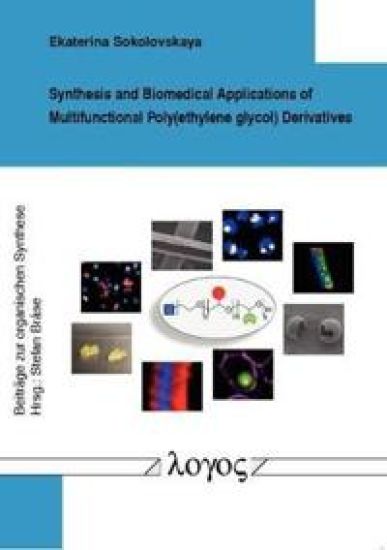
Synthesis and Biomedical Applications of Multifunctional Poly(Ethylene Glycol) Derivatives
Rapid development of biomedicine creates a continuous demand for new polymers with tailored properties for the fabrication of various biomaterials. Poly(ethylene glycol) (PEG) is particularly suitable for this purpose due to its biocompatibility and exceptional protein resistance, however introduction of new functional groups as well as the increase of their number per polymer chain is required in order to tune PEG's properties and increase its loading capacity. A general method for the anionic ring-opening polymerization of ethylene oxide and functional epoxides has been developed and utilized for the preparation of a number of multifunctional PEGs and their copolymers with PEG. The obtained polymers were either directly or after post-polymerization modification utilized for the fabrication of biomaterials. Smart hydrogels have been prepared from a multifunctional photoresponsive PEG copolymer and multifunctional hydrazide PEG. Reactive anisotropic particles suitable for either reversible sugar conjugation or dual stimuli (oxidation and UV irradiation) triggered degradation have been fabricated via electrohydrodynamic co-jetting. These new biomaterials have great potential for applications in tissue engineering and targeted drug delivery with controlled release.
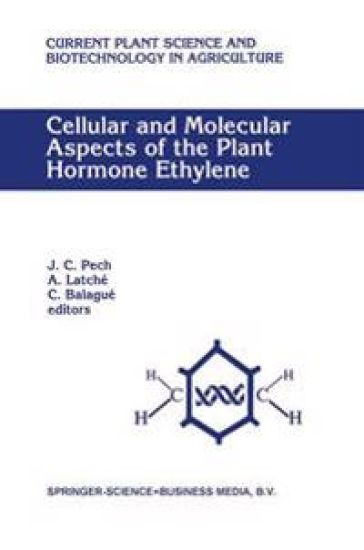
Cellular and Molecular Aspects of the Plant Hormone Ethylene
The International Symposium on "Cellular and Molecular Aspects of Biosynthesis and Action of the Plant Hormone Ethylenc" ,vas held in Agen, France from August 31 st and September 4th, 1992. The planning and management of the scientific and social programme of the Conference were carried out jointly by the "Ethylene Research Group" of ENSAlIN"P (Toulouse) and Agropole Congres Service (Agen). Since the last meetings in Israel (1984) and in Belgium (1988), ethylene physiology has gone through a period of exciting progress due to new developments in cellular and molecular bioiogy. New methods and tools have been developed to better understand the role and functions of ethylene in fruit ripening, flower senescence, abscission, piant growth, and cell differentiation. Genes involved in ethylene biosynthesis have been characterized and transgenic plants with altered ethylene production have been generated. The feasibility of delaying fruit ripening or flower senescence by genetic manipulation is now demonstrated, thus opening new perspectives for the postharvest handling of plant products. Some progress has also been made on the understanding of ethylene action. However, much remains to be done in this area to elucidate the ethylene signal transduction pathway. Around 140 scientists from 20 countries attended the Symposium. They presented 47 oral reports and 40 poster demonstrations. All of them are published in these proceedings. It has been a pleasure for us to organize this important Symposium and to edit this book.
Cellular and Molecular Aspects of the Plant Hormone Ethylene
The International Symposium on "Cellular and Molecular Aspects of Biosynthesis and Action of the Plant Hormone Ethylenc" ,vas held in Agen, France from August 31 st and September 4th, 1992. The planning and management of the scientific and social programme of the Conference were carried out jointly by the "Ethylene Research Group" of ENSAlIN"P (Toulouse) and Agropole Congres Service (Agen). Since the last meetings in Israel (1984) and in Belgium (1988), ethylene physiology has gone through a period of exciting progress due to new developments in cellular and molecular bioiogy. New methods and tools have been developed to better understand the role and functions of ethylene in fruit ripening, flower senescence, abscission, piant growth, and cell differentiation. Genes involved in ethylene biosynthesis have been characterized and transgenic plants with altered ethylene production have been generated. The feasibility of delaying fruit ripening or flower senescence by genetic manipulation is now demonstrated, thus opening new perspectives for the postharvest handling of plant products. Some progress has also been made on the understanding of ethylene action. However, much remains to be done in this area to elucidate the ethylene signal transduction pathway. Around 140 scientists from 20 countries attended the Symposium. They presented 47 oral reports and 40 poster demonstrations. All of them are published in these proceedings. It has been a pleasure for us to organize this important Symposium and to edit this book.
Validation de la stérilisation à l'oxyde d'éthylène

Validation de la stérilisation à l'oxyde d'éthylène

Hugo Campos Oliveira Santos

Editions Notre Savoir
2025
pokkari
Il s'agit d'une recherche en laboratoire visant laborer des protocoles de validation de la st rilisation l'oxyde. Cette tude comprend des m thodologies de qualification physique, microbiologique et chimique r siduelle par une technique valid e de chromatographie en phase gazeuse (GC/FID). La pr sente tude a permis d'optimiser le processus de st rilisation, garantissant la s curit , la robustesse et l'augmentation de l'efficacit du processus gr ce la r duction du temps d'a ration r siduelle de 48 heures 6 heures. Les m thodologies innovantes de cette recherche ont int gr l'utilisation de capteurs physiques et d'int grateurs chimiques, ainsi que l'utilisation de tests de st rilit et d'essais d'endotoxines par rapport la technologie de surveillance biologique du test bioindicateur rapide. Les analyses de contr le qualit , les qualifications r alis es et la validation de toutes les tapes de la st rilisation ont permis de garantir l'efficacit du processus, conform ment aux crit res de l'Agence nationale de surveillance sanitaire, permettant ainsi un gain de productivit et un meilleur rendement du syst me.