Kirjojen hintavertailu. Mukana 11 244 527 kirjaa ja 12 kauppaa.

Kirjahaku

Etsi kirjoja tekijän nimen, kirjan nimen tai ISBN:n perusteella.

1000 tulosta hakusanalla Eugene Bagger

Eugene O'Neill

Eugene O'Neill

Egil Törnqvist

McFarland Co Inc
2004
pokkari
Eugene O'Neill wrote his plays for a theatre in which the playwright would take a central position. He presented himself as a controlling personality both in the texts--in the form of ample stage directions--and in performances based on these texts. His plays address several audiences--reader, spectator, and production team--and scripts were often different from the published versions. This study examines O'Neill's multiple roles as a writer for many audiences. After a description of O'Neill's working conditions and the multiple audiences of the plays, this study examines the various formal aspects of the plays: titles, settings in time and place, names and addresses, language, and connections and allusions to other works. An examination of the plays follows, with particular emphasis on Bound East for Cardiff, Long Day's Journey Into Night, and A Touch of the Poet.
Eugene O'Neill and His Early Contemporaries
Eugene O'Neill was one of the great American playwrights of the twentieth century. Spanning the years 1910-1930, the 14 essays in this volume address the milieu he knew best--his friends in bohemian Greenwich Village, Provincetown, on waterfronts around the globe, and in the other beloved communities that comprised his early circle. At a time when O'Neill's creative powers were in their infancy, these influences formed the backdrop of his creative development and, consequently, demand more intensive study than they have received to date. This collection also highlights the larger modernist period and its impact on the First World War, the Little Theater Movement, the Abbey Players of Dublin, philosophical anarchism, and other contemporary upheavals that permeate his drama. Interspersed with rare period photos and illustrations, this volume contextualizes O'Neill's plays in the tumult of his historical and cultural moment, offering scholars a fresh approach to his life and art.
Eugene Ely, Daredevil Aviator

Eugene Ely, Daredevil Aviator

William M. Miller

McFarland Co Inc
2014
pokkari
Eugene Burton Ely was buried the day after his 25th birthday, less than a half-mile from where he was born. No sooner had he captured the world's eye and gained the fame he sought, than he crashed into the earth. Until 1911, the last year of his life, hardly anyone knew his name. More than a century later, nothing has changed. An Iowa farm boy afraid of heights, Ely was the first to land an airplane on the deck of a ship. To some, he is the father of naval aviation, the inspiration behind today's nuclear aircraft carriers--but many details of his life have been lost until now. This book seeks to fill this void.
Eugene Field and His Age

Eugene Field and His Age

Lewis O. Saum

University of Nebraska Press
2000
sidottu
Eugene Field (1850–95) is perhaps best remembered for his children's verse, especially "Little Boy Blue" and "Wynken, Blynken, and Nod." During his journalistic career, however, his column, "Sharps and Flats," in the Chicago Daily News illuminated the shenanigans of local and national politics, captured the excitement of baseball, and praised the cultural scene of Chicago and the West over that of the East Coast and Europe. Field used whimsy, satire, and, at times, unadorned admiration to depict and encapsulate the energy of a young nation reinventing itself and its political ambitions in the closing decades of the nineteenth century. Foremost, Field was a political observer. During his lifetime politics saw more public awareness and involvement than at any other time in American history, and Field's great popularity derived mainly from his near-ceaseless commentary—arch, outlandish, comic, serious—on that arena of affairs. Field also devoted many columns to entertainment and diversions, discussing the baseball "idiocy" that stormed Chicago and championing and criticizing authors and actors.
The Best Novels and Stories of Eugene Manlove Rhodes

The Best Novels and Stories of Eugene Manlove Rhodes

Eugene Manlove Rhodes; W. H. Hutchinson

Bison Books
1987
pokkari
Eugene Manlove Rhodes's masterpiece, "Pasó Por Aquí", opens this collection of his short novels and stories, set in New Mexico, where he lived during the 1880s and 1890s. J. Frank Dobie praised Rhodes's artistry, and Bernard DeVoto thought he wrote "much the best dialogue . . . Of western characters since Mark Twain." Included are the novelettes "Good Men and True," "Bransford of Rainbow Range," and "The Trusty Knaves."
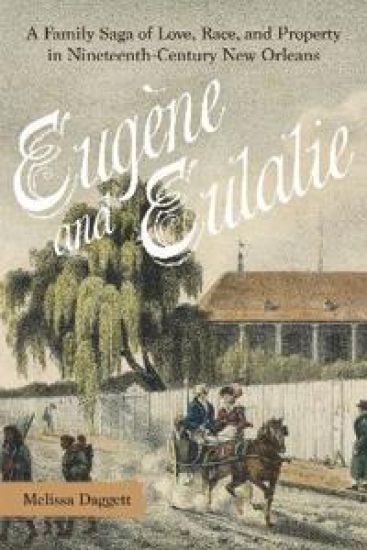
Eugène and Eulalie

Eugène and Eulalie

Melissa Daggett

LOUISIANA STATE UNIVERSITY PRESS
2026
sidottu
Melissa Daggett's Eugène and Eulalie is an epic story of love, race, prosperity, and legal maneuvering. It chronicles for the first time in a comprehensive way the largely forgotten lives of Eulalie Mandeville, a free woman of color, and her white partner, Eugène Macarty. Mandeville and Macarty, both descendants of elite colonial families, began an interracial relationship in the 1790s that endured for more than half a century and produced five children. It also led to Mandeville's phenomenal rise to the pinnacle of wealth and success within the unique tripartite racial structure of nineteenth-century New Orleans. Daggett uses the voluminous Nicolas Théodore Macarty et al. vs. Eulalie Mandeville f.w.c. (1848) court case to examine how an interracial relationship continued for more than fifty years despite onerous laws during the Spanish regime and the antebellum era that complicated such partnerships. She examines the origins of the Macarty and Mandeville families, revealing how they paralleled each other in Louisiana history and often intersected on social, military, economic, and political levels. Daggett also analyzes the struggles of the free people of color in both colonial Louisiana and early America and explores the ways slavery, manumission, and inheritance laws connected the two families. Above all, her work recovers the unique story of Eugène Macarty and Eulalie Mandeville, which has languished in the shadows of historical obscurity for generations.
Eugene Jolas

Eugene Jolas

Eugene Jolas

Northwestern University Press
2009
sidottu
Dividing his youth between the United States and the bilingual Alsace-Lorraine, Eugene Jolas (1894-1952) flourished in three languages. As an editor and poet, he came to know the major writers and artists of his time and enjoyed a pivotal position between the Anglo-American and Continental avant-grade. His editorship of transition, the leading avant-garde journal of Paris in the twenties and early thirties, provided a major impetus to writers from James Joyce (whose ""Finnegans Wake"" was serialized in transition) to Gertrude Stein, and Samuel Beckett, with first translations of Andre Breton, and Franz Kafka, among others. Jolas' critical work, collected in this volume, includes introductions to anthologies, manifestos like the famous Vertical, essays, some published here for the first time, on writers as various as Novalis, Trakl, the major Surrealists, Heidegger, and other philosophers. An acute observer of the literary scene as well as of the roiling politics of the time, Jolas emerges here in his role at the very center of avant-garde activity between the wars. Accordingly, this book is of signal importance to anyone with an interest in modernism, avant-garde, multilingualism, and the culture of Western Europe in the first half of the twentieth century. Eugene Jolas was born in Union City, New Jersey, in 1894 but was raised by his Franco-German parents in Lorraine. In 1927 Jolas, along with his wife Maria McDonald and Elliot Paul, founded the influential Parisian literary magazine transition. In Paris he met James Joyce and played a major part in encouraging and defending Joyce's ""Work-in-Progress,"" later to become ""Finnegans Wake"", a work Jolas viewed as the perfect embodiment of his manifesto. Jolas' life and career are described vividly in his autobiography, ""Man from Babel"".
Eugene Jolas

Eugene Jolas

Northwestern University Press

Northwestern University Press
2009
nidottu
Dividing his youth between the United States and the bilingual Alsace-Lorraine, Eugene Jolas (1894-1952) flourished in three languages. As an editor and poet, he came to know the major writers and artists of his time and enjoyed a pivotal position between the Anglo-American and Continental avant-garde. His editorship of transition, the leading avant-garde journal of Paris in the twenties and early thirties, provided a major impetus to writers from James Joyce (whose ""Finnegans Wake"" was serialized in transition) to Gertrude Stein, and Samuel Beckett, with first translations of Andre Breton, and Franz Kafka, among others. Jolas' critical work, collected in this volume, includes introductions to anthologies, manifestoes like the famous Vertical, essays, some published here for the first time, on writers as various as Novalis, Trakl, the major Surrealists, Heidegger, and other philosophers. An acute observer of the literary scene as well as of the roiling politics of the time, Jolas emerges here in his role at the very center of avant-garde activity between the wars. Accordingly, this book is of signal importance to anyone with an interest in modernism, avant-garde, multilingualism, and the culture of Western Europe in the first half of the twentieth century.
Eugene O’Neill - American Writers 45

Eugene O’Neill - American Writers 45

Gassner John

UNIVERSITY OF MINNESOTA PRESS
1965
nidottu
Eugene O'Neill - American Writers 45 was first published in 1965. Minnesota Archive Editions uses digital technology to make long-unavailable books once again accessible, and are published unaltered from the original University of Minnesota Press editions.
Eugene O'Neill Remembered

Eugene O'Neill Remembered

The University of Alabama Press
2016
sidottu
Eugene O’Neill Remembered offers new views into the playwright’s life by capturing the direct memories of those who were close to him through interviews, memoirs, and other recollections. These sixty-two remembrances create an unprecedented image of O’Neill. O'Neill is known principally as the author of some of the most significant plays in the American dramatic canon and as one of America's Nobel Laureates in literature. However, O'Neill's life has long been shrouded in myth. O'Neill rarely gave interviews and was not forthcoming about the details of his life. He also abetted some of the misconceptions about his youth by, for example, advocating the story that he was expelled from Princeton for throwing a rock through Woodrow Wilson's window or by exaggerating the amount of time he had spent at sea. The legend of the hard-drinking, tormented playwright with a grim view of life was further reinforced when Long Day's Journey into Night was produced in 1956, three years after his death instead of the twenty-five years he had insisted on. The portrayal of O’Neill as a tragic figure has been solidified in a number of biographies. The purpose of this collection, however, is to present O'Neill as others saw him and described him in their first-person accounts. In the course of these reminiscences, many of the vast and various narrators conflict with and contradict each other. Unlike other accounts of O’Neill’s life, much of the focus is on impressions instead of facts. The result is a revealing composite portrait of a key figure in twentieth-century American literary history. This extensive collection offers insights unavailable in any other book and will hold massive appeal for scholars and students interested in American literature, Eugene O’Neill, and theater history, as well as anyone keen to uncover intimate details of the life of one of America’s greatest writers.
Eugene O'Neill Remembered

Eugene O'Neill Remembered

THE UNIVERSITY OF ALABAMA PRESS
2021
nidottu
Eugene O’Neill Remembered offers new views into the playwright’s life by capturing the direct memories of those who were close to him through interviews, memoirs, and other recollections. These sixty-two remembrances create an unprecedented image of O’Neill. Known principally as the author of some of the most significant plays in the American dramatic canon and as one of America’s Nobel Laureates in literature, O'Neill rarely gave interviews and offered few details about himself. As a consequence, his life has long been shrouded in myth. He also abetted some of the misconceptions about his youth by, for example, advocating the story that he was expelled from Princeton for throwing a rock through Woodrow Wilson's window or by exaggerating the amount of time he had spent at sea. The legend of the hard-drinking, tormented playwright with a grim view of life was further reinforced when Long Day's Journey into Night was produced in 1956, three years after his death instead of the twenty-five years he had insisted on. The portrayal of O’Neill as a tragic figure has been solidified in a number of biographies. The purpose of this collection, however, is to present O'Neill as others saw him and described him in their first-person accounts. In the course of these reminiscences, many of the vast and various narrators conflict with and contradict each other. Unlike other accounts of O’Neill’s life, much of the focus is on impressions instead of facts. The result is a revealing composite portrait of a key figure in twentieth-century American literary history. This extensive collection offers insights unavailable in any other book and will hold massive appeal for scholars and students interested in American literature, Eugene O’Neill, and theater history, as well as anyone keen to uncover intimate details of the life of one of America’s greatest writers.
Eugene Odum

Eugene Odum

Betty Jean Craige

University of Georgia Press
2002
pokkari
Students of nature around the world revere Eugene Odum as a founder and pioneer of ecosystem ecology. In this biography of Odum, Betty Jean Craige depicts the intellectual growth, creativity, and vision of the scientist who made the ecosystem concept central to his discipline and translated the principles of ecosystem ecology into lessons in preserving the natural environment.Placing Odum's achievements in historical context, Craige traces his life from his childhood through his education, his collaboration with his brother Howard T. Odum in developing methods to study ecosystems, his contributions to the field of radiation ecology, his emergence as an internationally distinguished educator of ecosystem ecology, and his environmental activism. Craige also describes Odum's role in the creation of the Savannah River Ecology Laboratory, the Marine Institute on Sapelo Island, and the Institute of Ecology at the University of Georgia, where he became identified with the statement "The ecosystem is greater than the sum of its parts."Odum's textbook Fundamentals of Ecology is a classic, published in numerous editions and translations worldwide. Odum achieved membership in the National Academy of Sciences, shared with his brother the prestigious Crafoord Prize for Ecology, accepted six honorary doctorates, and received numerous awards for environmental activities.
Eugene O'Neill's Last Plays

Eugene O'Neill's Last Plays

Doris Alexander

University of Georgia Press
2005
sidottu
This study draws on new and unprecedented research concerning the lives of Eugene O’Neill, his family, and his circle. It corrects and expands the biographical record on O’Neill, sharpens our understanding of his art, and distinguishes the man and his life more clearly than ever from the creations that were inspired by, and drew on, that life.In his final creative years, 1939 to 1943, O’Neill wrote The Iceman Cometh, Long Day’s Journey into Night, and A Moon for the Misbegotten. Because these plays are so intense, intimate, and evocative of the friends and family members who influenced O’Neill’s artistic development, biographers and critics have long—and mistakenly—regarded them as accurate sources for insights into the playwright’s early years.Drawing upon interviews and a staggering amount of archival research into multiple generations of the O’Neill family, Alexander sets the historical record straight by documenting the actual people and situations on which characters and scenes in O’Neill’s last plays are based. Included in her study are such topics as the playwright’s attempted suicide, his tuberculosis, and his relationship with his parents. By revealing the distinctions between O’Neill’s life and his art, Alexander’s findings make possible greater insight into the artistry that shaped these final plays and brought them to life.
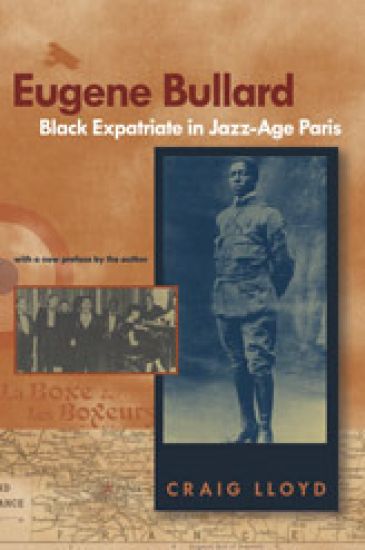
Eugene Bullard, Black Expatriate in Jazz-Age Paris

Eugene Bullard, Black Expatriate in Jazz-Age Paris

Craig Lloyd

University of Georgia Press
2006
pokkari
Although he was the first African American fighter pilot, Eugene J. Bullard is still a relative stranger in his homeland. An accomplished professional boxer, musician, club manager, and impresario of Parisian nightlife between the world wars, Bullard found in Europe a degree of respect and freedom unknown to blacks in America. There, for twenty-five years, he helped define the expatriate experience for countless other African American artists, writers, performers, and athletes.This is the first biography of Bullard in thirty years and the most complete ever. It follows Bullard's lifelong search for respect from his poor boyhood in Jim-Crow Georgia to his attainment of notoriety in Jazz-Age Paris and his exploits fighting for his adopted country, for which he was awarded the Croix de Guerre. Drawing on a vast amount of archival material in the United States, Great Britain, and France, Craig Lloyd unfolds the vibrant story of an African American who sought freedom overseas. Lloyd provides a new look at the black expatriate community in Paris, taking readers into the cabarets where Bullard rubbed elbows with Josephine Baker, Louis Armstrong, and even the Prince of Wales. Lloyd also uses Bullard's life as a lens through which to view the racism that continued to dog him even in Europe in his encounters with traveling Americans.When Hitler conquered France, Bullard was wounded in action and then escaped to America. There, his European successes counted for little: he spent his last years in obscurity and hardship but continued to work for racial justice. Eugene Bullard, Black Expatriate in Jazz-Age Paris offers a fascinating look at an extraordinary man who lived on his own terms and adds a new facet to our understanding of the black diaspora.
Anglo-Saxon Audiences / Eugene Green.

Anglo-Saxon Audiences / Eugene Green.

Eugene Green

Peter Lang Publishing Inc
2001
sidottu
Is it possible to enter the minds of medieval people? "Anglo-Saxon Audiences" explores this question through the use of modern approaches in textual analysis, including techniques of functional grammar, speech act analysis, and semiotics. This book reveals how kings, councillors, and homilists tried to engage and to direct the minds of Anglo-Saxon communicants, and how poets invited their audiences to consider the minds of others as well as their own. This book focuses on legal codes promulgated from the ninth to the eleventh centuries, the homilies of AElfric and Wulfstan, "Beowulf, The Battle of Maldon, Deor," and two elegies. Its unifying theme is that Anglo-Saxon audiences welcomed texts focused on future time, a perspective that challenged them to reflect on diverse patterns of thought."
Eugene V. Debs Reader

Eugene V. Debs Reader

The Merlin Press Ltd
2014
nidottu
A collection of writings and speeches by one of the most radical of America's early 20th century labour leaders which brings to life a once powerful socialist movement. Eugene Victor Debs (1855-1926), one of America's most famous socialists, was an important figure on the American political landscape. He ran as the Socialist Party's (SP) presidential candidate five times and obtained nearly a million votes in 1912 and 1920.