Kirjojen hintavertailu. Mukana 11 244 527 kirjaa ja 12 kauppaa.

Kirjahaku

Etsi kirjoja tekijän nimen, kirjan nimen tai ISBN:n perusteella.

274 tulosta hakusanalla Farnaz Zirakbash

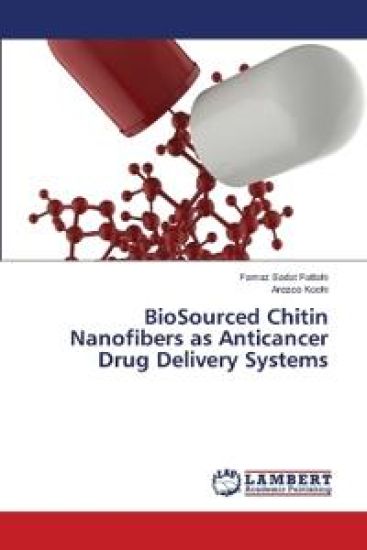
BioSourced Chitin Nanofibers as Anticancer Drug Delivery Systems

BioSourced Chitin Nanofibers as Anticancer Drug Delivery Systems

Farnaz Sadat Fattahi; Arezoo Koohi

Lap Lambert Academic Publishing
2025
pokkari
Chitin is a biopolymer that makes up the internal coating of a fungal cell wall, providing reinforcement and resilience. It is biocompatible, biodegradable, and bio-absorbable, with antibacterial and wound-healing specifications as well as minimum immunogenicity. Cancer is described as a wild growth of abnormal cells. Nanotechnology has been applied as drug carriers over the past few years to treat numerous cancers. The main objective of nanomedicine in the treatment of oncological illnesses is to selectively carry the drug just to cancer cells. Up to now, numerous anticancer drugs like doxorubicin (DOX), curcumin (CUR), paclitaxel (PTX) and camptothecin (CPT) have been used in drug delivery structures. 3-D Chitin nanofibers can be applied to deliver anti-cancer drugs in cancer therapy. This book presents the chitin Nano fibrous anti-cancer drug delivery carriers for clinical application of cancer nanomedicine in the future.
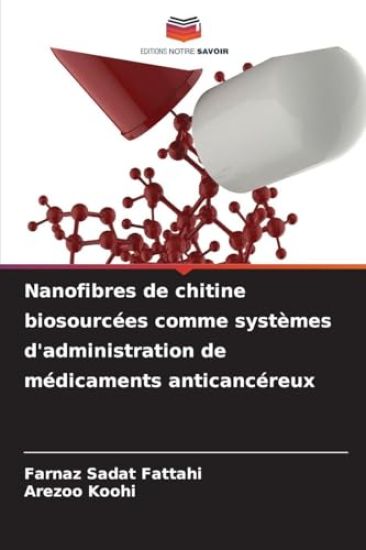
Nanofibres de chitine biosourcées comme systèmes d'administration de médicaments anticancéreux
La chitine est un biopolym re qui constitue le rev tement interne d'une paroi cellulaire fongique, apportant renforcement et r silience. Il est biocompatible, biod gradable et bio-absorbable, avec des sp cifications antibact riennes et cicatrisantes ainsi qu'une immunog nicit minimale. Le cancer est d crit comme une croissance sauvage de cellules anormales. La nanotechnologie a t utilis e ces derni res ann es comme vecteur de m dicaments pour traiter de nombreux cancers. L'objectif principal de la nanom decine dans le traitement des maladies oncologiques est de transporter s lectivement le m dicament uniquement vers les cellules canc reuses. Jusqu' pr sent, de nombreux m dicaments anticanc reux comme la doxorubicine (DOX), la curcumine (CUR), le paclitaxel (PTX) et la camptoth cine (CPT) ont t utilis s dans les structures d'administration de m dicaments. Les nanofibres de chitine 3D peuvent tre utilis es pour administrer des m dicaments anticanc reux dans le traitement du cancer. Ce livre pr sente les transporteurs de m dicaments anticanc reux nanofibreux de chitine pour les applications cliniques de la nanom decine anticanc reuse l'avenir.
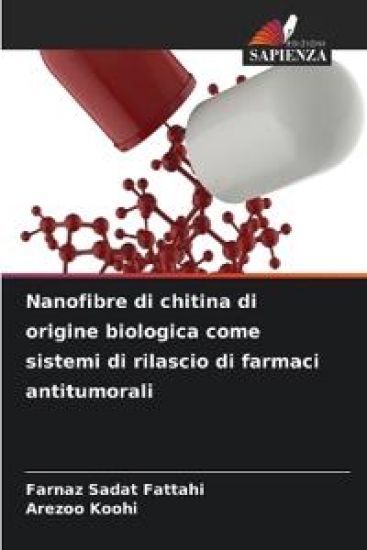
Nanofibre di chitina di origine biologica come sistemi di rilascio di farmaci antitumorali
La chitina un biopolimero che costituisce il rivestimento interno di una parete cellulare fungina, fornendo rinforzo e resilienza. biocompatibile, biodegradabile e bioassorbibile, con specifiche antibatteriche e di guarigione delle ferite, nonch un'immunogenicit minima. Il cancro descritto come una crescita selvaggia di cellule anormali. Negli ultimi anni la nanotecnologia stata applicata come vettore di farmaci per il trattamento di numerosi tumori. L'obiettivo principale della nanomedicina nel trattamento delle malattie oncologiche quello di veicolare selettivamente il farmaco solo alle cellule tumorali. Fino ad ora, numerosi farmaci antitumorali come la doxorubicina (DOX), la curcumina (CUR), il paclitaxel (PTX) e la camptotecina (CPT) sono stati utilizzati nelle strutture di somministrazione dei farmaci. Le nanofibre di chitina 3-D possono essere applicate per fornire farmaci antitumorali nella terapia del cancro. Questo libro presenta i trasportatori di farmaci antitumorali nanofibrosi di chitina per l'applicazione clinica della nanomedicina antitumorale in futuro.
Biologiczne nanowlókna chitynowe jako systemy dostarczania leków przeciwnowotworowych

Biologiczne nanowlókna chitynowe jako systemy dostarczania leków przeciwnowotworowych

Farnaz Sadat Fattahi; Arezoo Koohi

Wydawnictwo Nasza Wiedza
2025
pokkari
Chityna to biopolimer tworzący wewnętrzną powlokę ściany kom rkowej grzyb w, zapewniający wzmocnienie i sprężystośc. Jest biokompatybilny, biodegradowalny i biowchlanialny, ma wlaściwości antybakteryjne i gojenie się ran, a także minimalną immunogennośc. Rak opisuje się jako dziki wzrost nieprawidlowych kom rek. W ciągu ostatnich kilku lat nanotechnologię zastosowano jako nośniki lek w w leczeniu wielu nowotwor w. Gl wnym celem nanomedycyny w leczeniu chor b onkologicznych jest selektywne dostarczanie leku wlaśnie do kom rek nowotworowych. Do chwili obecnej w strukturach dostarczania lek w stosowano liczne leki przeciwnowotworowe, takie jak doksorubicyna (DOX), kurkumina (CUR), paklitaksel (PTX) i kamptotecyna (CPT). Nanowl kna chityny 3-D można zastosowac do dostarczania lek w przeciwnowotworowych w terapii nowotwor w. W tej książce przedstawiono chitynowe nanowl kniste nośniki lek w przeciwnowotworowych do zastosowań klinicznych w nanomedycynie nowotworowej w przyszlości.
Nanofibras de quitina de origem biológica como sistemas de administração de medicamentos anticancerígenos
A quitina um biopol mero que comp e o revestimento interno da parede celular do fungo, proporcionando refor o e resili ncia. biocompat vel, biodegrad vel e bioabsorv vel, com especifica es antibacterianas e cicatrizantes, bem como imunogenicidade m nima. O c ncer descrito como um crescimento selvagem de c lulas anormais. A nanotecnologia tem sido aplicada como transportador de medicamentos nos ltimos anos para tratar v rios tipos de c ncer. O principal objetivo da nanomedicina no tratamento de doen as oncol gicas transportar seletivamente o medicamento apenas para as c lulas cancer genas. At agora, numerosos medicamentos anticancer genos como a doxorrubicina (DOX), a curcumina (CUR), o paclitaxel (PTX) e a camptotecina (CPT) t m sido utilizados em estruturas de distribui o de medicamentos. Nanofibras de quitina 3-D podem ser aplicadas para fornecer medicamentos antic ncer na terapia do c ncer. Este livro apresenta os transportadores de entrega de medicamentos antic ncer nanofibrosos de quitina para aplica o cl nica da nanomedicina contra o c ncer no futuro.
Chitin-Nanofasern auf Biobasis als Verabreichungssysteme für Krebsmedikamente

Chitin-Nanofasern auf Biobasis als Verabreichungssysteme für Krebsmedikamente

Farnaz Sadat Fattahi; Arezoo Koohi

Verlag Unser Wissen
2025
pokkari
Chitin ist ein Biopolymer, das die innere Beschichtung einer Pilzzellwand bildet und f r Verst rkung und Widerstandsf higkeit sorgt. Es ist biokompatibel, biologisch abbaubar und biologisch resorbierbar, verf gt ber antibakterielle und wundheilende Eigenschaften sowie eine minimale Immunogenit t. Krebs wird als wildes Wachstum abnormaler Zellen beschrieben. Nanotechnologie wurde in den letzten Jahren als Wirkstofftr ger zur Behandlung zahlreicher Krebsarten eingesetzt. Das Hauptziel der Nanomedizin bei der Behandlung onkologischer Erkrankungen besteht darin, den Wirkstoff gezielt gezielt zu Krebszellen zu transportieren. Bisher wurden zahlreiche Krebsmedikamente wie Doxorubicin (DOX), Curcumin (CUR), Paclitaxel (PTX) und Camptothecin (CPT) in Wirkstoffverabreichungsstrukturen eingesetzt. 3D-Chitin-Nanofasern k nnen zur Verabreichung von Krebsmedikamenten in der Krebstherapie eingesetzt werden. Dieses Buch stellt die Chitin-Nanofasertr ger zur Wirkstoffabgabe gegen Krebs f r die klinische Anwendung der Krebs-Nanomedizin in der Zukunft vor.
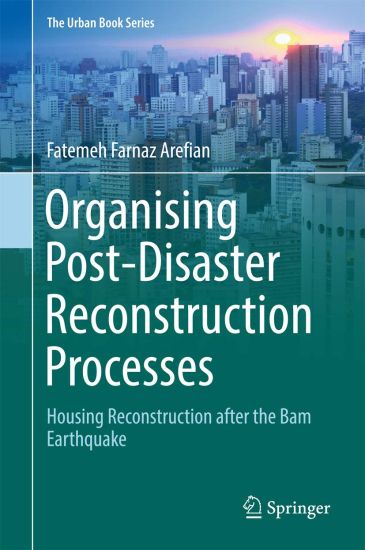
Organising Post-Disaster Reconstruction Processes

Organising Post-Disaster Reconstruction Processes

Fatemeh Farnaz Arefian

Springer International Publishing AG
2018
sidottu
Through a synthesis of a broader inter-disciplinary literature in the field of disaster studies, organisation theory and management, and an in-depth case study this book provides an analytical framework for organising post-disaster reconstruction programmes which aim to reduce future disaster risks and achieve other objectives. It explores the role of organisational design and management on approaching and achieving the objectives of the reconstruction programme in Iran after the 2003 Bam earthquake. The housing reconstruction programme in Bam was a complex case, offering various learning opportunities to understand organising reconstruction processes especially in urban areas. The case study research explores how the urban housing reconstruction programme system was formed purposefully towards the delivery of the stated objectives and created an innovative housing process throughout the urban area. It identifies consistencies and inconsistencies among the influential organisational attributes of the programme delivery system formation. The system evolved through corrective adjustments (either formally or informally) during its implementation to reflect unfolding consequences of inconsistencies in initial formation and emerging contextual issues in the field.
Organising Post-Disaster Reconstruction Processes

Organising Post-Disaster Reconstruction Processes

Fatemeh Farnaz Arefian

Springer International Publishing AG
2019
nidottu
Through a synthesis of a broader inter-disciplinary literature in the field of disaster studies, organisation theory and management, and an in-depth case study this book provides an analytical framework for organising post-disaster reconstruction programmes which aim to reduce future disaster risks and achieve other objectives. It explores the role of organisational design and management on approaching and achieving the objectives of the reconstruction programme in Iran after the 2003 Bam earthquake. The housing reconstruction programme in Bam was a complex case, offering various learning opportunities to understand organising reconstruction processes especially in urban areas. The case study research explores how the urban housing reconstruction programme system was formed purposefully towards the delivery of the stated objectives and created an innovative housing process throughout the urban area. It identifies consistencies and inconsistencies among the influential organisational attributes of the programme delivery system formation. The system evolved through corrective adjustments (either formally or informally) during its implementation to reflect unfolding consequences of inconsistencies in initial formation and emerging contextual issues in the field.
Farnah

Farnah

Beech Stave Press Inc
2018
sidottu
Over thirty specialists in Indo-European linguistics have contributed this elegant volume in honour of Professor Sasha Lubotsky of Leiden University. Besides giving an excellent snapshot of the research currently being undertaken by his students and colleagues at that institution, Farnah contains contributions from well-known scholars across the world covering topics in Tocharian, Germanic, Slavic, Indo-Iranian, and Anatolian linguistics, to name a few. Some contributions in German.
The Return of Faraz Ali

The Return of Faraz Ali

Aamina Ahmad

Riverhead Books
2022
sidottu
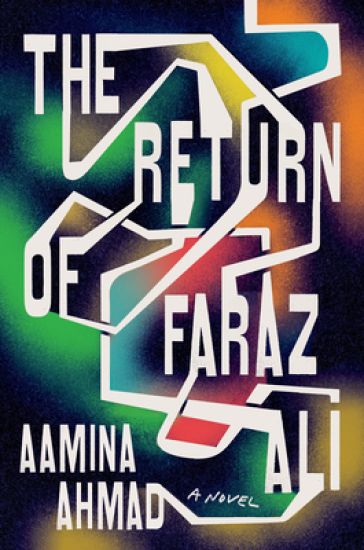
NAMED A BEST BOOK OF THE YEAR BY THE NEW YORK TIMES AND NPR WINNER OF THE 2023 L.A. TIMES BOOK PRIZE, ART SEIDENBAUM AWARD FOR FIRST FICTION "Stunning not only on account of the author's talent, of which there is clearly plenty, but also in its humanity." --New York Times Book Review (cover) Sent back to his birthplace--Lahore's notorious red-light district--to hush up the murder of a girl, a man finds himself in an unexpected reckoning with his past. Not since childhood has Faraz returned to the Mohalla, in Lahore's walled inner city, where women continue to pass down the art of courtesan from mother to daughter. But he still remembers the day he was abducted from the home he shared with his mother and sister there, at the direction of his powerful father, who wanted to give him a chance at a respectable life. Now Wajid, once more dictating his fate from afar, has sent Faraz back to Lahore, installing him as head of the Mohalla police station and charging him with a mission: to cover up the violent death of a young girl. It should be a simple assignment to carry out in a marginalized community, but for the first time in his career, Faraz finds himself unable to follow orders. As the city assails him with a jumble of memories, he cannot stop asking questions or winding through the walled city's labyrinthine alleyways chasing the secrets--his family's and his own--that risk shattering his precariously constructed existence. Profoundly intimate and propulsive, The Return of Faraz Ali is a spellbindingly assured first novel that poses a timeless question: Whom do we choose to protect, and at what price?
The Return of Faraz Ali

The Return of Faraz Ali

Aamina Ahmad

Riverhead Books
2023
nidottu
NAMED A BEST BOOK OF THE YEAR BY THE NEW YORK TIMES AND NPR WINNER OF THE 2023 L.A. TIMES BOOK PRIZE, ART SEIDENBAUM AWARD FOR FIRST FICTION "Stunning not only on account of the author's talent, of which there is clearly plenty, but also in its humanity." --New York Times Book Review (cover) Sent back to his birthplace--Lahore's notorious red-light district--to hush up the murder of a girl, a man finds himself in an unexpected reckoning with his past. Not since childhood has Faraz returned to the Mohalla, in Lahore's walled inner city, where women continue to pass down the art of courtesan from mother to daughter. But he still remembers the day he was abducted from the home he shared with his mother and sister there, at the direction of his powerful father, who wanted to give him a chance at a respectable life. Now Wajid, once more dictating his fate from afar, has sent Faraz back to Lahore, installing him as head of the Mohalla police station and charging him with a mission: to cover up the violent death of a young girl. It should be a simple assignment to carry out in a marginalized community, but for the first time in his career, Faraz finds himself unable to follow orders. As the city assails him with a jumble of memories, he cannot stop asking questions or winding through the walled city's labyrinthine alleyways chasing the secrets--his family's and his own--that risk shattering his precariously constructed existence. Profoundly intimate and propulsive, The Return of Faraz Ali is a spellbindingly assured first novel that poses a timeless question: Whom do we choose to protect, and at what price?
The Return of Faraz Ali

The Return of Faraz Ali

Aamina Ahmad

Hodder Stoughton
2022
sidottu
'Stunning, not only on account of the author's talent, of which there is clearly plenty, but also in its humanity' New York Times Book ReviewA spellbinding debut set in Pakistan during the anarchic late '60s - a multi-layered tale of family, identity and the politics of power in a caste-ridden society. As riots erupt on the streets of Lahore, Inspector Faraz returns to his birthplace, the red-light district in the ancient walled city where women still pass on the profession of courtesan to their daughters. Plucked from it as a small boy by his influential father, Faraz has kept his roots well hidden. Now his father has sent him back: to cover up the murder of a young courtesan. It should be a simple task in the marginalised community, but Faraz finds himself unable to obey orders or to resist searching for the mother and sister he left behind. Chasing down the walled city's labyrinthine alleys for answers that risk shattering his carefully constructed existence, he is unaware that his sister faces having to return too, and to a life she thought she had escaped. As riveting as it is thought-provoking, as profoundly intimate as it is wide in scope, The Return of Faraz Ali poses a timeless question: whom do we choose to protect, and at what price?

Return of Faraz Ali

Return of Faraz Ali

Aamina Ahmad

HodderStoughton
2022
nidottu
'Stunning, not only on account of the author's talent, of which there is clearly plenty, but also in its humanity' New York Times Book Review>br> 'A gripping read - everything beautifully evoked, from the alleys of the Old City to the atmosphere of corruption and secrets.' Kamila Shamsie A spellbinding debut set in Pakistan during the anarchic late '60s - a multi-layered tale of family, identity and the politics of power in a caste-ridden society. As riots erupt on the streets of Lahore, Inspector Faraz returns to his birthplace, the red-light district in the ancient walled city where women still pass on the profession of courtesan to their daughters. Plucked from it as a small boy by his influential father, Faraz has kept his roots well hidden. Now his father has sent him back: to cover up the murder of a young prostitute. It should be a simple task in the marginalised community, but Faraz finds himself unable to obey orders or to resist searching for the mother and sister he left behind. Chasing down the walled city's labyrinthine alleys for answers that risk shattering his carefully constructed existence, he is unaware that his sister faces having to return too, and to a life she thought she had escaped. As riveting as it is thought-provoking, as profoundly intimate as it is wide in scope, The Return of Faraz Ali poses a timeless question: whom do we choose to protect, and at what price?