

Kirjahaku
Etsi kirjoja tekijän nimen, kirjan nimen tai ISBN:n perusteella.
1000 tulosta hakusanalla Felicity Rosslyn





Sarah is a child, lost in her own world where she feels she doesn't fit with her sisters and going to school is a chore-until she meets Felicity and everything changes. She was someone, she was interesting and wanted so badly to meet Felicity but it just wasn't meant to be.

Felicity Huffman
VDM Publishing House
2010
nidottu
Observera att förlaget som ger ut denna produkt baserar innehållet i sina produkter på fria källor som Wikipedia. Boken är med stor sannolikhet endast ett utdrag ur dessa informationskällor, alltså inte en vanlig bok i den bemärkelsen.

Felicity Palmer
VDM Publishing House
2010
nidottu
Observera att förlaget som ger ut denna produkt baserar innehållet i sina produkter på fria källor som Wikipedia. Boken är med stor sannolikhet endast ett utdrag ur dessa informationskällor, alltså inte en vanlig bok i den bemärkelsen.

Thornton identifies two kinds of metafictions in Welty's works that testify to the author's confidence in the power of that particular form of fiction to achieve the results she desires. The first deals with literary issues such as language, fiction, readership, and authorship as they are embodied in the particular fiction. The other addresses the social subtexts, which carry the author's social message, or observations, buried beneath the surface story for the reader to excavate. By taking up major works from different stages of Welty's literary career, Thornton reveals the subtexts and, therefore, the author's ideas about the literary and social role of her own fiction.The postmodernist idea that all literary texts are inherently self-reflexive derives from the assumption that a text consists of the surface story and various buried subtexts. Through one or more of those subtexts, the work is considered to be speaking in the author's behalf about itself, or about the fiction or literature of which it is an example. Thornton identifies two kinds of metafictions in Welty's works that testify to the author's confidence in the power of that particular form of fiction to achieve the results she desires. The first deals with literary issues such as language, fiction, readership, and authorship as they are embodied in the particular fiction. The other addresses the social subtexts, which carry the author's social message, or observations, buried beneath the surface story for the reader to excavate. By taking up major works from different stages of Welty's literary career, Thornton reveals the subtexts and, therefore, the author's ideas about the literary and social role of her own fiction.Through a careful examination of the subtexts found in Welty's fiction, the author challenges the notion that Welty was the apolitical, asocial writer that many have thought her to be. Instead, this book reveals how many of the political messages about society, and about different aspects of literature, have been camouflaged by the surface stories that mask Welty's ideas about the social and institutional immorality and unhappiness of the real world. Broken into four parts, Thornton draws on the theories of Bakhtin, Barthes, Bourdieu, Derrida, and Macherey in order to place Welty, and her work, in a new position in the history of American literature.


Every day, Miss Felicity wants the children to bring in something they've found in nature.Some bring magic stones, some bring lizard bones. But there's one thing Miss Felicity likes best of all ... feathers As her colourful collection grows, so does the children's curiosity. Will they ever get to see what she's doing with them all?Miss Felicity's Hat is a story about the beauty and power of nature, and the enduring influence of an inspiring educator.


As this subtle title suggests, in Courting Felicity, the reader is invited to read more into the action and romance offered in this historical novel by Isabel Huff, her second novel, than the first impression might offer. The preface of local history and historical photos circa 1914, affords the setting as the fiction story unrolls to an earlier time; steamships ply the Kootenai River, railroads are built and loggers, homesteaders and tycoon developers put down roots in this hospitable valley of far Northern Idaho. This setting is the author's home where she lives with her husband of 48 years in a log house built by the original homesteaders some 90 years ago; the house where he grew up. Retired cattle ranchers and farmers, they still garden, raise blueberries and maintain their home. The cover photo taken by the author is of the first cabin built on the homestead but now serves as a boat house for their kayaks. Isabel Huff's protagonist, Hank Phillips, is a God fearing young blacksmith with a deep love of the horses he oversees. He files on a one hundred sixty acre homestead of raw land and timber, and dreams of a big house and a fine cattle ranch, instead of living in the crowded bunk house at the lumber camp where he works. His elation is dashed almost immediately by a very unjust firing from his job and he is forced to live in a rude camp he quickly builds on his new land. But by hard-work and resourcefulness Hank soon acquires a new job, and friends and neighbors who respect him. He also gains the affections of a beautiful young school teacher, Felicity Logan, who he hopes will share his dreams. But a young bachelor of this stature doesn't go un-noticed, not by, Janey Cumberland, who's embrace of the west leaves Hank shaking his head. The author's colorful parade of characters include strong ambitious women, an unscrupulous imposter, a gutsy old teamster, a band of Kootenai Indians; who lived here first, and others who find shelter and promise in the Kootenai Valley . They make for a fun and memorable reading experience.
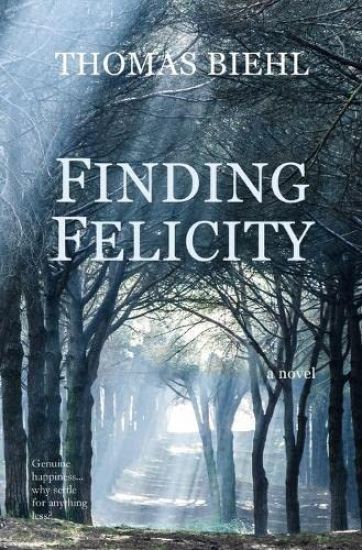
Passed over for a promotion at work, Devin wonders if his life has meaning; will he ever find that elusive happiness human beings all seek. While at a party attempting to drown his sorrows, the host suffers a tragic accident. Moments later, Devin meets the beautiful and mysterious Felicity, who somehow knows this dead man's tale. Felicity offers to share with him the whirlwind romance of Professor Ardor, who gets lost in the deceptive perfection of escapism. Using this and subsequent allusive stories, Devin's interactions with this enigmatic woman help him uncover the faulty ways people search for happiness, when the feelings they find are fleeting. Only then, can he discover genuine happiness and bring lasting meaning to his life.


ALL SHE WANTS IS HER OWN HOME Miss Felicity Chambers is the new teacher of piano and deportment at Miss Manville's Academy for Superior Girls. There is no reason a duke should contact her. There is certainly no reason she should marry his son. But that is evidently what the duke wants. Felicity should be delighted. But the orphaned schoolteacher has long since stopped believing in fairy tales. If only the duke's son weren't so compelling...ALL HE WANTS IS THIS HOME Lord Flint Bracken knows just what is behind the duke's command, and it isn't an attempt to secure a happily-ever-after for his son. The proposal is one of the duke's schemes. Flint has no choice but to cooperate, though, or he risks more than his home. He risks national security. So court a penniless schoolteacher he must. He should be furious. But Felicity Chambers isn't at all what he expected. She might very well be what he wants...