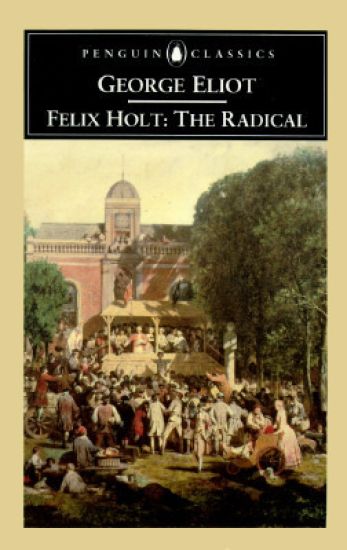
When the young nobleman Harold Transome returns to England from the colonies with a self-made fortune, he scandalizes the town of Treby Magna with his decision to stand for Parliament as a Radical. But after the idealistic Felix Holt also returns to the town, the difference between Harold's opportunistic values and Holt's profound beliefs becomes apparent. Forthright, brusque and driven by a firm desire to educate the working-class, Felix is at first viewed with suspicion by many, including the elegant but vain Esther Lyon, the daughter of the local clergyman. As she discovers, however, his blunt words conceal both passion and deep integrity. Soon the romantic and over-refined Esther finds herself overwhelmed by a heart-wrenching decision: whether to choose the wealthy Transome as a husband, or the impoverished but honest Felix Holt.
Félix Ravaisson's French Philosophy in the Nineteenth Century is one of the most influential and pivotal texts of modern French thought. Commissioned by the Minister of Public Instruction as one of a series of reports to record the progress of the French sciences and humanities for Paris' second world fair, the 1867 Exposition universelle d'arts et d'industrie, it was published with the others the following year. In the report Ravaisson argues, with verve and generosity, and with an unparalleled command of the century's intellectual developments, that the myriad voices in nineteenth-century French thinking were beginning to form a chorus, one that was advancing towards a new, more concrete form of spiritualist philosophy able to resist materialist, mechanist and sensualist doctrines while incorporating recent developments in the life-sciences. As Henri Bergson noted, it effected a "profound change of orientation in university philosophy" and for decades afterwards students learnt its concluding sections by heart in order to pass public examinations. Bergson's own Creative Evolution, which made him the world's most celebrated living philosopher at the end of the long nineteenth century, is, with its psychological interpretation of biological evolution, a direct expression of the new philosophical orientation that Ravaisson had divined in the report.
A scholarly edition of Felix Holt, The Radical by George Eliot. The edition presents an authoritative text, together with an introduction, commentary notes, and scholarly apparatus.
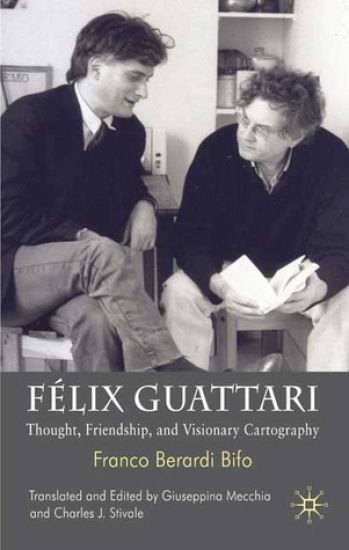
Félix Guattari: Thought, Friendship, and Visionary Cartography, by Franco Berardi 'Bifo', originates in the author's close personal acquaintance with Félix Guattari's writings and political engagement in the context of Berardi Bifo's activism in Italian autonomist politics and his ongoing collaboration with Guattari in the 1970s and 1980s. This biography gains distinction from its keen insight into Guattari's political practice and from a precise understanding of how this practice relates to the theoretical and conceptual aspects of Guattari's writings, alone and with Gilles Deleuze. Thanks to an approach at once personal and theoretically well informed, Bifo's biography provides a clear and accessible introduction to Guattari's works. This edition also includes a critical introduction and a 2005 interview with Bifo on a range of topics relating Guattari's works to the current political conjuncture.
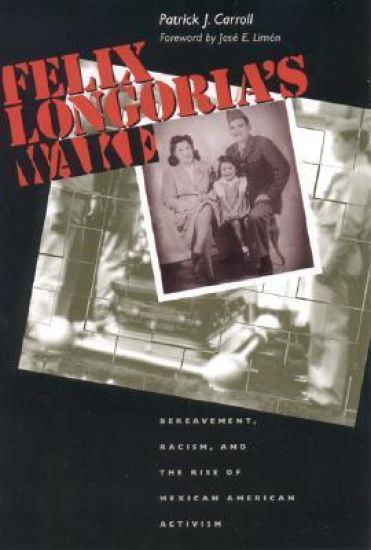
Winner, Tullis Prize, Texas State Historical Association, 2004Private First Class Felix Longoria earned a Bronze Service Star, a Purple Heart, a Good Conduct Medal, and a Combat Infantryman's badge for service in the Philippines during World War II. Yet the only funeral parlor in his hometown of Three Rivers, Texas, refused to hold a wake for the slain soldier because "the whites would not like it." Almost overnight, this act of discrimination became a defining moment in the rise of Mexican American activism. It launched Dr. HÉctor P. GarcÍa and his newly formed American G.I. Forum into the vanguard of the Mexican civil rights movement, while simultaneously endangering and advancing the career of Senator Lyndon B. Johnson, who arranged for Longoria's burial with full military honors in Arlington National Cemetery.In this book, Patrick Carroll provides the first fully researched account of the Longoria controversy and its far-reaching consequences. Drawing on extensive documentary evidence and interviews with many key figures, including Dr. GarcÍa and Mrs. Longoria, Carroll convincingly explains why the Longoria incident, though less severe than other acts of discrimination against Mexican Americans, ignited the activism of a whole range of interest groups from Argentina to Minneapolis. By putting Longoria's wake in a national and international context, he also clarifies why it became such a flash point for conflicting understandings of bereavement, nationalism, reason, and emotion between two powerful cultures-Mexicanidad and Americanism.
A self-taught scientist determined to bring science out of the laboratory and into the practical arena, French-Canadian Felix d’Herelle (1873-1949) made history in two different fields of biology. Not only was he first to demonstrate the use and application of bacteria for biological control of insect pests, he also became a seminal figure in the history of molecular biology. This engaging book is the first full biography of d’Herelle, a complex figure who emulated Louis Pasteur and influenced the course of twentieth-century biology, yet remained a controversial outsider to the scientific community. Drawing on family papers, archival sources, interviews, and d’Herelle’s published and unpublished writings, Dr. William C. Summers tells the fascinating story of the scientist’s life and the work that took him around the globe. In 1917, d’Herelle published the first paper describing the phenomenon of the bacteriophage and its biological nature. A series of more than 110 articles and 6 major books followed, in which d’Herelle established the foundation for the later work of the Phage Group in molecular biology. Yet d’Herelle sometimes inspired animosity in others--he was drummed out of the Pasteur Institute, he held only one brief permanent position in the scientific establishment (at Yale University from 1928 to 1933), and he was bewildered by the social nuances of the world of international science. His story is more than the biography of a single brilliant scientist; it is also a fascinating chapter in the history of biology.
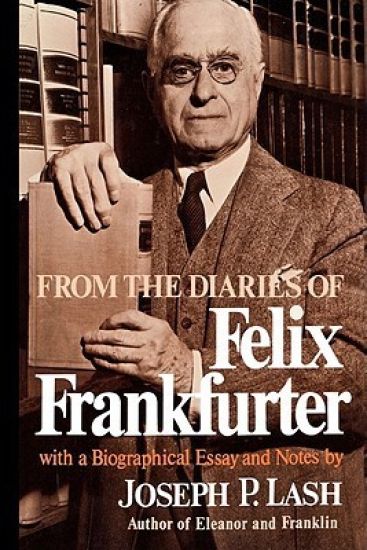
These diaries present fragments from a remarkable life: the immigrant boy who became a counselor to presidents and a shaping force in the evolution of our Constitution into a twentieth-century instrument. As Henry L. Stimson noted, Felix Frankfurter had a talent “for keeping in touch with the center of things.” The life of his times at the level of decision and policy, the human tensions elicited by the possession of power pulse through the pages of his diaries. There are fascinating glimpses, from the inside, of the Taft administration, of Roosevelt’s Washington during World War II, and of the early years of the Truman presidency.
Felix Mendelssohn Bartholdy: A Research and Information Guide is a valuable tool for any scholar, performer, or music student interested in accessing the most pertinent resources on the life, works, and cultural context of the composer. It is an updated, annotated bibliography of resources on the biographical, musical, and religious aspects of Mendelssohn's life.
"If it wasn't for the fused-with-Zyx thing, I suppose I would just be normal--whatever that means." When Felix Yz was three years old, a hyperintelligent fourth-dimensional being became fused inside him after one of his father's science experiments went terribly wrong. The creature is friendly, but Felix--now thirteen--won't be able to grow to adulthood while they're still melded together. So a risky Procedure is planned to separate them . . . but it may end up killing them both instead. This book is Felix's secret blog, a chronicle of the days leading up to the Procedure. Some days it's business as usual--time with his close-knit family, run-ins with a bully at school, anxiety about his crush. But life becomes more out of the ordinary with the arrival of an Estonian chess Grandmaster, the revelation of family secrets, and a train-hopping journey. When it all might be over in a few days, what matters most? Told in an unforgettable voice full of heart and humor, Felix Yz is a groundbreaking story about how we are all separate, but all connected too.
Written around 730–740 the Life of Guthlac by the monk Felix is an important and colourful source for the obscure early history of East Anglia and the Fens. It describes how the youthful Guthlac (674–714) won fame at the head of a Mercian warrior band fighting the British on the borders of Wales before entering the monastery at Repton at the age of twenty-four. Distinguished from the first by his piety and asceticism, Guthlac moved on around 700 to a solitary life on Crowland, an uninhabited island accessible only by boat deep in the wild and desolate marshland separating Mercia and East Anglia. Here he built a shelter cut into the side of a burial-mound in which he lived austerely, skin-clad in the manner of the Desert Fathers, for the rest of his life. Tormented by demons but consoled by visions of angels, Guthlac gained a reputation for sanctity and miraculous healing which spread far afield and continued to grow after his death. This Life vividly reflects the cult of St Guthlac as it existed in East Anglia only a generation later.
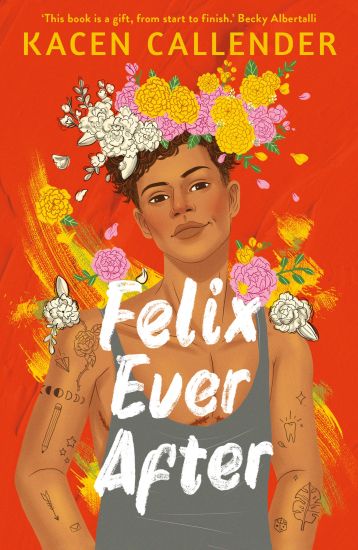
From award-winning author Kacen Callender comes a revelatory YA novel about a transgender teen grappling with identity and self-discovery while falling in love for the first time.Felix Love has never been in love - and, yes, he's painfully aware of the irony. He desperately wants to know what it's like and why it seems so easy for everyone but him to find someone. What's worse is that, even though he is proud of his identity, Felix also secretly fears that he's one marginalisation too many - Black, queer and transgender - to ever get his own happily-ever-after.When an anonymous student begins sending him transphobic messages - after publicly posting Felix's deadname alongside images of him before he transitioned - Felix comes up with a plan for revenge. What he didn't count on: his catfish scenario landing him in a quasi-love triangle . . .But as he navigates his complicated feelings, Felix begins a journey of questioning and self-discovery that helps redefine his most important relationship: how he feels about himself.Felix Ever After is an honest and layered story about identity, falling in love, and recognising the love you deserve.'Definitely not a book to be missed.' Buzzfeed'This book is a gift, from start to finish.' Becky Albertalli, bestselling author of Simon vs. The Homo Sapiens Agenda'An intricate love story for the ages.' CNN Underscored'A firecracker of a book. Teens need this one.' Casey McQuiston, bestselling author of Red, White & Royal Blue'Bold, empathetic coming-of-age story.' The Bookseller'Perfectly balances hardship, hope and happiness.' Nic Stone, bestselling author of Dear Martin'An essential purchase.' SLJ (starred review)'Boldly empathic, hopeful, and full of love.' Publisher's Weekly'Beautiful.' justin a. reynolds, author of Opposite of Always'An unforgettable story.' ALA Booklist (starred review)'Smart and engaging.' Horn Book Magazine
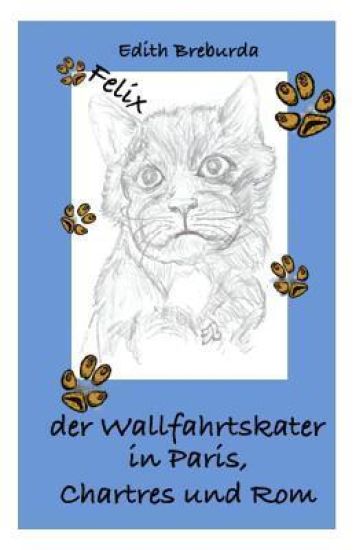
Felix, der hilfsweise die Pfortendienste des Seminars in Wigratzbad bernommen hat, f hrt keineswegs ein langweiliges Dasein. Jeden Tag passieren neue Dinge in seinem so aufregenden Katzenleben. Und was w re ein Wallfahrts-Kater der nicht wirklich die gro en Pilgerst tten Europas besuchen w rde. Alles, hat damit angefangen, dass man doch glatt verga ihn zu f ttern. Der blanke Katzenhunger brachte ihn in die N he der K che, wo es so fein duftete. Dass er im Rucksack von seinem Freund Peter landet, war schierer Zufall. Oder war es Vorsehung, denn Felix hatte eine Aufgabe, die nur er als kleine Katze ausf hren konnte. Er rettete seinem Peter das Leben in der Nacht der Pfingstwallfahrt von Paris nach Chartres. Wie konnte Peter da seinem Katerfreund noch b se sein, ber all die Streiche, die Felix ihm in den letzten Tagen spielte. Felix war nun ein Held und als dieser durfte er sogar mit Peter nach Rom. Doch durch einen dummen Zufall verliert er Peter und irrt mutterseelenallein in den Vatikanischen G rten herum. Findet er seine Freunde wieder? K nnen ihm seine neuen Freunde dabei helfen? Der zweite Band von unserem Felix zeigt jungen und alten Lesern, was in so einem kleinen Katzenhirn vor sich geht, wenn er mit den menschlichen Traditionen und Gepflogenheiten konfrontiert wird.
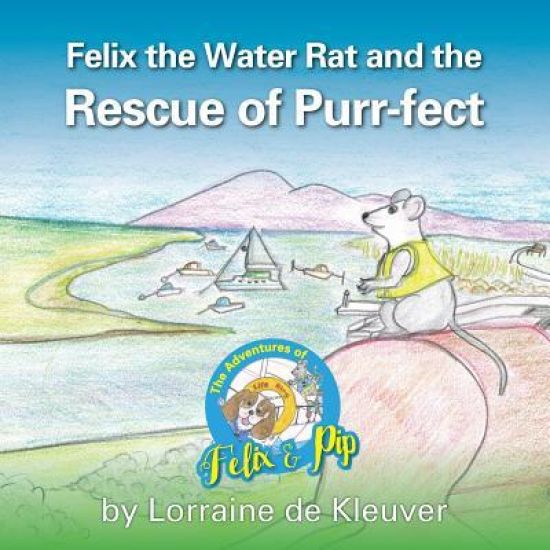
It's a fun and carefree life for Felix the Water rat and his gang of friends, playing together on the banks of the Werribee River. They are an unusual combination of pals - four water rats, two dogs, and even a pelican Things are just fine, until one stormy night Felix finds himself in trouble, and it's up to his brave buddies to rescue him, with a bit of help from some friends in high places Felix the Water rat and the Rescue of Purr-fect is an exciting tale of friendship and teamwork, and a wonderful book for the whole family to enjoy - not just on a stormy night either Felix is even based on a real rat, and the lovely illustrations are drawn by Lorraine herself, with just the right eye for bringing Felix to life
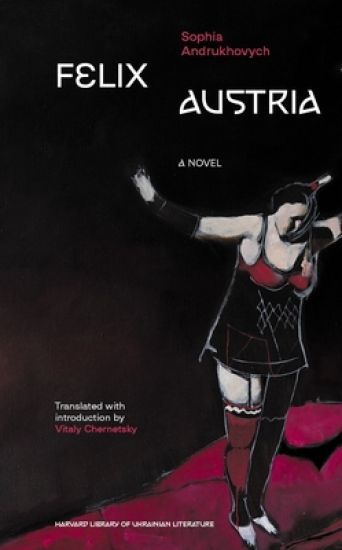
At the turn of the twentieth century, two young women find themselves in Stanyslaviv under Austro-Hungarian rule. Adela, the daughter of a wealthy German doctor, and Stefania, her orphan Ukrainian servant, could not be further apart socially and economically; but their fates intertwine in the cityscape of the late Habsburg Empire, densely inhabited by Ukrainians, Poles, Germans, and Jews for centuries. The intricate relationship between the two women—told by an unreliable narrator—unfolds against the backdrop of a rich ethnic, social, and cultural fabric that seems almost implausible to today’s reader who knows it to be irretrievably lost.In Felix Austria, Sophia Andrukhovych uses techniques from Gothic literature to reconstruct with astonishing detail the atmosphere and the everyday life of Stanyslaviv. As if foreshadowing the wars to come and their devastation, the city’s population delights in earthly pleasures: extravagant dinner parties and receptions, mass celebrations, exotic theater performances, art exhibitions, glitzy shows of stars and starlets from near and far, local rituals of soap making, competition among fashionable dames, and much more. Felix Austria is a must-read for all those who seek to understand Ukraine’s deep ties with Western Europe and its struggle to break away from Russia’s orbit.