The 1984 NBA draft is most remembered as the one where Michael Jordan slipped to third behind number-one pick Hakeem Olajuwon...and the immortal Sam Bowie. You could understand the Houston Rockets choosing Olajuwon, but how on earth could the Portland Trailblazers pass up Jordan for the injury-prone Bowie? For the first time, Filip Bondy pieces together the entire backstory of the draft: from Michael Jordan's indecision over whether he should declare himself eligible for the NBA draft after his junior year...to Charles Barkley's calculated attempt to avoid being drafted by the Philadelphia 76ers and to improve his position at the Olympic trials...to the trades that were considered but fatefully never made.
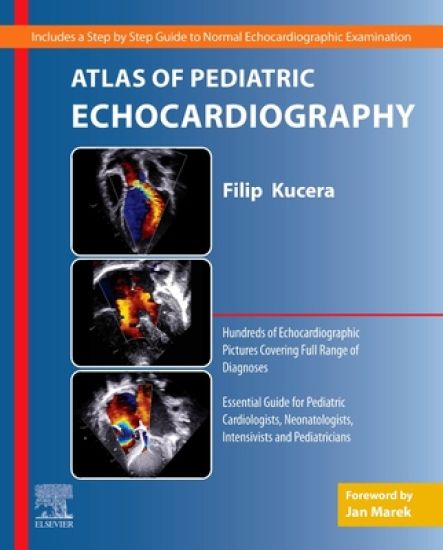
Written by Dr. Filip Kucera, a pediatric cardiology consultant at Great Ormond Street Hospital, Atlas of Pediatric Echocardiography provides "next level" guidance for clinicians who want to improve their echocardiographic skills. It covers a wide range of levels, from a beginner to an advanced level. This highly illustrated atlas is an excellent resource not only for pediatric cardiologists and trainees in pediatric cardiology, but also neonatologists, pediatric intensivists, and pediatricians with an interest in echocardiography. .Contains over 800 high-quality echocardiograms, depicting normal views followed by congenital and acquired cardiovascular defects and other conditions. .Provides clear explanations for all pathology images for a clear understanding of the diagnosis. .Includes a guide to normal echocardiographic examination. .Covers segmental approach to congenital heart disease; atrial, ventricular and atrio-ventricular septal defects; diseases of the mitral, tricuspid, left and right ventricular outflow tract; double outlet right ventricle; tetralogy of Fallot; transposition of the great arteries; truncus arteriosus; functionally single ventricle; PDA; coarctation and interruption of the aorta; vascular rings; pulmonary and systemic venous anomalies; congenital coronary artery abnormalities; myocarditis; cardiomyopathies; Kawasaki disease; rheumatic heart disease; infective endocarditis; pericardial disease; cardiac tumors; pulmonary hypertension; genetic syndromes; mechanical circulatory support; heart transplantation and more.
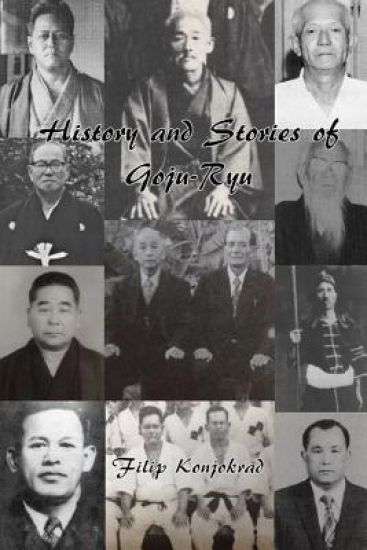
""History and Stories of Goju-Ryu"" tells the history of Goju-Ryu Karate through biographies of its major historical figures. This book introduces for the first time, information on many prominent and lesser known historical figures of Goju-Ryu karate that was not previously available in English. The book is the result of intensive research by the author and translations of many notes, articles and pages from other books such as the Okinawan Karate Kobuo Jitten. This book covers all the major lineages of Goju-Ryu and it is one of the most complete and up to date accounts of Goju-Ryu history published up until now. This will surely be a ""must have"" for all serious practitioners of Goju-Ryu Karate and Okinawan Karate as a whole who are interested in learning more about the people that had a role in its teaching and propagation.
Everything in Klara's life seems perfect. She runs a successful cosmetic clinic with her best friend Tomas, she has a beautiful house near the beach in Melbourne, and she and her adoring husband Dante are trying for a baby. Then one day she receives a call that punctures her perfect life. Dante has had an accident. He was found unconscious in a gay sauna and now lies in a coma. What Klara discovers about her husband will disrupt everything she thought she knew about love, marriage and family. From Australia's most exciting new author, Modern Marriage will cause you to question what lies beneath the appearance of perfectio
Benefit-risk assessment is at the centre of the approval process for every new medicine. The ability to assess the risks of a new medicine accurately and to balance these against the benefits the medicine could bring is critical for every regulatory authority and pharmaceutical company. Despite this there are very few tried and tested evaluative models currently available. The authors of this book have developed a new, pioneering tool for the assessment of benefits and risks for new medicines in development. This model utilises a multi-criteria decision analysis which involves selecting, scoring and weighting key benefit and risk attributes and leads to an overall appraisal of benefits and risks of medicines. Benefit-Risk Appraisal of Medicines establishes the background and criteria required to assess benefit and risk in general and reviews the current practices by regulatory authorities and the pharmaceutical industry, including those models currently available. It outlines the development and evaluation of the authors’ new model and analyses the implications of its implementation. Describes an innovative, systematic model which leads to transparent and responsible benefit-risk decision makingContributes important ideas to the debate on benefit-risk appraisalProvides a future framework for benefit-risk appraisal of medicines Benefit-Risk Appraisal of Medicines covers the entire process from the discovery of new medicines to their marketing and is ideal for all those who work in the pharmaceutical industry and regulatory authorities,, as well as post-graduate students of pharmaceutical medicine and clinical pharmacology.
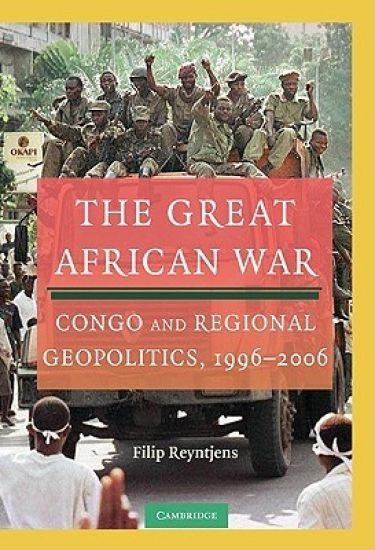
This book examines a decade-long period of instability, violence and state decay in Central Africa from 1996, when the war started, to 2006, when elections formally ended the political transition in the Democratic Republic of Congo (DRC). A unique combination of circumstances explain the unravelling of the conflicts: the collapsed Zairian/Congolese state; the continuation of the Rwandan civil war across borders; the shifting alliances in the region; the politics of identity in Rwanda, Burundi and eastern DRC; the ineptitude of the international community; and the emergence of privatised and criminalised public spaces and economies. This book seeks to provide an in-depth analysis of concurrent developments in Zaire/DRC, Rwanda, Burundi and Uganda in African and international contexts. By adopting a non-chronological approach, it attempts to show the dynamics of the inter-relationships between these realms and offers a toolkit for understanding the past and future of Central Africa.
This book examines a decade-long period of instability, violence and state decay in Central Africa from 1996, when the war started, to 2006, when elections formally ended the political transition in the Democratic Republic of Congo (DRC). A unique combination of circumstances explain the unravelling of the conflicts: the collapsed Zairian/Congolese state; the continuation of the Rwandan civil war across borders; the shifting alliances in the region; the politics of identity in Rwanda, Burundi and eastern DRC; the ineptitude of the international community; and the emergence of privatised and criminalised public spaces and economies. This book seeks to provide an in-depth analysis of concurrent developments in Zaire/DRC, Rwanda, Burundi and Uganda in African and international contexts. By adopting a non-chronological approach, it attempts to show the dynamics of the inter-relationships between these realms and offers a toolkit for understanding the past and future of Central Africa.
Millions of innocent people were arrested in Stalin’s Soviet Union during the 1930s in different waves of mass repression. Under violent interrogation, many were forced to confess to crimes they did not commit. Rather than save their lives, as the interrogators had promised, confession was usually the last step to their execution. Very few of those arrested eventually refused to confess.Oleksandr Shums´kyi, the Ukrainian Marxist revolutionary, was one of the most important but least known of them. He not only refused to confess but sustained for over a decade a massive protest against his repression and the Stalinist attack on his country, Ukraine. Stalin punished him mercilessly in response, paralyzing him in jail and murdering his wife, but refrained from assassinating him for more than ten years.This book unravels the Shum´skyi riddle to explain why. In doing so, it opens a new window into understanding the history of Soviet repression and the Russian pathologies toward Ukrainian independence, which help us understand Russia’s current war against Ukraine.
Millions of innocent people were arrested in Stalin’s Soviet Union during the 1930s in different waves of mass repression. Under violent interrogation, many were forced to confess to crimes they did not commit. Rather than save their lives, as the interrogators had promised, confession was usually the last step to their execution. Very few of those arrested eventually refused to confess.Oleksandr Shums´kyi, the Ukrainian Marxist revolutionary, was one of the most important but least known of them. He not only refused to confess but sustained for over a decade a massive protest against his repression and the Stalinist attack on his country, Ukraine. Stalin punished him mercilessly in response, paralyzing him in jail and murdering his wife, but refrained from assassinating him for more than ten years.This book unravels the Shum´skyi riddle to explain why. In doing so, it opens a new window into understanding the history of Soviet repression and the Russian pathologies toward Ukrainian independence, which help us understand Russia’s current war against Ukraine.
In Liberating Oedipus?: Psychoanalysis as Critical Theory, Dr. Filip Kovacevic demonstrates how psychoanalytic theory can join political theory in designing alternative political norms and values. Detailing the thoughts of major psychologists including Sigmund Freud, Jacques Lacan, and Alain Badiou, this book offers a new approach to traditional Lacanian theory. Kovacevic's emphasis on Lacanian psychoanalysis is especially relevant due to the modern challenges of failed globalization and the subsequent terrorist reactions. Kovacevic proves that political practice without an emancipatory psychology to guide it is potentially dangerous. Liberating Oedipus? is a critical text for scholars of political theory and those interested in the history of ideas.
system is a complex object containing a significant percentage of elec A tronics that interacts with the Real World (physical environments, humans, etc. ) through sensing and actuating devices. A system is heterogeneous, i. e. , is characterized by the co-existence of a large number of components of disparate type and function (for example, programmable components such as micro processors and Digital Signal Processors (DSPs), analog components such as AID and D/A converters, sensors, transmitters and receivers). Any approach to system design today must include software concerns to be viable. In fact, it is now common knowledge that more than 70% of the development cost for complex systems such as automotive electronics and communication systems are due to software development. In addition, this percentage is increasing constantly. It has been my take for years that the so-called hardware-software co-design problem is formulated at a too low level to yield significant results in shorten ing design time to the point needed for next generation electronic devices and systems. The level of abstraction has to be raised to the Architecture-Function co-design problem, where Function refers to the operations that the system is supposed to carry out and Architecture is the set of supporting components for that functionality. The supporting components as we said above are heteroge neous and contain almost always programmable components.
Desiring the Beautiful studies the concept of deification, theosis, in two of the most influential early Christian philosopher-theologians, who might be considered as theoretical consolidators of the idea of theosis, and argues that the proper understanding of their central soteriological concept must take into account its dimension of love and beauty. The core of the book consists of six chapters, each dedicated to the three central concepts in two thinkers, and while they can be considered as distinct studies, they are, however, elements which lead to the synoptic vision of the erotic-aesthetic dimension of deification. The three themes have been treated systematically, followed by a synthesis and comparison of convergence and divergence between Dionysus and Maximus. The core of the task stands, of course, in the texts and their interpretation, so the method employed was unavoidably hermeneutical as well. While Dionysius and Maximus are among the most studied Church fathers, the context in which love, beauty and deification relate has not been thoroughly examined so far, and thus Desiring the Beautiful complements existing studies by emphasizing this important aspect of deification as understood by its two chief advocates. Primarily intended for scholars of patristics and Byzantine philosophy, the book can serve as a substantial introduction to the overall thought of Dionysius and Maximus, so it will be of use also to readers interested in late antique and Byzantine studies, early Christian theology, and the relationship between Greek philosophy and Christianity.
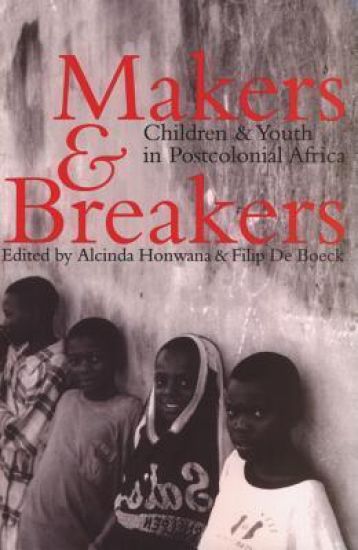
Presents a range of views on the lives of young people around Africa. This book contributes to a theoretical, ethnographic and historical understanding of issues concerning children, youth, agency, locality, globalization and identity from the past to the postcolony and beyond. As such the authors strive to achieve a better insight into what lives in the hearts and minds of African youngsters. Contributors include: Alcinda Honwana, Filip De Boeck, Jean & John Comaroff, Mats Utas, Pamela Reynolds, Tshikala Biaya,Deborah Durham, Nicolas Argenti, Ibrahim Abdullah & Mamadou Diouf North America: Africa World Press; Senegal: Codesria
When faced with material crises governments do not call upon historians, anthropologists, political scholars, or psychologists. They call on economists. These have developed the most coherent and convincing description of how society organizes itself through a system of accounting amenable to precise analysis. Mastering this analysis is the challenge of the apprentice economist. Learn to become a master from Filip Palda, who earned his Ph.D. in economics at the University of Chicago. Here is what Nobel Prize winners have said about Palda's previous books: "Interesting and well written." Gary S. Becker. Nobel Prize in economics 1992. "Palda offers a novel and interesting perspective." James M. Buchanan. Nobel Prize in economics 1987.



![Modern Marriage [16pt Large Print Edition]](/covers/9780369388032.jpg)