Kirjojen hintavertailu. Mukana 12 083 983 kirjaa ja 12 kauppaa.

Kirjahaku

Etsi kirjoja tekijän nimen, kirjan nimen tai ISBN:n perusteella.

1000 tulosta hakusanalla Flora

Flora of North America: Volume 14, Magnoliophyta: Gentianaceae to Hydroleaceae
Flora of North America represents the first and only comprehensive taxonomic guide to the extraordinary diversity of plant life in North America north of Mexico. The collaborative effort of more than 30 major U.S. and Canadian botanical institutions, this series revises and synthesizes literally thousands of floristic monographs and regional floras published over the last three centuries. Flora of North America North of Mexico Volume 14: Magnoliophyta: Gentianaceae to Hydroleaceae includes treatments prepared by 41 authors covering 624 species in 83 genera. Apocynaceae, Convolvulaceae, and Solanaceae, the largest families in the volume, contain many common ornamental plants and some widespread invasive species. They also contain plants used for food or medicine, yet some are highly toxic. Descriptions for all families, genera, species, and recognized infraspecies are provided, as are distribution maps for all species and infraspecies and many informative discussions. Every genus and 25% of the species are illustrated. Keys are included to aid in the identification of all genera, species, and infraspecies in the flora. Volume 14 is the twenty-fourth volume to be published in the planned 30-volume Flora of North America series.
Flora of North America, Volume 13

Flora of North America, Volume 13

OXFORD UNIVERSITY PRESS INC
2025
sidottu
Flora of North America represents the first and only comprehensive taxonomic guide to the extraordinary diversity of plant life in North America north of Mexico. The collaborative effort of more than 30 major U.S. and Canadian botanical institutions, this series revises and synthesizes literally thousands of floristic monographs and regional floras published over the last three centuries. Flora of North America North of Mexico Volume 13: Magnoliophyta: Geraniaceae to Apiaceae includes treatments prepared by 60 authors covering 624 species in 147 genera classified in 14 families. Apiaceae, the carrot or parsley family, is by far the largest family in the volume with 403 species, and includes many economically important plants that are used for food, spices, medicine, and ornamentals, as well as some species that are notoriously toxic. Many species are narrow endemics, a significant number of which have been described only recently. The treatment brings together the latest taxonomic and phylogenetic information on this diverse family. Some other families in the volume that have significant numbers of species include Anacardiaceae, Araliaceae, Geraniaceae, Rutaceae, and Sapindaceae. Descriptions for all families, genera, species, and infraspecies are provided, as are occurrence maps for all species and infraspecies. Every genus and 30% of the species are illustrated. Keys are included to aid in the identification of taxa at all ranks. Volume 13 is the twenty-fifth volume to be published in the planned 30-volume Flora of North America North of Mexico series.
Flora's Fieldworkers

Flora's Fieldworkers

Suzanne Zeller

MCGILL-QUEEN'S UNIVERSITY PRESS
2022
sidottu
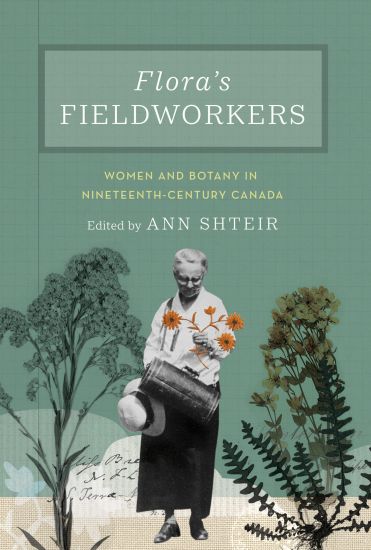
When Catharine Parr Traill came to Upper Canada in 1832 as a settler from England, she brought along with her ties to British botanical culture. Nonetheless, when she arrived she encountered a new natural landscape and, like other women chronicled in this book, set out to advance the botanical knowledge of the time from the Canadian field.Flora’s Fieldworkers employs biography, botanical data, herbaria specimens, archival sources, letters, institutional records, book history, and abundant artwork to reconstruct the ways in which women studied and understood plants in the nineteenth century. It features figures ranging from elite women involved in imperial botanical projects in British North America to settler-colonial women in Ontario and Australia – most of whom were scarcely visible in the historical record – who were active in “plant work” as collectors, writers, artists, craft workers, teachers, and organizers. Understood as an appropriate pastime for genteel ladies, botany offered women pathways to scientific education, financial autonomy, and self-expression. The call for more diverse voices in the present must look to the past as well. Bringing botany to historians and historians to botany, Flora’s Fieldworkers gathers compelling material about women in colonial and imperial Canada and Australia to take a new look at how we came to know what we know about plants.
Flora of the Maltese Islands

Flora of the Maltese Islands

Alex Casha

Lulu.com
2017
pokkari
An updated edition of the original book. Flora of the Maltese Islands describes over 730 species in full colour and contains over 1,500 colour photographs. The book can be regarded both as an informative one on plants and as a guide to the wild flora of the Maltese Islands. All proceeds from this book go towards nature conservation.
Flora Tristan, Utopian Feminist

Flora Tristan, Utopian Feminist

Indiana University Press
1993
pokkari
"The entries not only illuminate the career of a remarkable woman, but yield insights into the early industrial system of the 1830s and 1840s." —Library Journal A child of both the French and Industrial revolutions, Flora Tristan (1803-1844) became a bold social critic and political activist. Assuming personal freedoms enjoyed by few women contemporaries, she devoted herself to the cause of universal justice. Tristan traveled widely and tirelessly strived to organize French men and women workers. Several of her writings are here translated into English for the first time.
Flora of the Pacific Northwest

Flora of the Pacific Northwest

C. Leo Hitchcock; Arthur Cronquist

University of Washington Press
2018
sidottu
Flora of the Pacific Northwest, first published in 1973, became an instant classic for its innovative style of providing species descriptions in the identification keys and for its comprehensive illustrations of nearly all treated taxa (species, subspecies, and varieties). Students rely on it as an essential primer, while veteran botanists and natural resource managers use it as the definitive reference for the region's flora.This completely revised and updated edition captures the advances in vascular plant systematics over the decades since publication of the first edition. These advances, together with significant changes in plant nomenclature, the description of taxa new to science from the region, and the recent documentation of new native and nonnative species in the Pacific Northwest required a thorough revision of this authoritative work.Flora of the Pacific Northwest covers all of Washington, the northern half of Oregon, Idaho north of the Snake River Plain, the mountainous portion of western Montana, and the southern portion of British Columbia. It accounts for the wild-growing native and introduced vascular plants falling within those boundaries and includes:Treatment of 5,545 taxa (more than 1,000 taxa added from the first edition)Illustrations for 4,716 taxa (1,382 more than the first edition)Nomenclature changes for more than 40 percent of the taxa included in the first editionThese enhancements make this new edition the most comprehensive reference on Pacific Northwest vascular plants for professional and amateur botanists, ecologists, rare plant biologists, plant taxonomy instructors, land managers, nursery professionals, and gardeners.
Flora Illustrata

Flora Illustrata

Yale University Press
2014
sidottu
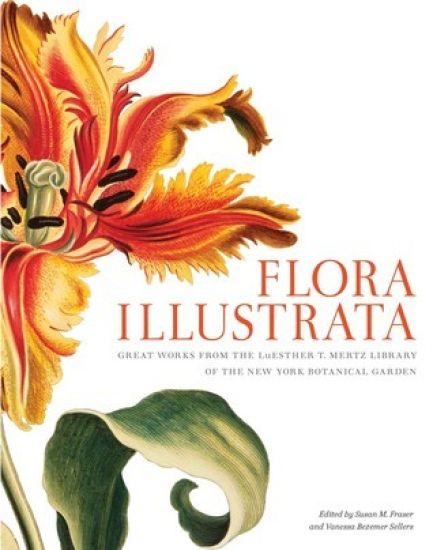
An exquisitely illustrated volume in celebration of the world’s foremost library of botanical works The renowned LuEsther T. Mertz Library of The New York Botanical Garden counts among its holdings many of the most beautiful and pioneering botanical and horticultural works ever created. More than eight centuries of knowledge, from the twelfth century to the present, are represented in the library’s collection of over one million items. In this sumptuously illustrated volume, international experts introduce us to some of the library’s most fascinating works—exceedingly rare books, stunning botanical artworks, handwritten manuscripts, Renaissance herbals, nursery catalogs, explorers’ notebooks, and more. The contributors hold these treasures up for close inspection and offer surprising insights into their histories and importance. The diverse materials showcased in the volume reflect the creative efforts of eminent explorers, scientists, artists, publishers, and print makers. From the rare, illuminated pages of Pliny the Elder’s Naturalis historia (1483), to the earliest book ever published on American insects (1797), to lovely etchings of the water gardens at Villa Pratolino in Florence (1600s), the Mertz Library holdings will inspire in readers a new appreciation for the extraordinary history of botany and its far-reaching connections to the worlds of science, books, art, and culture.A co-publication with The New York Botanical Garden
Flora Macdonald: Pretty Young Rebel: Her Life and Story
A captivating biography of the remarkable young Scotswoman whose bold decision to help "Bonnie" Prince Charlie--the Stuart claimant to the British throne--evade capture and flee the country has become the stuff of legend. After his decisive defeat at the Battle of Culloden in 1746, Prince Charles Edward Stuart was a man on the run. Seeking refuge in the Outer Hebrides, hoping to escape to France, he found an unlikely ally in Flora MacDonald, a young woman in her early twenties, loyal to the Stuarts. Disguising the prince as an Irish maid, petticoats and all, Flora conveyed Charles by boat to Skye, where they lodged safely with her family, until the prince's inexpert handling of feminine attire caused concern, and he was persuaded to forgo the ruse before fleeing the area undetected. Flora never saw him again. This famous incident led to Flora's enduring appeal as a courageous Scottish heroine, inspiring and influencing countless novels, poems, and songs--most notably, the classic ballad "Skye Boat Song" adapted from a traditional tune in the late nineteenth century. But her remarkable life didn't come to a close with her clandestine mission to Skye. Faced with a confession from one of the boatmen, Flora was arrested and taken to London on charges of treason, where under interrogation, she wittily deflected questions and staunchly defended her motives. She was eventually released under the 1747 Act of Indemnity, but disaster would befall her yet again: in 1774, Flora and her husband, Allan MacDonald, fled the impoverished highlands for a brighter future in Cross Creek, North Carolina--utterly unaware of the burgeoning revolution that would upend their lives there, with Allan imprisoned and Flora fleeing, penniless, back home to the Hebrides. In this probing, evocative portrait of a tumultuous life, master historian Flora Fraser peels away the layers of misinformation, legend, and myth to reveal Flora MacDonald in full. Fraser presents a fascinating picture of this headstrong and irrepressible woman. As Samuel Johnson declared upon visiting her in Scotland, her name was "a name that will be mentioned in history, and if courage and fidelity be virtues, mentioned with honor."
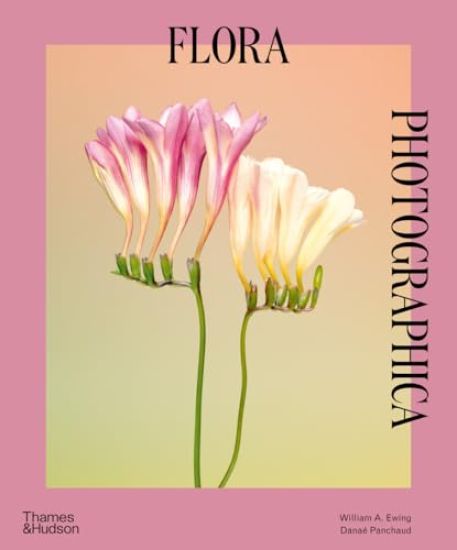
Flora Photographica

Flora Photographica

William A. Ewing; Danaé Panchaud

THAMES HUDSON LTD
2024
nidottu
Vivid, bold, spectacular and unexpected: a definitive overview of one of contemporary photography’s most innovative fields, showcasing flower imagery by more than 120 of the world’s leading practitioners. There has never been a period in photography’s long history – no school, no movement – when flowers have not been a central focus, whether in the form of the classic still life, the botanical study, incorporated into portraiture and studies of the human body, documented in street photography, or used subversively in surrealist collage and montage. Today, flower photography remains in full bloom, with photographers the world over depicting flowers and floral motifs in novel ways. Featuring works by more than 120 photographers, Flora Photographica links the very best of flower photography from the past thirty years with its predecessors – canonical floral studies from the realms of photography, botanical illustration, drawing and painting that have marked the collective imagination for centuries, if not millennia. Works by contemporary photographers such as Cindy Sherman, Thomas Ruff, Vik Muniz, Valérie Belin, Viviane Sassen, and Martin Schoeller appear across nine thematic chapters, complemented by two in-depth essays by curators William A. Ewing and Danaé Panchaud exploring the relationship between contemporary works and the rich traditions of floral art and photography.
Flora Europaea

Flora Europaea

Cambridge University Press
1968
sidottu
The Flora Europaea, originally published between 1964 and 1980, explores the synthesis of all the national and regional Floras of Europe. It is based on a critical review of existing literature and on studies on herbaria and in the field. It aims to be simple as well as authoritative, and should enable the reader to name as far as its subspecies any fern, conifer or flowering plant growing wild or wildly cultivated. The second of the five volumes covers the Dicotyledonous families from Rosaceae to Umbelliferae, following the Engler system. Apart from keys and descriptions, information is given on geographical distribution and, where possible, on habitat preference and chromosome number. All names used in Floras or important monographs are cited in the text or index. The text, in English, uses a limited vocabulary, and there are glossaries of technical terms and Latin equivalents.
Flora Europaea

Flora Europaea

Cambridge University Press
1972
sidottu
The Flora Europaea, originally published between 1964 and 1980, explores the synthesis of all the national and regional Floras of Europe. It is based on a critical review of existing literature and on studies on herbaria and in the field. It aims to be simple as well as authoritative, and should enable the reader to name as far as its subspecies any fern, conifer or flowering plant growing wild or wildly cultivated. The third of the volume covers the Dicotyledonous families from Diapensiaceae to Myoporaceae, following the Engler system. Apart from keys and descriptions, information is given on geographical distribution and, where possible, on habitat preference and chromosome number. All names used in Floras or important monographs are cited in the text or index. The text, in English, uses a limited vocabulary, and there are glossaries of technical terms and Latin equivalents.
Flora Europaea

Flora Europaea

Cambridge University Press
1976
sidottu
Originally published between 1964 and 1980, this fourth volume is a revision of the seventh edition of Willis, with substantial amendments and additions. One distinct feature is an alphabetical list of accepted family names in this dictionary with their equivalents in Bentham & Hooker's Genera Plantarum and Engler's Syllabus.
Flora Europaea Check-List and Chromosome Index
This book simultaneously provides a useful checklist of all taxa published in Flora Europaea and documents the sources of all the chromosome numbers cited therein. It will be useful to anyone wishing to have ready access to the names and sequence of taxa used in Flora Europaea (for example in botanical libraries and herbaria) and for those involved with chromosome studies of the European flora.
Flora Europaea

Flora Europaea

Cambridge University Press
2010
pokkari
Flora Europaea, published between 1964 and 1980, with a second edition of Volume One appearing in 1993, is the definitive account of the flowering plants, ferns and fern-allies of Europe, covering all plants growing in the wild, including many naturalised species and all widely cultivated crop species. It provides full keys and concise descriptions of families, genera, species and subspecies, together with bibliographic details for accepted species, summaries of geographical distribution, chromosome numbers and habitat information. Volume One brings the treatment of the first 79 families up to date. Keys and descriptions have been extensively revised, and many taxa have been incorporated, whilst others have been relegated to synonymy as a consequence of research. All synonyms are cited in the text. The Appendices have been thoroughly revised, and information on geographical distribution critically edited to give an authoritative summary of the occurrence of each species in 39 European territories.