Kirjojen hintavertailu. Mukana 11 244 527 kirjaa ja 12 kauppaa.

Kirjahaku

Etsi kirjoja tekijän nimen, kirjan nimen tai ISBN:n perusteella.

1000 tulosta hakusanalla Francis Alua

Francis Bacon: From Magic to Science
Originally published in 1968. This volume discusses Francis Bacon’s thought and work in the context of the European cultural environment that influenced Bacon’s philosophy and was in turn influenced by it. It examines the influence of magical and alchemical traditions on Bacon and his opposition to these traditions, as well as illustrating the naturalist, materialist and ethico-political patterns in Bacon’s allegorical interpretations of fables.
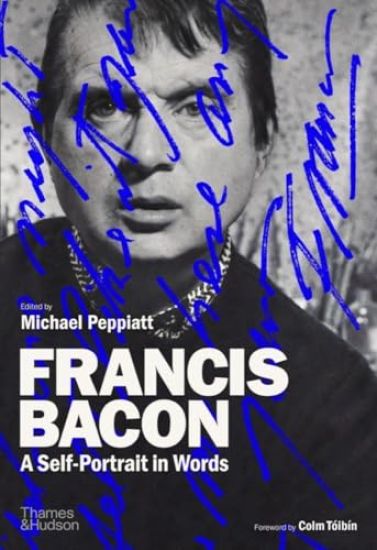
Francis Bacon: A Self-Portrait in Words

Francis Bacon: A Self-Portrait in Words

Michael Peppiatt; Colm Tóibín

THAMES HUDSON LTD
2024
sidottu
A new selection of letters, statements and interviews reveal the preoccupations, thoughts and ideas of Francis Bacon, one of the 20th century’s most influential and important artists. The documents selected for Francis Bacon: A Self-Portrait in Words illustrate Bacon’s sharp wit and ability to express complex ideas in highly personal, memorable language. Included here are not only letters to friends, patrons and fellow artists, but also intriguing notes and lists of paintings. They often come with a sketch as an aide-mémoire or an injunction to himself as he worked in the studio, and many have only come to light since his death. Bacon’s letters mirror and reveal his dominant preoccupations at different points throughout his long career. Most of Bacon’s letters have never been published and include several that he wrote to the author. Particularly intriguing is the record of a dream that he jotted down, outlining impossibly beautiful paintings he had conjured up in his sleep. Together with photographs, archive material and works by the artist are numerous reproductions of Bacon’s characteristic handwriting, from the briefest jottings and notes to more extensive letters and statements. Bacon frequently came up with memorable epithets and definitions. He delighted in doing with words what he set out to do in painting: 'I like phrases that cut me.' Michael Peppiatt explores the personal legacy of one of the 20th century’s most important painters and presents a compelling verbal self-portrait that reveals both man and artist.
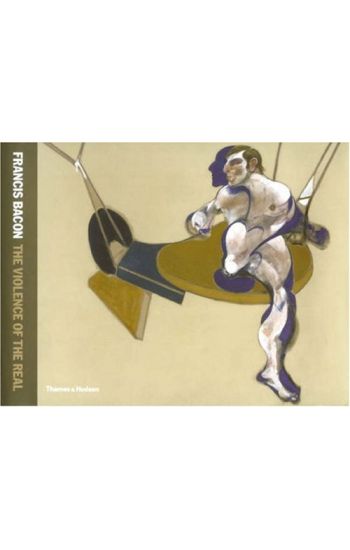
Francis Bacon

Francis Bacon

Thames Hudson Ltd
2006
sidottu
Francis Bacon (1909–1992) was renowned for his dramatic depictions of the human form; he portrayed the ordeal of the vulnerable, defencelessly exposed body like no other artist of his generation. At the centre of this volume are about sixty of Bacon’s disturbing yet captivating studies of the human figure, encompassing works from the late 1940s until his death. Texts by a range of experts on the artist offer new insights into these radical and often discomfiting images, so brilliantly reproduced on the pages of this book.
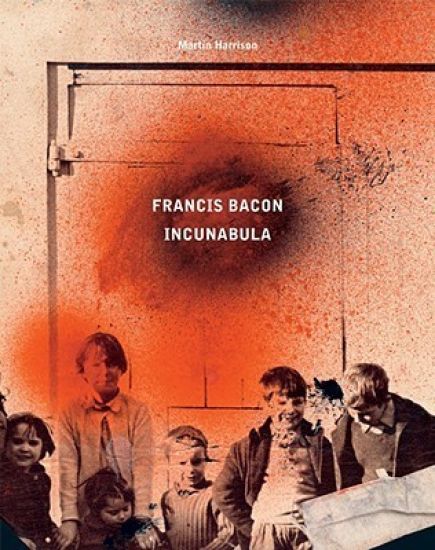
Francis Bacon: Incunabula

Francis Bacon: Incunabula

Martin Harrison; Rebecca Daniels

Thames Hudson Ltd
2008
sidottu
In 1949 Francis Bacon found his subject – the human body – and from then on it remained his principal theme. But he did not paint from life. Instead he appropriated images from the mass media that he manipulated into his `studies’. This book presents over 200 of the `working documents’ about which Bacon was entirely secretive but which, it emerges, were integral to his creative process. Culled from thousands of pieces of original material found in his studio, including newspapers, magazines, books and photographs, these items have each been exhaustively and minutely researched, providing for the first time comprehensive details of the artist’s sources. Previously unseen, these visually thrilling documents demonstrate Bacon’s tactile, visceral relationship with his sources, and his unerring eye for seeking out visual stimulation in the most unexpected places. This unique selection of material from Bacon’s studio – thoroughly researched, meticulously documented and compellingly presented – will provide an invaluable insight into both the artist’s work and his working methods.
Francis Bacon: Books and Painting
Published to accompany the first Francis Bacon retrospective in Paris for twenty years, this catalogue analyses Bacon’s works from 1971 onwards in light of his relationship to literature. Bacon always vigorously opposed over-analysis of his paintings, preferring to interpret them in purely illustrative or symbolic terms; he admitted, however, that literature was a powerful stimulus to his imagination. The artist was inspired by the images conjured up by certain texts: Aeschylus’ phrase ‘the reek of human blood smiles out at me’ in particular haunted Bacon, while his 1978 work Painting refers to T. S. Eliot’s seminal poem The Waste Land. The inventory of Bacon’s personal library has identified more than 1,300 books, ranging from Bataille and Conrad to Nietzsche and Leiris. Including twelve of Bacon’s renowned triptychs, this lavish publication features eleven gatefolds and some sixty paintings created by Bacon between 1971 and his death in 1992. Reproduced here with analyses of Bacon’s paintings in the light of some of his most admired authors, these specially commissioned texts reveal new ways of understanding some of the most powerful works in the modern canon.
Francis Bacon

Francis Bacon

Thames Hudson Ltd
2015
nidottu
Francis Bacon (1909-1992) was one of the great figurative painters of the twentieth century. This book, newly available in paperback, provides a thorough account of the life and work of this complex and conflicted artist, whose paintings retain their visceral impact and relevance today. Essays by international scholars provide new insights into Bacon's art and life, and some fifty art works from every decade of his career – from the pensive and shocking works of the 1940's to the exuberantly coloured and visceral large paintings of the 1970s and 80's – show Bacon' unique representations of the human body through his mastery of paint. Over 150 additional illustrations portray his studio, friends and lovers, and reveal the diversity of his source materials, from Velázquez to the motion photos of Eadweard Muybridge.
Francis Bacon: Studies for a Portrait

Francis Bacon: Studies for a Portrait

Michael Peppiatt

Thames Hudson Ltd
2021
nidottu
Francis Bacon was one of most elusive and enigmatic creative geniuses of the twentieth century. However much his avowed aim was to simplify both himself and his art, he remained a deeply complex person. Bacon was keenly aware of this underlying contradiction, and whether talking or painting, strove consciously towards absolute clarity and simplicity, calling himself ‘simply complicated’. Until now, this complexity has rarely come across in the large number of studies on Bacon’s life and work. Francis Bacon: Studies for a Portrait shows a variety of Bacon’s many facets, and questions the accepted views on an artist who was adept at defying categorization. The essays and interviews brought together here span more than half a century. Opening with an interview by the author in 1963, the year that he met Bacon, there are also essays written for exhibitions, memoirs and reflections on Bacon’s late work, some published here for the first time. Included are recorded conversations with Bacon in Paris that lasted long into the night, and an overall account of the artist’s sources and techniques in his extraordinary London studio. This is an updated edition of Francis Bacon: Studies for a Portrait (2008), published for the first time in a paperback reading book format. It brings this fascinating artist into closer view, revealing the core of his talent: his skill for marrying extreme contradictions and translating them into immediately recognizable images, whose characteristic tension derives from a life lived constantly on the edge.With 14 illustrations, 7 in colour
Francis Bacon Retrieved - Lost Words / New Writing
The fifth volume in the acclaimed Francis Bacon Studies series, published under the aegis of The Estate of Francis Bacon David Sylvester's Interviews with Francis Bacon remain the most consulted writing on Bacon. In this book, the fifth volume in the acclaimed Francis Bacon Studies series, Bacon's words appear in their unredacted form for the very first time. Other essays throw light on form and accident in Bacon's work, chimera and liminal entities, the psychology of the imposter and destroyed paintings. Half of this volume, an unprecedented proportion in the ‘Studies’ series, is devoted to one topic: key parts of Bacon’s responses in Interviews with Francis Bacon that were removed, either to maintain continuity or at Bacon's own insistence. This unpublished material will add immensely to this most frequently consulted resource and will require a reassessment of many of Bacon's statements and ideas. Maria Balaska considers the question: Where does a painting come from? She investigates forms and accidents in Bacon's work. Amanda J. Harrison studies chimera and liminal entities in Bacon’s work, while Darian Leader turns our attention to the psychology of the imposter. Martin Harrison examines photographs of four paintings that Bacon later destroyed, and are reproduced here for the first time.
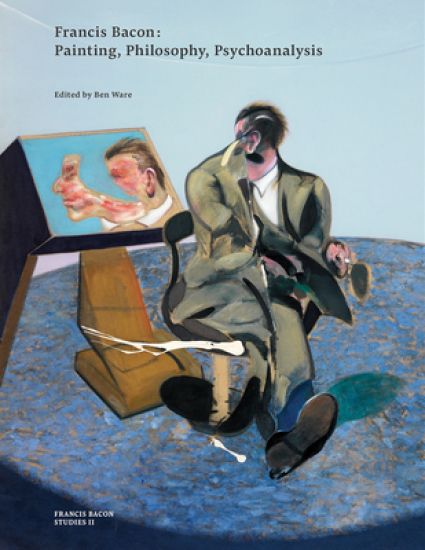
Francis Bacon: Painting, Philosophy, Psychoanalysis

Francis Bacon: Painting, Philosophy, Psychoanalysis

Ben Ware; The Estate of Francis Bacon

Thames Hudson Ltd
2019
nidottu
The second in a series of books that seeks to illuminate Francis Bacon’s art and motivations, and to open up fresh and stimulating ways of understanding his paintings.Francis Bacon is one of the most important artists of the 20th century. His works continue to puzzle and unnerve viewers, raising complex questions about their meaning. Over recent decades, two theoretical approaches to Bacon’s work have come to hold sway: firstly, that Bacon is an existentialist painter, depicting an absurd and godless world; and secondly, that he is an anti-representational painter, whose primary aim is to bring his work directly onto the spectator’s ‘nervous system’. Francis Bacon: Painting, Philosophy, Psychoanalysis brings together some of today’s leading philosophers and psychoanalytic critics to go beyond established readings of Bacon and to open up radically new ways of thinking about his art. The essays bring Bacon into dialogue with figures such as Aristotle, Hegel, Freud, Lacan, Adorno and Heidegger, as well as situating his work in the broader contexts of modernism and modernity. The result is a timely and thought-provoking collection that will be essential reading for anyone interested in Bacon, modern art and contemporary aesthetics.
Francis Bacon: Shadows

Francis Bacon: Shadows

Thames Hudson Ltd
2021
nidottu
Francis Bacon: Shadows continues in the revelatory mode established by Inside Francis Bacon. It comprises six essays on diverse topics, interpretative as well as factual, which cumulatively present an abundance of fresh ideas and information about Bacon. The fundamental aim of the series – to rethink Bacon’s art from new perspectives – is impressively fulfilled by the eminent authors. Martin Harrison opens the book with some hitherto unseen Bacon-related photographs and includes a tribute to the great Bacon scholar, David Boxer (1946–2017). Christopher Bucklow turns his attention to the contrast between Bacon's art and the art of our own times, setting Bacon in the context of Romantic Modernism's confidence in the unconscious as a source. Amanda Harrison’s essay explores imagery in Bacon’s paintings that relates to esoteric, mythological and alchemical themes, while Stefan Haus draws on the ideas of philosophers from Plato to Hegel to consider the impact of Bacon’s art. Hugh Davies’s unexpurgated 1973 Bacon Diaries are published here in their entirety for the first time, revealing a more complete view of Bacon as both man and artist. Sophie Pretorius examines Tate's Barry Joule Archive, a collection of working materials and drawings attributed to Bacon. Finally, Martin Harrison explores Francis Bacon's Lost Paintings – works Bacon dubbed 'failures', but preserved by his Estate and published here for the very first time.With 120 illustrations in colour
Francis Bacon

Francis Bacon

Brian Harvey Goodwin Wormald

Cambridge University Press
2006
pokkari
In the centuries since his death, Francis Bacon has been perceived as a promoter and prophet of 'natural science'. Certainly Bacon expected to fill the vacuum which he saw existing in the study of nature; but he also saw himself as a clarifier and promoter of what he called 'policy', that is, the study and improvement of the structure and function of civil states including the then new British state. In this major study, Brian Wormald's first since his work on Clarendon, Bacon is shown resolving this conflict by attending assiduously to both fields, arguing that work on one would help progress in the other. In his teaching, in his practice and in terms of what was actually achieved, the junction between the two enterprises was affected by Bacon's work in history - civil and natural. In this fundamental reappraisal of one of the most complex and innovative figures of the age, Brian Wormald reveals how Bacon's conception and practice of history provided an answer to his strivings in both policy and natural philosophy.
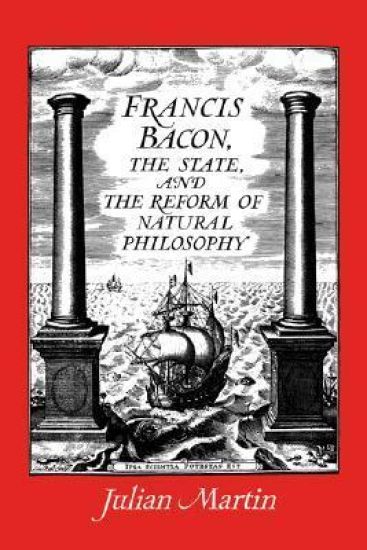
Francis Bacon, the State and the Reform of Natural Philosophy
Why was it that Francis Bacon, trained for high political office, devoted himself to proposing a celebrated and sweeping reform of the natural sciences? Julian Martin's investigative study looks at Bacon's family context, his employment in Queen Elizabeth's security service and his radical critique of the relationship between the Common Law and the monarchy, to find the key to this important question. Deeply conservative and elitist in his political views, Bacon adapted Tudor strategies of State management and bureaucracy, the social anxieties and prejudices of the late Elizabethan governing elite, and a principal intellectual resource of the English governing classes - the Common Law - into a novel vision and method for the sciences. Bacon's axiom that 'Knowledge is Power' takes on far-reaching implications in Martin's challenging argument that the reform of natural philosophy was a central part of an audacious plan to strengthen the powers of the Crown in the State.
Francis Bacon: Discovery and the Art of Discourse

Francis Bacon: Discovery and the Art of Discourse

Lisa Jardine

Cambridge University Press
2009
pokkari
By modern standards Bacon's writings are striking in their range and diversity, and they are too often considered a separate specialist concerns in isolation from each other. Dr Jardine finds a unifying principle in Bacon's preoccupation with 'method', the evaluation and organisation of information as a procedure of investigation or of presentation. She shows how such an interpretation makes consistent (and often surprising) sense of the whole corpus of Bacon's writings: how the familiar but misunderstood inductive method for natural science relations to the more information strategies of argument in his historical, ethical, political and literary work. There is a substantial and valuable study of the intellectual Renaissance background from which Bacon emerged and against which he reacted. Through a series of details comparisons and contrasts we are led to appreciate the true originality and ingenuity of Bacon's own views and also to discount the more superficial resemblances between them and later developments in the philosophy of science.
Francis Bacon and Renaissance Prose

Francis Bacon and Renaissance Prose

Vickers Brian

Cambridge University Press
2009
pokkari
The full study of Bacon as a writer, Dr Vickers takes into account the whole corpus of Bacon's work, in Latin as well as in English. His chief sources are the The Advancement of Learning and the Essays. His purpose is to reinstate Bacon as one of the supreme masters of English prose in a period which made rich use of all the expressive resources of the medium. The study is both analytical and historical: it isolates the major features of Bacon's style, and sets them in the context of Renaissance theory and practice. The features include the overall structure of Bacon's works, his important concept of the aphorism, and his use of the traditional patterns of syntax. Dr Vickers makes a challenging reassessment of the accepted view of Bacon as a 'Senecan' or 'anti-Ciceronian' prose writer. Particular attention is paid to imagery, in which Bacon's powers as an imaginative writer are greatest. There are two general chapters, the first being the problem of analysing style, the last on reactions to Bacon's style since the seventeenth century. This book also provides the basis for a fresh assessment of Renaissance prose.
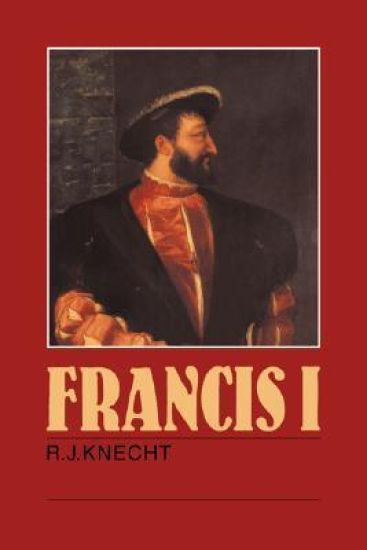
Francis I

Francis I

R. J. Knecht

Cambridge University Press
1984
pokkari
The name of Francis I and his emblem, the salamander, are familiar to the many thousands of tourists who visit the chateaux of the Loire each year. But what sort of monarch was he? Whereas in his own day he was acclaimed as 'the great king Francis', in more recent times he has generally been taken less seriously than his exact contemporaries Henry VIII of England and the Emperor Charles V. Yet his reign was no less important than theirs. It witnessed and promoted fundamental changes in France's political structure, economy, society, religion and cultural life. The king's obsession with war stimulated constitutional change. By entailing expenditures far in excess of the crown's traditional resources, it obliged him to tap new sources of wealth, to reorganise the fiscal system and to promote administrative centralisation. Economically, Francis' reign saw the completion of the recovery that had followed the Hundred Years' War. While the land was reclaimed, the population grew, town life flourished and trade expanded.
Francis Bacon

Francis Bacon

Brian Harvey Goodwin Wormald

Cambridge University Press
1993
sidottu
In the centuries since his death, Francis Bacon has been perceived as a promoter and prophet of ‘natural science’. Certainly Bacon expected to fill the vacuum which he saw existing in the study of nature; but he also saw himself as a clarifier and promoter of what he called ‘policy’, that is, the study and improvement of the structure and function of civil states including the then new British state. In this major new study, Brian Wormald’s first since his work on Clarendon, Bacon is shown resolving this conflict by attending assiduously to both fields, arguing that work on one would help progress in the other. In his teaching, in his practice, and in terms of what was actually achieved, the junction between the two enterprises was affected by Bacon’s work in history - civil and natural. In this fundamental reappraisal of one of the most complex and innovative figures of the age, Brian Wormald reveals how Bacon’s conception and practice of history provided an answer to his strivings in both policy and natural philosophy.
Francis Ford Coppola's The Godfather Trilogy
The Godfather trilogy is among the most significant works of Hollywood cinema of the last quarter century. They provide a richly complex look at a whole segment of American life and culture spanning almost the whole century. In six essays, written especially for this volume, The Godfather trilogy is re-examined from a variety of perspectives. Providing original analyses on the form and significance of Coppola’s achievement, they demonstrate how the filmmaker revised the conventions of the American crime film in the Viet Nam era, his treatment of the capitalism of the criminal underworld and its inherent violence, the power struggles within Hollywood over the film, and the contribution of opera to the epic force and cinematic style of Coppola’s vision of an American criminal dynasty. The Godfather articulates the themes, styles, mythologies, performances, and underlying cultural values that have made the film a modern classic.
Francis Ford Coppola's The Godfather Trilogy
The Godfather trilogy is among the most significant works of Hollywood cinema of the last quarter century. They provide a richly complex look at a whole segment of American life and culture spanning almost the whole century. In six essays, written especially for this volume, The Godfather trilogy is re-examined from a variety of perspectives. Providing original analyses on the form and significance of Coppola’s achievement, they demonstrate how the filmmaker revised the conventions of the American crime film in the Viet Nam era, his treatment of the capitalism of the criminal underworld and its inherent violence, the power struggles within Hollywood over the film, and the contribution of opera to the epic force and cinematic style of Coppola’s vision of an American criminal dynasty. The Godfather articulates the themes, styles, mythologies, performances, and underlying cultural values that have made the film a modern classic.