Kirjojen hintavertailu. Mukana 11 244 527 kirjaa ja 12 kauppaa.

Kirjahaku

Etsi kirjoja tekijän nimen, kirjan nimen tai ISBN:n perusteella.

1000 tulosta hakusanalla Frank Merlo

Frank O'Hara

Frank O'Hara

Marjorie Perloff

University of Chicago Press
1998
nidottu
Drawing extensively upon the poet's unpublished manuscripts - poems, journals, essays, and letters - as well as all his published works, Marjorie Perloff presents Frank O'Hara as one of the central poets of the postwar period and an important critic of the visual arts. Perloff traces the poet's development through his early years at Harvard and his interest in French Dadaism and Surrealism to his later poems that fuse literary influence with elements from Abstract Expressionist painting, atonal music, and contemporary film. This edition contains a new introduction addressing O'Hara's homosexuality, his attitudes toward racism, and changes in the poetic climate in recent years.
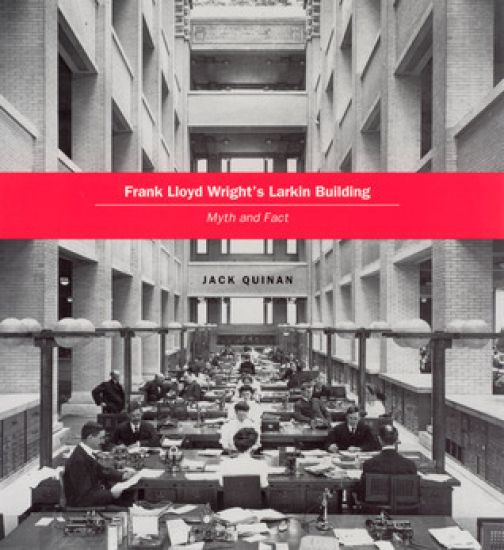
Frank Lloyd Wright's Larkin Building

Frank Lloyd Wright's Larkin Building

Jack Quinan

University of Chicago Press
2006
nidottu
Frank Lloyd Wright's Larkin Building has become an icon of modern architecture. And the fact that it was demolished only forty-six years after its 1904 completion makes Jack Quinan's study of the building - which housed a Buffalo, New York, soap company - all the more valuable. Quinan's history draws on engineering documents, personal accounts of the building, and other papers he acquired from the family of Darwin D. Martin, a Larkin executive who proposed commissioning Wright to design the company's offices. With access to these rare sources, Quinan reveals how a young Wright landed the commission and traces the evolution of his cutting-edge plans. Quinan then takes Wright studies to a new level, examining the Larkin Building as a structure at the center of economic and personal relationships. Illustrated with over one hundred photographs, floor plans, maps, and diagrams, "Frank Lloyd Wright's Larkin Building" provides a concise but complete record of how the building was conceived, built, evaluated, and finally demolished in what has been called a tragic loss for American architecture.
Frank Lloyd Wright

Frank Lloyd Wright

Meryle Secrest

University of Chicago Press
1998
nidottu
This biography focuses on Wright's family history, personal adventures and colourful friends and family. The author had unprecedented access to an archive of over 100,000 of Wright's letters, photographs, drawings and books, and she also interviewed surviving devotees, students and relatives.
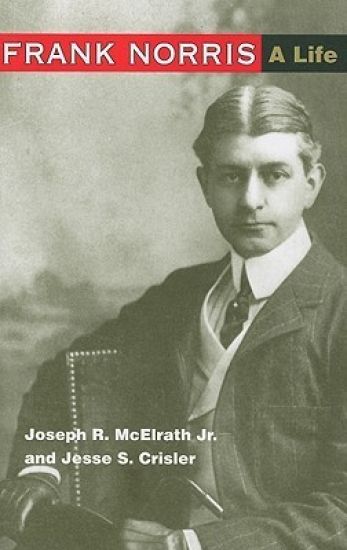
Frank Norris

Frank Norris

Joseph R. McElrath Jr.; Jesse Crisler

University of Illinois Press
2010
nidottu
Born in Chicago in 1870, Frank Norris led a life of adventure and art. He moved to San Francisco at fifteen, spent two years in Paris painting, returned to San Francisco to become an internationally famous author, and died at age thirty-two from a ruptured appendix. During his short life, he wrote an inspired series of novels about the United States coming of age, including The Octopus, The Pit, and McTeague. Until recently, various obstacles prevented a comprehensive biography of Norris: the writer burned most of his correspondence, the 1906 San Francisco earthquake and fire devoured more, and his brother and widow dispersed his surviving papers as gifts. Joseph R. McElrath Jr. and Jesse S. Crisler spent over thirty years amassing the material necessary for this truly full-scale portrait of Norris.
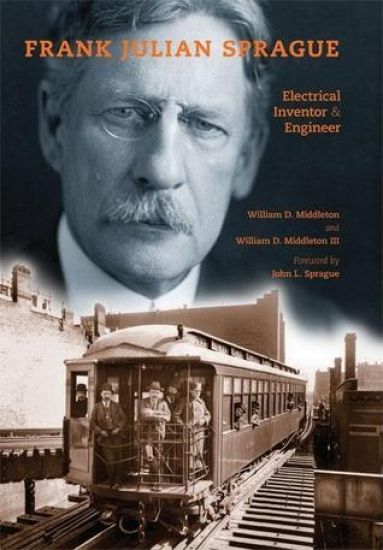
Frank Julian Sprague

Frank Julian Sprague

William D. Middleton

Indiana University Press
2009
sidottu
Frank Julian Sprague invented a system for distributing electricity to streetcars from overhead wires. Within a year, electric streetcars had begun to replace horsecars, sparking a revolution in urban transportation. Sprague (1857–1934) was an American naval officer turned inventor who worked briefly for Thomas Edison before striking out on his own. Sprague contributed to the development of the electric motor, electric railways, and electric elevators. His innovations would help transform the urban space of the 20th century, enabling cities to grow larger and skyscrapers taller. The Middletons' generously illustrated biography is an engrossing study of the life and times of a maverick innovator.
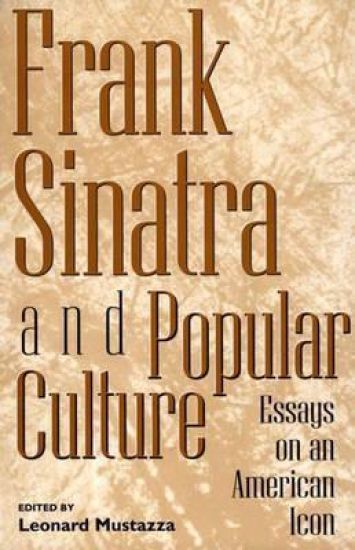
Frank Sinatra and Popular Culture

Frank Sinatra and Popular Culture

Leonard Mustazza

Praeger Publishers Inc
1998
sidottu
Frank Sinatra's influence on American popular culture has been wide reaching and long lasting. This diverse collection of essays written by historians, music critics, and popular culture personalities offers a myriad of perspectives and commentaries on this multitalented legend. The essays attest to the interest in Sinatra that has spanned six decades and shows no sign of diminishing—even after his death. From singer to actor, from mass media personality to humanitarian and cultural trendsetter, the many contributions of Frank Sinatra are brought to life in this entertaining volume. Written to appeal to Sinatra fans, these unique essays, including one by Frank Sinatra himself, are organized into three sections. The first examines Sinatra's fame and the ways in which his image was formed, the second looks at his music, and the final group of essays are personal reminiscences by the people who knew him. Together these essays will provide new material for the ever-growing dialogue about Frank Sinatra's place in and influence over twentieth-century American popular culture.
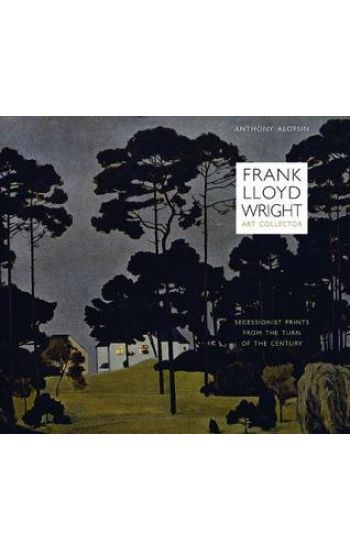
Frank Lloyd Wright, Art Collector

Frank Lloyd Wright, Art Collector

Anthony Alofsin

University of Texas Press
2012
sidottu
These Secessionist art prints, acquired by Frank Lloyd Wright and his lover Mamah Borthwick Cheney during their infamous flight to Europe in 1909–1910, reveal a new dimension of the architect’s taste and aesthetic preferences. This previously unknown and newly discovered group of prints from his personal art collection shows that around the turn of the twentieth century Wright had a surprising interest in European artists pursuing their own versions of modernism. Identified from careful archival research, the prints demonstrate how richly diffuse and multifaceted modernism was before the codification of a modernist canon. Wright, a revolutionary architect, preferred the work of Secessionists to that of the avant-garde of expressionism, cubism, and futurism. To Wright, the artists he selected were modern, and they appealed deeply to his interest in landscapes and graphic techniques of reproduction.In Frank Lloyd Wright, Art Collector, Anthony Alofsin presents the first catalogue raisonnÉ of the thirty-two prints and one original drawing that constitute Wright’s Secessionist collection. Alofsin explores Wright’s encounters with German and Austrian art before his travels to Europe; the fluid definition of modern art around 1909; and the complex context for Wright’s acquiring this collection while in Europe. This book, with its original research, puts into a new light a range of artists-some famous, others unknown-who sought to express, like Wright, their own rebellion against academic traditions. A unique contribution to the history of modern art, Frank Lloyd Wright, Art Collector offers stunningly original insights into the master’s artistic taste, as well as to a group of progressive artists whose work has been undeservedly overlooked in conventional histories of modernism.
Frank Okada

Frank Okada

Kazuko Nakane

University of Washington Press
2005
pokkari
Artist Frank Okada played a significant role in the modern art history of the Pacific Northwest. Born a Nisei in 1931, he was raised in Seattle's International District and throughout his life retained its influences and his vivid memories in his art. From his first painting award -- received at the Washington State fair -- until his death in 2000, he worked at the confluence of regional art, Asian culture, and national art movements.At the beginning of his career, Okada received a series of prominent fellowships -- John Hay Whitney in 1957, Fulbright in 1959, and Guggenheim in 1966–67. He was greatly influenced by the artists he met and was a close observer of the art scenes in New York, Paris, and Kyoto in an effort to find his own style of painting. He began teaching painting at the University of Oregon in 1969, a tenure that lasted almost thirty years. His work from the seventies, eighties, and nineties balanced forms and colors in intensely worked surfaces. The color blocks gradually became more intellectually structured and his compositions more expressive as he made his colors more powerful. As Nakane notes, "without recognizable reference to nature or his own personality, he created a texture that brought light to a field of color. . . . In order to appreciate his paintings, one needs to spend time observing how the colors respond to the changes of light throughout the day."
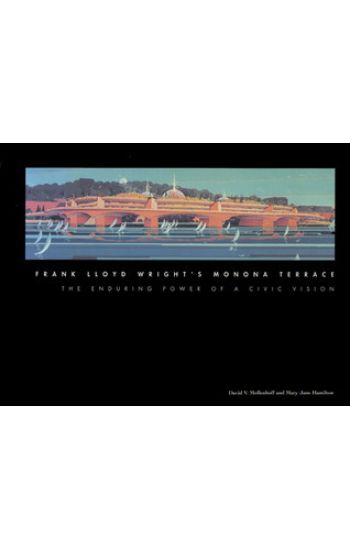
Frank Lloyd Wright's Monona Terrace

Frank Lloyd Wright's Monona Terrace

University of Wisconsin Press
1999
sidottu
The story of the 59-year battle to build one of Frank Lloyd Wright's most important designs. The Monona Terrace, first conceived in 1938, resulted in five local referenda, ten lawsuits and several acts of state legislature. This text examines those who opposed and those who supported the project.
Frank Lloyd Wright's Taliesin

Frank Lloyd Wright's Taliesin

Randolph C. Henning; Kathryn A. Smith

University of Wisconsin Press
2011
nidottu
The Wisconsin-born Frank Lloyd Wright (1867-1959) is recognized worldwide as an iconic architectural genius. In 1911 he designed Taliesin to use as his personal residence, architectural studio, and working farm. A century later Randolph C. Henning has assembled a splendid collection of rare vintage postcards, some never before published, that provides a revealing and visually unique journey through Wright's work at Taliesin. Included are intimate images of Taliesin at various stages and views of the building just after the tragic 1914 fire. The postcards also depict nearby buildings designed by Wright, including the Romeo and Juliet windmill and two buildings for the Hillside Home School. Henning provides useful explanations that highlight relevant details and accompany each image. Frank Lloyd Wright's Taliesin documents and celebrates Wright's 100-year-old masterpiece.
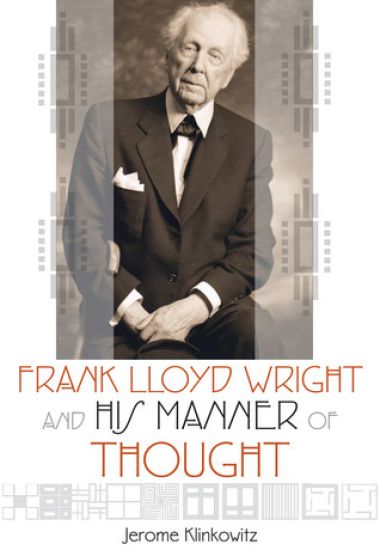
Frank Lloyd Wright and his Manner of Thought

Frank Lloyd Wright and his Manner of Thought

Jerome Klinkowitz

University of Wisconsin Press
2014
nidottu
An iconic figure in American culture, Frank Lloyd Wright is famous throughout the world. Although his achievements in architecture are stunning, it is his importance in cultural history, Jerome Klinkowitz contends, that makes Wright the object of such avid and continuing interest. Designing more than just buildings, Wright offered a concept for living that still influences how people conduct their lives today. Wright's innovations in architecture have been widely studied, but this is the most comprehensive and sustained treatment of his thought.Klinkowitz presents a critical biography driven by the architect's own work and intellectual growth, focusing on the evolution of Wright's thinking and writings from his first public addresses in 1894 to his last essay in 1959. Did Wright reject all of Victorian thinking about the home, or do his attentions to a minister's sermon on ""the house beautiful"" deserve closer attention? Was Wright echoing the Transcendentalism of Ralph Waldo Emerson, or was he more in step with the philosophy of William James? Did he reject the Arts and Crafts movement, or repurpose its beliefs and practices for new times? And, what can be said of his deep dissatisfaction with architectural concepts of his own era, the dominant modernism that became the International Style? Even the strongest advocates of Frank Lloyd Wright have been puzzled by his objections to so much that characterized the twentieth century, from ideas for building to styles of living.In Frank Lloyd Wright and His Manner of Thought, Klinkowitz, a widely published authority on twentieth-century literature, thought, and culture, examines the full extent of Wright's books, essays, and lectures to show how he emerged from the nineteenth century to anticipate the twenty-first.
Frank Lloyd Wright's Forgotten House

Frank Lloyd Wright's Forgotten House

Nicholas D. Hayes

University of Wisconsin Press
2021
sidottu
While the grandiosity of Fallingwater and elegance of Taliesin are recognized universally, Frank Lloyd Wright's first foray into affordable housing is frequently overlooked. Although Wright began work on his American System-Built Homes (ASBH, 1911-17) with great energy, the project fell apart following wartime shortages and disputes between the architect and his developer. While continuing to advocate for the design of affordable small homes, Wright never spoke publicly of ASBH. As a result, the heritage of many Wright-designed homes was forgotten. When Nicholas and Angela Hayes became stewards of the unassuming Elizabeth Murphy House near Milwaukee, they began to unearth evidence that ultimately revealed a one-hundred-year-old fiasco fueled by competing ambitions and conflicting visions of America. The couple's forensic pursuit of the truth untangled the ways Wright's ASBH experiment led to the architect's most productive, creative period. Frank Lloyd Wright's Forgotten House includes a wealth of drawings and photographs, many of which have never been previously published. Historians, architecture buffs, and Wrightophiles alike will be fascinated by this untold history that fills a crucial gap in the architect's oeuvre.
Frank Lloyd Wright's Unity Temple

Frank Lloyd Wright's Unity Temple

Patrick F. Cannon

UNIVERSITY OF WISCONSIN PRESS
2025
sidottu
Following a thorough restoration completed in 2017, Frank Lloyd Wright's early modern masterpiece, Unity Temple in Oak Park, IL, was designated in 2019 as part of a UNESCO World Heritage Site, "The 20th Century Architecture of Frank Lloyd Wright". It was a fitting recognition for a building whose ground-breaking form and transcendent interior spaces brought its architect international recognition when published as part of a portfolio of his work in Berlin in 1910, the two-volume Wasmuth Portfolio. Designed for a Unitarian congregation when he was not yet 40 years old, and dedicated in 1909, it still serves the same congregation today. In addition to serving as a worship space, Unity Temple Restoration Foundation (the secular, nonprofit organization responsible for the preservation of the building) presents educational and performing arts programs, highlighting the building's excellent acoustical and spatial qualities. As a sublime work of art, it has long attracted visitors from around the world. Declared a National Historic Landmark in 1970 by the US Department of the Interior, it has also been designated as one of the architect's "indispensable" buildings by the American Institute of Architects. More recently, its restoration, carried out by Harboe Architects with major funding by the Alphawood Foundation, received the Richard H. Driehaus Foundation National Preservation Award from the National Trust for Historic Preservation. This book, a complete rethinking of an earlier one by the same team, tells the story of Unity Temple's design and creation and includes all new post-restoration photography by noted architectural photographer James Caulfield. Turning its pages will give you a complete tour of one of the most important buildings of the 20th century.
Frank Loesser

Frank Loesser

Thomas L. Riis

Yale University Press
2015
pokkari
Perhaps best remembered as the writer and composer of the ever-popular Guys and Dolls and the Pulitzer Prize–winning How to Succeed in Business Without Really Trying, Frank Loesser was one of the great songwriters of the twentieth century. Lyricist of over 700 songs—among them such cherished favorites as “Baby, It’s Cold Outside,” “Once in Love with Amy,” and “I Believe in You”—his work has received both Tony and Academy Awards. Here Thomas L. Riis, in a deeply informed and lively discussion of Loesser’s life and musical career, presents a critical look at one of the most important—though often overshadowed—Broadway composers. Immensely prolific and a personally magnetic man, Loesser was a major figure during the Broadway golden age that included Rodgers and Hammerstein, Lerner and Loewe, and Bernstein. Riis traces Loesser’s early career as a Hollywood songwriter and a noted contributor to the war effort. He discusses in depth each of Loesser’s musicals and provides a look at the legacy of a man admired as a mentor who inspired dozens of assistants, protégés, young songwriters, novice singer-actors, and aspiring producers. This book offers a concise look at Loesser’s life along with an engaging examination of the totality of his works.
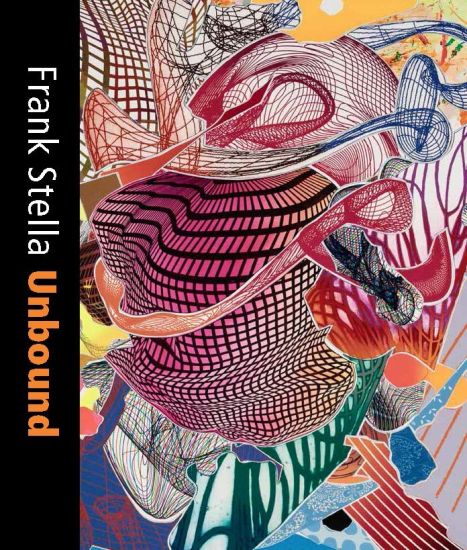
Frank Stella Unbound

Frank Stella Unbound

Mitra Abbaspour; Calvin Brown; Erica Cooke

Yale University Press
2018
sidottu
Focusing on the vital role of literature in the development of the artistic practice of Frank Stella (b. 1936), this insightful book looks at four transformative series of prints made between 1984 and 1999. Each of these series is named after a literary work—the Had Gadya (a playful song traditionally sung at the end of the Passover Seder), Italian Folktales, compiled by Italo Calvino, Moby-Dick by Herman Melville, and The Dictionary of Imaginary Places by Alberto Manguel and Gianni Guadalupi. This investigation offers a critical new perspective on Stella: an examination of his interdisciplinary process, literary approach, and interest in the lessons of art history as crucial factors for his artistic development as a printmaker. Mitra Abbaspour, Calvin Brown, and Erica Cooke examine how Stella’s dynamic engagement with literature paralleled the artist’s experimentation with unconventional printmaking techniques and engendered new ways of representing spatial depth to unleash the narrative potential of abstract forms.Distributed for the Princeton University Art MuseumExhibition Schedule:Princeton University Art Museum (05/19/18–09/23/18)Museum of Contemporary Art Jacksonville (10/06/18–01/13/19)
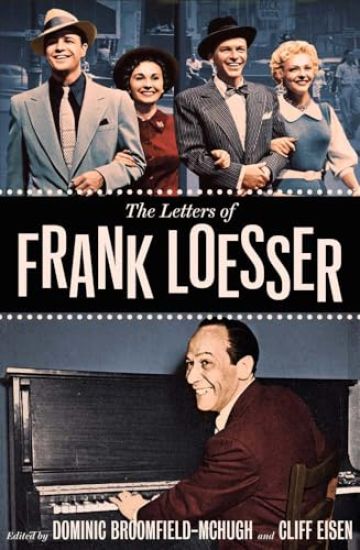
The Letters of Frank Loesser

The Letters of Frank Loesser

Frank Loesser

YALE UNIVERSITY PRESS
2025
sidottu
The first collected correspondence of one of America’s greatest songwriters—revealing a fascinating life and lasting influence Frank Loesser was one of the most versatile and influential figures of the Golden Age of Broadway, most famous for Guys and Dolls. A Pulitzer Prize– and Academy Award–winning composer and lyricist, he was also a successful producer and businessman who maintained a wide and rich correspondence. From Richard Rodgers and Ira Gershwin to Sammy Davis Jr. and Marlon Brando, his milieu included the great creatives of the day. Dominic Broomfield-McHugh and Cliff Eisen draw together the best of Loesser’s letters to reveal the mind behind numerous hit musicals and a wealth of perennially popular songs. Clever, funny, and original, the letters shed light on Loesser’s creative process, his cultural Jewishness, and his keen business sense and relationship with the musical profession. This correspondence allows us dazzling new access to the world of Broadway at its height—and reveals the scale of Loesser’s influence to this day.
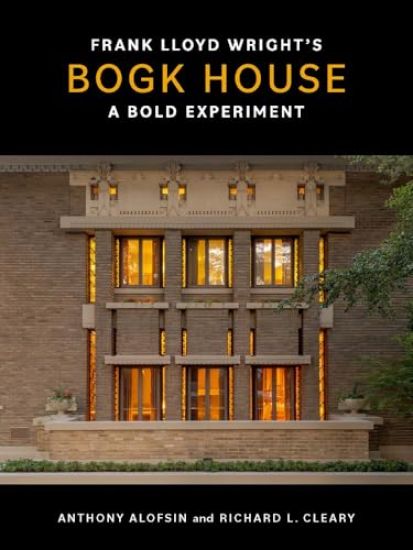
Frank Lloyd Wright's Bogk House

Frank Lloyd Wright's Bogk House

Anthony Alofsin; Richard L. Cleary

YALE UNIVERSITY PRESS
2025
sidottu
A trove of insights into and images of an important, little-known Frank Lloyd Wright building The house that Frank Lloyd Wright designed for Frederick C. and Katherine G. Bogk in Milwaukee, Wisconsin, in 1916 occupies a unique position in Wright’s career: it is the only fully realized house designed in the teens that demonstrates his fascination with Primitivism, the use of non-Western sources as an inspiration for modern design. This book traces Wright’s exploration alongside the stories of an immigrant family’s rise and Milwaukee’s emergence as a vibrant city. It also documents the interiors, relatively unchanged for over a century, that represent Wright’s approach to total design. Written by two eminent architectural historians and Wright scholars, Anthony Alofsin and Richard L. Cleary, this book offers new insight into the evolution of Wright’s design process during the least understood decade of his career. The book draws on a fascinating cache of unpublished letters, photographs, drawings, and documents in the private archive of the Elsner family, who owned the house from 1955 to 2023. The book also features new photography of the Bogk House by Alexander Vertikoff, renowned for his use of natural light. Distributed for Frank Lloyd Wright’s Burnham Block, Inc.