Kirjojen hintavertailu. Mukana 11 717 486 kirjaa ja 12 kauppaa.

Kirjahaku

Etsi kirjoja tekijän nimen, kirjan nimen tai ISBN:n perusteella.

1000 tulosta hakusanalla Frank Tenner

Frank Family That Survived

Frank Family That Survived

Gordon F Sander

Cornerstone
2005
pokkari
Presents a story of a German-Jewish family named Frank which, like Anne Frank's family and 25,000 other Dutch and other 'stateless' Jews, 'dived under' in Nazi-occupied Holland in 1942 - but miraculously survived. This book is based on personal testaments, records and family interviews.
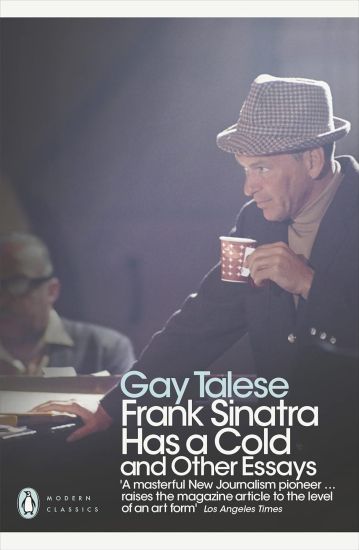
Frank Sinatra Has a Cold

Frank Sinatra Has a Cold

Gay Talese

Penguin Classics
2011
pokkari
A selection of witty and provocative essays from the father of New Journalism, Gay Talese's Frank Sinatra Has a Cold and Other Essays is published in Penguin Modern Classics.Gay Talese is the father of American New Journalism, who transformed traditional reportage with his vivid scene-setting, sharp observation and rich storytelling. His 1966 piece for Esquire, one of the most celebrated magazine articles ever published, describes a morose Frank Sinatra silently nursing a glass of bourbon, struck down with a cold and unable to sing, like 'Picasso without paint, Ferrari without fuel - only worse'. The other writings in this selection include a description of a meeting between two legends, Fidel Castro and Muhammad Ali; a brilliantly witty dissection of the offices of Vogue magazine; an account of travelling to Ireland with hellraising actor Peter O'Toole; and a profile of fading baseball star Joe DiMaggio, which turns into a moving, immaculately-crafted meditation on celebrity. Gay Talese (b. 1932) is an American author. He wrote for The New York Times in the early 1960s and helped to define literary journalism or 'new nonfiction reportage', also known as New Journalism. His most famous articles are about Joe DiMaggio, Dean Martin and Frank Sinatra. He lives in New York with his wife, Nan Talese.If you enjoyed Frank Sinatra has a Cold, you might like George Orwell's Essays, also published in Penguin Modern Classics.'The best American prose of the second half of the twentieth century' Atlantic Monthly'The best non-fiction writer in America' Mario Puzo, author of The Godfather'A masterful New Journalism pioneer ... raises the magazine article to the level of an art form'Los Angeles Times
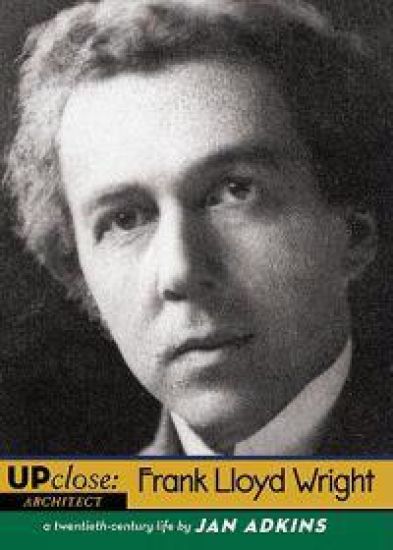
Frank Lloyd Wright: A Twentieth-Century Life
Frank Lloyd Wright was the most influential architect of the twentieth century?and a rogue genius whose life was a wild ride. Wright routinely ignored unpaid bills, clients? wishes, budget constraints. Only his creative vision mattered to him. That vision transformed the way we live, sweeping aside the Victorian home and creating a uniquely American architecture exemplified by his Prairie Style houses. Wright built hotels, churches, and offices, too, incorporating endless innovations in techniques and materials. Ideas poured out of him throughout his long career; he called it ?shaking the design out of my sleeve.? Jan Adkins's fascinating biography of this compelling, infuriating, largerthan- life figure will change the way every reader looks at architecture.
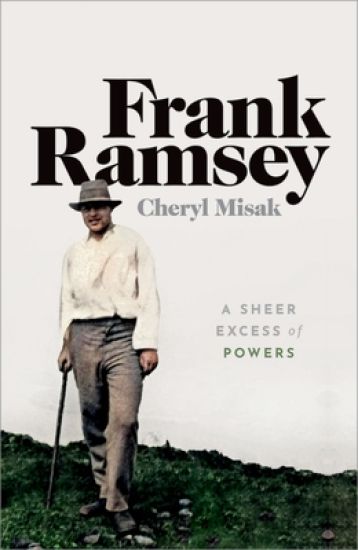
Frank Ramsey

Frank Ramsey

Cheryl Misak

Oxford University Press
2022
nidottu
The full story of Frank Ramsey's extraordinary life. When he died in 1930 aged 26, Frank Ramsey had already invented one branch of mathematics and two branches of economics, laying the foundations for decision theory and game theory. Keynes deferred to him; he was the only philosopher whom Wittgenstein treated as an equal. Had he lived he might have been recognized as the most brilliant thinker of the century. This amiable shambling bear of a man was an ardent socialist, a believer in free love, and an intimate of the Bloomsbury set. For the first time, Cheryl Misak tells the story of his tragically short, but extraordinary life.
Frank O'Hara's New York School and Mid-Century Mannerism
Frank O'Hara's New York School and Mid-Century Mannerism offers a ground-breaking account of the poet Frank O'Hara and the extraordinary cultural blossoming O'Hara catalysed, namely the mid-century experimental and multi-disciplinary arts scene, the New York School. Fresh accounts of canonical figures (Jackson Pollock, Willem de Kooning, George Balanchine, Fred Astaire) and original work on those too little discussed (Edwin Denby, Elaine de Kooning) resound with analysis of queer iconology from Michelangelo's David to James Dean. Sam Ladkin argues that O'Hara and the New York School revive Mannerism. Turning away from interpretations of O'Hara's Transcendentalism, Romanticism, or pastoralism, 'mid-century Mannerism' helps explain O'Hara's self-conscious style, its play with sweet and grand grace, contortion of conventional measure, risks with affectation, conceits, nonchalance, and scrambling of high/low culture. Mannerism clarifies the sociability implicit in the formal innovations of the New York School. The work also studies the kinship between art mediums by retooling rhetoric and recovering a perennial manneristic tendency beyond period style. Genealogies of grace, the figura serpentinata, sprezzatura, ornatus, and the marvellous exemplify qualities exhibited by O'Hara's New York School. Ladkin relates the essential role of dance in the New York School. O'Hara's reception has been tied to painting, predominantly Abstract Expressionism. He was also, however, a balletomane, a fan, for whom ballet was 'made up exclusively of qualities which other arts only aspire to in order to be truly modern.' Relaying ballet's Mannerist origins and aesthetics, and demonstrating its influence alongside Broadway and Hollywood musical-dance on art and poetry, completes the portrait of mid-century modernity.
Frank Ramsey

Frank Ramsey

Cheryl Misak

Oxford University Press
2020
sidottu
When he died in 1930 aged 26, Frank Ramsey had already invented one branch of mathematics and two branches of economics, laying the foundations for decision theory and game theory. Keynes deferred to him; he was the only philosopher whom Wittgenstein treated as an equal. Had he lived he might have been recognized as the most brilliant thinker of the century. This amiable shambling bear of a man was an ardent socialist, a believer in free love, and an intimate of the Bloomsbury set. For the first time Cheryl Misak tells the full story of his extraordinary life.
Frank O'Hara

Frank O'Hara

Marjorie Perloff

University of Chicago Press
1998
nidottu
Drawing extensively upon the poet's unpublished manuscripts - poems, journals, essays, and letters - as well as all his published works, Marjorie Perloff presents Frank O'Hara as one of the central poets of the postwar period and an important critic of the visual arts. Perloff traces the poet's development through his early years at Harvard and his interest in French Dadaism and Surrealism to his later poems that fuse literary influence with elements from Abstract Expressionist painting, atonal music, and contemporary film. This edition contains a new introduction addressing O'Hara's homosexuality, his attitudes toward racism, and changes in the poetic climate in recent years.
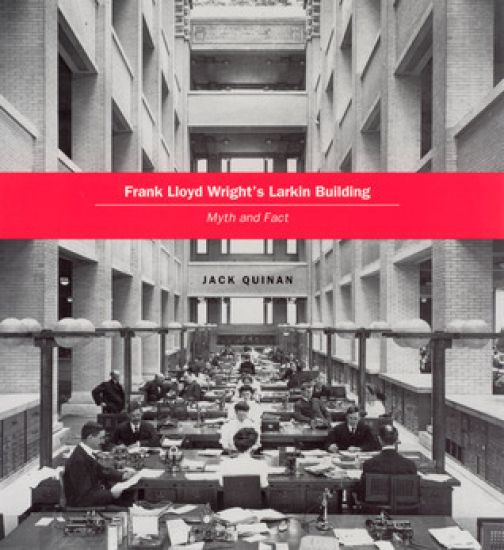
Frank Lloyd Wright's Larkin Building

Frank Lloyd Wright's Larkin Building

Jack Quinan

University of Chicago Press
2006
nidottu
Frank Lloyd Wright's Larkin Building has become an icon of modern architecture. And the fact that it was demolished only forty-six years after its 1904 completion makes Jack Quinan's study of the building - which housed a Buffalo, New York, soap company - all the more valuable. Quinan's history draws on engineering documents, personal accounts of the building, and other papers he acquired from the family of Darwin D. Martin, a Larkin executive who proposed commissioning Wright to design the company's offices. With access to these rare sources, Quinan reveals how a young Wright landed the commission and traces the evolution of his cutting-edge plans. Quinan then takes Wright studies to a new level, examining the Larkin Building as a structure at the center of economic and personal relationships. Illustrated with over one hundred photographs, floor plans, maps, and diagrams, "Frank Lloyd Wright's Larkin Building" provides a concise but complete record of how the building was conceived, built, evaluated, and finally demolished in what has been called a tragic loss for American architecture.
Frank Lloyd Wright

Frank Lloyd Wright

Meryle Secrest

University of Chicago Press
1998
nidottu
This biography focuses on Wright's family history, personal adventures and colourful friends and family. The author had unprecedented access to an archive of over 100,000 of Wright's letters, photographs, drawings and books, and she also interviewed surviving devotees, students and relatives.
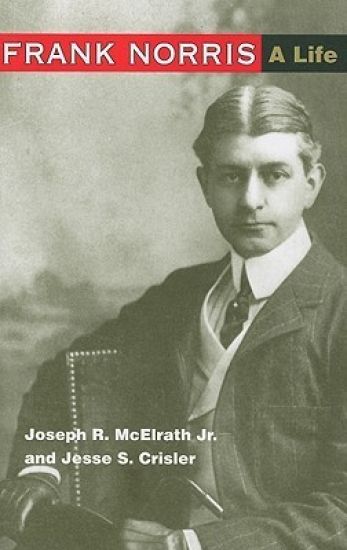
Frank Norris

Frank Norris

Joseph R. McElrath Jr.; Jesse Crisler

University of Illinois Press
2010
nidottu
Born in Chicago in 1870, Frank Norris led a life of adventure and art. He moved to San Francisco at fifteen, spent two years in Paris painting, returned to San Francisco to become an internationally famous author, and died at age thirty-two from a ruptured appendix. During his short life, he wrote an inspired series of novels about the United States coming of age, including The Octopus, The Pit, and McTeague. Until recently, various obstacles prevented a comprehensive biography of Norris: the writer burned most of his correspondence, the 1906 San Francisco earthquake and fire devoured more, and his brother and widow dispersed his surviving papers as gifts. Joseph R. McElrath Jr. and Jesse S. Crisler spent over thirty years amassing the material necessary for this truly full-scale portrait of Norris.
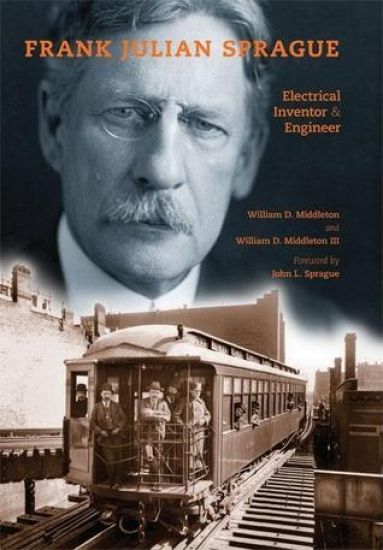
Frank Julian Sprague

Frank Julian Sprague

William D. Middleton

Indiana University Press
2009
sidottu
Frank Julian Sprague invented a system for distributing electricity to streetcars from overhead wires. Within a year, electric streetcars had begun to replace horsecars, sparking a revolution in urban transportation. Sprague (1857–1934) was an American naval officer turned inventor who worked briefly for Thomas Edison before striking out on his own. Sprague contributed to the development of the electric motor, electric railways, and electric elevators. His innovations would help transform the urban space of the 20th century, enabling cities to grow larger and skyscrapers taller. The Middletons' generously illustrated biography is an engrossing study of the life and times of a maverick innovator.
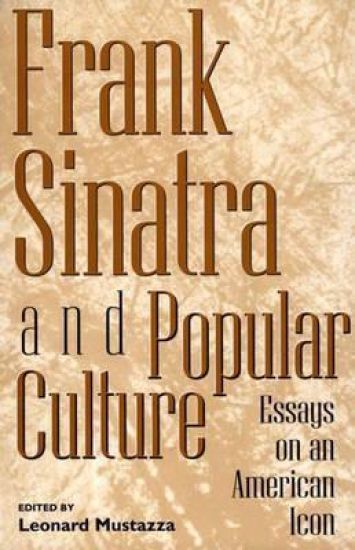
Frank Sinatra and Popular Culture

Frank Sinatra and Popular Culture

Leonard Mustazza

Praeger Publishers Inc
1998
sidottu
Frank Sinatra's influence on American popular culture has been wide reaching and long lasting. This diverse collection of essays written by historians, music critics, and popular culture personalities offers a myriad of perspectives and commentaries on this multitalented legend. The essays attest to the interest in Sinatra that has spanned six decades and shows no sign of diminishing—even after his death. From singer to actor, from mass media personality to humanitarian and cultural trendsetter, the many contributions of Frank Sinatra are brought to life in this entertaining volume. Written to appeal to Sinatra fans, these unique essays, including one by Frank Sinatra himself, are organized into three sections. The first examines Sinatra's fame and the ways in which his image was formed, the second looks at his music, and the final group of essays are personal reminiscences by the people who knew him. Together these essays will provide new material for the ever-growing dialogue about Frank Sinatra's place in and influence over twentieth-century American popular culture.
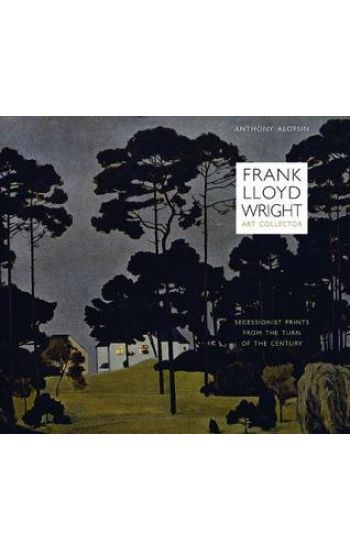
Frank Lloyd Wright, Art Collector

Frank Lloyd Wright, Art Collector

Anthony Alofsin

University of Texas Press
2012
sidottu
These Secessionist art prints, acquired by Frank Lloyd Wright and his lover Mamah Borthwick Cheney during their infamous flight to Europe in 1909–1910, reveal a new dimension of the architect’s taste and aesthetic preferences. This previously unknown and newly discovered group of prints from his personal art collection shows that around the turn of the twentieth century Wright had a surprising interest in European artists pursuing their own versions of modernism. Identified from careful archival research, the prints demonstrate how richly diffuse and multifaceted modernism was before the codification of a modernist canon. Wright, a revolutionary architect, preferred the work of Secessionists to that of the avant-garde of expressionism, cubism, and futurism. To Wright, the artists he selected were modern, and they appealed deeply to his interest in landscapes and graphic techniques of reproduction.In Frank Lloyd Wright, Art Collector, Anthony Alofsin presents the first catalogue raisonnÉ of the thirty-two prints and one original drawing that constitute Wright’s Secessionist collection. Alofsin explores Wright’s encounters with German and Austrian art before his travels to Europe; the fluid definition of modern art around 1909; and the complex context for Wright’s acquiring this collection while in Europe. This book, with its original research, puts into a new light a range of artists-some famous, others unknown-who sought to express, like Wright, their own rebellion against academic traditions. A unique contribution to the history of modern art, Frank Lloyd Wright, Art Collector offers stunningly original insights into the master’s artistic taste, as well as to a group of progressive artists whose work has been undeservedly overlooked in conventional histories of modernism.
Frank Okada

Frank Okada

Kazuko Nakane

University of Washington Press
2005
pokkari
Artist Frank Okada played a significant role in the modern art history of the Pacific Northwest. Born a Nisei in 1931, he was raised in Seattle's International District and throughout his life retained its influences and his vivid memories in his art. From his first painting award -- received at the Washington State fair -- until his death in 2000, he worked at the confluence of regional art, Asian culture, and national art movements.At the beginning of his career, Okada received a series of prominent fellowships -- John Hay Whitney in 1957, Fulbright in 1959, and Guggenheim in 1966–67. He was greatly influenced by the artists he met and was a close observer of the art scenes in New York, Paris, and Kyoto in an effort to find his own style of painting. He began teaching painting at the University of Oregon in 1969, a tenure that lasted almost thirty years. His work from the seventies, eighties, and nineties balanced forms and colors in intensely worked surfaces. The color blocks gradually became more intellectually structured and his compositions more expressive as he made his colors more powerful. As Nakane notes, "without recognizable reference to nature or his own personality, he created a texture that brought light to a field of color. . . . In order to appreciate his paintings, one needs to spend time observing how the colors respond to the changes of light throughout the day."
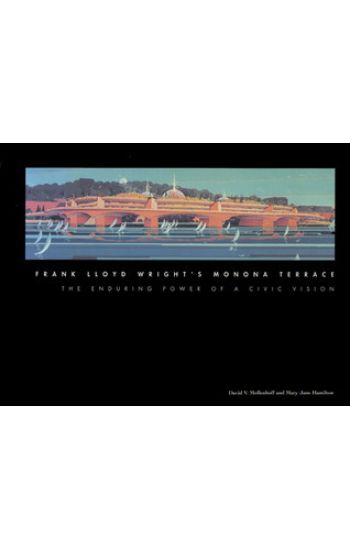
Frank Lloyd Wright's Monona Terrace

Frank Lloyd Wright's Monona Terrace

University of Wisconsin Press
1999
sidottu
The story of the 59-year battle to build one of Frank Lloyd Wright's most important designs. The Monona Terrace, first conceived in 1938, resulted in five local referenda, ten lawsuits and several acts of state legislature. This text examines those who opposed and those who supported the project.